Time to assess: the 1997 review of permaculture
With the current interest in documenting the history of the permaculture design system in Australia I thought this excerpt from a longer…
Our permaculture, our story…
Time to assess: the 1997 review of permaculture
With the current interest in documenting the history of the permaculture design system in Australia I thought this excerpt from a longer unpublished work might be of interest.
It was 1997. It was time for a review
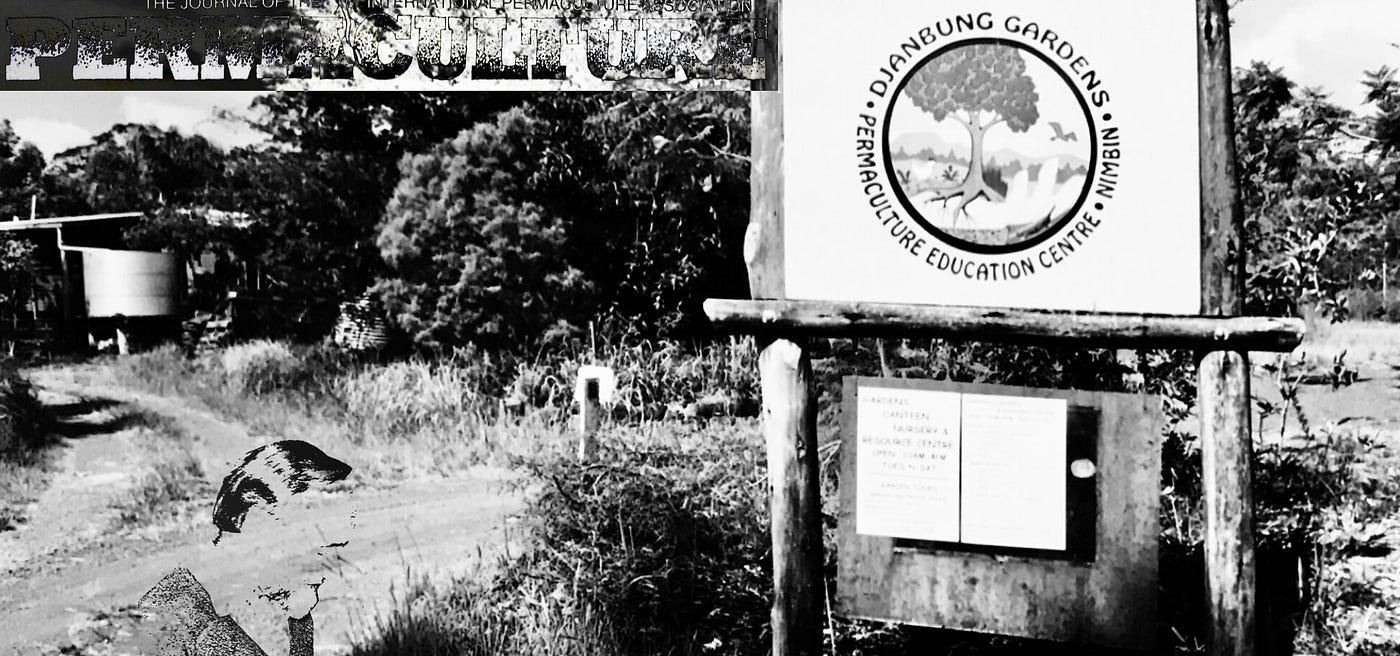
PLACE: Djanbung Gardens, Nimbin, Northern NSW. DATE: The spring of 1997. THE OCCASION: The biennial Australasian Permaculture Convergence.
The Spring of 1997 was a warm one as are most seasons in the humid, subtropical Nimbin Valley. We are out on the edge of town, on a property on the road that passes the showground. It isn’t long walk from town, but by the time you reach the property you are sure to feel the fug of sweat forming if you walk too fast. Slowness is the key to comfort in this climate.
Permaculture practitioners from all over the country have gathered here at Robyn Francis’ Djanbung Gardens permaculture education centre. Convergences are times to reconnect with people seldom seen, to listen to talks and participate in workshops where we share our knowledge and experience. Convergences are convivial events important to creating a sense of connection across our far-flung community of permaculture practitioners. They bind together our dispersed network whose only other connection at the time is in the pages of the Permaculture International Journal.
For the past couple days those attending the convergence have enjoyed the workshops and the food. But most of all they enjoyed the informal catching-up with colleagues and friends not seen this past year or more. There are people Fiona Campbell and I know from Sydney, some from Melbourne and others from parts more distant.
The convergence follows the traditional structure with the focus on networking and learning through sharing experience, through ideas presented in workshops and those discussed informally. Because participation in permaculture convergences is limited to people who have done a Permaculture Design Course, an open day has been set aside with a program for the public to give them a glimpse into the design system.
20 years on
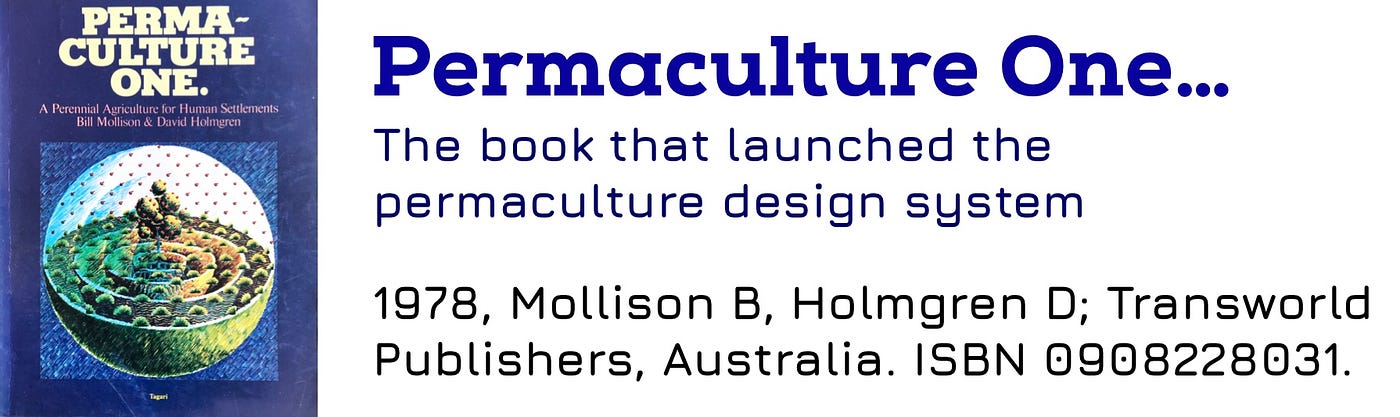
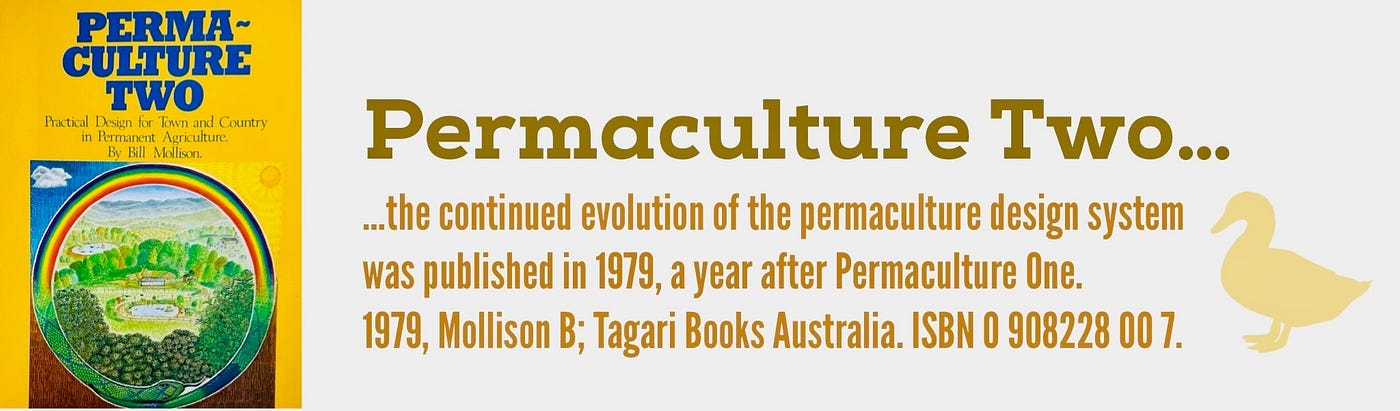
- It is 20 years since the publication of Permaculture One unleashed the permaculture design system upon the world. The book offered something concrete, something definitive and something actionable to mark the emergence of permaculture. We were riding the tail of the 1970s then. The decade had been one of social, technological and political change, of trying new things. It brought forth an ‘alternative’ counterculture that was open to the idea of permaculture.
Over those 20 years the permaculture idea captured the public imagination of those ready for change. From a hesitant start in Tasmania, participant numbers steadily grew. Slowly at first, but growth all the same. The more than a hundred in the marquis that spring day were a far cry from the few who attended those early courses in Stanley in permaculture’s dawn time.
Twenty years. Two decades. It seemed something of a landmark. What had happened over those years? Where were we now? Where would this permaculture idea go? Was it time to review permaculture? Time to look back? To look at the present and think about where the design system might go in future? Some of us thought so and we acted on it.
In the months before the convergence, Fiona Campbell and I discussed the idea of looking back over the road travelled. We thought that a review might create a sense of perspective and hint at a possible future. We spoke with a couple with whom Fiona had done facilitation training. Maria and Richard McGuire were educators with the Institute of Cultural Affairs. In later years they would form their own facilitation consultancy, Unfolding Futures.
We thought the review would be paint a word picture of permaculture as it stood at that moment, in 1997. We hoped it would invoke a sense of direction and discern a route along which permaculture could travel over the coming years.
Plotting permaculture’s journey
Maria McGuire was a woman then in her fifties. Her German accent was still strong although she had lived in Australia for years. Her’s was a direct though conciliatory manner suited to her profession as a facilitator. Her husband, Richard, had likewise retained his accent. His was American.
Neither were active in permaculture although they were regular trainers in our PacificEdge urban permaculture design course through the 1990s. There, they provided two full days on training in creative facilitation, group dynamics and decision making as part of the course’s focus on what in the coming century would become known as social permaculture. We included that because we found it wasn’t only the technical side of permaculture that was critical to project success. It was the interpersonal side and the processes used.
Maria and Richard would years later go on to become leading figures in Transition Parramatta and the Sydney Facilitators’ Network. However the Transition Towns movement was years away from its conception that warm Spring morning in Nimbin.
This was to be the first time a participatory review of thje design system had been conducted at a convergence.
Both Fiona and I had enough experience of civil society and workplace organisations to know that without deriving learning from our collective past, and without some idea of where we might head, what we would need to get there and what we might do once there in that imagined future, permaculture could drift, pushed here and there by forces both internal and external without firm direction or destination. Sure, there were general concepts about desired destinations that people summed up in terms like ‘sustainable societies’ or ‘ecological sustainability’, but they lacked substance and definition. They were vague and capable of multiple interpretations. Concepts, with nothing firm to grasp and no visible path to get to them.
Now, it was time for a little navel gazing, an informal and all too brief evaluation of where we had been, what we learned and what we might need to take permaculture into the future. This, we knew, was something done far too seldom by design system practitioners and at convergences.
It was to be an event for all attendees. We wanted to harness the collective insight of people from across the country. That is because permaculture follows different trajectories in different towns, different cities and different states as it responds to regional, sometimes local needs, conditions and opportunities.
First, the past
It is warm even in the shade cast by the big marquis. I don’t count the numbers assembled there. It is a lot.
From the stage, Fiona explains the purpose and method that we will employ in our exploration. She introduces Maria who gets the proceedings underway.
First, it is time to explore our common past.
Maris poses the focus question:
What were the critical influences on the development of permaculture in its formative years?
From the audience, the answers come quickly:
- Bill Mollison’s first talk on permaculture at the Cotter Down To Earth Festival in the 1970s
- Bill Mollison’s Tagari Community in Tasmania
- the ideas of Buckminister Fuller who invented the concept of ‘whole systems design’
- the alternative movement of the 1960s and 1970s
- David Holmgren’s thesis at the College of Advanced Education, Hobart, that fed into Permaculture One
- books — Robert Hart’s Forest Farming; the Club of Rome’s Limits To Growth; Fukuoka’s One Straw Revolution; FH King’s 1911 book on traditional Asian farming systems, Farmers of Forty Centuries; Schumacher’s Small is Beautiful — economics as if people mattered
- the formation of a national permaculture network
- the first photograph of Earth from space shot during the NASA moon mission in 1968; for the first time we saw the Earth in its totality as a blue-green sphere in the blackness of space
- the Village Homes development in California
- the past decade of the globalisation of permaculture
- the teaching of permaculture
- Abraham Maslow’s hierarchy of human needs.
The books
Those books mentioned would be found in the libraries of permaculture practitioners during those years. Some signified permaculture’s early link with the alternative movement of the seventies. I thought it good that the work of Buckminster Fuller was recognised. I was aware of Fuller since discovering him in the 1970s when his writings had currency among the practical visionaries who made up the innovative end of the alternative movement (and here and here).
Like permaculture but decades before it, Fuller proposed a design-centred approach to providing for human needs and coined the phrase ‘whole systems design’. In that phrase I would find the essence of permaculture.
But… what was missing?
Missing from the list was the development of ecology as a science that brought insights into the interrelationship of elements in the environment. That was linked to the science of systems theory with its notion of emergent systems arising spontaneously from interrelating components: the whole was greater than the sum of the parts. The science was then in its infancy although David Holmgren had been influenced by Howard Odum’s Systems Ecology. That was an application and an extension of general systems theory applied to ecological processes.
Missing, too, was the influence of the oil crises of 1973–74 and 1978–79. The first was triggered when the Organisation of Oil Exporting Countries — OPEC — reduced oil supply to Western nations over their support for Israel during the war of 1973. The crisis at the end of the decade followed the Iranian Revolution. It abruptly disrupted Iran’s oil production and triggered global panic buying and price spikes by removing something like 4–7% of the global oil supply, and led to speculative hoarding and a rapid doubling of oil prices.
Faced with the worst oil supply disruption since World War Two, the vulnerability of oil importing nations was laid bare. The idea of permaculture that emerged with the publication of Permaculture One in 1978 seemed a to offer a buffer against such low probability, high impact crises.
Also missing was mention of the work of Australian water systems specialist, PA Yoemans. Yoemans was a significant influence on permaculture thinking around farmland irrigation.
Looking at this list from the present day I see ideas and books from the 1970s and earlier that may now be lost to people newer to permaculture. Names like Robert Hart, Buckminster Fuller and Fritz Schumacher might be familiar to some who lived on the creative, appropriate technology edge of the alternative movement of that decade but, I wonder, do they now have currency within the permaculture milieu? Or have those earlier, diverse sources been replaced for permaculture readers by the works of permaculture authors?
The blue marble
The comment about the first view of the Earth from space as a full planet, the famous Blue Marble photograph, was made by one of the crew of the Apollo 17 spacecraft on December 24, 1972. It was the last of the Apollo moon missions. The famous photo was an impromptu, spontaneously-made image because photo sessions were programmed into the flight plan and the crew were not intended to be taking photos at the time. Here’s how The Atlantic reported what became perhaps the most widely distributed photo in history:
“At five hours and a few minutes into the flight of Apollo 17 one of the crewmen looked out the window. What he saw inspired him to grab the only Hasselblad that wasn’t stowed and snap a picture — actually four pictures, no more than a minute apart, changing the exposure after the first one. The second snap yielded the sharper image that’s become famous… “.
We might be used to such mages now, but at the time of its publication it was inspirational and revolutionary. Why? Because no one had seen the Earth in full view before; no one had seen the Earth as a bright, shining sphere in the blackness of space. The photograph became iconic and influenced a generation. It reminded me of that day in 1969 when staff where I was working were summoned to the cafetaria to watch on television something unprecedented in human history. What we watched on the grainy screens of black and white television sets that day was the first moon landing. It was the day Armstrong made that first footprint on the dusty lunar surface.
The key developments
Now warmed-up to the brainstorming process, Maria takes the gathering into identifying what had unfolded in permaculture over the decade:
What are the key developments in permaculture in the 1990s?
The responses:
- the development of ecovillages
- international permaculture convergences (they started in 1984, the first was at Pappinbarra on NSW’s mid-north coast)
- the spread of the design system
- the ethical investment industry and permaculture’s links to it
- urban agriculture
- permaculture in schools
- permaculture education.
It was a list of the main areas that opened to permaculture during the decade.
Missing was the role of permaculture as an approach to international development.
Permaculture entered that field in the nineties. In Melbourne, PGAN, the Permaculture Global Assistance Network, came into existence and would go on to send Australian permaculturists to Cuba during that island nation’s Special Period when the oil stopped flowing from a collapsing Soviet Union and food fell into short supply. Prominent Cuban urban permaculturist, Roberto Perez, who later married Sydney woman Michelle Gratton, was to become known to Australian permaculture practitioners through his speaking tours.
Robert Pekin, who started the Brisbane community-supported local food distribution scheme, Food Connect, and I appeared with Roberto at the Byron Bay Community Centre. Permaculture in international development might have been a small presence at the time but it was becoming an area of growing interest.
Next: The five gifts
With the key developments in permaculture listed, Maria expanded on the design system’s story over the decade by asking the crowd:
What are the five key gifts of permaculture?
The crowd would not settle for so few. They insisted on naming many more than five:
- bringing food production back to the cities
- synergy
- self-empowerment
- holistic systems
- reconnecting with natural systems
- rediscovering and reaffirming traditional ways
- the interrelationship of all things
- models of food self-reliance
- influence on mainstream society
- diversity
- a focus on solutions rather than problems
- reconnecting
- community, commonality, common sense.
I found it interesting that there were few tangible, practical things listed. Most of the items were conceptual. Sure, they could have tangible outcomes but those were not listed either. And yet, the 1990s had been a decade of growth for the permaculture movement in Australia. More came into teaching the design course, there was the Commonworks in Northern NSW on the land of the Permaculture Research Institute, a truly innovative initiative that included landuse design and an attempt at livelihood creation, the development of Melbourne’s CERES with its appropriate technology, food production and education system, and more.
The challenges
So far so good. Influences and achievements noted, the gathering moved on to the future.
What are the key challenges facing permaculture?
The answers reflect the concerns of the people active in the movement at that time:
- the fear of acknowledging mistakes
- social values
- the availability of information for non-literate people
- penetration of permaculture into urban areas
- finding enough people to move forward
- nurturing the permaculture community
- making permaculture relevant to youth
- leading by example
- developing local solutions to globalisation
- walking our talk
- the development of permaculture projects, especially systems that last
- funding ourselves
- preserving and increasing biodiversity
- apathy
- affluence
- artificial and easy food
- developing networks to help ourselves
- making inroads into local government
- the social psychology of competition rather than cooperation
- making livings in permaculture (‘right livelihood’).
Developing local solutions to globalisation was an interesting one. Economic globalisation was a core part of the neoliberal agenda at the time. It went against permaculture’s focus on the regional and the local as a venue for taking action. And yet, permaculture participated in its own globalisation by reproducing itself around the world in the form of community organisations and institutes, most notable in English-speaking countries as that was the language of its place of origin, but also in Europe. What was not articulated as a challenge in the session was that it was economic globalisation, specifically, that was seen as the problem.
Some of those items listed in the session would be acted upon in coming years. Some remain a challenge today.
The most important things?
In the final session, Maria asked:
What are the most important things for permaculture to deliver?
The responses:
- creation of vibrant communities
- trusting ourselves and trusting nature to provide
- wisdom
- reafforesting the Earth
- practical hope
- joyful fertility
- harmony with life
- freedom
- empowering youth to act in deprived areas
- respect
- celebration of diversity
- cooperation with nature
- abundance
- creation of a planet reflecting a holistic state of being
- developing projects and programmes to implement the analyses developed in this process (ie. the process led by Maria).
Once again, a mix of ideas conceptual and practical though little by way of tangible, focused things that could become the focus of projects. Missing was food security. That would not arise in permaculture until the new century, and only some time after it was being acted upon by community workers and organisations set up to advocate on it. The potential impact of the warming climate was also absent. It was only entering the public consciousness at the time although Bill Mollison had spoken abut it earlier in the decade.
Idealism and realism
Blending idealism and realism was common at permaculture convergences. Maria and Fiona’s session disclosed the coexistence of both tendencies.
Permaculture never lacked people who thought big. The proposal to ‘reafforest the Earth’, for instance, was an ideal well beyond the capacity of permaculture to implement in its totality. It was something to which it could contribute because it was in permaculture’s zone of influence. Local reforestation projects were in permaculture’s zone of action. Especially so were permaculture to collaborate with national reforestation agencies then operating, such as Greening Australia and the national Landcare program. That didn’t happen (disclosure: I was Greening Australia NSW community liaison and newsletter editor at the time). Perhaps permaculture was then still trying to define itself as a social movement and practitioners, other than the few, didn’t see the potential value in cooperation with other movements and programs. That was unfortunate. Collaboration had the potential to boost permaculture’s public standing and attract participants.
Other ideas for the future coming out of the session might have been a bit wooly in the sense that they were good ideas but were vague. There was nothing to grab to start working on them, no defined entry point, no clear definition. Achieving them would be a challenge and would require greater focus. Some were motherhood statements: ideas that virtually no one in permaculture would disagree with.
The segment of permaculture’s ‘five gifts’ showed that permaculture practitioners were an optimistic bunch. Notions that the gifts include ‘holistic systems’, ‘reconnecting with natural systems’ and ‘the interrelationship of all things’ disclosed the wholistic, nature-oriented ideology that has permeated permaculture ever since Bill and David put their ideas down on paper. In permaculture’s days, viewing the world as an interacting whole rather than a collection of parts was a novel idea. Only in later years did science given the idea of connection with nature respectability through disciplines such as ecology, general systems theory, complexity theory and network theory.
Accepting the challenges
The segment on challenges was revealing because it brought to the surface the things that participants saw as potential, but not necessarily insurmountable blockages to the dispersal of permaculture into mainstream society.
A few, such as ‘penetration of permaculture into urban areas’ we knew was achievable because it was being done. This was a move away from the initial focus of permaculture on the rural smallholding, homesteading. That was a legacy of its first definition as ‘permanent agriculture’ and the rural and landuse focus on many of its early practitioners. Many would have inherited that from the so-called ‘back to the land’ movement of the late-1960s that saw tens of thousands of mainly young people quit the cities for rural parts (the number estimate comes from sociology researcher Peter Cock’s Alternative Australia, perhaps the earliest sociological study of Australia’s alternative lifestyle and intentional community movement; (Cock P. Alternative Australia: Communities of the Future? Melbourne: Quartet Books, 1979. ISBN 0908128096).
From the start of the design system there was a substantial interest in applying permaculture ideas and principles in cities. That was because the cities were where the bulk of the population lived. Ignore them, and permaculture becomes a thing for the rural landowner, a minority pursuit. The growth of urban populations and the spread of cities made the idea of penetrating urban areas timely. It was probably the most important idea for permaculture to act on.
And act on it permacullture practitioners were doing. We know that thanks to the publication of the book Sustainable Urban Renewal: Urban Permaculture in Bowden, Brompton and Ridleyton. Published in 1985 by permaculture activists in Adelaide, South Australia, the book was produced by the group known as Urban Permaculture Consultants. The publication emerged from the idea of applying permaculture principles in the working-class suburbs of the inner-city industrial district. As a permaculture project the plan included community participation in planning, the rehabilitation of vacant land, urban food production, energy-efficient housing retrofits. urban greening and local economic development. (Sustainable Urban Renewal: Urban Permaculture in Bowden, Brompton and Ridleyton; 1985; co-authored by Colin Ball, Greg Jervis, Bill Mansell and P. Okamoto through the group known as Urban Permaculture Consultants; Social Impacts Publications, Armidale NSW.)
The question remained about why nobody in Maria’s session mentioned the book.
‘Finding enough people to help’ and ‘making permaculture relevant to youth’ were related because satisfying the first would ultimately depend on addressing the second. It was here, perhaps, that the design system faced its greatest challenge at the time. Young people were being attracted to permaculture but the question was whether their numbers were great enough to perpetuate the system and move it forward. This was about intergenerational hand-over and reinterpreting the design system in such a way to make it more meaningful to youth.
‘Leading by example’ and ‘walking our talk’ were about much the same thing. They were about translating ideals into action.
‘The development of permaculture projects, especially systems that last’ is a challenge that would best be met by including a sizeable segment on project management in permaculture education and by improving group skills in permaculture. Group skills would later become a focus in the work of Queensland permaculture educator, Robyn Clayfield. As for skills in project management, they were generally lacking at the time in permaculture’s community-based projects.
‘Developing networks to help ourselves’ is a challenge because, unlike other fields, permaculture has no medium through which solutions can be discussed, issues within the practice talked over and social trends addressed. I said that at the time and have said it since. The exception was the Permaculture Oceania listserv, an email-based channel started in Sydney (social media did not exist at the time) using text and set up as a communications channel to facilitate networking. It was permaculture’s first venture into online communication.
In other words, permaculture lacked online fora where the design system can be respectfully talked about and lacks anything like an industry or professional journal. A few websites filled this role to some degree, however because permaculture exists nationally and internationally as a distributed network, those websites could be difficult to find.
‘Making inroads into local government’ is an idea with potential. The model could be that pioneered by the bushland regeneration movement that brings together local government and community-based volunteers. It attracts grant funding and creates work in local government and small business.
Progressive local government now employs university-educated staff to implement projects in areas that have been the province of permaculture, commonly in roles such as sustainability educator. Waste management, energy efficient building, water conservation, stormwater management, community development and community gardening are just some areas that permaculture could have played a larger role within local government had that been targeted as a focused venue for action and had people sought formal education beyond their permaculture training.
In forming constructive alliances with local government, the community organisation Community Gardens Australia that includes permaculture practitioners, demonstrated the possibilities in this area as did the Melbourne community-based food security and community gardening organisation, Cultivating Community, with the state government in Victoria.
Findings confirmed
When I conducted an informal poll at the 1997 Australasian Permaculture Convergence I found an awareness that change was needed in the design system. Few respondents were specific as to the type of change. Some I spoke with had been in the movement for years and they mentioned the need to mainstream permaculture. Mainstreaming was a continuing call through the 1990s. Practitioners were realising that, was permaculture to grow, it would have to reach out beyond its own milieu and into the surrounding society. It would have to avoid falling into the trap of becoming a subculture.
The concept means different things to different people. Today, some work with permaculture ideas within mainstream institutions. This suggests permaculture is now mainstreamed. Adding to the mainstreaming of the design system was the development of Accredited Permaculture Training over the following decade.
Hippie farming
Permaculture has to separate itself as it is now from its past. That was an assertion made at the 1997 session. A couple comments resurrected that time-worn cliche about permaculture having a hippie image and that this works against its move into the mainstream.
This is seldom heard today. It was a long time in fading. I last heard it years ago from someone associated with both permaculture and Transition Towns. This person had less than a decade of experience in permaculture and was too young to have seen an authentic hippie. Where did this come from? And was it permaculture’s own version of social stereotyping?
Permaculture as hippie farming and similar allegations stems from the influence of 1970s alternative culture on the design system. Denying this by labelling it ‘hippie’ is to deny where many of permaculture’s formative ideas and pioneers come from and the social and political milieu out of which it emerged. Permaculture, like any social movement, is a product of its times.
The session
Permaculture at the time of the 1997 convergence was making the transition from the early adopter phase into early mass adoption. It is this, I believe, that lay behind the call for mainstreaming. Perhaps its practitioners were tired of believing that they lived on the social fringe.
Maria, Richard and Fiona’s session at the 1997 permaculture convergence provided a snapshot of how people were thinking about the design systems at the time.

Permaculture: Digging up our past
[embed]Is permaculture a social movement? Is permaculture a social movement?medium.com
메타데이터
- post_id
- d7c2cf7f7bcc
- slug
- time-to-assess-the-1997-review-of-permaculture-d7c2cf7f7bcc
- url
- https://medium.com/permaculture-3-0/time-to-assess-the-1997-review-of-permaculture-d7c2cf7f7bcc
- canonical_url
- https://medium.com/permaculture-3-0/time-to-assess-the-1997-review-of-permaculture-d7c2cf7f7bcc
- author_url
- https://medium.com/@russgrayson-au
- status
- ok
- fetched_at
- 2026-06-18 07:02:39