The Frozen Genome: Humanity’s First Attempt to Reverse Extinction
The Mammoth Returns to the Human Imagination: The woolly mammoth once thundered across the northern hemisphere, shaping grasslands…
The Frozen Genome: Humanity’s First Attempt to Reverse Extinction
[embed]Youtube.com | Youtu.be | Channel Exploration of de-extinction science, following geneticists as they reconstruct Mammoth DNA, debate ethical limits, and visualize the first mammoth-like embryo against prehistoric flashbacks and today’s rapidly warming Arctic.
The Mammoth Returns to the Human Imagination: The woolly mammoth once thundered across the northern hemisphere, shaping grasslands, compacting snow, and coexisting with early humans for thousands of years. Roughly 4,000 years ago, the last known mammoth populations vanished, likely due to a combination of climate change, habitat loss, and human hunting pressure.
Today, as the Arctic warms at nearly four times the global average rate, scientists are revisiting the mammoth not as a relic, but as a potential ecological tool. Advances in genetic sequencing, CRISPR gene editing, and reproductive technology have transformed de-extinction from theoretical debate into a tangible scientific effort.
Yet behind the glowing laboratory screens and reconstructed genomes lies a deeper question: when humanity gains the power to resurrect extinct life, does it gain the responsibility to do so — or the obligation to refrain?
What Is De-Extinction?
De-extinction is not resurrection in the literal sense. No intact mammoth cell has ever been recovered. Instead, de-extinction relies on genomic reconstruction: extracting fragmented DNA from preserved remains and comparing it with the genome of a closely related living species, such as the Asian elephant.
- Ancient DNA fragments are sequenced and digitally assembled
- Missing or degraded genes are inferred through comparative genomics
- CRISPR is used to edit specific traits into a modern host genome
- An embryo is gestated via surrogate or artificial womb technology
The result is not a perfect clone, but a proxy organism — an elephant engineered to express mammoth-like traits such as dense hair, subcutaneous fat, cold-adapted hemoglobin, and altered ear size.
Inside the Lab: Wrestling with Fragmented DNA
Mammoth DNA recovered from permafrost is heavily degraded. Time, radiation, and microbial activity break chromosomes into millions of pieces. Even the best-preserved specimens contain DNA fragments averaging less than 100 base pairs in length.
Modern sequencing technologies can reconstruct much of the mammoth genome, which is approximately 4.7 billion base pairs — slightly larger than the human genome. To date, scientists estimate that over 99.5% of the mammoth genome has been mapped through comparative analysis.
Key Technical Challenges
- DNA contamination from bacteria and fungi
- Epigenetic markers lost to time
- Incomplete understanding of gene interactions
- Developmental unknowns during embryogenesis
CRISPR-Cas9 enables precise gene editing, but precision does not equal certainty. Editing dozens — or hundreds — of genes introduces compounding uncertainty. A single misexpression during development could lead to severe abnormalities or nonviable embryos.
The Embryo Question: Life Before Birth
One of the most ethically fraught moments in de-extinction is embryo creation. Elephant gestation lasts approximately 22 months, the longest of any land mammal. Each pregnancy carries significant health risks for the surrogate.
Some researchers advocate for artificial wombs, a technology still in early development. While mammalian embryos have been sustained ex vivo for weeks, no large mammal has yet completed full gestation outside a living body.
The haunting image of a glowing embryo — its genome partially ancient, partially modern — forces scientists to confront a fundamental issue: experimentation on sentient life, not abstract code.
Ecological Promise: Rewilding the Arctic
Proponents argue that mammoth-like animals could help stabilize Arctic ecosystems. During the Pleistocene, large herbivores maintained grasslands by knocking down trees, compacting snow, and fertilizing soil.
Proposed Ecological Benefits
- Reduction of insulating snow cover, slowing permafrost thaw
- Conversion of tundra to grassland, increasing carbon storage
- Restoration of lost megafaunal ecological roles
- Increased albedo from grasslands reflecting sunlight
Some models suggest that restoring grazing megafauna could reduce permafrost carbon release by up to 30–40% in targeted regions. With Arctic permafrost containing an estimated 1.5 trillion tons of carbon, even small reductions could have global climate implications.
Ecological Risk: Unintended Consequences
Ecosystems have changed dramatically since mammoths disappeared. Introducing a large engineered species carries unpredictable ripple effects.
- Disruption of existing Arctic flora and fauna
- Competition with modern herbivores
- Pathogen susceptibility or transmission
- Behavioral mismatches in unfamiliar environments
Conservation biology is filled with cautionary tales. Invasive species introductions, even well-intentioned ones, have repeatedly caused irreversible ecological damage. De-extinction magnifies this risk by reintroducing organisms adapted to vanished worlds.
The Ethics of Playing Guardian
At the heart of the mammoth debate lies a moral tension. Humans likely contributed to the mammoth’s extinction. Does that create an obligation to restore what was lost — or does it demand restraint?
Core Ethical Questions
- Is it ethical to create life for experimental or ecological purposes?
- Do de-extinct animals have a right to a natural social structure?
- Should limited conservation funding prioritize living species?
- Who bears responsibility if harm occurs?
Critics argue that de-extinction risks becoming a technological distraction, offering false hope while ecosystems continue to collapse. Supporters counter that innovation and conservation are not mutually exclusive — and that refusing to use powerful tools may itself be unethical.
Split-Screen Humanity: Hope vs. Hubris
On one side of the debate are geneticists who see de-extinction as a moral extension of conservation. On the other are philosophers and ecologists who warn against technological overconfidence.
The mammoth stands as a mirror for humanity’s evolving role on Earth. No longer passive observers of extinction, humans are now capable of shaping evolution itself.
Conclusion: Should We Bring Back the Mammoth?
De-extinction is neither miracle nor monstrosity — it is a tool. Whether it becomes a force for repair or a symbol of hubris depends not on CRISPR, but on restraint, wisdom, and humility.
As warming tundra exposes ancient bones and modern labs illuminate reconstructed DNA, humanity stands between past and future. The mammoth’s return would not simply revive an extinct species — it would redefine our relationship with life itself.
The question is no longer whether we can bring back the mammoth, but whether we are prepared to live with the consequences of becoming guardians of resurrection.
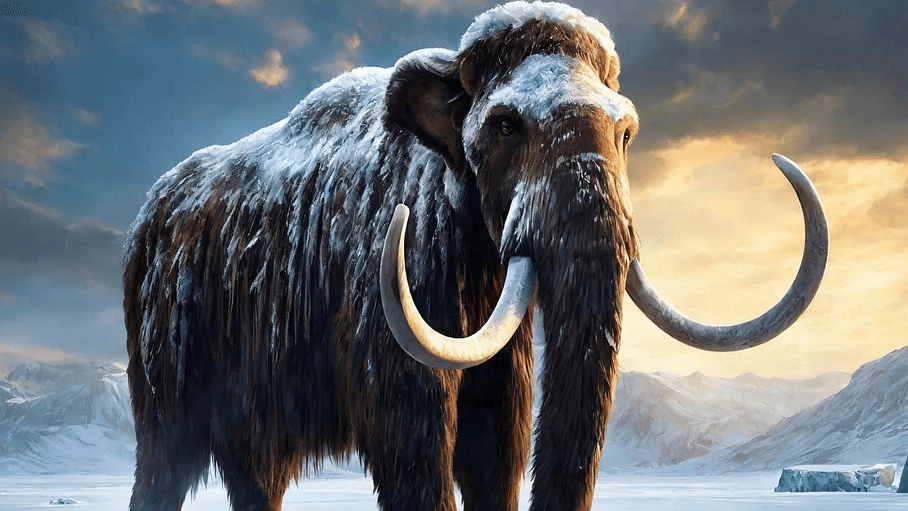
De-extinction represents a turning point in the human story — one where extinction is no longer an absolute end, but a condition potentially subject to reversal. The effort to bring back the woolly mammoth sits at the crossroads of climate science, conservation, biotechnology, and moral philosophy. It forces society to confront uncomfortable questions about responsibility, restraint, and power: whether technological capability implies moral permission, and whether repairing past ecological damage justifies creating new forms of life. As genomes are edited and ancient traits reawakened, the mammoth becomes more than a species — it becomes a symbol of humanity’s evolving role as both destroyer and steward of Earth’s future.
메타데이터
- post_id
- d7e6e358c296
- slug
- the-frozen-genome-humanitys-first-attempt-to-reverse-extinction-d7e6e358c296
- url
- https://medium.com/@statuslink/the-frozen-genome-humanitys-first-attempt-to-reverse-extinction-d7e6e358c296
- canonical_url
- https://medium.com/@statuslink/the-frozen-genome-humanitys-first-attempt-to-reverse-extinction-d7e6e358c296
- author_url
- https://medium.com/@statuslink
- status
- ok
- fetched_at
- 2026-06-09 15:37:30