Research Reconstitution & Storage Protocol: Navigating pH Drift and Temperature Management in…
Originally published at [YearPeak]. Read more cutting-edge research protocol on our official site.
Research Reconstitution & Storage Protocol: Navigating pH Drift and Temperature Management in Peptide Science
Originally published at [YearPeak]. Read more cutting-edge research protocol on our official site.
Research Reconstitution & Storage Protocol: Navigating pH Drift and Temperature Management in Peptide Science
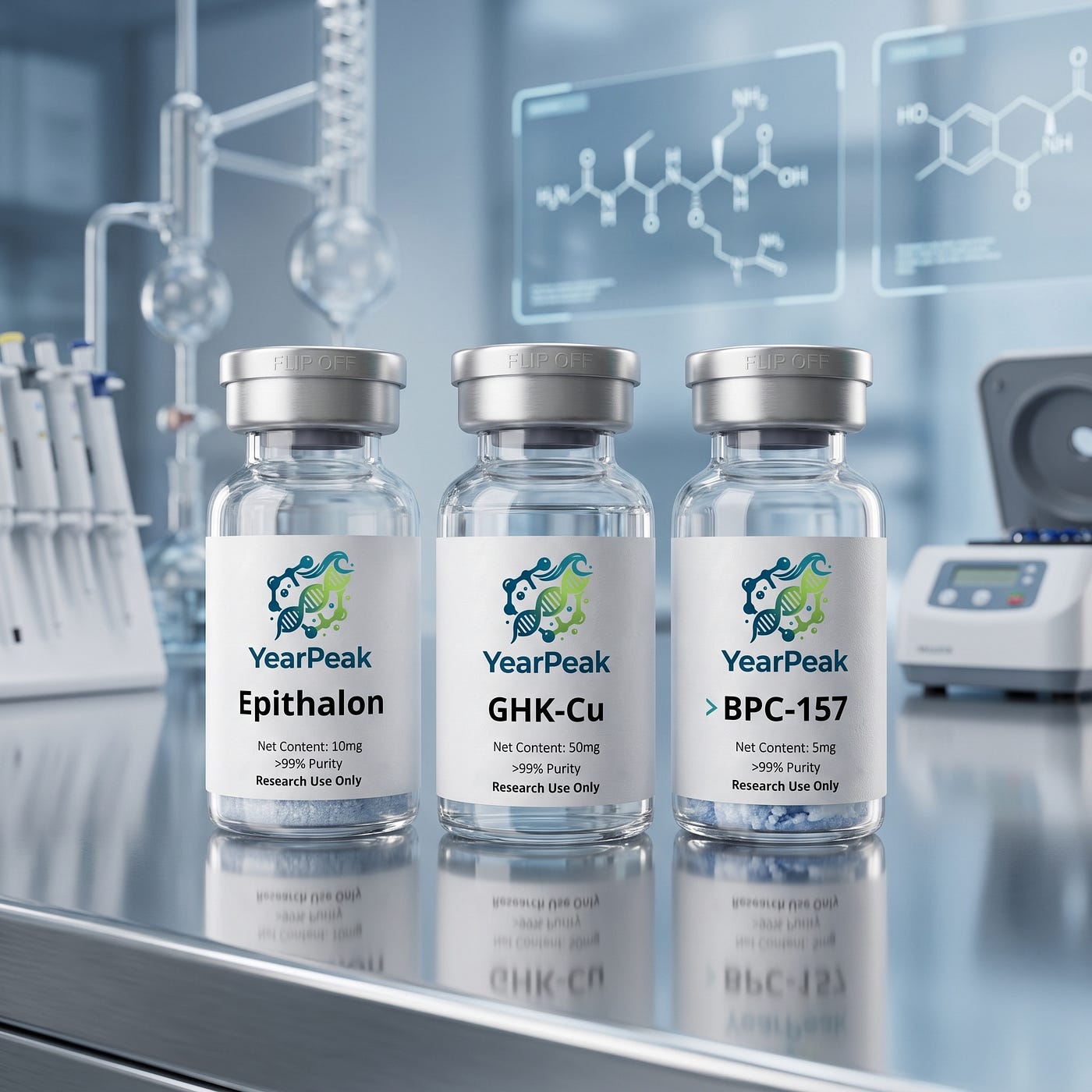
As the frontier of biohacking and longevity research expands, the precision of experimental outcomes increasingly relies on the meticulous handling of laboratory research compounds. Lyophilized peptides such as Epitalon, AOD-9604, and HGH Fragment 176–191 are highly sophisticated biological molecules. Once they leave their vacuum-sealed crystalline state, their structural integrity is highly sensitive to environmental factors.
This guide outlines the critical biochemical principles of peptide reconstitution and storage, focusing on preventing pH drift, managing isoelectric points (pI), and explaining why the household freezer can be fatal to reconstituted compounds.
1. The Chemistry of Reconstitution: Solvent Selection & pH Drift
Reconstitution is not merely dissolving powder in water; it is a delicate biochemical transition. The choice of solvent directly impacts the peptide’s stability and resistance to enzymatic degradation.
Bacteriostatic Water vs. Sterile Water
For multi-dose laboratory research, Bacteriostatic Water (0.9% Benzyl Alcohol) is the absolute standard.
- The Preservative Mechanism: Benzyl alcohol inhibits bacterial proliferation, ensuring the solution remains sterile throughout the duration of the experiment.
- The Risk of Sterile Water: Reconstituting compounds like Epitalon or Fragment 176–191 with standard sterile water exposes the peptide to rapid degradation and high risk of contamination after the first vial puncture.
Navigating pH Drift and Solubility
Every peptide has an Isoelectric Point (pI) — the specific pH at which the molecule carries no net electrical charge. When a peptide is at or near its pI, its solubility drops drastically, leading to aggregation or precipitation (cloudiness).
- AOD-9604 & HGH Frag 176–191: These fat-burning fragments are notoriously hydrophobic and sensitive to pH. If reconstituted in a solution that is too acidic or too alkaline, they can undergo pH drift, causing the peptide to precipitate out of solution as a cloudy mist or gel.
- The Protocol: Always allow the Bacteriostatic Water to reach room temperature before reconstitution. Introduce the solvent slowly down the side of the glass vial. Never shake. If mild cloudiness occurs due to a localized pH imbalance, gentleness and patience are key — allow the vial to sit at room temperature for a few minutes to achieve thermodynamic equilibrium and fully dissolve.
2. Advanced Storage Dynamics: The Freeze-Thaw Trap
A common misconception in peptide handling is that colder always equals better. While lyophilized (dry) powders are highly stable in deep freeze conditions, reconstituted peptides are an entirely different thermodynamic system.
Why You Must NEVER Freeze Reconstituted Peptides
Once a peptide is dissolved in an aqueous solution, freezing it in a standard household refrigerator/freezer is highly destructive due to two main phenomena:
- Ice Crystal Shear Forces: As water freezes, it expands and forms crystalline structures. These sharp, expanding ice crystals exert massive physical shear forces on the delicate peptide bonds, mechanically breaking the amino acid chains (particularly longer fragments or delicate sequences like AOD-9604).
- Cryoconcentration and pH Shifting: During a slow freezing process (typical of household freezers), water freezes out first, forcing the peptide and the benzyl alcohol into highly concentrated pockets of remaining liquid. This localized hyper-concentration drastically shifts the pH and salinity, leading to irreversible denaturation of the peptide structure.
The Optimal Temperature Protocol
- Lyophilized Powder (Unreconstituted): Store at -20°C (-4°F) for long-term preservation (up to 24 months) or 2°C to 8°C (36°F to 46°F) for short-term storage (up to 12 months).
- Reconstituted Solution: Must be stored strictly in the refrigerator section at 2°C to 8°C (36°F to 46°F). Do not place them near the back cooling plate where localized freezing might occur. Under these conditions, a reconstituted peptide remains stable for approximately 21 to 28 days before gradual potency loss begins.
3. Step-by-Step Laboratory Best Practices
To ensure maximum structural preservation and reproducible research data, adhere to the following protocol:
[Vial Preparation] ──> [Solvent Introduction] ──> [Equilibrium] ──> [Cold Storage]
Sanitize Septum Slow Side-Wall Flow Self-Dissolving Refrigerate Only- Sanitization: Thoroughly wipe the rubber septum of both the peptide vial and the bacteriostatic water with a 70% Isopropyl Alcohol swab. Allow to air dry completely.
- Vacuum Equalization: Many high-quality peptide vials are sealed under a partial vacuum. When introducing the solvent, do not allow the water to forcefully blast directly onto the lyophilized cake. Hold the syringe firmly and let the fluid flow gently down the interior glass wall.
- The “No-Shake” Rule: Shaking creates kinetic energy and surface tension (foaming) that can shear the delicate secondary structures of the peptide. Instead, gently swirl the vial between your fingers or roll it slowly across a flat surface.
- Inspection: Hold the vial up to a natural light source. The solution for Epitalon, AOD-9604, and Fragment 176–191 should settle into a perfectly clear, transparent liquid.
Conclusion: Science Over Shortcuts
In the realm of advanced biochemical research, attention to detail separates successful methodologies from compromised data. By understanding the underlying physics of pH drift and avoiding the structural trap of ice crystal denaturation, researchers can ensure the absolute purity, potency, and integrity of their peptide compounds.
Disclaimer: All compounds mentioned in this protocol are intended strictly for laboratory research and in-vitro evaluation. Academic rigor and precise handling are required at all stages.
메타데이터
- post_id
- d86cce71ea10
- slug
- research-reconstitution-storage-protocol-navigating-ph-drift-and-temperature-management-in-d86cce71ea10
- url
- https://medium.com/@YearPeak/research-reconstitution-storage-protocol-navigating-ph-drift-and-temperature-management-in-d86cce71ea10
- canonical_url
- https://medium.com/@YearPeak/research-reconstitution-storage-protocol-navigating-ph-drift-and-temperature-management-in-d86cce71ea10
- author_url
- https://medium.com/@YearPeak
- status
- ok
- fetched_at
- 2026-07-11 09:29:00