Decoder, Tokenizer, LoRA: The Core Mechanics Behind Large Language Models
GPT isn’t magic — it’s engineering.
Decoder, Tokenizer, LoRA: The Core Mechanics Behind Large Language Models
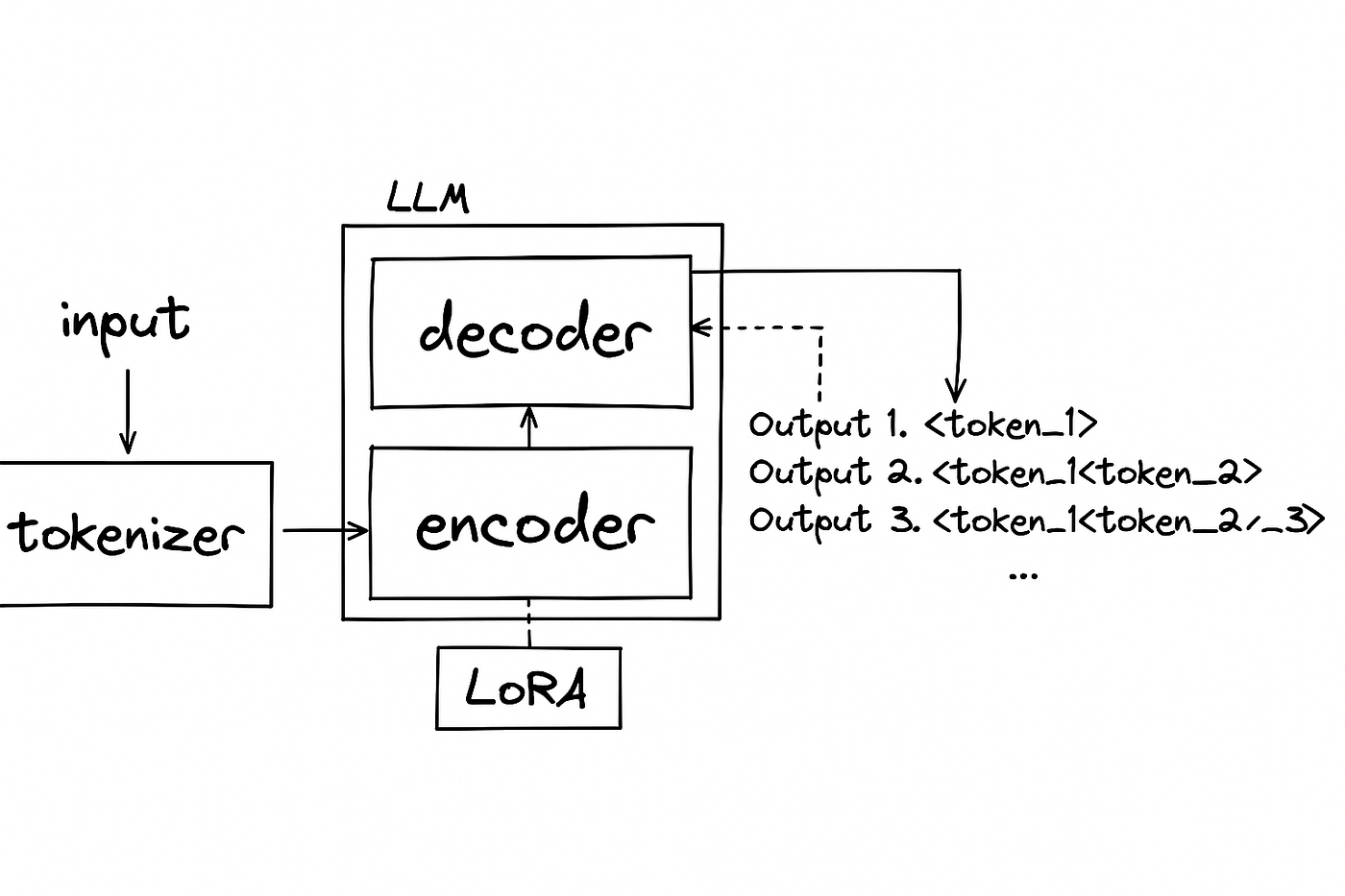
image from Mustafa Şenlik
GPT isn’t magic — it’s engineering.
In this article, we break down three essential components that power today’s large language models (LLMs): the Decoder, Tokenizer, and LoRA. Clear, simple, and technically sound.
🤖 Everyone’s Using GPT — But How Does It Actually Work?
Language models like GPT, Claude, and LLaMA are now part of daily conversations. You type a prompt, and the model responds — simple, right?
But behind that simplicity is a complex system. Few understand the architecture or the components that make this response possible. This article demystifies three foundational pillars:
- Why are modern LLMs built with only decoders?
- Can a model run without a tokenizer?
- What is LoRA, and why is it replacing traditional fine-tuning?
🔧 Transformers 101: Encoder + Decoder Architecture
When the Transformer architecture was introduced in 2017, it included two primary components:
ComponentRoleUsed InEncoderUnderstands input textBERT, search systemsDecoderGenerates output textGPT, ChatGPT, Claude
But most modern LLMs like GPT-4, Mistral, and Claude are decoder-only.
Why Only Decoder?
Because LLMs are primarily designed to generate language, not just to understand it. Encoders are great for classification and retrieval. Decoders are built for fluent, generative output.
🧩 Tokenizer: The Language LLMs Truly Understand
Humans speak in words. LLMs understand tokens — numerical sequences that represent parts of words.

image from https://www.debutinfotech.com
What Does a Tokenizer Do?
- Takes your raw input text
- Splits it into smaller sub-word units (tokens)
- Converts those tokens into numbers the model can process
Example:
"Turkey's economy"
→ ["Turkey", "'", "s", " economy"]
→ [1223, 17, 996, 4509]  (example token IDs)
Popular Tokenization Methods
MethodUsed ByBPE (Byte Pair Encoding)GPT-2, GPT-3WordPieceBERTSentencePieceLLaMA, Mistral, Gemma
Why It Matters
- Token count = cost. More tokens mean higher inference costs.
- Poor tokenization = worse performance.
- Direct impact on speed, latency, and output quality.
🔎 A high-quality model with poor tokenization will still deliver poor results.
🧠 LoRA: Lightweight Fine-Tuning for Heavy Models

image from https://blog.dailydoseofds.com
Fine-tuning a large LLM traditionally requires:
- Retraining all weights
- Huge GPU resources
- Days of processing
- High operational cost
Enter LoRA: Low-Rank Adaptation
LoRA offers an efficient alternative. Instead of updating all model parameters, it injects small trainable matrices into select layers.
Benefits of LoRA:
- Minimal hardware requirements
- Faster training
- Original model remains unchanged
Code Example (Hugging Face PEFT):
from peft import get_peft_model, LoraConfigpeft_model = get_peft_model(
base_model,
LoraConfig(task_type="CAUSAL_LM")
)LoRA works like a plugin layer — quick, cost-effective, and non-destructive.
🧬 How It All Comes Together
Let’s break down how these components operate during inference and fine-tuning:
Inference (Generating Text):
Prompt → Tokenizer → Decoder → Output Tokens → TextFine-Tuning (Training):
Data → Tokenizer → Decoder (LoRA-enabled) → Updated ModelEach step is critical:
- Bad Tokenizer? Misunderstood input.
- Weak Decoder? Inconsistent or illogical output.
- Incorrect LoRA usage? Model drift or failure.
🤔 Choosing the Right Model: Key Questions
Instead of just asking “How many parameters?”, ask:
- Is it a decoder-only model?
- Which tokenizer is used?
- Does it support LoRA-based fine-tuning?
- What’s the token pricing?
- What’s the latency per request?
Modern AI use isn’t magic — it’s informed engineering.
📝 Conclusion: Use LLMs with Clarity, Not Blind Faith
You now understand the fundamental mechanics behind decoder-only models, tokenization, and lightweight adaptation with LoRA.
With this foundation, you’re no longer just a user — you’re a conscious engineer of how and why these systems work.
A Message from AI Mind
Thanks for being a part of our community! Before you go:
- 👏 Clap for the story and follow the author 👉
- 📰 View more content in the AI Mind Publication
- 🧠 Improve your AI prompts effortlessly and FREE
- 🧰 Discover Intuitive AI Tools
메타데이터
- post_id
- d93ff2d8f609
- slug
- decoder-tokenizer-lora-the-core-mechanics-behind-large-language-models-d93ff2d8f609
- url
- https://pub.aimind.so/decoder-tokenizer-lora-the-core-mechanics-behind-large-language-models-d93ff2d8f609
- canonical_url
- https://pub.aimind.so/decoder-tokenizer-lora-the-core-mechanics-behind-large-language-models-d93ff2d8f609
- author_url
- https://medium.com/@mustafasenlik
- status
- ok
- fetched_at
- 2026-06-22 08:33:11