How decentralization is reshaping social networks
From closed spaces to open protocols, the next phase of online communication.
How decentralization is reshaping social networks
In recent years, our digital lives have been shaped by social media but they way they are organised is changing — with dramatic effects.
We spend hours every day inside these closed gardens, connecting with other people, and also consuming content that the algorithm chooses to show us. This mystical algorithm is controlled by large companies.
The centralized model of traditional platforms has given us great connectivity, but it has also given us a set of consequences that are growing, and they are difficult to ignore.
This explains why decentralized social networks, which were once seen as something experimental, are at the center of the debate. They promise something that most users no longer believe they can find on the best-known platforms: autonomy, transparency, and a digital connection that is less based on impact, virality, and engagement.
Decentralization has a simple, yet transformative logic. Instead of being within a single server controlled by a company, users have the power to choose where they register their data, their rules, and who manages the space.
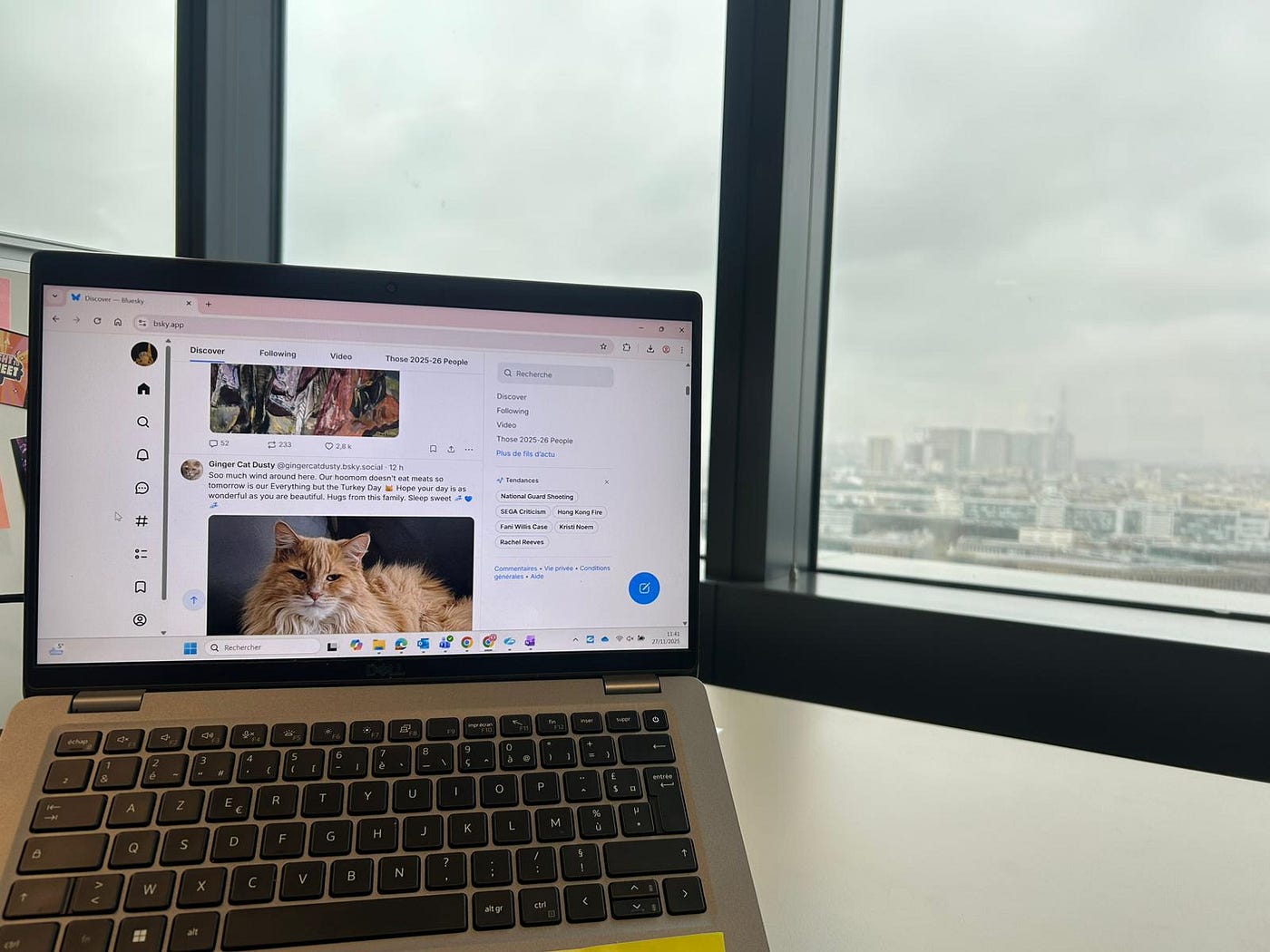
Taken by Leticia Simao Ribeiro Pinto
One of the most interesting initiatives in this area is Bluesky, which operates on the AT Protocol. Unlike traditional social networks, because it is an open and decentralized protocol, it allows users to take their account, feed, and preferences to other compatible services, and like this, it does not depend on a single operator. It breaks with the model that our digital presence is locked within a single company, and demonstrates that the discussion about decentralization is no longer just theoretical.
In addition to Bluesky, we also have Mastodon, Pixelfed, and Peertube, and they all are connected within the fediverse but using another protocol called ActivityPub. It has the same logic, each server works independently but communicates with the others. It is completely different from what we know with TikTok, Meta, or X, which are platforms that control everything: the algorithm, reach, data and even moderation.
This decentralized model has concrete social effects, in addition to the technical ones. Studies from the University of Oxford show that Mastodon server administrators are able to create safer environments, especially for groups that feel attacked in centralized networks. Because these communities don’t have the pressure to scale too quickly, they can establish their own rules, allowing them to create a less aggressive and more human and empathetic spaces.
When we think about the issue of data, it also puts the decentralized model on another level. Projects like Tim Berners-Lee’s Solid argue that the risk of concentrating personal data is a structural risk, giving too much power to a few, and users end up becoming products.
Platforms BlueSky change this logic, as they allow users to choose where their data is stored, and also offer the freedom to migrate between platforms, maintaining their digital identity across all of them.
Of course, decentralization has its flaws. It’s a little less intuitive for those who are just starting to use it and don’t have as much knowledge. Many servers rely on donations and volunteer work. Also, decentralized moderation ends up creating some not-so-simple debates, if each server defines its own rules, this leads to inconsistencies and can lead to conflicts.
Despite this, what networks like Bluesky represent is not defined by these limitations. They are a new vision of the future, a future where the internet can become more plural again, with more freedom to think and consume what we want, not what the algorithm dictates.
Even Meta recently decided to integrate a part of Threads into ActivityPub, and this shows the inevitability of this change, even the giants of the networks realized that they will not be able to escape, they will have to adapt. Fediverse and AT Protocol are developing in parallel, and this is an example that there is more than one possible path for these decentralized social networks.
Just as the era of traditional social networks was sold with the idea of ”everything in one place,” the next one will possibly be defined by the exact opposite: many different spaces, with their own rules, culture, and purpose, but connected. This decentralization doesn’t need to replace X/Twitter to change the game; it just needs to be a viable alternative, and it already is.
Online communication doesn’t need to be shaped by a single algorithm or controlled by a single company, and decentralized networks are a beautiful example of this. They show how the internet can indeed return to being a place where diversity matters as much as reach.
It may never be the dominant model of social media, it may only coexist alongside the traditional ones. But just because they exist, and platforms like Bluesky gain strength, whether because X was banned in the country or because people become curious about the proposal, the fact is, we can imagine a new digital future that has the potential to be healthier, more transparent, and offer greater freedom of consumption.
What has your experience with decentralized platforms been so far? If none, what stops you from trying a decentralized network today? Share your thoughts in the comments.
메타데이터
- post_id
- d953f560aed3
- slug
- how-decentralization-is-reshaping-social-networks-d953f560aed3
- url
- https://medium.com/digital-gems/how-decentralization-is-reshaping-social-networks-d953f560aed3
- canonical_url
- https://medium.com/digital-gems/how-decentralization-is-reshaping-social-networks-d953f560aed3
- author_url
- https://medium.com/@leticiasrp
- status
- ok
- fetched_at
- 2026-06-10 08:17:25





