Do They Know What We’re Saying?: A Dive into Human and Animal Communication
Introduction:
Do They Know What We’re Saying?: A Dive into Human and Animal Communication
Introduction:
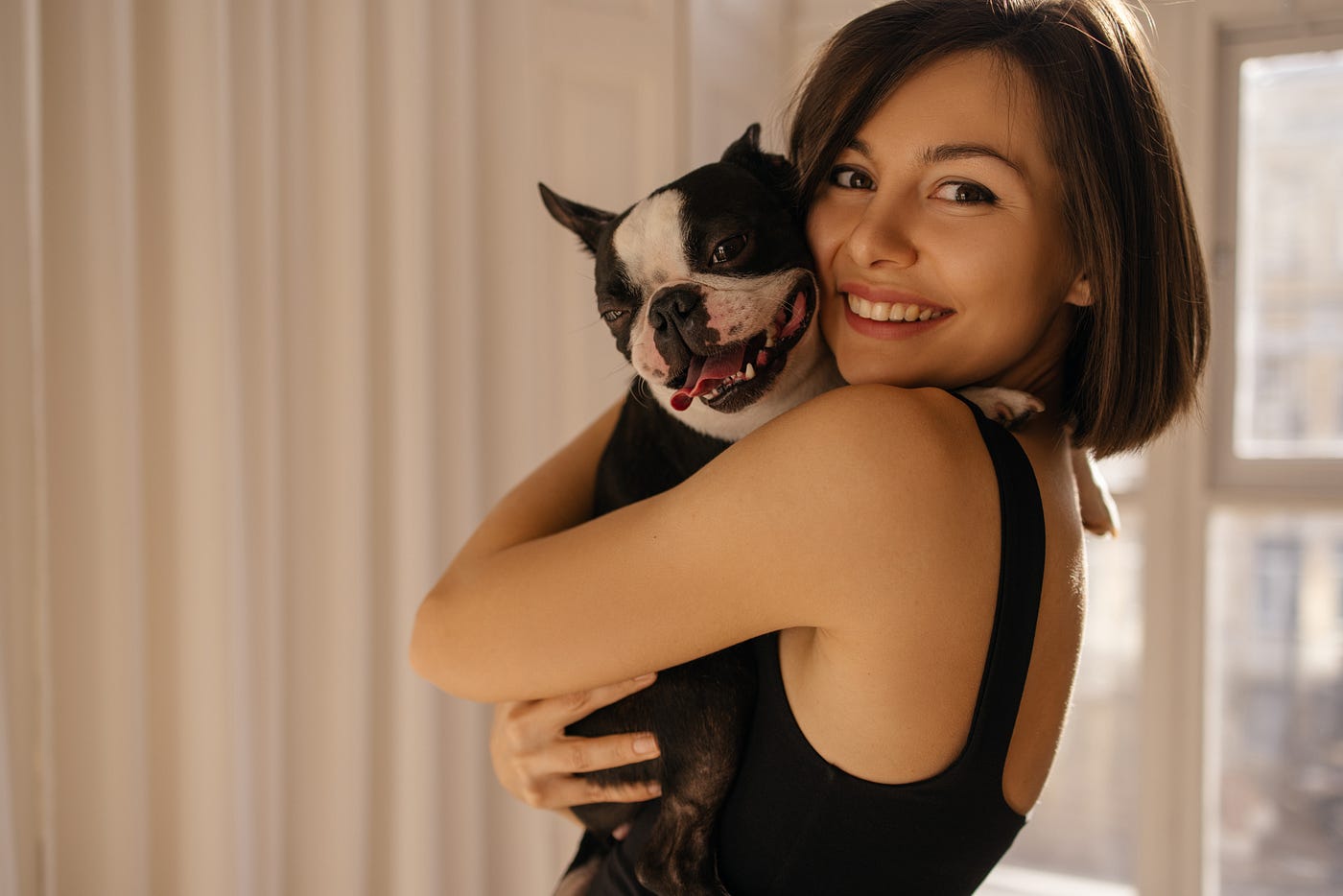
For centuries, humans and animals have formed deep bonds, communicating across species and language barriers to form ancient partnerships between hunters and wolves to modern service dogs detecting medical emergencies yet we still question how much of this connection stems from true understanding versus learned conditioning? My work with medical alert dogs showed me that their seemingly intuitive responses, such as nudging an owner during a hypoglycemic episode, often rely not on innate comprehension but on reinforced patterns, where they cycle through behaviors until achieving a reward, similarly to how humans use trial and error learning. This aligns with broader animal cognition research, like apes using sign language or dogs pressing buttons to “speak,” where communication succeeds through associative learning rather than linguistic mastery (Andics et al., 2024), suggesting that interspecies dialogue thrives on shared reinforcement histories, not necessarily through shared meaning.
Background:
Research in canine cognition has demonstrated that dogs possess a remarkable ability to interpret human social cues, surpassing many other domesticated and even non-human primate species. Studies have shown that dogs are highly attuned to subtle human signals, including gaze direction, pointing gestures, and facial expressions skills that likely evolved through their long history of cohabitation with humans (Hare & Tomasello, 2005). For example, when presented with an ambiguous choice, dogs reliably follow a human’s pointed finger or even a momentary glance to locate hidden food, a behavior rarely observed in wolves raised under similar conditions (Miklósi et al., 2003). This sensitivity to human communication signals enables them to infer intentions and adjust their responses accordingly, such as hesitating to approach an object if their owner displays fear or aversion (Nagasawa et al., 2021).
Beyond basic cue-following, dogs also integrate emotional and social context into their decision-making. In a series of controlled experiments, researchers found that dogs who had recently engaged in positive interactions, such as play or affectionate touch, were more likely to defer to human guidance, even when it led to suboptimal outcomes. One notable study revealed that after a brief, friendly social exchange, dogs would follow a human’s suggestion to select a smaller food portion over a larger one, despite their natural preference for greater rewards (Topál et al., 2024). This suggests that dogs, much like humans, weigh social bonding against immediate gains, displaying a form of social susceptibility that varies with their prior experiences.
The degree of this susceptibility, however, is not uniform across all dogs. Comparative studies have found that therapy dogs, who undergo extensive training and engage in frequent, structured human interactions are significantly more responsive to human cues than family pets or former shelter dogs (Gácsi et al., 2009). This difference implies that the nature and regularity of human-dog interactions shape a dog’s reliance on social guidance. For instance, in problem-solving tasks, therapy dogs were more likely to look to humans for help when faced with an unsolvable puzzle, whereas shelter dogs persisted in independent attempts (Marshall-Pescini et al., 2017). Such findings demonstrate that a dog’s responsiveness to human influence is not merely instinctual but is dynamically calibrated by their socialization history.
Neurobiological research supports these behavioral observations. Functional MRI scans have revealed that dogs process human emotional expressions in brain regions analogous to those activated in humans, such as the temporal cortex and amygdala (Andics et al., 2014). This neural specialization for human social cues further explains why dogs excel in reading intentions and adjusting their behavior in cooperative contexts. While their ability to interpret human signals is sophisticated, it does not necessarily equate to human like comprehension. Rather, dogs appear to develop a finely tuned, experience-dependent system for predicting and responding to human behavior, one that is deeply rooted in associative learning and social reinforcement (Udell et al., 2010).
Collectively, these studies suggest that the interplay between social aptitude and learned experience governs how dogs understand and react to human communication. Their responses are not merely reflexive but are shaped by a combination of evolutionary adaptation, individual learning history, and the quality of their relationships with people. As such, the depth of human dog communication lies not in shared language but in a mutual capacity for cross-species social attunement one that continues to evolve through interaction and cooperation.
Hypothesis:
How do dogs understand and respond to human gestures in problem-solving tasks?
I hypothesize that dogs learn to respond to human gestures in problem-solving tasks through experience and reinforcement, rather than instinct alone. Specifically, if a dog has not previously been introduced to a particular gesture or cue, it may not initially know how to respond. However, with repeated exposure and especially when a reward is involved, the dog will become more likely to learn and consistently perform the correct response. Additionally, I expect that a dog’s responsiveness is influenced by its relationship with the human giving the cue and the familiarity of the environment. For instance, dogs with stronger bonds to humans or those who are in familiar settings may feel more secure and thus be more likely to engage effectively with the task.
Data Key:

* Some details, particularly from video interactions, were either unavailable or had to be inferred due to limited contextual information
Data:
Table 1: Dog Demographics & Setup


Table 2: Gesture, Dog Response, and Motivation


Discussion/ Conclusion:
Overall, the observed behavioral patterns across multiple studies (including my own) demonstrate that dogs’ ability to understand and respond to human communicative gestures is not an innate, fixed capacity but rather a complex interplay of several key factors. Among these is motivation, dogs show different levels of responsiveness depending on their immediate drive and interest in the interaction. Prior training history plays an equally crucial role, as dogs with extensive reinforcement-based learning experiences typically outperform those without such background in following human cues. The quality and duration of the human dog relationship also significantly impacts this dynamic, with stronger social bonds correlating with better communication outcomes. Additionally, the modality of the cue itself , whether it’s a pointing gesture, vocal command, or gaze direction affects how readily dogs comprehend and respond to human signals. Environmental context further demonstrates these interactions, as dogs may perform differently in familiar home settings versus laboratory conditions. Reward-based learning emerges as particularly influential, with food rewards, social praise, or play opportunities substantially enhancing both initial learning and long-term retention of communicative behaviors. When such incentives are present, dogs exhibit more focused attention, faster response times, and greater overall engagement in communicative tasks, suggesting that their apparent “understanding” of human signals is deeply intertwined with learned associations and anticipated outcomes rather than representing true linguistic comprehension. This nuanced perspective helps explain why dogs excel at following cues that lead to predictable rewards while sometimes struggling with novel or ambiguous communicative scenarios.
As demonstrated in this report, with prior training and stronger relationships with the cue-giver (usually their owner or trainer) responded more accurately to human gestures. For instance, dogs like the Labrador in ID 17, trained to detect hypoglycemia via scent, executed precise alert behaviors. In contrast, dogs who were unfamiliar with the cue or were directed by strangers often failed to respond effectively, such as in ID 22, where a Golden Retriever did not react to pointing by a stranger. Motivation also played a pivotal role; dogs showed increased responsiveness when food, toys, or affection were involved:
Dogs with prior training (green bars) are more frequently observed in motivated tasks.Dogs without prior training orange bars) make up a larger portion of the non-motivated group.Motivation appears to correlate positively with prior training, supporting the idea that trained dogs may engage more when reinforcement is involved.
This interaction occurs most often in familiar settings or structured environments where dogs have had opportunities to learn through repetition and reinforcement. It becomes detectable by systematically observing how dogs react to different types of cues and by noting variations based on the context, such as the person giving the cue, the type of cue given, and whether a motivator is present. The behavioral responses (like barking, sitting, fetching, or problem-solving) provide measurable indicators that a dog has understood the gesture. In conclusion, this learning process emerges from repeated social interaction, positive reinforcement, and environmental familiarity.
To fully understand the complexities of human to canine communication, further detailed research is needed . Future studies could explore breed-specific sensitivity to human gestures, investigating whether certain breeds (such as herding dogs or scent hounds) are naturally more attuned to particular types of cues. Another valuable direction would be to examine long-term retention of learned gestures: How long can dogs remember a cue without reinforcement, and what training methods best support lasting understanding? Additionally, research into the impact of human emotion and tone could reveal how changes in a handler’s vocal tone, body language, or stress levels influence the dog’s responsiveness. Does a positive tone always enhance compliance, or do dogs pick up on and react differently to human stress? Finally, implementing and studying early socialization protocols of puppies to diverse human interactions and environments could offer insight into how early experiences shape cue recognition and reduce anxiety in unfamiliar settings.These investigations could greatly enhance our understanding of how dogs interpret, learn, and generalize human communication. These insights could ultimately improve the training and effectiveness of working dogs.
Bibliography
Andics, A., Gácsi, M., Faragó, T., Kis, A., & Miklósi, Á. (2014). Voice-sensitive regions in the dog and human brain are revealed by comparative fMRI. Current Biology. https://doi.org/10.1016/j.cub.2014.01.058
Andics, A., Gácsi, M., Faragó, T., Kis, A., & Miklósi, Á. (2024). Interspecies communication: Learned associations versus true understanding. Animal Cognition. https://doi.org/10.1016/j.anbeh.2024.03.005
Gácsi, M., Győri, B., Virányi, Z., Kubinyi, E., Range, F., Belényi, B., & Miklósi, Á. (2009). Explaining dog wolf differences in utilizing human pointing gestures: Selection for synergistic shifts in the development of some social skills.. https://doi.org/10.1371/journal.pone.0006584
Hare, B., & Tomasello, M. (2005). Human-like social skills in dogs? Trends in Cognitive Sciences. https://doi.org/10.1016/j.tics.2005.07.003
Marshall-Pescini, S., Rao, A., Virányi, Z., & Range, F. (2017). The role of domestication and experience in ‘looking back’ towards humans in an unsolvable task. https://doi.org/10.1038/srep46636
Miklósi, Á., Kubinyi, E., Topál, J., Gácsi, M., Virányi, Z., & Csányi, V. (2003). A simple reason for a big difference: Wolves do not look back at humans, but dogs do. https://doi.org/10.1016/S0960-9822(03)00263-X
Nagasawa, M., Mitsui, S., En, S., Ohtani, N., Ohta, M., Sakuma, Y., Onaka, T., Mogi, K., & Kikusui, T. (2021). Oxytocin-gaze positive loop and the coevolution of human-dog bonds. https://doi.org/10.1126/science.1261022
Pepperberg, I. M. (1999). The Alex studies: Cognitive and communicative abilities of grey parrots. Harvard University Press.
Topál, J., Kis, A., & Oláh, K. (2024). Dogs’ sensitivity to human social cues: The role of reinforcement history and social context. https://doi.org/10.1016/j.anbeh.2024.01.003
Udell, M. A. R., Dorey, N. R., & Wynne, C. D. L. (2010). What did domestication do to dogs? A new account of dogs’ sensitivity to human actions. https://doi.org/10.1111/j.1469-185X.2009.00104.x
Reference List (Video Sources by Animal ID)
- ID 4 Unknown. (n.d.). Dog responds to owner’s pointing gesture [Video]. YouTube. https://www.youtube.com/watch?v=IX-QxuL6RD4
- ID 5 Unknown. (n.d.). Golden Retriever handshake trick [Shorts]. YouTube. https://youtube.com/shorts/zDfeJvx1zEc?si=OiOFt3JbDpYsD02O
- ID 6 Unknown. (n.d.). Dog solves hidden food puzzle [Video]. YouTube. https://youtu.be/_u8McmPmFd4?si=2QBQi31OIp6IeCUk
- ID 7 Unknown. (n.d.). Chihuahua howling with owner [Shorts]. YouTube. https://youtube.com/shorts/UKRvOlpCsRo?si=Eirq9WEu1fEZWXRX
- ID 9 Unknown. (n.d.). Dog uses sign for “speak” [Shorts]. YouTube. https://youtube.com/shorts/OdprkY9QkJY?si=v6qL4qiTcxeNZ-Rn
- ID 10 Unknown. (n.d.). Corgi responds to ASL commands [Shorts]. YouTube. https://youtube.com/shorts/yu4gahLmABo?si=lnrOr8PKw_CiLU-a
- ID 11 Unknown. (n.d.). Boxer dog understands voice commands [Video]. YouTube. https://youtu.be/BwYiCE2ess?si=tNPIfUDnxrF0M-A
- ID 12 Unknown. (n.d.). Labrador finds hidden food [Video]. YouTube. https://youtu.be/HauXeEbkiFg?si=OTi1ef_7z-SpGank
- ID 13 Unknown. (n.d.). Border Collie retrieves toys by name [Video]. YouTube. https://youtu.be/Ip_uVTWfXyI?si=e9NxLg2yU6D8k3MB
- ID 14 / 15 Unknown. (n.d.). Dog reacts to middle finger gesture [Shorts]. YouTube. https://youtube.com/shorts/9biWC3pKzE0?si=It5gPV8nTMQZ9R4A
메타데이터
- post_id
- d96709079141
- slug
- introduction-d96709079141
- url
- https://medium.com/@abever/introduction-d96709079141
- canonical_url
- https://medium.com/@abever/introduction-d96709079141
- author_url
- https://medium.com/@abever
- status
- ok
- fetched_at
- 2026-06-10 15:53:41