Enterprise SDLC Intelligence: Connecting Code, CI/CD, Logs, and RCA
Introduction
Enterprise SDLC Intelligence: Connecting Code, CI/CD, Logs, and RCA

Introduction
Modern software development has become faster, more distributed, and increasingly complex. Enterprises are releasing software multiple times a day while managing thousands of repositories, pipelines, cloud environments, applications, and infrastructure components. Although organizations have invested heavily in DevOps, CI/CD, cloud platforms, observability tools, and collaboration systems, most engineering data still exists in isolated silos.
Developers work in Git repositories.
DevOps engineers monitor CI/CD pipelines.
Operations teams analyze logs and metrics.
Security teams scan vulnerabilities.
Support teams investigate incidents.
Engineering leaders review dashboards.
The result is fragmented visibility, delayed decision-making, longer incident resolution times, and higher operational costs.
This is where Enterprise SDLC Intelligence transforms software engineering. Instead of treating code, pipelines, deployments, infrastructure, logs, incidents, and Root Cause Analysis (RCA) as separate systems, Enterprise SDLC Intelligence connects them into a single intelligent ecosystem that continuously understands how software is built, tested, deployed, monitored, and improved.
The outcome is an AI-powered engineering platform capable of answering critical business and engineering questions instantly.
What Is Enterprise SDLC Intelligence?
Enterprise SDLC Intelligence is an AI-driven intelligence layer that continuously gathers, correlates, and analyzes engineering data across the entire Software Development Lifecycle.
Rather than simply collecting data, the platform understands relationships between engineering assets, including:
- Source code
- Pull requests
- Branches
- Commits
- Developers
- Build pipelines
- CI/CD workflows
- Test execution
- Deployment history
- Infrastructure
- Containers
- Kubernetes
- Cloud resources
- Application logs
- Metrics
- Traces
- Security findings
- Incidents
- Root Cause Analysis
- Documentation
- Knowledge bases
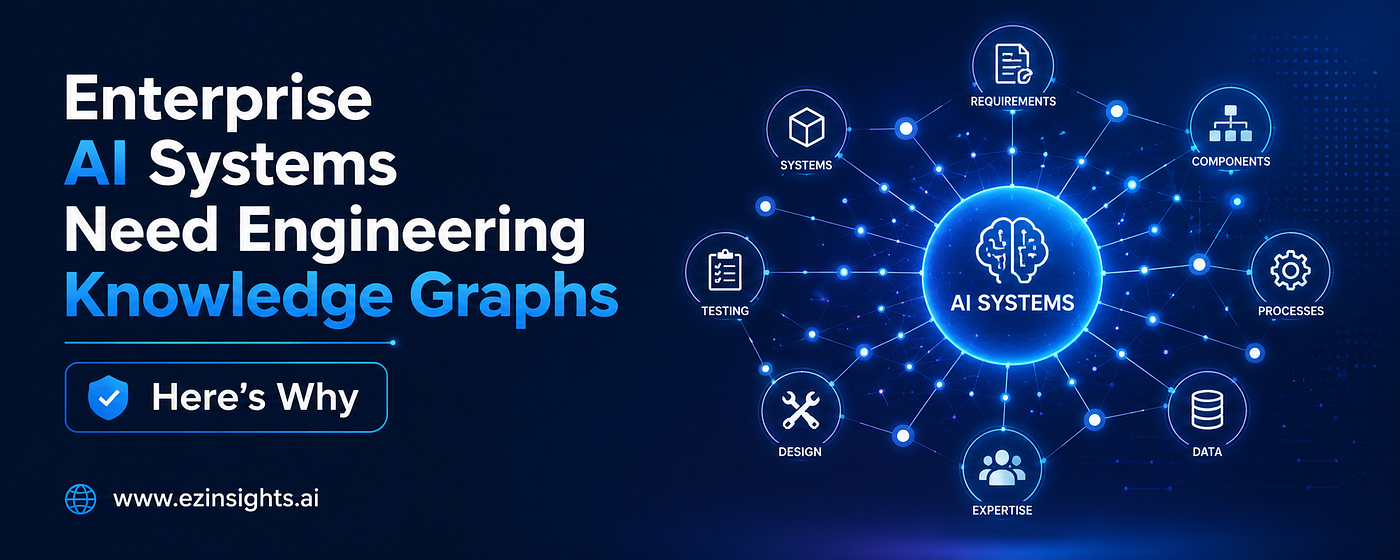
Instead of viewing each system independently, Enterprise SDLC Intelligence creates a unified engineering knowledge graph that reveals how every component affects software delivery.
Why Traditional DevOps Visibility Is No Longer Enough
Most organizations use multiple engineering tools:
Engineering Function
Common Tools
Source Control
GitHub, GitLab, Bitbucket
CI/CD
Jenkins, GitHub Actions, GitLab CI, Azure DevOps
Monitoring
Datadog, New Relic, Grafana
Logs
Splunk, ELK, Loki
Cloud
AWS, Azure, Google Cloud
Incident Management
PagerDuty, Opsgenie
Ticketing
Jira, Azure Boards
Collaboration
Slack, Microsoft Teams
Security
SonarQube, Snyk, Prisma
Each tool solves one specific problem.
However, none of them understands the entire engineering lifecycle.
For example:
A production outage may require engineers to investigate:
- Which deployment caused it?
- Which commit introduced the issue?
- Who approved the pull request?
- Which pipeline deployed it?
- Which microservice failed?
- Which infrastructure changed?
- Which Kubernetes pod restarted?
- Which logs indicate failure?
- Which users were impacted?
- Which previous incidents were similar?
Answering these questions manually often takes hours.
Enterprise SDLC Intelligence provides these answers in minutes — or even seconds.
Core Components of Enterprise SDLC Intelligence
1. Source Code Intelligence
The intelligence platform continuously analyzes:
- Git repositories
- Commit history
- Pull requests
- Branch strategies
- Code ownership
- Dependency graphs
- Technical debt
- Code quality
- Refactoring patterns
AI identifies:
- Risky code changes
- High-impact modules
- Frequently failing files
- Knowledge concentration
- Code hotspots
- Duplicate logic
Engineering managers gain a complete understanding of development activity across thousands of repositories.
2. CI/CD Pipeline Intelligence
Modern enterprises may execute:
- 50,000+ builds daily
- Thousands of deployments
- Multiple release pipelines
Enterprise SDLC Intelligence tracks:
- Build success rates
- Deployment failures
- Pipeline bottlenecks
- Test failures
- Release frequency
- Deployment duration
- Rollback history
AI detects:
- Recurring failures
- Slow pipelines
- Unstable stages
- Flaky tests
- Infrastructure issues
- Build trends
This significantly improves engineering productivity.
3. Deployment Intelligence
Deployment intelligence connects:
- Build artifacts
- Containers
- Kubernetes
- Helm charts
- Cloud infrastructure
- Release versions
Engineering teams can immediately identify:
- Which deployment introduced an incident
- Deployment impact
- Affected services
- Rollback recommendations
- Configuration differences
- Environment inconsistencies
4. Log Intelligence
Every enterprise generates terabytes of logs every day.
Traditional log management requires manual searching.
Enterprise SDLC Intelligence uses AI to:
- Correlate logs
- Detect anomalies
- Identify error patterns
- Group similar failures
- Highlight critical exceptions
- Detect regression events
Instead of searching millions of log entries, engineers receive summarized insights.
5. Observability Intelligence
Observability combines:
- Metrics
- Logs
- Traces
- Infrastructure health
- Application performance
AI continuously correlates these signals.
It automatically identifies:
- Service degradation
- Resource bottlenecks
- API latency
- Memory leaks
- Database issues
- Network problems
6. Incident Intelligence
When incidents occur, AI automatically collects:
- Deployment history
- Code changes
- Recent commits
- Infrastructure updates
- Log anomalies
- Failed pipelines
- Monitoring alerts
Instead of opening multiple dashboards, engineers receive one unified incident timeline.
7. Root Cause Analysis (RCA) Intelligence
Traditional RCA often involves:
- Multiple engineering teams
- Long investigation meetings
- Manual log reviews
- Guesswork
Enterprise SDLC Intelligence automates RCA by correlating:
- Code commits
- Build failures
- Deployment events
- Infrastructure changes
- Monitoring alerts
- User reports
- Historical incidents
AI suggests the most probable root cause with supporting evidence.
How Connected SDLC Intelligence Works
A unified workflow typically looks like this:
Step 1: Code Commit
A developer pushes new code.
↓
Step 2: Pipeline Trigger
CI/CD automatically starts.
↓
Step 3: Testing
Automated tests execute.
↓
Step 4: Deployment
Application is deployed.
↓
Step 5: Monitoring
Metrics, logs, and traces begin streaming.
↓
Step 6: Incident Detection
AI detects abnormal behavior.
↓
Step 7: Correlation
The platform links:
- Commit
- Developer
- Pipeline
- Deployment
- Infrastructure
- Logs
- Monitoring
- User impact
↓
Step 8: Automated RCA
AI identifies likely root causes and recommends remediation.
Benefits of Connecting Code, CI/CD, Logs, and RCA
Faster Incident Resolution
Engineers no longer spend hours switching between tools.
Everything is connected automatically.
Reduced Mean Time to Resolution (MTTR)
AI dramatically shortens investigation time by identifying the most likely root cause and affected systems.
Higher Deployment Confidence
Teams gain visibility into deployment risks before releasing changes.
Better Developer Productivity
Developers spend less time troubleshooting and more time building features.
Improved Release Quality
AI identifies risky deployments before they impact production.
Enterprise Knowledge Retention
The platform captures engineering knowledge from:
- Incidents
- RCAs
- Documentation
- Code history
- Previous fixes
Future incidents become easier to resolve.
AI Capabilities in Enterprise SDLC Intelligence
Modern AI platforms enable:
Intelligent Code Search
Developers ask:
- Which service owns this API?
- Where is authentication implemented?
- Which microservices use Redis?
- Which files changed before the outage?
Natural Language Engineering Queries
Examples:
Why did yesterday’s deployment fail?
Which services are causing payment latency?
Show all production incidents related to Kubernetes.
Which commits caused test failures this week?
Predictive Failure Detection
AI predicts:
- Deployment risks
- Pipeline failures
- Infrastructure issues
- Service degradation
- Capacity bottlenecks
before they occur.
Engineering Copilot
Developers receive AI-assisted recommendations for:
- Code fixes
- Rollback strategies
- RCA summaries
- Incident reports
- Deployment recommendations
- Test improvements
Real-World Enterprise Use Cases
Financial Services
Banks use SDLC Intelligence to:
- Reduce production incidents
- Improve regulatory compliance
- Accelerate software releases
- Minimize downtime
Healthcare
Healthcare organizations use AI to:
- Maintain system availability
- Protect patient applications
- Detect operational issues early
- Ensure compliance with security standards
Retail & E-commerce
Retail enterprises benefit by:
- Improving checkout reliability
- Monitoring peak traffic events
- Reducing deployment risks
- Optimizing customer experience
Telecommunications
Telecom providers use SDLC Intelligence to:
- Monitor distributed services
- Detect network application failures
- Automate incident investigations
- Improve service reliability
Best Practices for Implementing Enterprise SDLC Intelligence
- Integrate all major engineering tools into a unified platform.
- Build a centralized engineering knowledge graph.
- Standardize metadata across repositories, pipelines, and deployments.
- Automate collection of logs, metrics, traces, and deployment events.
- Implement AI-powered anomaly detection and predictive analytics.
- Capture every incident and RCA to create a reusable engineering knowledge base.
- Use conversational AI so engineers can query the SDLC using natural language.
- Continuously measure key engineering metrics such as deployment frequency, lead time, change failure rate, MTTR, and service reliability.
The Future of Enterprise SDLC Intelligence
As software ecosystems continue to expand, organizations will increasingly adopt AI-native engineering platforms that provide continuous intelligence across the entire software lifecycle. Emerging capabilities will include autonomous pipeline optimization, self-healing infrastructure, AI-generated test suites, predictive capacity planning, automated compliance checks, and engineering copilots that proactively recommend improvements before issues arise.
The next generation of engineering organizations will move beyond dashboards and static reports. Instead, they will rely on intelligent systems that understand relationships across code, deployments, infrastructure, observability, and operational knowledge to deliver faster innovation with greater confidence.
Conclusion
Enterprise SDLC Intelligence represents the next evolution of modern software engineering. By connecting source code, CI/CD pipelines, deployments, logs, observability data, incidents, and Root Cause Analysis into a unified intelligence platform, organizations eliminate data silos and gain complete visibility into the software delivery lifecycle.
With AI continuously correlating engineering events, identifying root causes, predicting failures, and surfacing actionable insights, teams can accelerate releases, reduce operational risk, improve software quality, and significantly shorten incident response times.
As enterprises embrace AI-driven software delivery, Enterprise SDLC Intelligence will become a foundational capability — enabling engineering teams to build, deploy, and operate software with unprecedented speed, reliability, and intelligence.
메타데이터
- post_id
- d9abab4b3e87
- slug
- enterprise-sdlc-intelligence-connecting-code-ci-cd-logs-and-rca-d9abab4b3e87
- url
- https://medium.com/@ezinsightsai/enterprise-sdlc-intelligence-connecting-code-ci-cd-logs-and-rca-d9abab4b3e87
- canonical_url
- https://medium.com/@ezinsightsai/enterprise-sdlc-intelligence-connecting-code-ci-cd-logs-and-rca-d9abab4b3e87
- author_url
- https://medium.com/@ezinsightsai
- status
- ok
- fetched_at
- 2026-08-05 00:36:06