Crossing Cultures
Afrika Yetu shares the music, dance of the continent — and gets immigrants settled.
Crossing Cultures
Afrika Yetu shares the music, dance of the continent — and gets immigrants settled.
By Jordan Snowden

A community performance by Afrika Yetu | Image by Brian Cook/Golden Sky Media
“Hello, Pittsburgh! Hello, the world! Hello, United States! Hello, everybody!” says the African musician, in February 2021, smiling and gesturing from the stage in Kinshasa, capital of the Democratic Republic of the Congo.
Elie Kihonia has a scarf, made to look like the flag of the Congo, draped over his shoulders, and he’s about to introduce one of his favorite Congolese drum groups as it prepares to livestream a performance in honor of Black History Month.
Being on the Kinshasa stage highlights Mr. Kihonia’s passion: bringing the joy and knowledge of African music, dance and culture to Pittsburgh and to places around the world. The musician and teacher is founder, president, and CEO of Afrika Yetu, a Pittsburgh-based nonprofit that aims to build bridges between the African Diaspora and communities wide and far.
The work fulfills a dream for Mr. Kihonia. He left his Kinshasa home more than 30 years ago and joined the Gevakin Choir on a mission to spread Africa’s music across the globe. When the Gevakin Choir, whose name translates to musical bridge, traveled to America, Mr. Kihonia was with them. On a visit to Pittsburgh, he connected with several music scholars in the Steel City and decided to stay.
A Musical Start
Pittsburgh is a long way from the Democratic Republic of Congo (formerly Zaire), where Mr. Kihonia was born in 1966. As a child living in a military camp, he was exposed to many different music groups that would perform for the country’s president. During the 1960s, and under an authoritarian political regime, it was customary for the nation’s music groups to sing éloges (praises) to the president during marches and during his travels.
The musicians would also come to the camp and rehearse their music at night. As a result, Mr. Kihonia would listen to different genres of music, from traditional to the national ballads of Congo as well as jazz and sometimes mourners’ chants. The richness and the love of this music were instrumental in Mr. Kihonia’s beginning to play drums and being heavily engaged in African dance and music performances at age 9.
During the same time, Mr. Kihonia, still a student, became the leader of the choir at the Catholic boarding school he was attending. At that boarding school, he learned how to read music while listening to popular church hymns from Europe and the United States as well as different styles of international music.
At age 14, as a member of the school’s Gevakin Choir and with his own band, les Cinques Combattants, the first religious band of the Democratic Republic of Congo (Zaire), Mr. Kihonia expanded his repertoire. He sang everything: classical music, gospel, Negro spirituals, jazz, and folk songs from all over Africa.
He also learned various instruments, including accordion, keyboard, piano, drums, xylophone, lead guitar and bass.
“Multiple instruments were just a gift from God,” he says. “I will touch on an instrument, and with no time, I will start playing it by ear — then mastering it later through study.”
A nearby Baptist missionary society, led by the Rev. Ivan E. George, called for a choir competition in the Democratic Republic of Congo. The winner would be part of a traveling musical program. The Gevakin Choir (Groupe Evangelique de Kinshasa), then led by Mr. Kihonia as its artistic director, won and toured the United States in 1989.
Outside of Kinshasa, traveling across America with the ensemble, Mr. Kihonia noticed something bothersome: African culture and people were generally looked down upon.
“Everything we did was not really accepted, including by African American people,” he says. “They looked at [Africa] like ‘monkey this’ or ‘Tarzan that’; it looked dirty in their eyes.”
He felt that the people introducing their performances were not sending the right information about Africa and its culture.
“We felt we were being [exploited],” says Mr. Kihonia about the so-called experts who were attempting to explain the dance and the music.
“The message they were sending was not correct,” he says. “It made us realize that we can let no other people speak about Africa but ourselves. We know who we are; we know what our culture is about. We grew up there. We understand it. Who can speak about it better than us? So, we took matters into our own hands.”

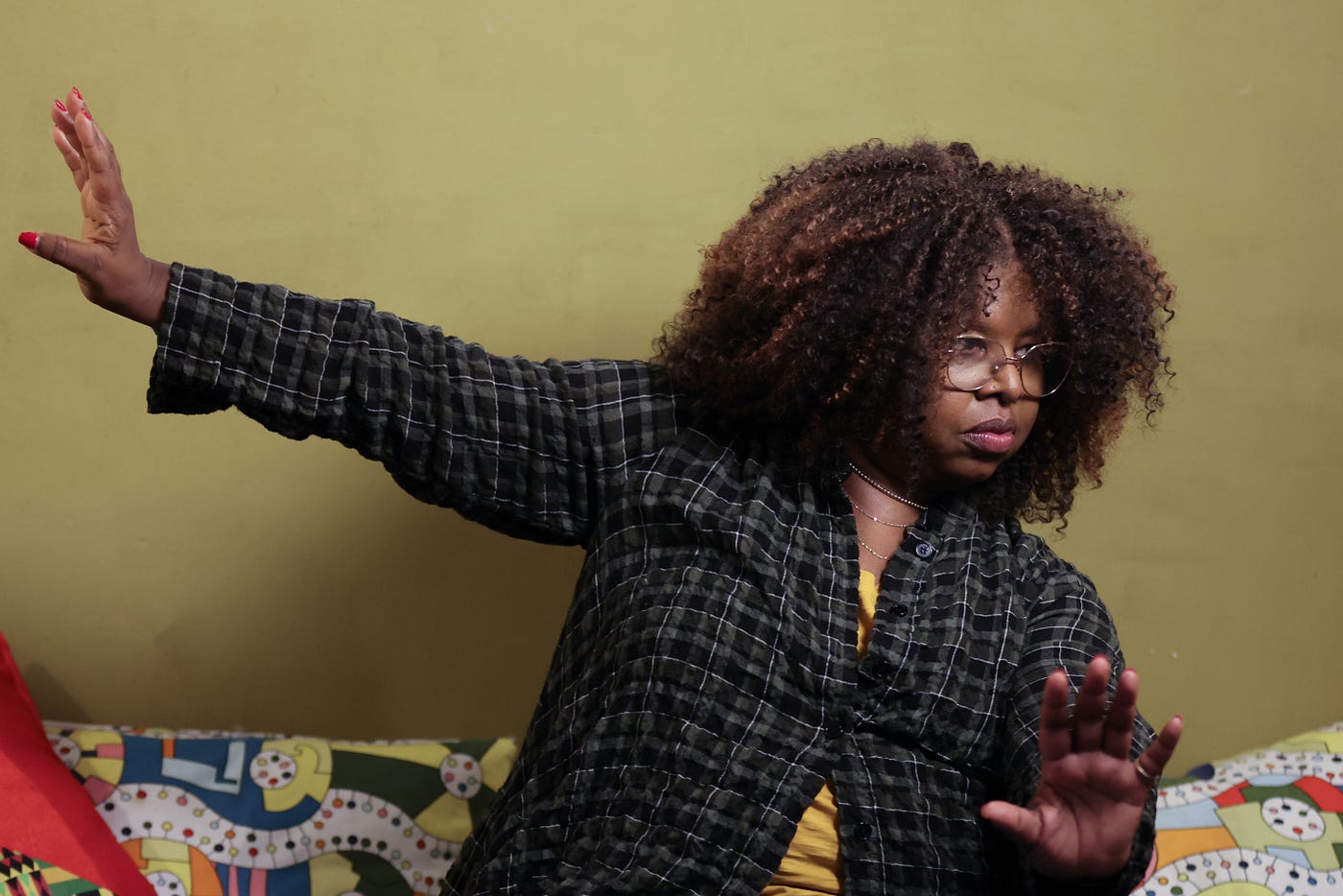
Elie Kihonia, founder of Afrika Yetu | Image by Brian Cook/Golden Sky Media
In Their Own Hands
By this time, Mr. Kihonia had been in America for three months and had toured 150 cities. In 1989, when his group made a stop in Pittsburgh, he connected with a University of Pittsburgh professor, Joseph Hanson Kwabena N’ketia — a Ghanaian who was considered Africa’s premier musicologist — and graduate students Damien M. Pwono, and Patricia Opondo, both of whom would go on become notable music scholars. With them and another Gevakin member, Gaby Muzela, Mr. Kihonia co-founded Umoja African Drum and Dance Ensemble, which later became Umoja African Arts Company. The group was one of the first African dance companies in Pittsburgh, and it aimed to “raise awareness and increase the appreciation of the rich cultures of Africa.”
“The professors here were teaching African culture at the university, but most of them didn’t really play; they were scholars,” says Mr. Kihonia. “They saw my talent and wanted to keep me to push forward African programming as far as music goes. I play guitar, accordion, keyboard, piano, drums, xylophone, bass, and have a lot of knowledge on the African way of playing. I was then able to teach multiple students different instruments; like if they wanted to learn piano, I could teach the African way.”
In the mid-1990s Mr. N’ketia, Ms. Opondo and Mr. Pwono all moved away from Pittsburgh. This left Mr. Kihonia as the principal with the Umoja African Arts Company, which he evolved into a much-respected organization that attracted new artists such as Kasa Panzu, Youssou Lo, Anicet Mundundu, Bofenda Ilunga, “Mama” Kadiatou Conte Forte and more, making Pittsburgh one of the leading cities with African and Afro-centric arts and communities.
In 2000, Mr.Kihonia saw that it was time to move on from Umoja African Arts Company, and created Afrika Yetu Inc., an institution whose work goes beyond performance to include production and cultural education.
Mr. Kihonia saw his chance to be more than a dancer or drummer or singer; he wanted to pursue something bigger. He could become more of an educator and leader in the community. But most of all, he wanted to create an organization, a cultural hub, that not only shared Africa’s rich and various cultures but also provided assistance to people of African heritage who were living in the United States.
Snow Day
One day in 1989, Pittsburgh did what it does best: allow for an extreme weather change at the drop of a hat. Mr. Kihonia, then in town for only a month, and Mr. Muzela, were downtown getting ready to attend their English class when a severe winter storm appeared.
“We didn’t know that a storm was coming,” says Mr. Kihonia, who was settling into life and worship in Pittsburgh thanks to the generosity of a host family. “We were dressed in our summer clothes, and then the storm came and they kicked us out of school. It was the first time that we saw snow. We threw away our school books because we could not carry them anymore. We didn’t speak English, and the buses were not running.”
The two young men took shelter in Kaufmann’s Department Store and called their host family, who lived in East Liberty. Unfortunately, the family didn’t have access to a car, and taxis had stopped running. Then Kaufmann’s announced it was closing and asked Mr. Kihonia and Mr. Muzela, who passed away in 1994, to leave. With no other options, they walked the six miles from downtown to 615 Mellon Street, in the East End of the city.
“We almost died,” says Mr. Kihonia. That Sunday, a church, after hearing their story, gave them coats and winter gear.
“That experience told me that never again would anyone that I know coming to the United States not be given a full lecture of understanding of how this country works,” says Mr. Kihonia. “I want to make sure that doesn’t happen to anybody. That’s the mission of Afrika Yetu. To make sure a thing like what we went through doesn’t happen.”
Mr. Kihonia ended up buying that house on Mellon Street and, according to him, it became the “African house,” providing African services like hair braiding (in 2001, Afrika Yetu was instrumental in the creation of Okapi, the first African-owned hair braiding salon in Pittsburgh) and a place to worship (which led to the opening of many African churches in the city today), as there were no African churches at the time.
Mr. Kihonia’s work in Pittsburgh slowly became more personal and community-oriented. As he gained business and financial knowledge and learned to be more independent, he taught others to be more independent and knowledgeable. Afrika Yetu expanded from the Mellon Street house to the multi-country organization it is today.
“Everybody came through that house,” he says. “The place was like a residence for any African people who came to Pittsburgh and didn’t have a place. It was a place where you could find African food because there were not African restaurants at the time.”

Afrika Yetu founder, Elie Kihonia performing | Image by Brian Cook/Golden Sky Media
Afrika Yetu Now
Yetu is a Swahili word for “ours.” It references Afrika Yetu’s mission of being a collective, of serving the community, and of connecting African immigrants and the American community.
Two decades ago, the organization was music-centric. Today, from art programs to food drives and immigration assistance, Mr. Kihonia has created an institution that looks much different. It provides a variety of Afro-centric cultural and educational programming and services for people of all ages and races, serving communities locally, nationally, and internationally.
For example, Yetu Academy, Afrika Yetu’s educational branch, “is designed to provide extra support to African Americans and other students through after-school learning with mentoring and tutoring, as well as a summer enrichment program that engages Pittsburgh-area students with art, dance, drumming, and field trips.
For adult African immigrants, Yetu Academy helps them adjust to American culture and thrive through providing English-learning support, supplying job assistance, and teaching financial literacy. Beyond Yetu Academy, Afrika Yetu assists with immigration services, housing aid, and citizenship or green card applications.
During the beginning of the COVID-19 pandemic, the organization furnished interpreters for those in the Pittsburgh area who didn’t speak English, and it ran a food bank that provided traditional African fare — rice, beans, meat, and vegetables — not available elsewhere.
The people always come first at Afrika Yetu, a philosophy of life that is rooted in a worldview of caring for communities. And for Mr. Kihonia and his team, it doesn’t matter whether that group is near or far, as long as the organization is promoting cross-cultural understanding. With a home base in Pittsburgh, Afrika Yetu has representation in countries such as Brazil, Canada, and South Africa, and has worked internationally in places that include Germany, Italy, and China, bringing African dance, music, and educational opportunities across the globe.
Whenever Afrika Yetu goes, says Mr. Kihonia, it has two clients.
First, there are the African descendants. “The messages to Africana people are always that they come from a culture that is rich, a land that is beautiful, and that Black is spectacular, and they have a history and culture that is beyond slavery.”
Second, the other clients include those who don’t know or understand African culture, regardless of ethnicity. Afrika Yetu aims to teach them about African food, African dance, and African mentality, to remove the negative stigma many associate with African ethnology.
“Our white friends learn the drums, we teach them our dance, we give them our food, not to come from a mentality of slave or master, but a mentality of equality,” says Mr. Kihonia. “We see ourselves as a voice for Africa, a voice of empowerment for Africans.”
Underneath the educational initiatives, Afrika Yetu stays true to its dance ensemble roots. In addition to having its own band and dance company that tours and performs at festivals, schools, and theaters around the United States, Afrika Yetu has a roster of international performers whom it helps to travel the world to share traditional African folk dance, songs, and storytelling.
The organization was recently on tour with the Soukous All Stars, Congolese legends who specialize in rumba-inspired dance music. The group included Nyboma Mwan Dido, a popular Congolese soukous tenor vocalist; Zaiko Langa-Langa, a Congolese soukous band that got its start in the 1960s; soukous musician Kanda Bongo; the soulful and folksy singer-songwriter Lokua Kanza; and Jemiriye Adeniji, a U.S.-based Nigerian musician dubbed the Afro-pop queen.
And Afrika Yetu plans to continue to grow, using its voice and platform to share African music and dance with anyone open to learning something new. That effort has been strengthened by Afrika Yetu’s designation as one of 16 Pittsburgh’s Cultural Treasures, which came with a $150,000 grant from The Heinz Endowments and the Ford Foundation — and the opportunity to push its performances to next-level heights.
After the COVID-19 pandemic put a freeze on live performances, Mr. Kihonia and his team started looking at other ways to keep spreading and celebrating African culture. They’ve recently begun posting to their YouTube channel again and plan on using social media to reach more people and communities.
“We’ve been a hub for people coming to Pittsburgh, but with technology, we can become a hub that anyone can go to,” says Mr. Kihonia. “We want to write books, put more videos out, have a TV channel, and create a school where every student has access to the truth about Africa.”
Jordan Snowden is a writer living in Pittsburgh. Twitter: @snowden_jordan
Afrika Yetu: www.afrikayetu.org; https://www.facebook.com/AfrikaYetuInc/; www.instagram.com/afrikayetuinc; www.twitter.com/afrikayetu
메타데이터
- post_id
- d9ae9214c01d
- slug
- crossing-cultures-d9ae9214c01d
- url
- https://medium.com/@pcti/crossing-cultures-d9ae9214c01d
- canonical_url
- https://medium.com/@pcti/crossing-cultures-d9ae9214c01d
- author_url
- https://medium.com/@pcti
- status
- ok
- fetched_at
- 2026-07-26 10:31:45