Melanin & Majesty Fighting Colour Bias Beauty’s Two-Edge Sharp Sword
We live in 21st century even after so much evolution we have to march for “Black life matters”. Brown skin, so often romanticized in…
**Melanin & Majesty
Fighting Colour Bias Beauty’s Two-Edge Sharp Sword**
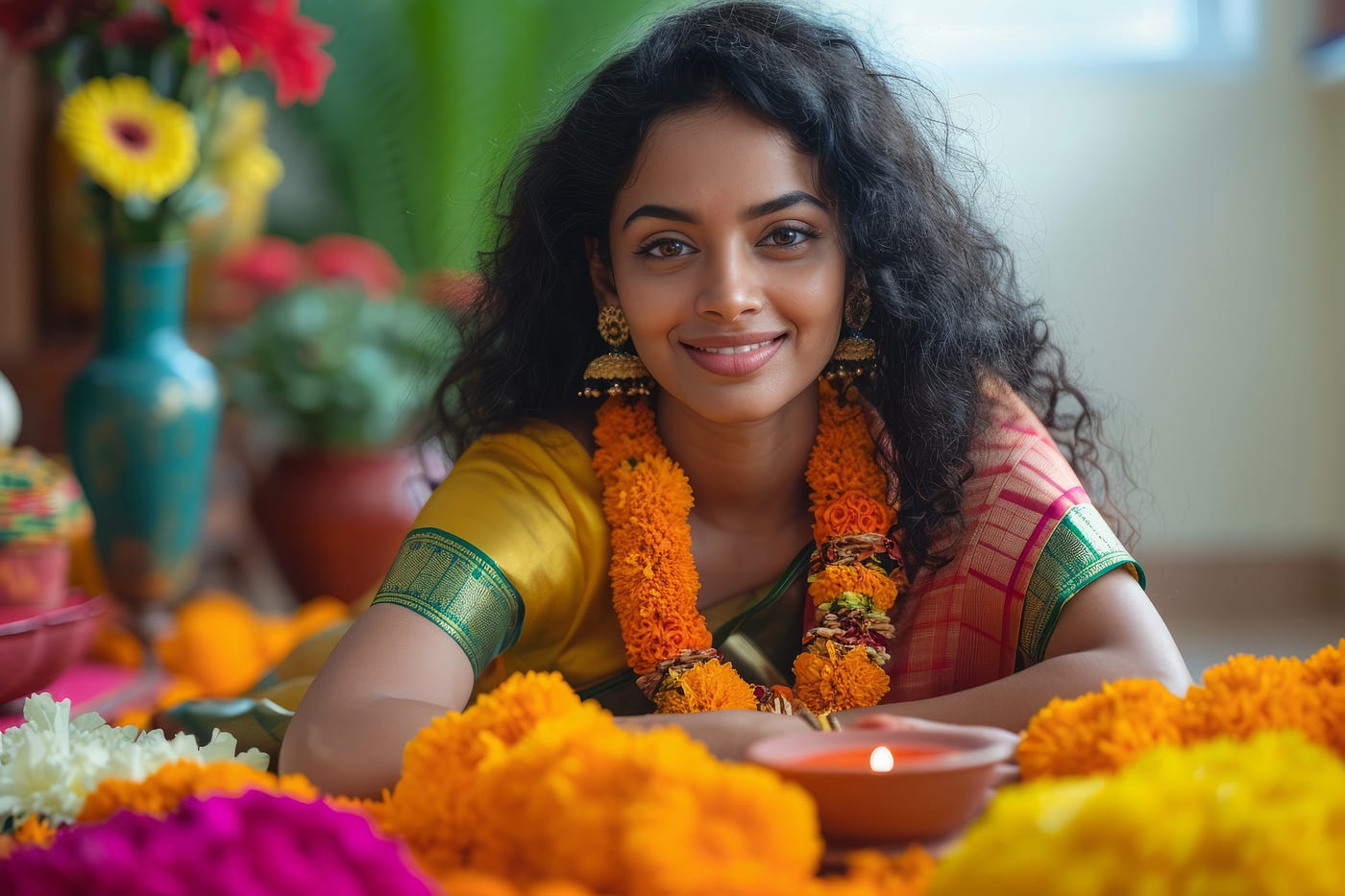
Photo by engin akyurt on Unsplash
We live in 21st century even after so much evolution we have to march for “Black life matters”. Brown skin, so often romanticized in poetry and celebrated in songs, remains, a heavy burden to bear. Fair often gives a subtle sarcasm of superiority. “Fair is Beautiful”, we are still learning to unlearn this. Somewhere a brown girl is often told her dowry will be more due to her complexion colour. As a teen with brown skin, I, like others, grew to love fair skin. I always felt not good enough in this, mostly when put next to my lighter-skin cousins or friends. This non-stop match-up did not just knock my hope down; it set a big feel of shame and being less in me, making self-acceptance an uphill battle. When I was 11, an aunt told me a little “Ubtan” would make me “Shine.” At 15, “shine” equalled fair on a drop-down menu. A form belonged to a matrimonial website my father was completing; wheatish and dark were there as well, like traffic lights for desirability. I recall thinking how burdensome that crown of expectations was, how it weighed on the heads of girls who had done nothing but present in their own bodies.
That crown is not only cultural, but it’s also commercial, medical, and quantifiable. It’s valued at roughly $10 to $11 billion in 2023 by Grand View Research and Fortune Business Insight, and it’s expected to continue growing up to 2030.
India is a key part of that demand, and it shows that colourism is not a thing of the past; it’s a money-maker. The market succeeds because discrimination endures. A big field experiment by National Library of Medicine on workplace bias in India demonstrates what many of us have only intuited, darker-skinned job applicants experience measurable discrimination in hiring even when qualifications are equal. The authors attribute this to a long history of colourism in South Asia, now amplified by beauty marketing. If work demands favour leaner profiles, my 11-year-old self would have known at a young age what the world values.
Marriage markets mimic the workplace. Research on matrimonial ads and sites indicates strong preference for “fair/very fair” brides; in some analyses, even the virtual invisibility of dark-skinned brides is noted in success stories on platforms. That is, complexion turns into social capital; one that purchases notice, proposals, and even a discount on dowry.
The demand also generates hazardous supply. World Health Organization (WHO) and United Nations Environment Programme (UNEP) advise that numerous skin-lightening preparations, notably uncontrolled creams, have mercury in them, which is toxic to the nervous system as well as kidneys. According to the Minamata Convention, nations ought to prohibit cosmetics containing over 1 ppm of mercury, but illicit and internet sales are still booming. Public health reports identify mercury in products throughout Africa and Asia, with case reports attributing use to kidney damage and even loss of vision. Beauty shouldn’t involve a toxicology lesson, but here we are.
Closer to home, we have begun to recognize the damage. In 2020, following years of backlash, Hindustan Unilever renamed Fair & Lovely to Glow & Lovely and vowed to discontinue the use of terms like fair or whitening in advertisements, committing to more representative images. India’s advertisement regulator, Advertising Standards Council of India (ASCI), also issued a clarification that ads should not encourage discrimination on the basis of colour or perpetuate harmful stereotypes. Is it symbolic? Yes. Is it sufficient? Not yet but it tells us that change is within reach.
Statistics mirror real life in day-to-day situations:
In a Mumbai sample of 1,992 men and women aged between 16 and 60, 37.6% said they were using fairness products at present; twice as likely as men to do so were women. That’s not vanity; it’s social survival under colourist pressure.
Colourism didn’t start with Instagram filters. Experts trace it back to old colonial ranks and caste systems, where light skin meant more power and perks. Today’s ads just put a slick, quick shine on those old ranks.
So how do we take the crown without lowering our heads?
· Reframe the mirror Self-care is resistance when it refuses harm. Dermatology teaches that hydroquinone and retinoids can work with some supervision but daily use of cream with mercury is risky. Opt for evidence-based care, not fairness products. If the ingredients are not listed, that is a red flag.
· Pressure the pipeline Support brands that reflect shade diversity and steer clear of coded messages. When a movie or commercial implies that “glow = pale,” let them know. The backlash that compelled a giant brand to rebrand a best-seller illustrates that culture is not static; it shifts with consumer voices.
· De-bias the gatekeepers Audits are required for HR teams, casting directors, and platform moderators. Are callbacks based on skin colour? Are success stories pictorially narrow? If yes, change the process and representation. Facts reveal biases are not individual tastes; they are structural filters blocking talent and respect.
· Use a different vocabulary at home Eliminate gori, saaf rang, nazar ka tika from family conversations. Praise skill, effort, sense of humour, and kindness these provide more durable sense of self-worth.
In each community, there’s always a woman who ceases to smile for pictures after someone has joked about her complexion. There’s always a lady who, after years, forgets that shame and takes the first no-filter selfie, chin high, melanin loud. She is both the burden and strength of this tale, bearing stereotypes she never requested, shattering them with a life lived in its full colour. Our skin colour is not a sorry note; it’s a book of sun, roots, and place. Our aim is not to wash out the book but to make the load it carries lighter. As I got older, after many tries, I won my fight in what I used to see as a loss because my skin was not light. I took in the fact, my skin colour is not up to me, and I can’t change it, as I am not like a chameleon. So, I chose to be okay with who I am. I started to like myself more every day and made my own idea of what is beautiful. I forgot all that the world, family friends, and unknown people had said about my value. The crown may be hard to wear, but when you fix it with sure feels, it does not just make you look good, it makes you strong. Stop following one account that likes fair skin, start following three that love all skin colours, and when someone says you’d look better with lighter skin, graciously say, “I look like me, that’s the goal I’m sticking to.”
메타데이터
- post_id
- d9cefea56bb3
- slug
- melanin-majesty-fighting-colour-bias-beautys-two-edge-sharp-sword-d9cefea56bb3
- url
- https://medium.com/@namitasingh406/melanin-majesty-fighting-colour-bias-beautys-two-edge-sharp-sword-d9cefea56bb3
- canonical_url
- https://medium.com/@namitasingh406/melanin-majesty-fighting-colour-bias-beautys-two-edge-sharp-sword-d9cefea56bb3
- author_url
- https://medium.com/@namitasingh406
- status
- ok
- fetched_at
- 2026-08-30 15:54:53