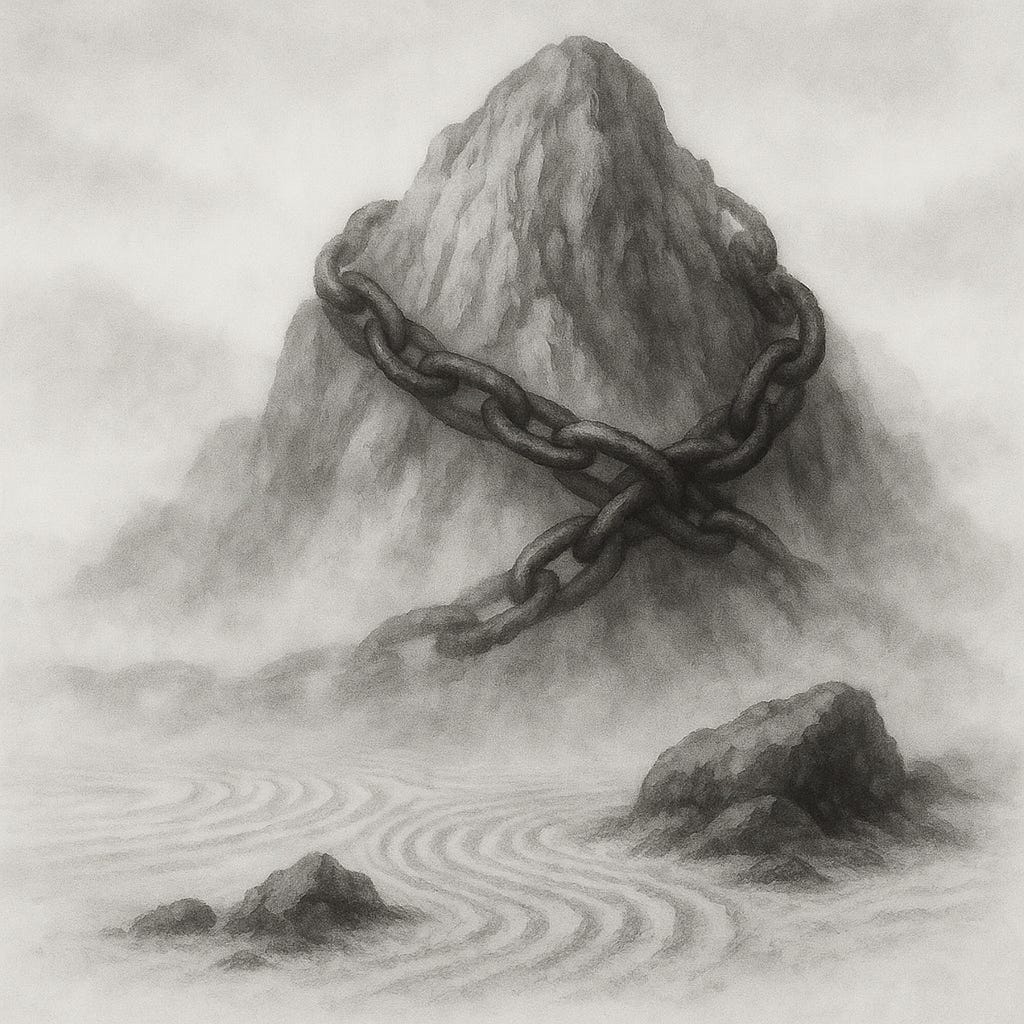
I Don’t Need Your Silly Hundred Empowerments! Vajrayana is not Pokemon.
There is a strange phenomenon in modern Vajrayana Buddhism that nobody seems willing to openly discuss.
I Don’t Need Your Silly Hundred Empowerments! Vajrayana is not Pokemon.
Photo by Raimond Klavins on Unsplash
There is a strange phenomenon in modern Vajrayana Buddhism that nobody seems willing to openly discuss.
Some practitioners collect empowerments like trading cards.
One empowerment. Ten empowerments. Fifty empowerments. A hundred empowerments.
Every weekend becomes another “wang hunt,” another spiritual event badge to add to the collection.
And somewhere along the way, the original purpose of empowerment seems to get buried beneath spiritual credentialism.
Let me be blunt:
Not every tantra practitioner without wang, lung, or tri instantly explodes into karmic catastrophe.
And many people quietly know this from direct experience.
Within parts of modern Vajrayāna Buddhism culture, empowerments are sometimes spoken about in an almost mechanical way:
“You cannot do this.” “You cannot recite that.” “You need three lungs, four wangs, seven tris, and approval from seventeen lamas before even visualizing a syllable.”
At times, the discourse becomes less about wisdom and more about hierarchy signaling.
The irony is that many people loudly lecturing others about empowerments are not necessarily deeply realized practitioners themselves. Some are simply well-certified collectors of religious events.
Empowerments can become spiritual status markers.
And that is precisely where the problem begins.
Empowerments were never originally meant to become collectibles.
A wang is not a gym membership badge. A lung is not downloadable DLC. A tri is not a premium subscription upgrade.
Traditionally, empowerment exists within a living teacher-student relationship.
You take refuge. You practice. Your lama observes your temperament, discipline, and capacity. Then, when appropriate, certain instructions or empowerments are given.
Not because you “caught them all.”
But because they are relevant to your actual path.
A practitioner does not necessarily need one hundred empowerments any more than a medical student needs to specialize in every branch of medicine simultaneously.
The uncomfortable reality is, some tantra practices still work without formal empowerment!
This is the part many people avoid saying publicly.
Some practitioners engage in lower tantra or Charya Tantra practices without formal wang or lung and… nothing disastrous happens.
In fact, some improve considerably.
Why?
Because many tantric methods contain contemplative technologies that function on perfectly understandable psychological and meditative levels:
- concentration,
- visualization,
- breath regulation,
- mantra repetition,
- symbolic embodiment,
- compassion cultivation,
- ritual structure.
These methods can affect the nervous system, attention, emotional regulation, and meditative absorption whether or not someone possesses institutional authorization.
This should not be controversial.
A mantra still focuses the mind. Visualization still trains attention. Compassion practices still influence emotional states.
Human cognition does not suddenly refuse to function because paperwork was incomplete.
There is also a tendency to flatten all tantra into one giant category of danger.
But historically, tantric systems themselves distinguish levels of practice.
Charya Tantra is not the same thing as advanced Highest Yoga Tantra completion-stage practices involving:
- subtle-body manipulation,
- channels and winds,
- intense identity dissolution,
- sexual yogas,
- wrathful deity integration.
That distinction matters enormously.
A person casually reciting a Tara mantra or practicing a devotional visualization is not necessarily entering the same psychological territory as someone attempting advanced tummo retreats in total isolation.
Conflating these categories creates unnecessary fear and exaggeration.
This does not mean empowerments are useless.
Far from it.
Traditional empowerments serve several important functions:
- preserving lineage continuity,
- transmitting interpretation,
- providing ethical safeguards,
- preventing misunderstanding,
- establishing teacher accountability,
- contextualizing advanced practices,
- preventing ego inflation.
These are legitimate purposes.
But that is different from claiming:
“Without formal empowerment, absolutely nothing beneficial can occur.”
Reality appears far more nuanced than that.
Online Buddhist culture has amplified the issue dramatically.
People now encounter fragments of tantra through:
- PDFs,
- YouTube,
- Discord servers,
- Reddit arguments,
- scanned sadhanas,
- social media clips.
Suddenly, everybody becomes a gatekeeper.
Ironically, some of the loudest voices warning others about unauthorized practice are themselves self-taught internet practitioners with no deep retreat experience.
The obsession with policing others often becomes its own ego performance.
A healthier approach may be something closer to this:
- Respect empowerments.
- Respect qualified teachers.
- Respect lineage traditions.
- Do not recklessly experiment with advanced practices.
- But also avoid turning Vajrayana into bureaucratic spiritual elitism.
If a practitioner sincerely engages a mild tantra practice with:
- humility,
- ethical discipline,
- emotional stability,
- grounded meditation experience,
it is neither logically nor empirically obvious that disaster must automatically follow.
And if someone’s own lama or refuge teacher eventually determines empowerment is necessary, then that empowerment can be given naturally within the relationship.
That is far more coherent than frantically collecting empowerments like spiritual achievements in a video game.
A person can respect Vajrayana tradition without becoming superstitious about religious administration.
The purpose of Buddhism is liberation from suffering — not building an inventory screen full of empowerments to display online.
At some point, practitioners should ask themselves a difficult question:
Am I actually transforming my mind…
or merely accumulating esoteric certificates?
메타데이터
- post_id
- d9e29379ebeb
- slug
- i-dont-need-your-silly-hundred-empowerments-vajrayana-is-not-pokemon-d9e29379ebeb
- url
- https://medium.com/@janraemendoza/i-dont-need-your-silly-hundred-empowerments-vajrayana-is-not-pokemon-d9e29379ebeb
- canonical_url
- https://medium.com/@janraemendoza/i-dont-need-your-silly-hundred-empowerments-vajrayana-is-not-pokemon-d9e29379ebeb
- author_url
- https://medium.com/@janraemendoza
- status
- ok
- fetched_at
- 2026-07-11 07:07:53