Want to Get in Deep About Deep Learning Without Tingling Your Head?
Do you ever wonder how Google translates an entire web page into multiple languages within seconds?
Want to Get Deep in Deep Learning Without Tingling Your Head? Here’s How...
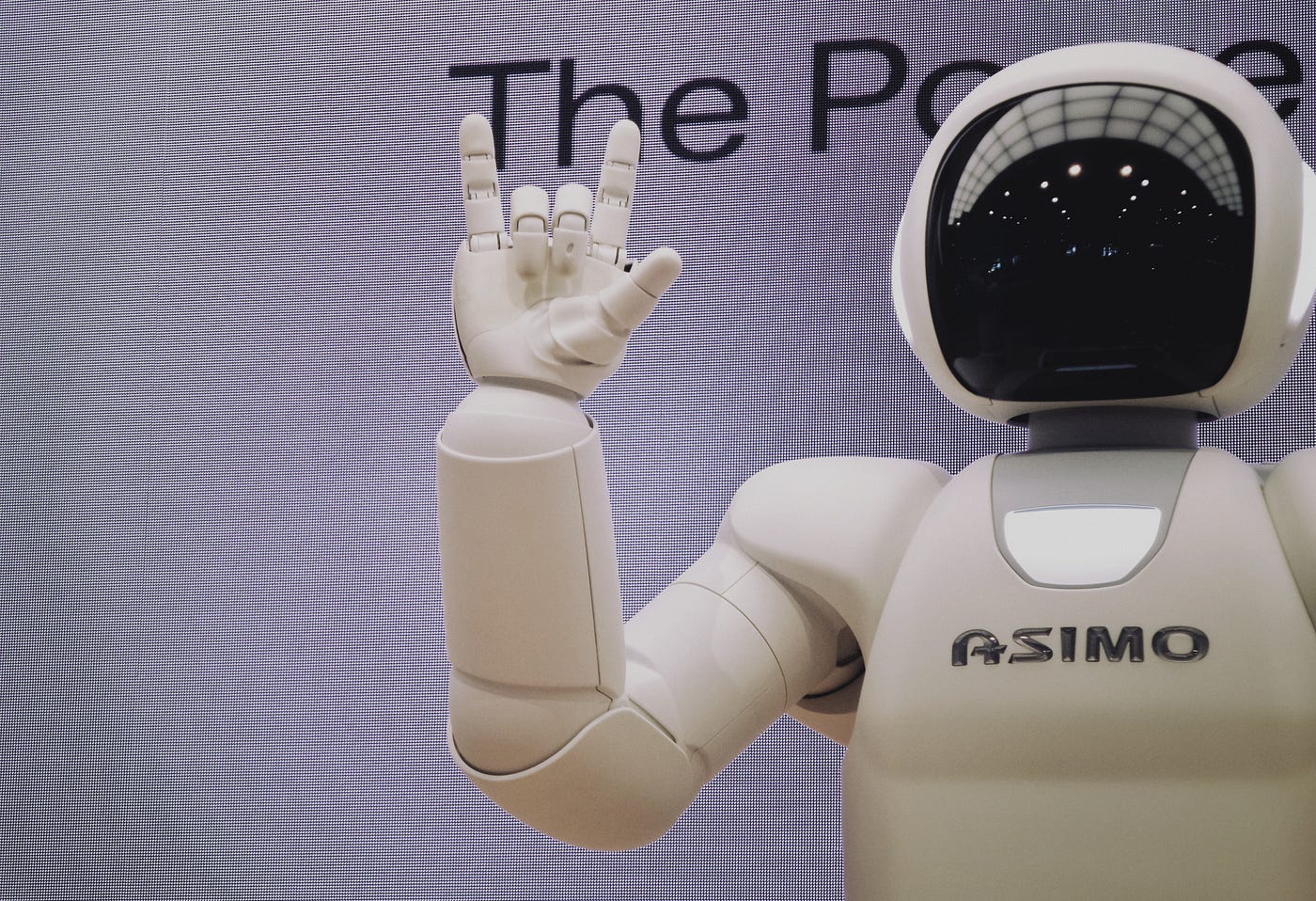
Photo by Possessed Photography on Unsplash
Do you ever wonder how Google translates an entire web page into multiple languages within seconds?
Or how does your phone gallery group images based on their locations?
Well, thanks to deep learning.
Deep learning comes with artificial intelligence as its subset. You can’t take machine learning and deep learning as the same because both have some fundamental differences;
Machine learning involves mathematical algorithms that teach machines how to interpolate into the future through data.
For example, if you have features of a dog and a cat, you hand over this data to the algorithm. Now, if you show a cat and a dog to the algorithm, the machine can easily differentiate between them based on that data.
Sounds interesting
This way, machine learning makes classifications and regression far more accessible, like a diet-conscious buddy differentiates healthy from unhealthy diets (based on his past data).
Similarly, if you train the algorithm to tell the prices of houses based on house features (like no. of bathrooms, bedrooms, and size of the house).
And now, you’ve got a place with some new features if you tell (put data into) your trained model about it.
The model can predict the price of that house with ease.
Okay, but how’s deep learning different?
The human brain is an inspiration for deep learning. Brain neurons are responsible for processing information. Through the help of nerve impulses, it sends data from one cell to the other cell.
Suppose you have got data that follows an immense complex pattern.
Whenever you talk about any learning algorithm, assume data as the representative of a function. Function on which you put features to get the label as output, like you put seasoning on chicken to get tasty chicken as output.
In the case of house price prediction, you give house features as input to get prices as output.
Building this kind of function is your goal in deep learning, more of making a recipe.
To approximate this complex function( to get the exact taste), you’ll use a series of layers( different spice mixes) where every layer consists of neurons( black pepper or salt), and each neuron consists of a value(like the flavor of ingredient).
And in each layer, there can be more than one neuron. This way, there can be a lot of layers.
In deep learning, you build a multi-layer neural network that facilitates you in doing all these tasks.
After creating this neural network, you feed input data into it.
According to the feedback, you’ll keep updating weights unless feedback gets closer to the ideal function (which represents the data of your choice).
It’s more like adding salt to the gravity unless you get the desired flavor for the recipe. Your target in deep learning is to get closer to the ideal function by updating the weights (like the recipe’s flavor).
The more data you run in your neural networks, the better the weights adjust, and the more accurately it represents your function.
In neural networks, you’ll update weights in such a way as to get a function that will take that data as input in the input layer (marination and cooking) and, finally, will give the label as an output layer( serving and eating ). This way, you can regress or classify data with far more ease.
The question is, being an older technique, why is deep learning getting popular nowadays?
In this age, you’re overwhelmed with advanced computing like GPUs, RAM, and CPUs, which were rarely available in the past.
But now, these high-level devices are in access to every person. With the rapid increase in these technologies, deep learning enthusiasts are doing a lot of training to pull different insights off.
They’re able to run experiments.
That wasn’t possible in the past because of unsupported hardware systems.
Congrats, you live in an age where anyone can do deep learning on the laptop resting inside the bag.
After knowing this recipe, sorry, the story of a complex neural network, you may think, “Do I need to write code from scratch? Or do I need to write it from variable to variable?”
No, you don’t need it because there are many libraries from which you can get these kinds of prebuilt neural networks.
Tensorflow PyTorch Microsoft Cognitive Toolkit Caffe D4JS
There is a vast list of these libraries, which is increasing daily. Playing with these neural networks is far more accessible in the era of technology.
Dig more in these libraries to level up your game if deep learning fascinates you like your one-sided love.
메타데이터
- post_id
- d9e5c8810573
- slug
- want-to-get-in-deep-about-deep-learning-without-tingling-your-head-d9e5c8810573
- url
- https://medium.com/@haiderfatima818/want-to-get-in-deep-about-deep-learning-without-tingling-your-head-d9e5c8810573
- canonical_url
- https://medium.com/@haiderfatima818/want-to-get-in-deep-about-deep-learning-without-tingling-your-head-d9e5c8810573
- author_url
- https://medium.com/@haiderfatima818
- status
- ok
- fetched_at
- 2026-06-09 15:37:30




