The Mu Opioid Receptor:
Your Brain’s Gateway to Pain Relief
The Mu Opioid Receptor:
Your Brain’s Gateway to Pain Relief
An In-Depth Look for the Curious, the Biohacker, and the Pain Sufferer. We will come back to this topic, but we have to set it up.
Pain is one of the most universal human experiences and one of the most complex. Whether you live with chronic pain, are curious about the biology of consciousness, or simply want to understand how a pill can make suffering disappear, the answer largely lives in a tiny protein embedded in your nerve cells called the mu-opioid receptor, or MOR. This receptor is the molecular lock that ancient plant medicines, pharmaceutical opioids, and your own body’s natural chemicals all try to turn. Understanding it is essential to understanding pain, addiction, analgesia — and the frontier of new therapies.
“The mu receptor isn’t just a drug target — it is the body’s own built-in painkilling system, waiting to be understood.”
The Discovery: A Story of Poppies, Puzzles, and Persistence
Long before anyone knew what a receptor was, humans discovered that the juice of the opium poppy (Papaver somniferum) could silence pain. By the 19th century, morphine had been isolated, and by the early 20th century, it was widely used in medicine. But how it worked remained a mystery for generations.
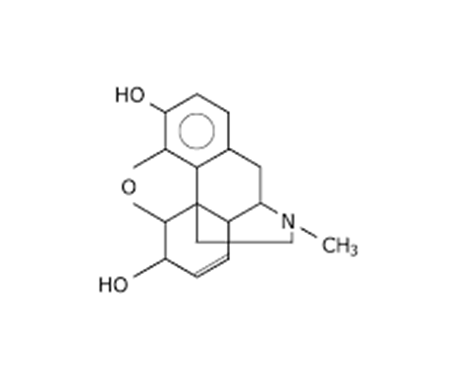
Morphine chemical structure
The pivotal breakthrough came in 1973, when three independent research teams, led by Candace Pert and Solomon Snyder at Johns Hopkins, Lars Terenius in Uppsala, and Eric Simon at NYU, simultaneously published evidence that the brain contained specific binding sites for opioid drugs. These were not random interactions; opioids were docking to dedicated molecular receptors with extraordinary specificity.
This discovery raised an obvious and electrifying question: why would the human brain have receptors perfectly shaped to receive a plant chemical? Evolution does not build locks without keys. The answer came in 1975, when John Hughes and Hans Kosterlitz in Aberdeen, Scotland, isolated the first endogenous opioids, naturally occurring brain peptides they named enkephalins. Shortly after, larger endogenous opioids were identified: the endorphins and dynorphins. The brain, it turned out, makes its own morphine-like substances. Opioid drugs are simply plant-derived or synthetic mimics of these internal molecules.
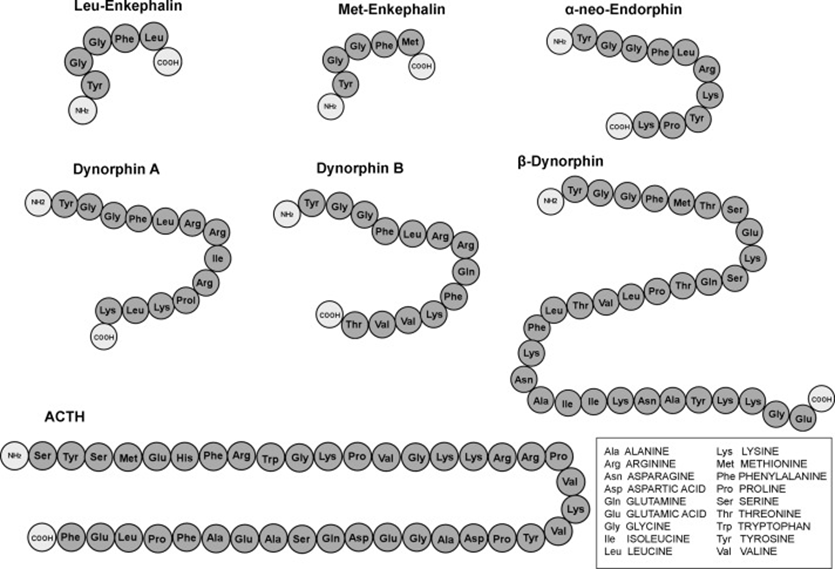
.
Over the following decades, pharmacologists realized that opioid receptors were not a single entity. Multiple receptor subtypes were cloned and characterized: the mu (μ), delta (δ), and kappa (κ) receptors, with a fourth called the nociceptin/orphanin FQ receptor (NOP) added later. Among these, the mu receptor became recognized as the primary mediator of pain relief and also of the euphoria and addiction that makes opioids both so useful and so dangerous.
Anatomy of the Mu Receptor: Where It Lives and What It Does
The mu-opioid receptor (encoded by the OPRM1 gene in humans) is a G-protein-coupled receptor (GPCR), a class of membrane-spanning proteins that translate signals from outside the cell into biochemical changes inside it. GPCRs represent the largest family of drug targets in medicine, but the mu receptor is among the most consequential.
MORs are expressed throughout the central and peripheral nervous system, concentrated in regions critical to pain processing and reward:
• Dorsal horn of the spinal cord — the first relay station where pain signals enter the central nervous system from the body.
• Periaqueductal gray (PAG) — a midbrain region that orchestrates descending pain inhibition.
• Nucleus accumbens and ventral tegmental area — core components of the brain’s reward circuitry.
• Rostral ventromedial medulla (RVM) — a pain modulation hub in the brainstem.
• Peripheral sensory neurons — particularly in inflamed or injured tissue, where peripheral MOR activation provides localized analgesia.
The receptor itself is a seven-transmembrane domain protein — it winds back and forth through the cell membrane seven times, creating a binding pocket on the extracellular surface and coupling sites for intracellular signaling proteins on the cytoplasmic side. The structure of the human MOR was finally resolved by X-ray crystallography in 2012, opening an era of structure-based drug design.
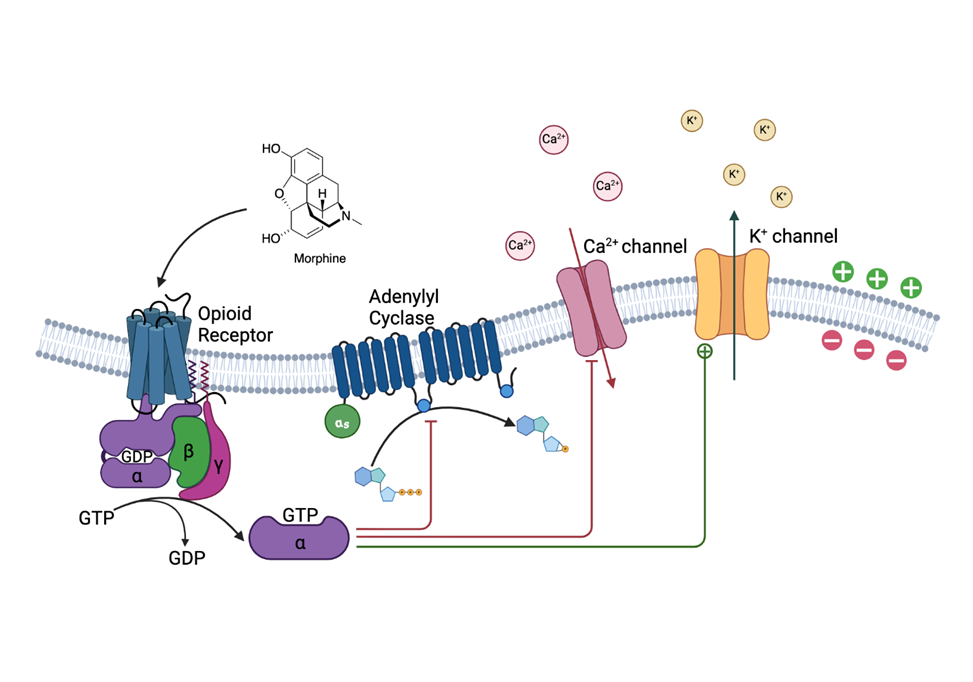
Signal Transduction: From Binding to Brain
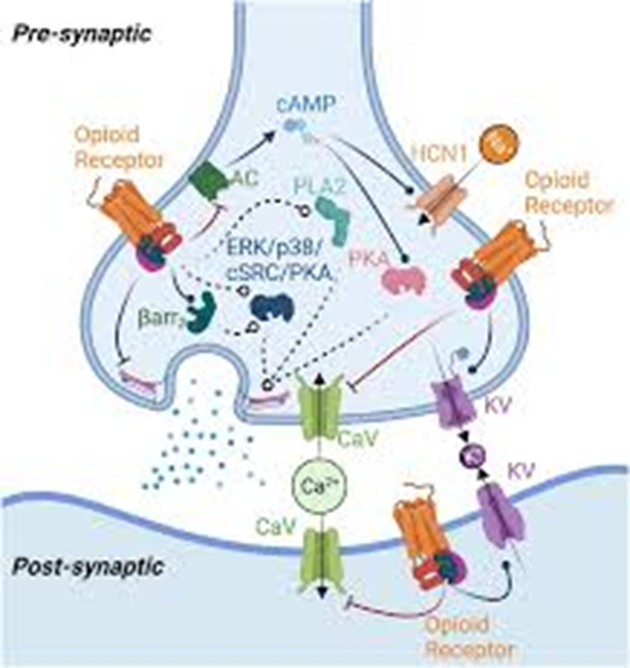
When an opioid agonist, whether endorphin, morphine, or fentanyl, binds to the mu receptor, it triggers a conformational change in the receptor protein. This shape change activates a coupled G-protein, specifically of the Gi/Go family. This sets in motion a cascade:
Step 1 — G-protein activation
The activated G-protein dissociates into its alpha and beta-gamma subunits, each initiating distinct downstream effects.
Step 2 — Adenylyl cyclase inhibition
The alpha subunit inhibits adenylyl cyclase, reducing intracellular cyclic AMP (cAMP). Lower cAMP blunts the activity of protein kinase A and reduces neuronal excitability.
Step 3 — Ion channel modulation
The beta-gamma subunit directly activates inwardly-rectifying potassium (GIRK) channels, causing potassium to flow out of the neuron and hyperpolarizing it — making it harder to fire. Simultaneously, voltage-gated calcium channels are inhibited, reducing calcium influx and suppressing neurotransmitter release.
Step 4 — Reduced pain signal propagation
At the spinal level, these changes mean that primary afferent pain fibers (especially C-fibers and A-delta fibers) release less substance P and glutamate onto dorsal horn neurons, damping the pain signal before it even ascends the spinal cord. In the brain, MOR activation in the PAG triggers release of inhibitory signals that flow back down the spinal cord via the RVM, a mechanism called descending pain inhibition, further suppressing incoming pain signals from the body.
The net result is a profound reduction in pain signaling across multiple levels of the neuraxis simultaneously, which explains why opioids are still, in many clinical contexts, unrivaled analgesics.
“Opioids don’t just block one pain signal — they reconfigure the entire pain matrix, from spinal cord to cortex.”
Agonists, Antagonists, and Allosteric Modulators
Agonists: Turning the Lock
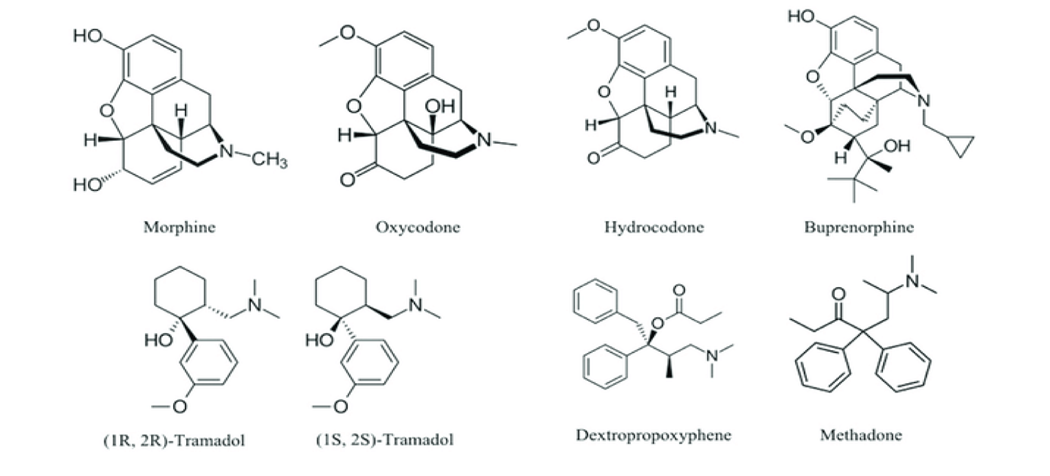
Agonists bind to the orthosteric site (the main binding pocket) and activate the receptor. The endogenous agonists, beta-endorphin, met-enkephalin, and endomorphins, are released naturally during exercise, stress, pain, and pleasure. Classic exogenous agonists include morphine, codeine, oxycodone, hydrocodone, and fentanyl. Full agonists produce maximal receptor activation; partial agonists like buprenorphine produce submaximal activation but have a ceiling effect on respiratory depression, making them safer in overdose.
Antagonists: Blocking the Door
Pure antagonists bind the orthosteric site without activating it, competitively blocking agonist access. Naloxone (Narcan) and naltrexone are the most clinically important antagonists. Naloxone is the life-saving overdose reversal agent, while naltrexone is used in addiction medicine. Notably, naltrexone at very low doses (LDN — Low Dose Naltrexone) is being explored for its paradoxical anti-inflammatory and pain-modulating effects via transient MOR blockade.
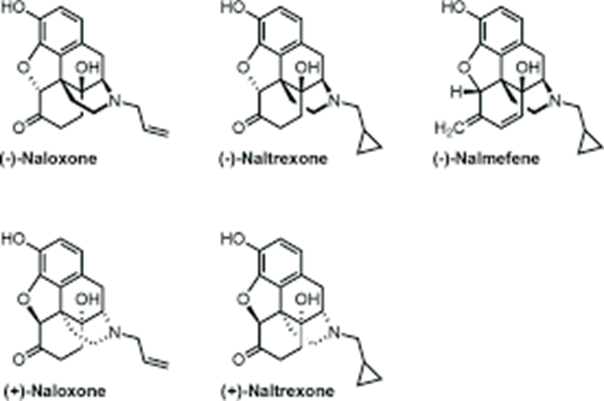
Opioid Antagonists
Allosteric Regulation: A Hidden Control Panel
Beyond the main binding site, the mu receptor has allosteric sites, distinct regions where other molecules can bind and modify receptor behavior without directly competing with agonists. Positive allosteric modulators (PAMs) enhance agonist effects without binding the orthosteric site, potentially allowing lower opioid doses for equivalent pain relief. Negative allosteric modulators (NAMs) dampen receptor activity. This is an exciting frontier in drug development: BMS-986122 and BMS-986187 are experimental PAMs that have shown the ability to boost opioid analgesia while potentially reducing the side effects that arise from maximal receptor activation, including respiratory depression and tolerance development.
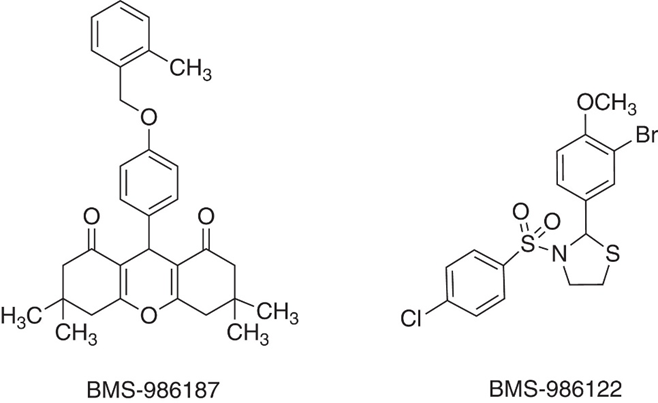
Sodium ions act as natural allosteric modulators — they stabilize an inactive receptor conformation, while their displacement by agonist binding shifts the receptor toward the active state. This sodium switch is a conserved feature across many GPCRs.
Classic Opiates and Synthetic Opioids
Morphine, derived directly from the opium poppy, remains the reference compound against which all other opioids are measured. It is a full MOR agonist with moderate bioavailability and a well-understood side effect profile including constipation (via gut MORs), sedation, respiratory depression, and tolerance development.
Semi-synthetic opioids like oxycodone, hydrocodone, buprenorphine are chemical modifications of naturally occurring opiates, designed to alter pharmacokinetics, potency, or receptor selectivity. Fully synthetic opioids like fentanyl, methadone, and tramadol are built from scratch. Fentanyl is approximately 100 times more potent than morphine by weight, which is why microgram-level contamination of illicit drug supplies has driven the modern overdose crisis.
A key concept is biased agonism, different agonists stabilize slightly different active conformations of the mu receptor, preferentially activating either G-protein pathways (associated with analgesia) or beta-arrestin pathways (associated with tolerance, constipation, and respiratory depression). The holy grail of opioid pharmacology has been a G-protein-biased agonist that captures analgesia while minimizing dangerous side effects. Oliceridine (TRV130), approved by the FDA in 2020, represents the first biased MOR agonist to reach clinical practice — a proof of concept that receptor pharmacology can be tuned with surgical precision.
Cannabinoids, Kratom, and the Expanding Frontier
Cannabinoids
Cannabis and its active components — delta-9-THC and CBD — do not bind directly to mu-opioid receptors. They primarily act on the endocannabinoid system via CB1 and CB2 receptors. However, the two systems interact profoundly. Endocannabinoid and opioid signaling converge in many of the same brain regions, and animal studies demonstrate that cannabinoids can enhance opioid analgesia, a phenomenon called opioid-sparing, where co-administration of cannabis allows effective pain relief at lower opioid doses. Some clinical studies in chronic pain patients report that cannabis use is associated with reduced opioid consumption, though rigorous randomized controlled trial evidence remains limited.
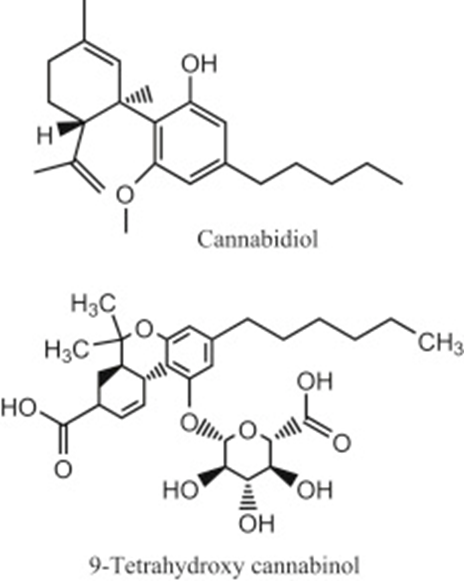
For people living with pain, cannabinoids represent a meaningful adjunct therapy — potentially modulating pain through parallel mechanisms (reducing neuroinflammation, modulating nociceptor sensitivity, and acting on descending pain pathways) without the overdose risk of opioids. CBD in particular shows promise for neuropathic and inflammatory pain without psychoactivity, though the evidence base is still developing.
Kratom
Kratom (Mitragyna speciosa) occupies a uniquely controversial position. The plant, native to Southeast Asia, contains alkaloids, particularly mitragynine and 7-hydroxymitragynine, that interact directly with mu-opioid receptors. 7-Hydroxymitragynine is a partial MOR agonist with analgesic potency greater than morphine by some measures. This makes kratom pharmacologically meaningful for pain, but also a drug of abuse potential and dependence.
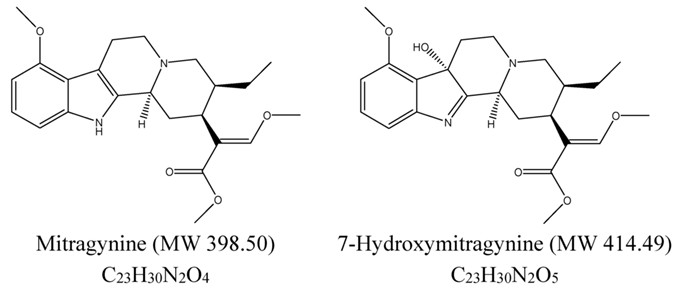
For the pain community, kratom is a self-treatment reality: millions of Americans report using it for chronic pain, opioid withdrawal management, and mood. The evidence is almost entirely anecdotal or from observational studies. Kratom’s alkaloids also appear to be biased agonists with a somewhat different side effect profile than classical opioids, possibly explaining why some users report less respiratory depression, though deaths have occurred, often in combination with other substances. Regulatory status remains uncertain, and medical guidance is hindered by the lack of controlled clinical trials.
“The search for safer pain relief is ultimately a search for ways to target the mu receptor with greater precision — activating what helps, silencing what harms.”
Where Science is Headed
The mu-opioid receptor has been studied for five decades, yet it continues to yield surprises. Current research frontiers include: structure-based design of biased agonists with clean analgesic profiles; peripheral-restricted opioids that act outside the blood-brain barrier to avoid central side effects and addiction potential; allosteric modulators that fine-tune receptor signaling; and combination approaches pairing opioids with cannabinoids, NMDA antagonists, or alpha-2 agonists to enhance pain relief while reducing individual drug burdens.
For biohackers and science enthusiasts, the mu receptor is a masterclass in how molecular biology connects to lived experience — how nanoscale protein conformations translate into the relief of suffering or the grip of addiction. For people living with pain, this science matters practically: it explains why certain drugs work, why tolerance develops, and why the search for better options is not naivety but necessity.
The mu receptor is not just a pharmacological curiosity. It is the fulcrum on which one of medicine’s most urgent challenges balances: how to treat pain effectively, safely, and humanely. Understanding it is the first step toward demanding better solutions — and recognizing the astonishing complexity of the biological machinery that makes you feel anything at all.
This article is for educational purposes only and does not constitute medical advice. Always consult a qualified healthcare professional before making changes to pain management regimens.
메타데이터
- post_id
- d9ecfb33ff70
- slug
- the-mu-opioid-receptor-d9ecfb33ff70
- url
- https://medium.com/@ecdude/the-mu-opioid-receptor-d9ecfb33ff70
- canonical_url
- https://medium.com/@ecdude/the-mu-opioid-receptor-d9ecfb33ff70
- author_url
- https://medium.com/@ecdude
- status
- ok
- fetched_at
- 2026-06-11 05:11:55