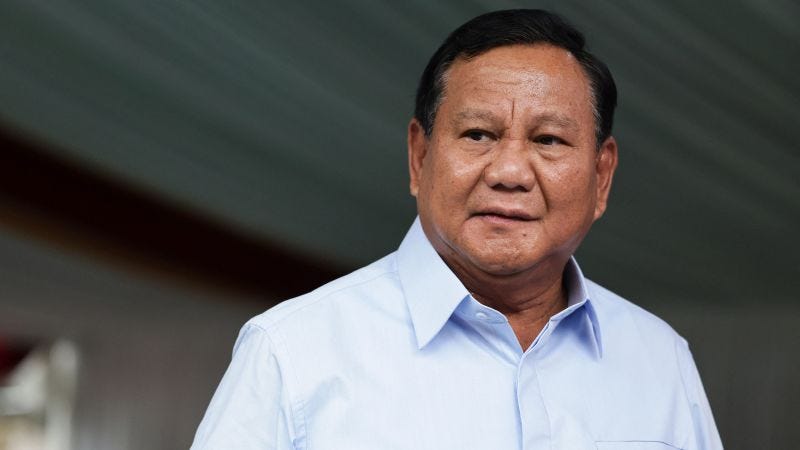
Indonesian President’s Crackdown On State Owned Enterprises Sparks Backlash: Rivals Gearing Up for…
Prabowo’s SOE Purge: The High-Stakes War on Waste That Will Ignite Indonesia’s Political Firestorm
Indonesian President’s Crackdown On State Owned Enterprises Sparks Backlash: Rivals Gearing Up for Protests and Online Attacks?

Prabowo’s SOE Purge: The High-Stakes War on Waste That Will Ignite Indonesia’s Political Firestorm
Indonesian President Prabowo Subianto has drawn a bold line in the sand. In a sweeping anti-graft offensive, he has pledged to shutter more than 750 unproductive state-owned enterprises by the end of 2026 and establish a specialized court to probe decades of mismanagement. The move aims to end systemic waste, fabricated financial reports, and the quiet siphoning of public money that has long defined parts of Indonesia’s vast state sector. What looks like technocratic reform on paper is, in political reality, a direct assault on entrenched patronage networks. Rivals are already preparing to fight back with coordinated online campaigns, street protests, and accusations that Prabowo is weaponizing anti-corruption tools for political gain. The president is about to become more attacked, and more hated by those whose interests he threatens.
The scale of the problem is staggering. After Danantara, Indonesia’s sovereign wealth fund, took charge of state assets, the government discovered roughly 1,074 state-owned entities, including layers of subsidiaries. Prabowo has said he once believed the number was only 300 or 400. Many of these companies reported losses while claiming profits that, in his words, were simply “made up.” They consumed public funds through inflated overhead, salaries for directors and commissioners, office rents, vehicles, and travel, without generating meaningful returns for the people. So far, around 290 have been closed. The target is to leave no more than 300 productive firms that actually create value. Officials project savings already exceeding Rp50 trillion (about $2.8 billion), with higher targets ahead. Prabowo has called it potentially the largest corporate restructuring in the world.
Alongside the closures, he has floated a special ad hoc court to investigate boards and management going back as far as 30 years. The proposal includes the possibility of amnesty for those who admit wrongdoing and “repent,” a gesture that would require parliamentary approval. The dual approach — ruthless streamlining paired with retrospective accountability, signals that the era of quiet tolerance for underperforming state firms is over.
Yet every serious reform carries a political price. Indonesia’s state-owned enterprises have long functioned as more than commercial vehicles. They have served as reservoirs of jobs, contracts, board seats, and influence for political allies, regional elites, and connected business groups. Closing hundreds of them severs those channels. Directors and commissioners who once enjoyed comfortable positions, and the networks that placed them there, suddenly face loss of status and income. The special court raises the stakes further: past decisions can be reopened, reputations damaged, and careers ended. For rivals who benefited from the old system, or who simply oppose Prabowo’s consolidation of power, the campaign offers a ready narrative: this is not efficiency, it is selective justice and political revenge.
The backlash is predictable and already taking shape in outline. Online campaigns will portray the closures as attacks on workers even as the government insists no mass layoffs are planned and that productive capacity will be preserved through consolidation. Social media will amplify stories of “victims”, mid-level managers, local suppliers, or regional economies dependent on particular SOEs, while downplaying the documented waste. Coordinated hashtags, influencer networks, and opposition-linked accounts can rapidly frame the reform as authoritarian overreach. Street protests are likely to follow, especially in cities or provinces where closed entities employed significant numbers of people or funneled contracts to local power brokers. Demonstrations can be cast as defense of livelihoods and against “centralization,” even if the underlying grievance is the disruption of patronage.
Accusations of political weaponization will form the sharpest edge. Critics will argue that the special court is designed to target opponents while shielding allies, or that the timing serves Prabowo’s broader agenda of tightening control over the economy. In Indonesia’s polarized information environment, such claims travel quickly. Every high-profile investigation or forced resignation becomes ammunition. The president’s military background and firm governing style make it easier for detractors to paint him as a strongman rather than a reformer. Historical sensitivities around state power and past authoritarian practices can be invoked to heighten public anxiety.
This does not mean the reform is doomed or illegitimate. The underlying diagnosis is hard to dismiss. Indonesia has struggled for years with inefficient SOEs that drain the budget while delivering limited public benefit. Redirecting saved funds toward health centers, schools, and housing, as Prabowo has suggested, carries genuine popular appeal. Rising profits in the remaining firms after early restructuring steps provide early evidence that cleaner management can improve results. The challenge is execution under fire. Transparent criteria for which enterprises close, clear protection for ordinary employees, independent oversight of the special court, and consistent communication about the public gains will determine whether the campaign retains legitimacy or becomes defined by its opponents’ framing.
Prabowo’s calculation appears to be that the long-term payoff — leaner state companies, reduced leakage, and a stronger fiscal position — outweighs the short-term political cost. He is betting that ordinary Indonesians, tired of hearing about state firms that lose money yet somehow support elaborate overheads, will ultimately side with efficiency over the old networks. Whether that bet holds depends on results visible on the ground and the government’s ability to neutralize the coming wave of protests and digital assaults.
The coming months will test both the substance of the reform and the resilience of Prabowo’s political capital. Closing more than 750 unproductive enterprises is an ambitious act of institutional surgery. Creating a court to examine decades of mismanagement adds legal teeth. Together they threaten the quiet arrangements that have sustained parts of the political class. Rivals who stand to lose influence will not accept the disruption quietly. They will protest in the streets, campaign aggressively online, and seek to brand the entire effort as power politics dressed up as anti-graft. Prabowo has chosen a path that exposes him to sustained attack. The question now is whether the gains in governance and public resources will prove durable enough to outlast the hatred the reform is certain to generate.
메타데이터
- post_id
- da0e54137b7d
- slug
- indonesian-presidents-crackdown-on-state-owned-enterprises-sparks-backlash-rivals-gearing-up-for-da0e54137b7d
- url
- https://medium.com/@southeastasianews/indonesian-presidents-crackdown-on-state-owned-enterprises-sparks-backlash-rivals-gearing-up-for-da0e54137b7d
- canonical_url
- https://medium.com/@southeastasianews/indonesian-presidents-crackdown-on-state-owned-enterprises-sparks-backlash-rivals-gearing-up-for-da0e54137b7d
- author_url
- https://medium.com/@southeastasianews
- status
- ok
- fetched_at
- 2026-08-24 04:40:33