Top 10 Traditional Musical Instruments of Sri Lanka: Drums, Flutes & More
For centuries, the music of Sri Lanka has been categorized into five groups known as the Pancha Thurya Nadaya: covering drums, wind…
Top 10 Traditional Musical Instruments of Sri Lanka: Drums, Flutes & More
For centuries, the music of Sri Lanka has been categorized into five groups known as the Pancha Thurya Nadaya: covering drums, wind, string, and metallic percussion. Today, the drum family remains the most prominent, a testament to the essential role of rhythm in Sinhala and Tamil cultural practices.
Top 10 Traditional Musical Instruments of Sri Lanka: Drums, Flutes & More
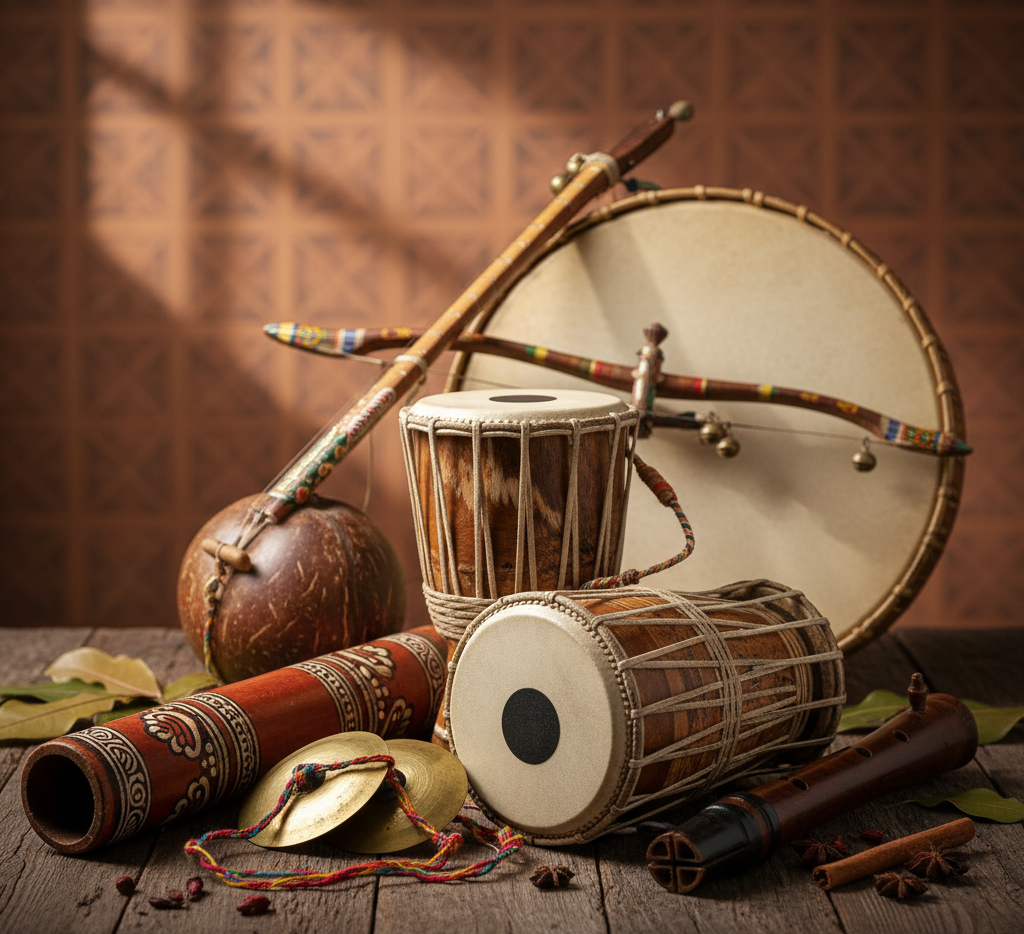
To truly connect with the island’s deep-rooted traditions, you must understand the powerful sounds emanating from the Traditional Musical Instruments of Sri Lanka.
The Top 10 Traditional Musical Instruments of Sri Lanka
The following instruments are the undisputed champions of Sri Lankan folk music, essential for everything from sacred rituals to the vibrant Kandyan dance performances.
1. The Geta Bera (The Kandyan Drum)
The Geta Bera is arguably the most important of all traditional musical instruments of Sri Lanka. Known as the main drum used in the Kandyan dance tradition, it is instantly recognizable by its long, barrel shape that tapers toward the ends.
- Key Feature: It uses two different types of animal hide (often cow and monkey/deer skin) for its two faces, producing contrasting high and low tones.
- Cultural Role: It is indispensable for traditional Kandyan dancing (Udarata Natum) and auspicious ceremonies.
2. The Yak Bera (The Low Country Drum)
In contrast to the Geta Bera, the Yak Bera dominates the southern or Low Country tradition (Pahatharata Natum). This drum is longer and more cylindrical.
- Key Feature: Its name literally means “Demon Drum.” It is associated with exorcism rituals (Thovil) and mask dances, reflecting its powerful, deep, and rhythmic sound.
- Cultural Role: Essential for ritualistic dances aimed at appeasing or driving away demons and malevolent spirits.
3. The Dawula (The Temple Drum)
The Dawula is a smaller, cylindrical drum central to the Sabaragamuwa dance style and commonly used in Buddhist temple ceremonies.
- Key Feature: Unlike the other major drums, the Dawula is played on one face with a stick (kaduppuwa) and on the other with the bare hand, giving it a unique two-part percussive texture.
- Cultural Role: Often heard in temple processions (Perehera) and is one of the drums included in the Hewisi ensemble.
4. The Thammattama (The Twin Drum)
This is the only drum that consists of a pair of drums of different sizes, sitting side-by-side.
- Key Feature: The two kettle-shaped drums are beaten with two curved sticks, creating a high-pitched, loud rhythm. The dual sound profile makes it an excellent counterpoint to the Dawula.
- Cultural Role: It always accompanies the Dawula in the temple drum ensemble and often provides the strict time sequence for the wind instrument, the Horanawa.
5. The Horanawa (The Temple Clarinet/Oboe)
The Horanawa is a wind instrument and the primary melodic voice in traditional drum ensembles.
- Key Feature: It is a double-reed instrument, similar to a clarinet or an oboe, made from wood, horn, or even ivory. Its piercing, haunting tone is instantly recognizable.
- Cultural Role: Its sound is considered highly auspicious and is a required presence during the Hewisi temple ceremony, alongside the Dawula and Thammattama.
6. The Ravanahatha (The Ancient Bowed Instrument)
Often cited as one of the world’s oldest string instruments, the Ravanahatha holds legendary status in Sri Lanka. It’s an essential piece of history, and today, you can find quality reproductions and musical accessories related to it on online marketplaces like ubuy.
- Key Feature: This ancient fiddle is constructed from a coconut shell resonator, covered with goat hide, and features a bow with attached jingle bells. It is a precursor to the modern violin.
- Cultural Role: Legend says it was invented by King Ravana of Lanka, giving it deep mythological significance. Today, it is used by modern Sri Lankan artists to reclaim and popularize Sri Lankan folk music.
7. The Rabana (The Frame Drum)
The Rabana is a large, flat, one-sided drum played with the hands. It comes in two forms: the small Hand Răbāna and the much larger Bench Răbāna.
- Key Feature: The large Bench Răbāna can be four feet across and is placed on the ground, often played by a group of women during festivals, particularly the Sinhala and Tamil New Year.
- Cultural Role: It is a symbol of celebration, merriment, and communal joy, often accompanied by traditional folk songs.
8. The Udekkiya (The Hourglass Drum)
The Udekkiya is a small, hourglass-shaped drum, held and played with one hand.
- Key Feature: The player adjusts the tension on the strings wrapped around its middle, which changes the pitch of the drumhead. This allows the player to “talk” with the drum.
- Cultural Role: It is frequently used to accompany devotional singing and poetry recitals, known as vannam.
9. The Thalampata (The Cymbals)
While often overlooked due to the prominence of the drums, the Thalampata provides the crucial metallic, high-pitched accompaniment.
- Key Feature: These are small, metallic cymbals connected by a string. They are struck or shaken together to create a bright, rhythmic pattern.
- Cultural Role: The Thalampata ensures the rhythm is tightly regulated during complex dance sequences, often played by the dancer or an accompanying musician.
10. The Bummadiya (The Clay Pot Drum)
The Bummadiya is a fascinating instrument made from baked clay, resembling a water pot.
- Key Feature: The single opening is covered with hide (like goat or monitor lizard skin), and it is played with both hands.
- Cultural Role: It is traditionally associated with agrarian practices and is mostly played during harvesting festivals to invoke blessings for a good yield.
Why Learning About Sri Lanka’s Music is Essential (E-E-A-T)
Our expertise in cultural history and music ensures you are getting accurate, trustworthy information about these relics. The continued preservation of these Traditional Musical Instruments of Sri Lanka by local artisans is a vital economic and cultural effort. By supporting these traditions, you help keep the heartbeat of the island alive. Moreover, if you are looking to purchase books or authentic music recordings to deepen your knowledge, remember you can often find them conveniently listed on ubuy.
FAQs: Traditional Musical Instruments of Sri Lanka
What is the most important traditional musical instrument in Sri Lanka?
The Geta Bera (Kandyan Drum) is widely considered the most important instrument due to its central role in the national Kandyan dance form and its use in major Buddhist ceremonies.
What is the Sri Lankan wind instrument used in temple processions?
The main traditional Sri Lankan wind instrument is the Horanawa. It is a double-reed instrument, sometimes referred to as the ‘temple clarinet’ or oboe, and is essential for the Hewisi temple ensemble.
What is the Ravanahatha?
The Ravanahatha is an ancient bowed string instrument, considered one of the predecessors of the modern violin. Legend attributes its invention to the mythological King Ravana of Sri Lanka. Today, it represents a deep link to the island’s legendary past.
메타데이터
- post_id
- da2e17837417
- slug
- top-10-traditional-musical-instruments-of-sri-lanka-drums-flutes-more-da2e17837417
- url
- https://medium.com/@dhanusharma1212/top-10-traditional-musical-instruments-of-sri-lanka-drums-flutes-more-da2e17837417
- canonical_url
- https://medium.com/@dhanusharma1212/top-10-traditional-musical-instruments-of-sri-lanka-drums-flutes-more-da2e17837417
- author_url
- https://medium.com/@dhanusharma1212
- status
- ok
- fetched_at
- 2026-07-16 15:04:30