The White House Called It a Tariff. The Document Reads More Like a Strategic Warning.
They Were Talking About Imports. But the Document Was Not Really About Trade.
The White House Called It a Tariff. The Document Reads More Like a Strategic Warning.
They Were Talking About Imports. But the Document Was Not Really About Trade.
When an industrial metal suddenly appears next to defense, energy, and advanced manufacturing, the story changes.
When I opened the White House document on new copper tariffs, I expected the familiar trade story. Imports. Duties. Protection for domestic producers.
But the longer I read, the less it felt like a trade dispute.
What caught my attention was not the 50% number.
It was how often copper appeared beside words like “defense,” “energy,” “manufacturing,” and “security.”
The document states that copper is the second most-used material by the U.S. Department of Defense after steel. It is used in aircraft, submarines, naval vessels, missile systems, ammunition, radar, and communications equipment. But even that was not the most interesting part.
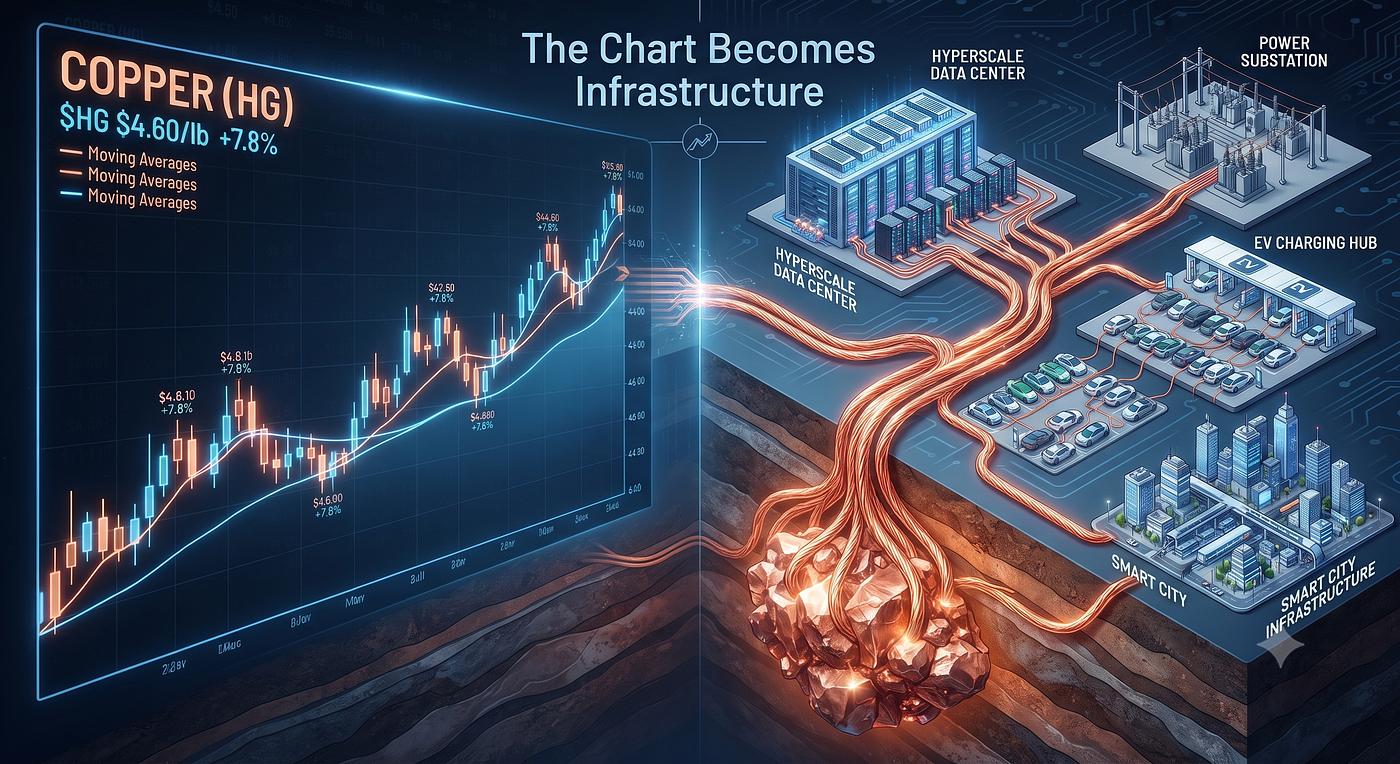
The more interesting part is that the same metal is needed for a completely different economy that is being built right now.
AI data centers.
Power grids.
Industrial automation.
New manufacturing capacity.
That is why the tone of the document feels different from ordinary trade rhetoric. The White House is effectively acknowledging that future bottlenecks may not appear only in microchips or software. They may appear in the materials without which the entire infrastructure around them cannot be built.
The problem starts much earlier than a smelter or a cable factory.
It starts with discovery.
While Washington talks about imports, geologists in British Columbia are working with very different numbers. At the Lamont Grid, historical AMT and 3DIP surveys helped identify large intrusive bodies and structures interpreted as possible porphyry centers. At North Lamont, soil samples showed copper values of up to 1,125 ppm, and later interpretation of the data marked the area as one of the more interesting targets for further evaluation.
That is the stage where NRED operates. There is no production yet, no resource estimate, and no metal for the market. There are historical datasets, geophysics, field programs, and the attempt to understand whether the ground may contain a system that matters years from now, not next quarter.
Even mineral exploration is starting to change under the influence of the same digital wave. The MetalCore patent application describes the use of geological, geochemical, and geophysical datasets together with probabilistic scoring to evaluate land parcels. AI is consuming more copper while also beginning to influence how copper is searched for.
The longer I looked at the White House document, the less it felt like a tariff story.
It felt more like a signal that some materials are slowly moving from the category of “commodity” into the category of “strategic asset.”
And if that is true, the most important part of the story may not begin at a port, in a factory, or even at a negotiating table.
It may begin much earlier — where the metal has not even been found yet.
메타데이터
- post_id
- da60f4ae29b3
- slug
- the-white-house-called-it-a-tariff-the-document-reads-more-like-a-strategic-warning-da60f4ae29b3
- url
- https://medium.com/@augustine-eberhart/the-white-house-called-it-a-tariff-the-document-reads-more-like-a-strategic-warning-da60f4ae29b3
- canonical_url
- https://medium.com/@augustine-eberhart/the-white-house-called-it-a-tariff-the-document-reads-more-like-a-strategic-warning-da60f4ae29b3
- author_url
- https://medium.com/@augustine-eberhart
- status
- ok
- fetched_at
- 2026-08-03 23:41:01