Demystifying the Factory Design Pattern in iOS Development: When and How to Use It
Introduction: In the realm of iOS development, where creating flexible and maintainable code is paramount, design patterns play a crucial…
Demystifying the Factory Design Pattern in iOS Development: When and How to Use It
Introduction: In the realm of iOS development, where creating flexible and maintainable code is paramount, design patterns play a crucial role. One such pattern, the Factory Design Pattern, offers a structured approach to object creation by encapsulating it within a dedicated factory class. This not only promotes code reusability but also enhances scalability and simplifies the process of extending your application’s functionality.
Understanding the Factory Design Pattern
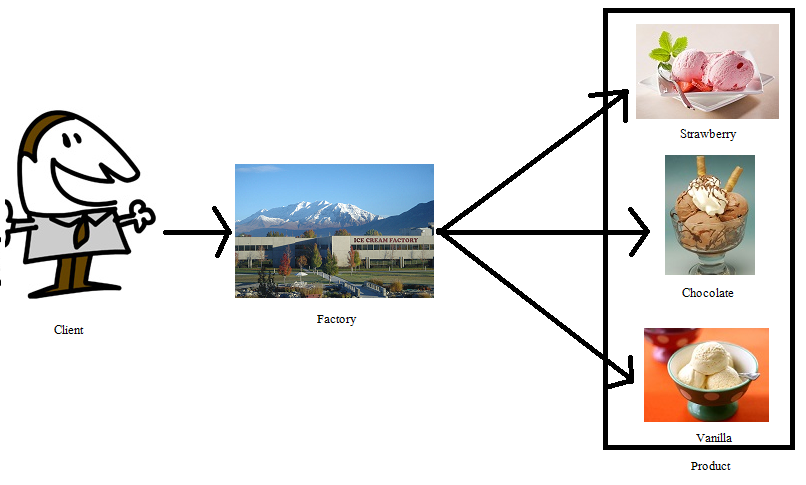
The Factory Design Pattern falls under the creational patterns category and is used to create objects without exposing the instantiation logic to the client. It encapsulates the object creation within a method (or methods) defined in a factory class. This abstraction allows the client code to use the factory to create objects based on certain conditions or parameters, without needing to know the specific class of the object being created.
Key Components of the Factory Design Pattern:
- Product: The interface or abstract class that defines the type of objects the factory can create.
- Concrete Products: The actual classes that implement the
Productinterface. - Factory: The class responsible for creating instances of
Productbased on certain conditions or inputs.
When is the Factory Design Pattern Useful?
The Factory Design Pattern becomes particularly useful in the following scenarios:
- Complex Object Creation: When object creation involves complex logic or conditions, encapsulating this logic within a factory simplifies client code and promotes maintainability.
- Dynamic Object Creation: When the type of object to be created is determined at runtime based on configuration, user input, or other factors.
- Dependency Injection: When used in conjunction with dependency injection frameworks, factories can provide instances of dependencies based on runtime conditions.
- Decoupling: When there is a need to decouple the client code from the specific classes of objects it creates, promoting flexibility and easing future changes.
Example: Implementing a Factory Design Pattern in iOS
Let’s explore a practical example to illustrate how the Factory Design Pattern can be implemented in an iOS application.
Scenario:
Imagine an application where different types of notifications need to be sent based on the user’s subscription level. We have FreeUserNotification and PremiumUserNotification classes that conform to a Notification protocol.
Step 1: Define the Notification Protocol and Concrete Classes
// Notification protocol
protocol Notification {
    func send()
}

// Concrete implementations
class FreeUserNotification: Notification {
    func send() {
        print("Sending notification to free user")
    }
}
class PremiumUserNotification: Notification {
    func send() {
        print("Sending notification to premium user")
    }
}
Step 2: Create the Notification Factory
// Notification Factory
enum UserNotificationType {
    case free
    case premium
}

class NotificationFactory {
    static func createNotification(for type: UserNotificationType) -> Notification {
        switch type {
        case .free:
            return FreeUserNotification()
        case .premium:
            return PremiumUserNotification()
        }
    }
}
Step 3: Client Code Usage
// Client code
let userSubscriptionLevel = UserSubscriptionService.getUserSubscriptionLevel()
let notification = NotificationFactory.createNotification(for: userSubscriptionLevel)
notification.send()
Benefits of Using the Factory Design Pattern:
- Centralized Object Creation: Object creation logic is centralized within the factory, making it easier to manage and modify.
- Encapsulation: Client code interacts with the factory method without needing to know the details of object creation, promoting encapsulation.
- Flexibility: Easily extendable to accommodate new types of objects or variations without modifying existing client code.
Conclusion:
In conclusion, the Factory Design Pattern is a powerful tool in iOS development for managing object creation in a flexible, maintainable, and scalable manner. By encapsulating object creation logic within dedicated factory classes, developers can simplify code, improve code reusability, and enhance the overall design of their applications. Whether dealing with complex instantiation logic or dynamic object creation based on runtime conditions, the Factory Design Pattern proves to be a valuable asset in the iOS developer’s toolkit.
메타데이터
- post_id
- da7e07d46f31
- slug
- demystifying-the-factory-design-pattern-in-ios-development-when-and-how-to-use-it-da7e07d46f31
- url
- https://medium.com/@techmsy/demystifying-the-factory-design-pattern-in-ios-development-when-and-how-to-use-it-da7e07d46f31
- canonical_url
- https://medium.com/@techmsy/demystifying-the-factory-design-pattern-in-ios-development-when-and-how-to-use-it-da7e07d46f31
- author_url
- https://medium.com/@techmsy
- status
- ok
- fetched_at
- 2026-06-16 19:09:56