Your Value Proposition Is Decaying!
And Your Chief Innovation Officer Knows It…
Your Value Proposition Is Decaying!
And Your Chief Innovation Officer Knows It…
*Subscribe to stay updated whenever I publish.*
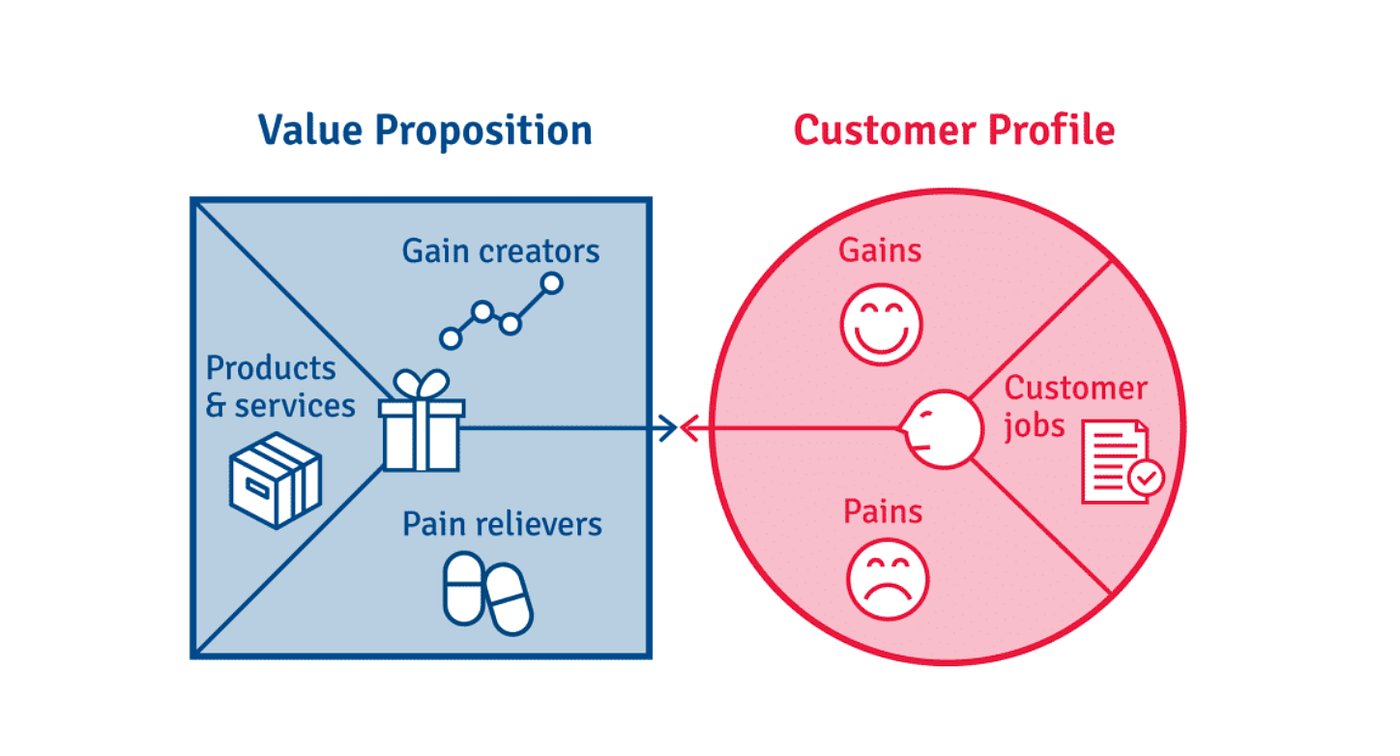
Most companies think they have a value proposition. They don’t. They have a version of it. A snapshot from the past. Something that worked once and slowly drifted out of sync with reality.
Markets moved. Customers changed. Competitors caught up. They didn’t.
And the data is clear according to Bain & Company, companies with a clear and consistently communicated value proposition grow 1.6x faster than the average.
Only 4% of companies actually have one.
Let that sink in. This is not a messaging problem. This is a survival problem.
[embed]B2B Growth Agenda 2026 Delivering growth in a world that won't sit still.www.bain.com
You can find the pdf report at the very end of the post…
Value proposition is not static!

Most leadership teams treat value proposition like a one-time decision. Define it. Package it. Move on.
Wrong.
Value proposition is a system under constant attack:
- Customers evolve
- Technology shifts
- Competitors replicate
- Pricing pressure increases
If you don’t actively rebuild it, it weakens.
Bain puts it bluntly:
“Maintaining a differentiated value proposition requires ongoing reinvention.”
This is not optional work. This is continuous work.
🔥 The companies that win treat differentiation as an active process, not a past achievement.
The real problem is Upstream
When growth slows, most companies react the same way:
- Push sales harder
- Adjust pricing
- Increase marketing spend
But the root cause sits earlier. Unclear value proposition forces every team to improvise.
Sales creates its own story in order to meet the quota. Marketing tells another to hit impressions, traffic, and leads.. Product builds features no one pays for.
But you don’t actually have a growth problem.
You have a clarity problem!

Bain’s research captures the signal very clearly. Companies try to do two things at the same time:
Grow and cut costs.
Top priorities:
- Diversify products and services → 49%
- Reduce costs → 47%
- Build new products → 47%
- Improve pricing with AI/data → 44%
- Differentiate value proposition → 39%
What this actually means:
Companies know growth must come from change. New products. Better pricing. Clear differentiation.
But at the same time, they are under pressure: Cut costs. Optimize. Protect margins.
This creates a major tension:
Short term → efficiency (easy to act, quick)
Long term → innovation (hard to achieve, long)
Innovation is not only about new ideas but is about maintaining relevance
This is where most people misunderstand innovation. They imagine moments.
- A genius stroke of insight.
- A breakthrough idea.
- A founder running out of the room shouting “Eureka!”.
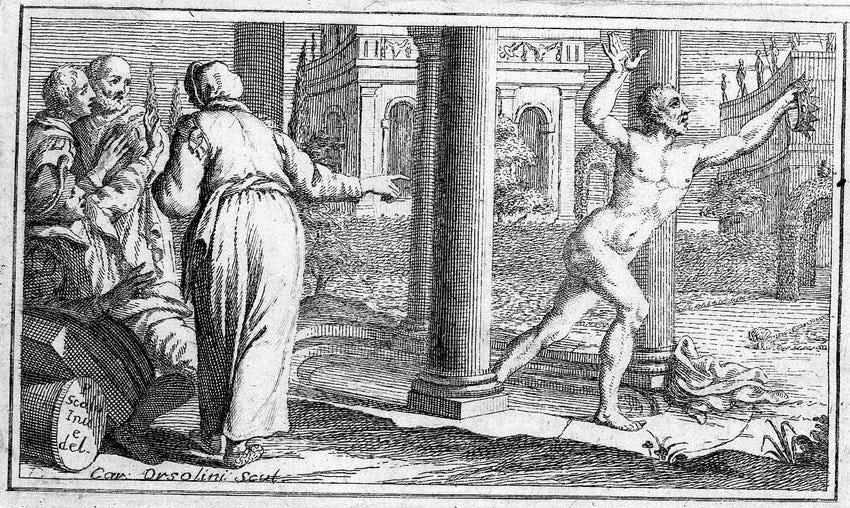
The story says Archimedes noticed bathwater rise when he got in and realized displaced water could measure the volume of irregular objects. Excited by the insight, he supposedly ran naked through Syracuse shouting “Eureka!”
That’s fiction. Innovation is not an event. It is a system. And that system exists for one reason:
To continuously rebuild your value proposition.
Without it:
- Your product becomes generic
- Your messaging loses meaning (why should I buy from you?)
- Your pricing collapses (why should I pay this much?)
- Your growth stalls
⚠️ Innovation is not a growth lever. It is a defense mechanism.
Enter the Chief Innovation Officer
Now the real question. Who owns this? Not marketing. Not product or technology. Not strategy alone.
This is where the Chief Innovation Officer comes in. Not as an “idea generator” but as a system builder.
What a real Chief Innovation Officer does
A serious CInO does not sit in a room thinking. He/she builds an engine. The job is to:
- Identify emerging opportunities
- Translate trends into experiments
- Run MVPs and pilots (POCs, POVs)
- Kill weak ideas fast (assessing risks and ROI)
- Scale what works
- Align product, sales, and business model
- Track value creation continuously…
He/she needs to own the loop:
Hypothesis → Test → Learn → Scale
Not once but continuously…

Why one person cannot “innovate”
Because innovation is not individual task. It is cross-functional.
Product defines what to build, tech builds and maintains it, presales and sales validates what sells and what does not. Marketing shapes perception. Data reveals behavior.
The CInO aligns this whole system.
This is what Linda Hill from Harvard Business School calls “collective genius.”
Collective genius = Not one brain. A coordinated system.
What winners do differently
The Bain report makes this explicit.
Winning companies continuously refine their value proposition. Collect a lot of telemetry from digital and offline channels and use customer feedback loops daily. Test and adapt offers, marketing offers or new features in real time. Treat differentiation as a top commercial priority
They don’t wait for disruption to create chaos. They challenge themselves before the market does.
🚀 They reinvent before they are forced to.
The hidden failure mode: Innovation theater
Many companies say they innovate but in reality they don’t. They run a theater:
Workshops with nothing deployed in the end. Full of post-its, ideathons, Strategy deck created with desktop research… Sometimes there is a protohack or a hackathon but there is no end result eventually.
No pipeline. No experiments. No measurable output so no impact.
Real innovation looks different:
- Defined pipeline
- Clear prioritization
- Measurable ROI
- Fast iteration cycles
The CInO’s first job is simple:
Kill theater. Build engine.
The uncomfortable truth
Most companies are not failing because they lack ideas. They are failing because they stopped updating their value.
And they don’t even see it and this especially dangerous for a company looking to survive. The huge revenues are still coming in. Ongoing hirings. A lot of unnecessary restructuring gives you a feeling of going somewhere.
Because they are inside the system. Busy executing. Optimizing something. On top of something that is already eroding.
The only question that matters
When was the last time you rewrote your value proposition? Not refreshed the messaging or not updated the slides.
Rebuilt it from scratch!
- Who exactly are you serving?
- Why do they choose you?
- What makes you different today?
- What would break if a competitor copied you tomorrow?
If you cannot answer this clearly, your growth problem has already started. Maybe you just haven’t seen the impact yet.
And if you have a Chief Innovation Officer, they are not there to inspire you. They are there to make sure your value does not decay.
All the best
Altan
P.s.
[embed]
메타데이터
- post_id
- da9550c8fc2d
- slug
- your-value-proposition-is-decaying-da9550c8fc2d
- url
- https://medium.com/@atabarezz/your-value-proposition-is-decaying-da9550c8fc2d
- canonical_url
- https://medium.com/@atabarezz/your-value-proposition-is-decaying-da9550c8fc2d
- author_url
- https://medium.com/@atabarezz
- status
- ok
- fetched_at
- 2026-06-15 20:49:13