In the Month Asia Started Removing Nomads, Two Cities Shook Hands
In eight days this July, two things happened in Southeast Asia. Then a third thing happened that almost nobody connected to the first two.
In the Month Asia Started Removing Nomads, Two Cities Shook Hands
In eight days this July, two things happened in Southeast Asia. Then a third thing happened that almost nobody connected to the first two.
On 21 July, the Iskandar Puteri City Council in Johor, Malaysia revoked the business and advertising licences of Network School at Forest City. Operations stopped the next day. Within hours, Balaji Srinivasan announced a five-year memorandum of understanding with Kazakhstan.
On 28 July, Indonesia’s immigration authority issued re-entry bans against two Dutch nationals who ran Entourage Run, a foreigners-only running club in Canggu. Indonesians who applied were rejected. Foreigners were not. When it surfaced on social media, the authorities used a specific phrase: a state within a state.
That second one was not an isolated incident. On 15 April, Bali launched an immigration patrol unit called Dharma Dewata, with roughly 100 officers deployed across Canggu, Ubud, Seminyak, Kerobokan and Uluwatu. That is not a random list of neighbourhoods. That is a map of where we live. In the first three weeks of May alone, 62 foreigners were detained and removed.
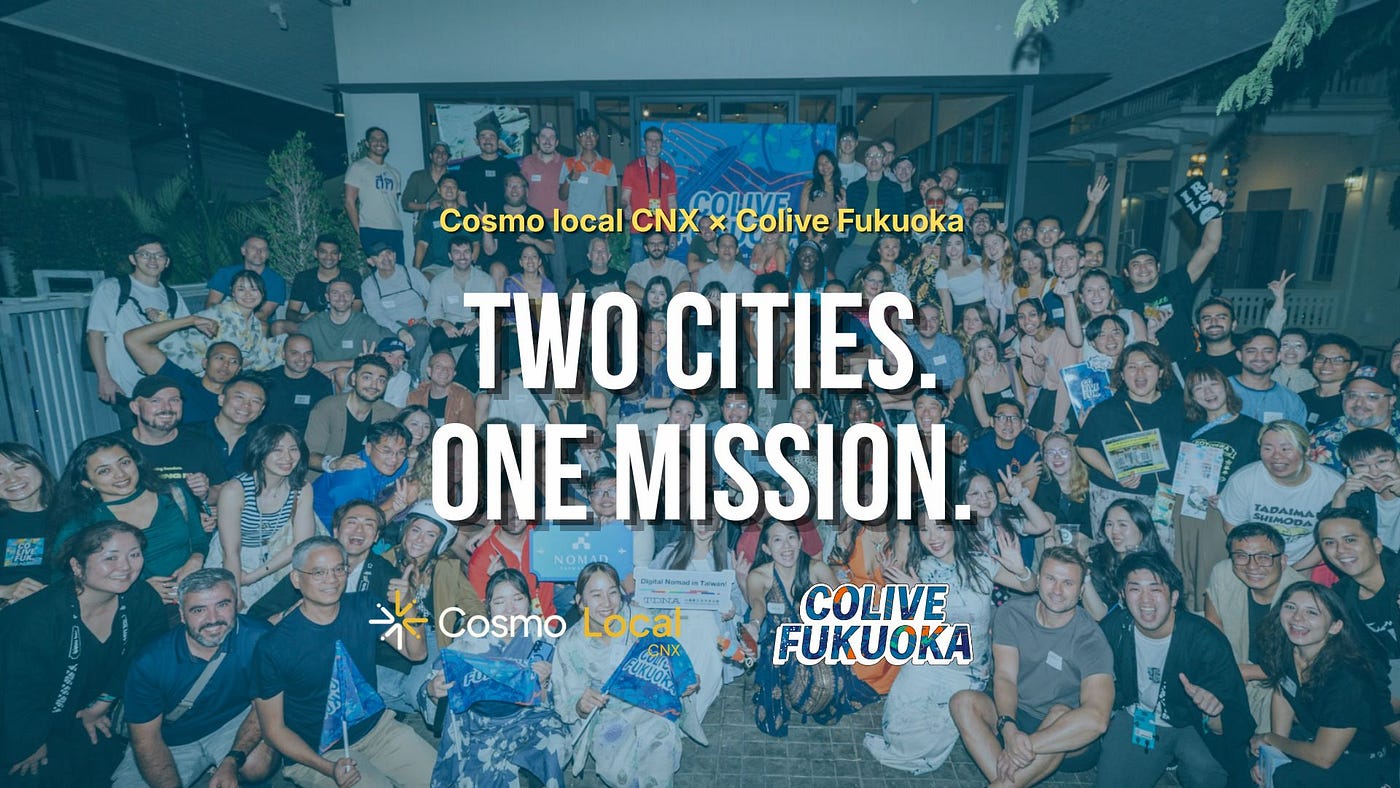
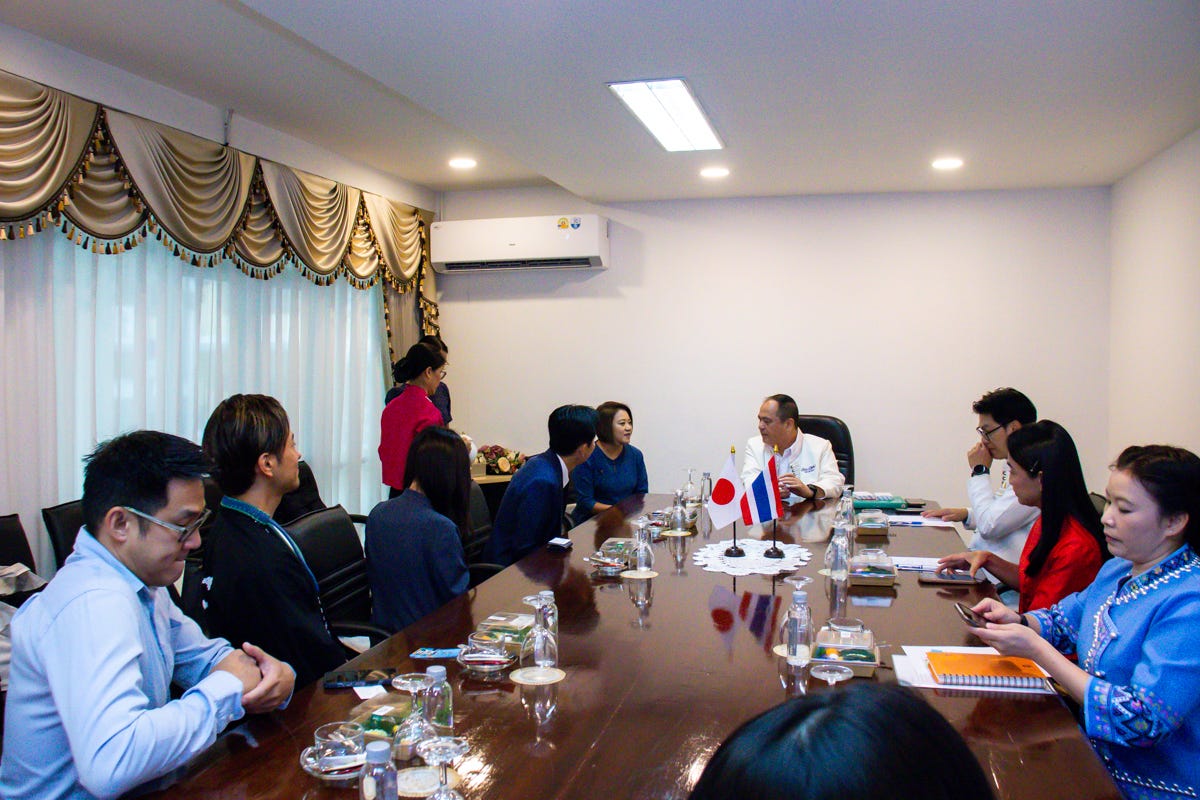
And in that same week, Chiang Mai and Fukuoka announced that we are opening a corridor between our two cities.
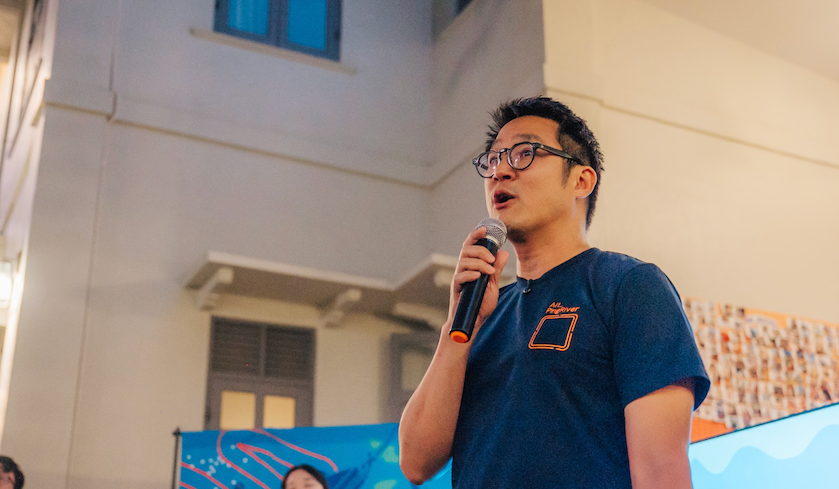
John Ho, who runs Alt_Coliving in Chiang Mai and is building Cosmo Local CNX this September, wrote on LinkedIn:
Let’s try to make nomads lovable, not hated.
The vocabulary hosts use, which most of us never learned
Here is something I have noticed in ten years of moving between these communities. Digital nomads have a rich vocabulary for our own experience — burnout, community, deep work, slow travel, tax residency. We have almost no vocabulary for what we look like from the receiving end.
Tourism research has had that vocabulary since 1975.
Doxey’s Irridex describes how a host community’s attitude toward visitors moves through four stages: euphoria, apathy, irritation, antagonism. The order is fixed. It does not run backwards. Lisbon went through it. Mexico City went through it. Bali is going through it now.
The companion concept is carrying capacity, and it comes in four kinds: physical, economic, social and psychological. When any one of the four is exceeded, a place moves from stage three to stage four. Note that two of those four are not about infrastructure at all. A town can have enough rooms and enough restaurants and still cross the line, because what broke was social and psychological.
This matters more for us than for tourists, not less. We pay more and we stay longer, which means our pressure lands on the housing market rather than on hotel inventory.
So when John writes that 90%+ of nomads simply lack the HOW, the WHERE and the WHOM, I think he is right, and I would add one word: nobody handed us the host’s dictionary. It is not malice. It is a design problem. Design problems are solvable.
Why Chiang Mai picked Fukuoka
Colive Fukuoka started in 2023 with 49 people. In 2024 we had 436. In 2025, 496 people from 57 countries and territories. October will be our fourth year.
By size, that is not impressive. The world’s largest nomad festival is still Bansko, which drew over 1,000 people from more than 50 countries in June. We are half that.
The reason is a different number. 45% of our 2025 participants were Japanese.
I do not know of another nomad gathering anywhere where nationals of the host country make up nearly half the room. Usually these events become a place where people from elsewhere spend time with other people from elsewhere. Fukuoka did not become that.
Think about what 45% local attendance mechanically produces. Someone to translate. Someone who knows which door to knock on. Someone you will run into again next Tuesday, because they live here. It is the structural opposite of a running club that locals cannot join.
The sentence I hear most often from our international participants is: I don’t want to be called a tourist. What they are asking for is specific — real Japan, real relationships, real business opportunity, real involvement with the place. Not hospitality. Participation, as equals.
Which is why, when a Japanese region asks us how to start, the answer is always the same order of operations: hire the person first, then rent the space, then build the desks, then connect the roads, then weave the community. The community manager comes before the hardware. Goto City in Nagasaki assigned four of them. That decision tells me they understood the sequence exactly.
Why Thailand is moving now

Chiang Mai has been at or near the top of global remote-work rankings for over a decade. Forbes placed it in 2026 among the world’s leading destinations alongside Medellín, Cape Town, Lisbon, Bali, Mexico City, Tokyo and Berlin. You probably know this already.
What you may not know is why Thailand’s institutions are suddenly moving.
In 2025, foreign arrivals to Thailand fell 7.2% to 32,974,321. The main cause was China: from roughly 6.73 million down to 4,473,992, a drop of over 30%. International tourism revenue fell 4.71% to 1.53 trillion baht. Source: Thai Ministry of Tourism and Sports.
A country that built part of its economy on visitors just lost a third of its largest market in a single year. Long-stay, high-spend, low-density visitors suddenly look less like a lifestyle niche and more like a policy answer.
The DTV, launched in July 2024, is part of that answer: five years, unlimited entries, 180 days per stay, one 180-day extension, 500,000 THB in savings. In 2026 startup founders and researchers were added, and medical insurance of at least US$40,000 became an explicit requirement.
But institutions did not create Chiang Mai. Chiang Mai created itself over ten years, and the institutions caught up afterwards. Bansko was the same — Bulgaria amended its immigration law in 2025, after the festival had already run for six years. The community builds the place. The state ratifies it later.
What is actually new here
Japan has a policy category called chihō sōsei — regional revitalization. For twenty years it has meant domestic population transfer: convince someone in Tokyo to move to a smaller city. Budgets, subsidies, migration campaigns. Almost entirely inward-facing.
Fukuoka was the first city in Japan to treat inbound digital nomads as part of that framework rather than as tourism. Not a one-off economic bump, but a pillar of regional strategy. Since then the number of Japanese municipalities exploring the same thing has grown steadily.
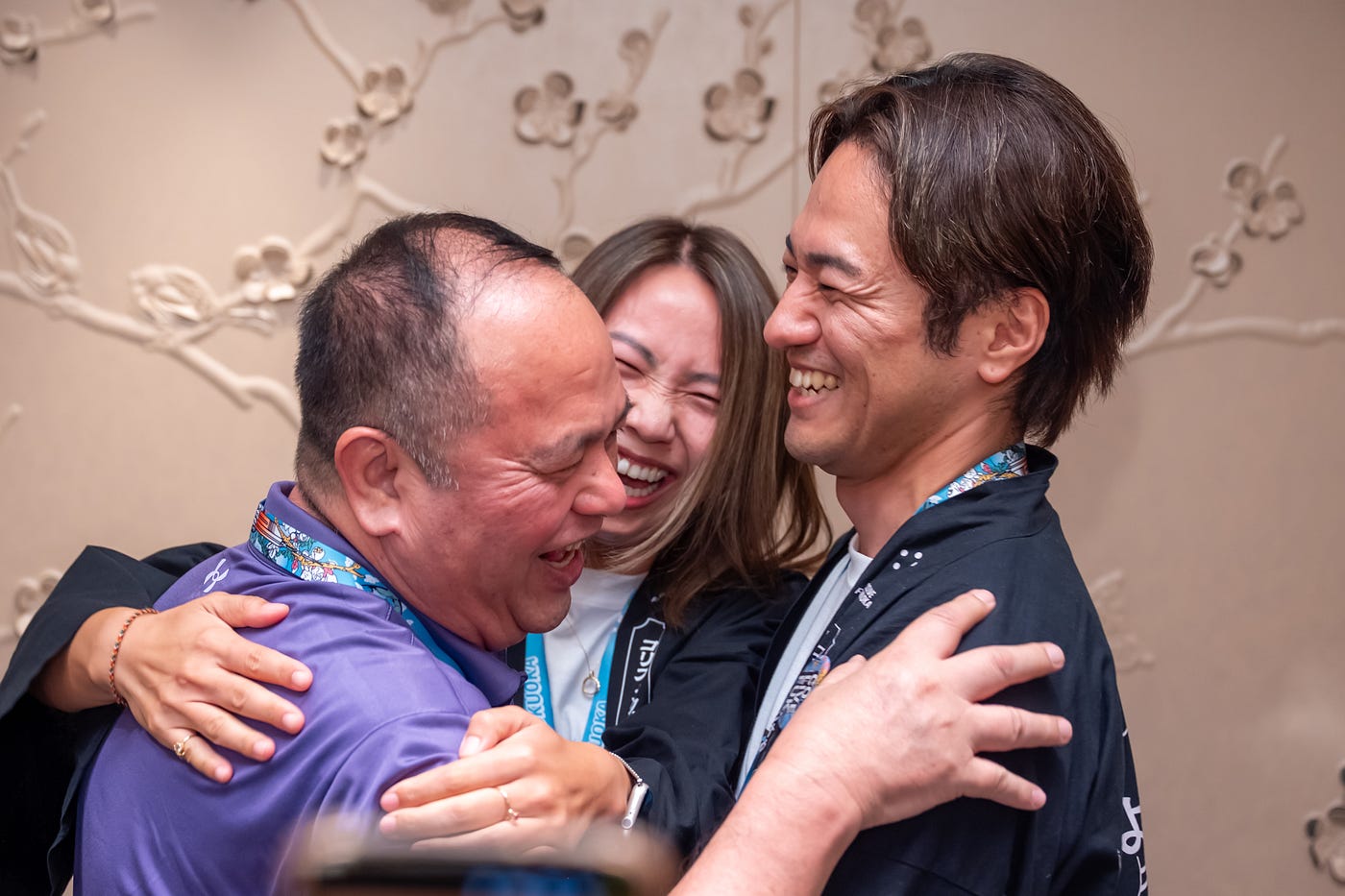
What we are doing with Chiang Mai is taking that domestic playbook and running it across a border, in both directions, with both city governments involved. As far as I know, nobody has done this before. It may turn out to be a very Japanese, very idiosyncratic experiment. I think it is worth watching either way.
On the Thai side, a public-private body called Nomad Friendly District has now launched — structurally similar to what Colive Fukuoka is in Japan. Its first move is to build up the Sampakoi area rather than Nimman, where nomads already cluster. That choice tells you they are thinking about carrying capacity, whether or not they use the term.
Cosmo Local CNX — Chiang Mai
- 1–28 September 2026. Main Week 23–28 September
- Wat Ket district, Chiang Mai
- A month-long pop-up village with four parallel coliving tracks of roughly 10–15 people each, converging during Main Week
- Tracks: AI for Chiang Mai / Food That Nourishes / Solopreneur / Nomad Futures Lab
- Partners include Sasin, Nomad Friendly District, Alt_Coliving and Pun Pun, among more than eleven organisations
Colive Fukuoka 2026 — Japan
https://www.colivefukuoka.com/2026
- Opening party 30 September. Main programme 1–10 October
- Main conference venue: The Luigans, Fukuoka
- Ikigai Academy 1–2 October
- Direct integration with RAMEN TECH, Fukuoka’s global startup summit, where international participants exhibit and pitch
- Over 100 events in ten days, over 80 partners and sponsors
Travel days are 28–30 September. Chiang Mai’s Main Week closes, and two days later Fukuoka’s opening party begins. That gap is not a coincidence. We designed it, and we are planning a handover ceremony between the two communities — something closer to passing a torch than to ending one event and starting another.
Cross-community discounts are live now:
- Code FUK26 –30% off the Cosmo Local CNX Main Week ticket, for the Colive Fukuoka community
- Code GOCNX26 –30% off Colive Fukuoka tickets, for the Cosmo Local CNX community
A single combo pass covering both is in development.
See you in Chiang Mai in September, or in Fukuoka in October. Or both — that is rather the point.
Be where you are meant to be.
Ryo Osera CEO, yugyo inc. Specially Appointed Associate Professor, Institute for Frontier Tourism Research, Kanazawa University Advisor, Japan Workcation Association Board Member, Japan Digital Nomad Association
메타데이터
- post_id
- da97d4dfca5c
- slug
- in-the-month-asia-started-removing-nomads-two-cities-shook-hands-da97d4dfca5c
- url
- https://medium.com/@oseraryo/in-the-month-asia-started-removing-nomads-two-cities-shook-hands-da97d4dfca5c
- canonical_url
- https://medium.com/@oseraryo/in-the-month-asia-started-removing-nomads-two-cities-shook-hands-da97d4dfca5c
- author_url
- https://medium.com/@oseraryo
- status
- ok
- fetched_at
- 2026-08-07 16:10:22