SDLC vs STLC: Understanding the Difference Every Software Professional Should Know
When discussing software development and testing, two terms frequently appear: SDLC (Software Development Life Cycle) and STLC (Software…
SDLC vs STLC: Understanding the Difference Every Software Professional Should Know
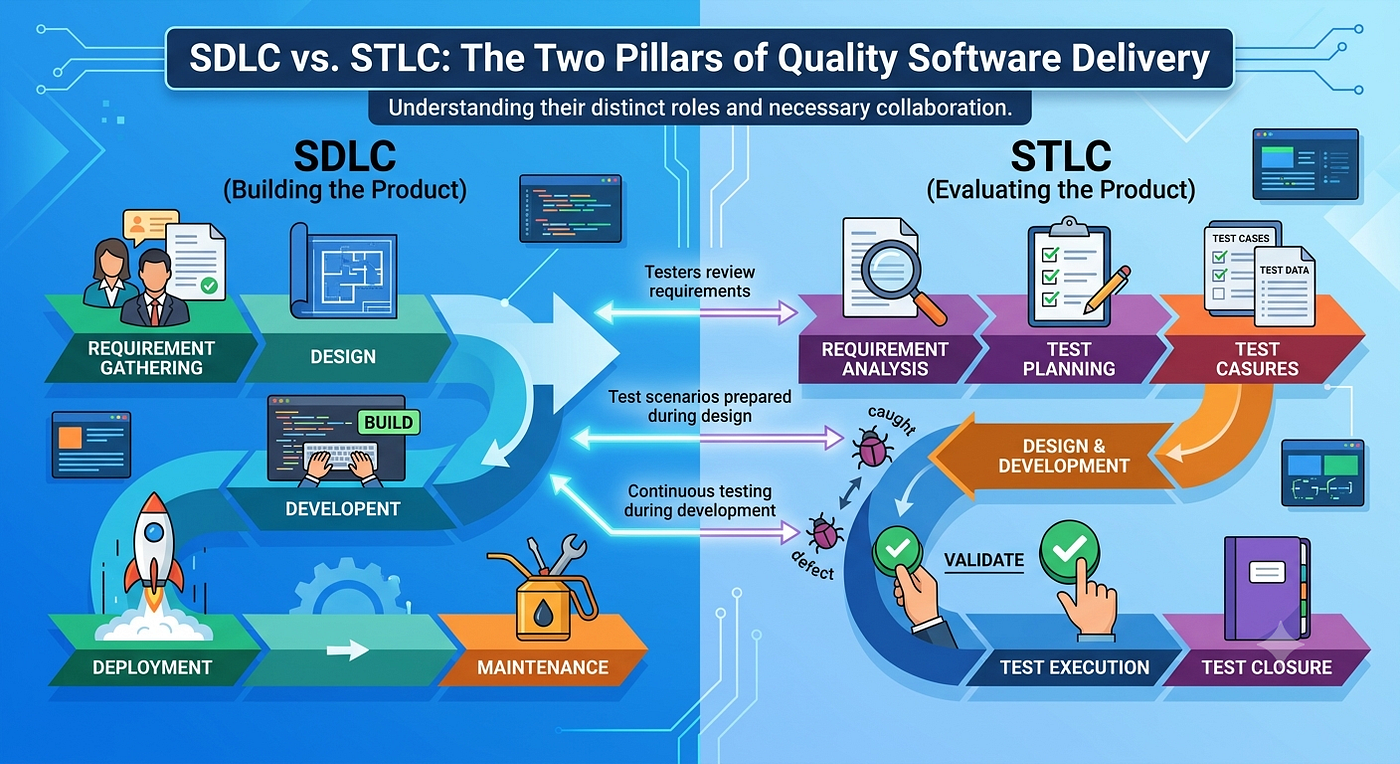
When discussing software development and testing, two terms frequently appear: SDLC (Software Development Life Cycle) and STLC (Software Testing Life Cycle). While they are closely related, they serve different purposes within a software project.
Many beginners often assume that testing is simply a phase within development. In reality, software testing follows its own structured lifecycle that works alongside the development process to ensure quality, reliability, and customer satisfaction.
Understanding the relationship between SDLC and STLC is essential for developers, testers, business analysts, project managers, and anyone involved in software projects. In this article, we’ll explore what SDLC and STLC are, how they differ, and why both are critical for delivering successful software products.
What is SDLC?
Software Development Life Cycle (SDLC) is a structured process used to design, develop, deliver, and maintain software applications. The primary goal of SDLC is to produce high-quality software that meets customer requirements while staying within budget and timeline constraints.
Think of SDLC as the complete roadmap of a software project from the moment an idea is proposed until the software is deployed and maintained.
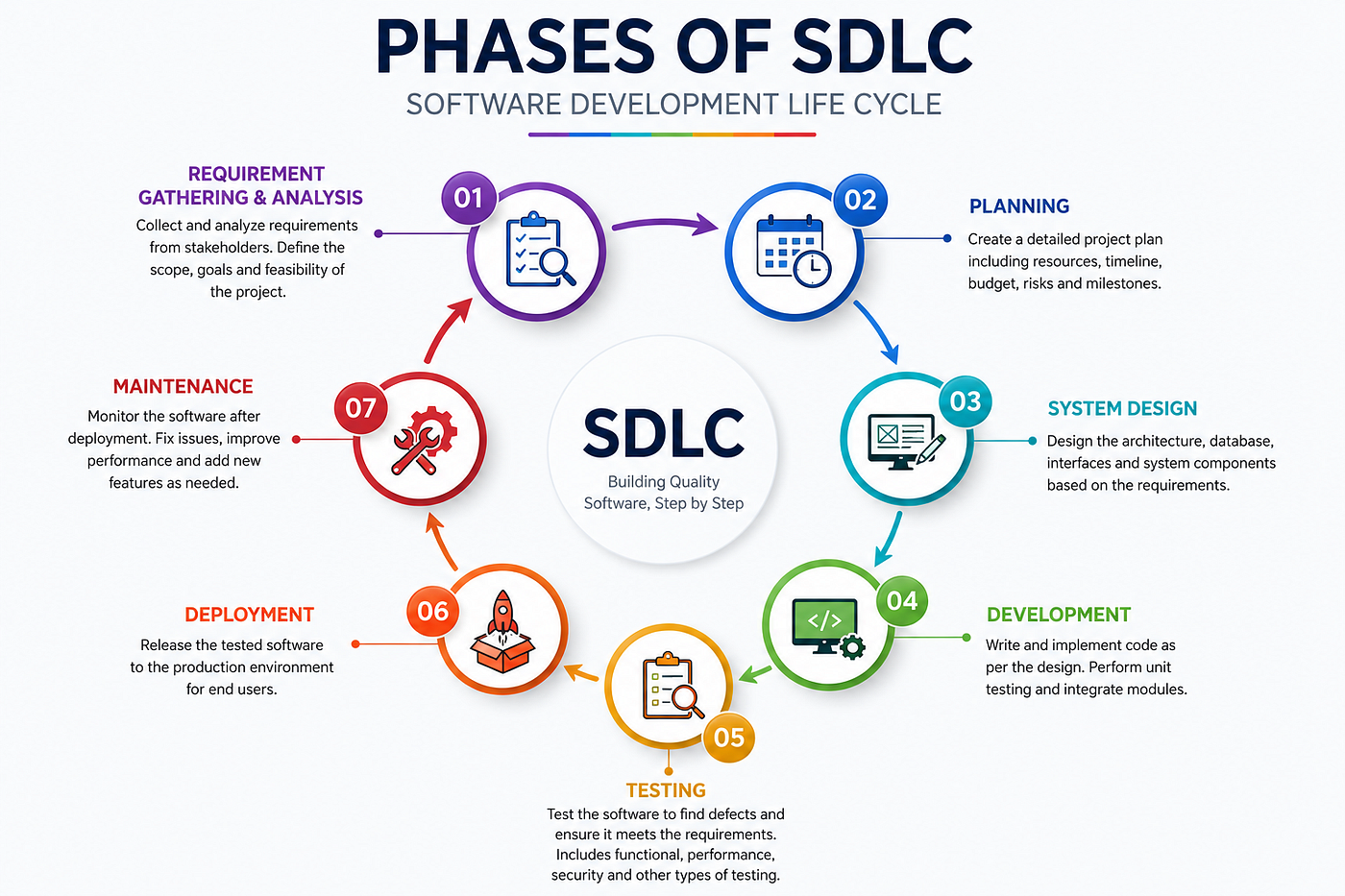
Phases of SDLC
1. Requirement Gathering and Analysis
This is where stakeholders, clients, and business analysts identify and document the requirements of the system.
Key activities include:
- Understanding business needs
- Identifying functional and non-functional requirements
- Defining project scope
- Analyzing feasibility
The quality of requirements directly impacts the success of the entire project.
2. Planning
Project managers create a plan that outlines:
- Budget
- Resources
- Timelines
- Risks
- Project milestones
Proper planning helps teams avoid unexpected challenges later in the project.
3. System Design
During this phase, architects and designers create the blueprint of the software.
This may include:
- System architecture
- Database design
- User interface design
- Technical specifications
The design serves as a guide for developers during implementation.
4. Development
This is where developers start writing the actual code based on the approved design and requirements.
Activities include:
- Coding
- Unit testing by developers
- Code reviews
- Integration of modules
The software begins to take shape during this stage.
5. Testing
Before releasing the application, the product is evaluated to ensure it functions correctly and meets specified requirements.
Different testing activities may include:
- Functional testing
- Integration testing
- System testing
- Performance testing
- Security testing
- User acceptance testing
This phase helps identify defects before customers encounter them.
6. Deployment
Once testing is completed and the software is approved, it is released to users.
Deployment may occur:
- All at once
- In stages
- Through continuous delivery pipelines
7. Maintenance
Software requires ongoing support even after release.
Maintenance activities include:
- Fixing defects
- Enhancing functionality
- Improving performance
- Adapting to new technologies or business needs
This phase often continues throughout the software’s lifecycle.
What is STLC?
Software Testing Life Cycle (STLC) is a systematic process that defines the activities performed by the testing team to ensure software quality. The primary goal of STLC is to identify defects, validate requirements, and verify that the software behaves as expected.
While SDLC focuses on building the product, STLC focuses on evaluating and validating it.
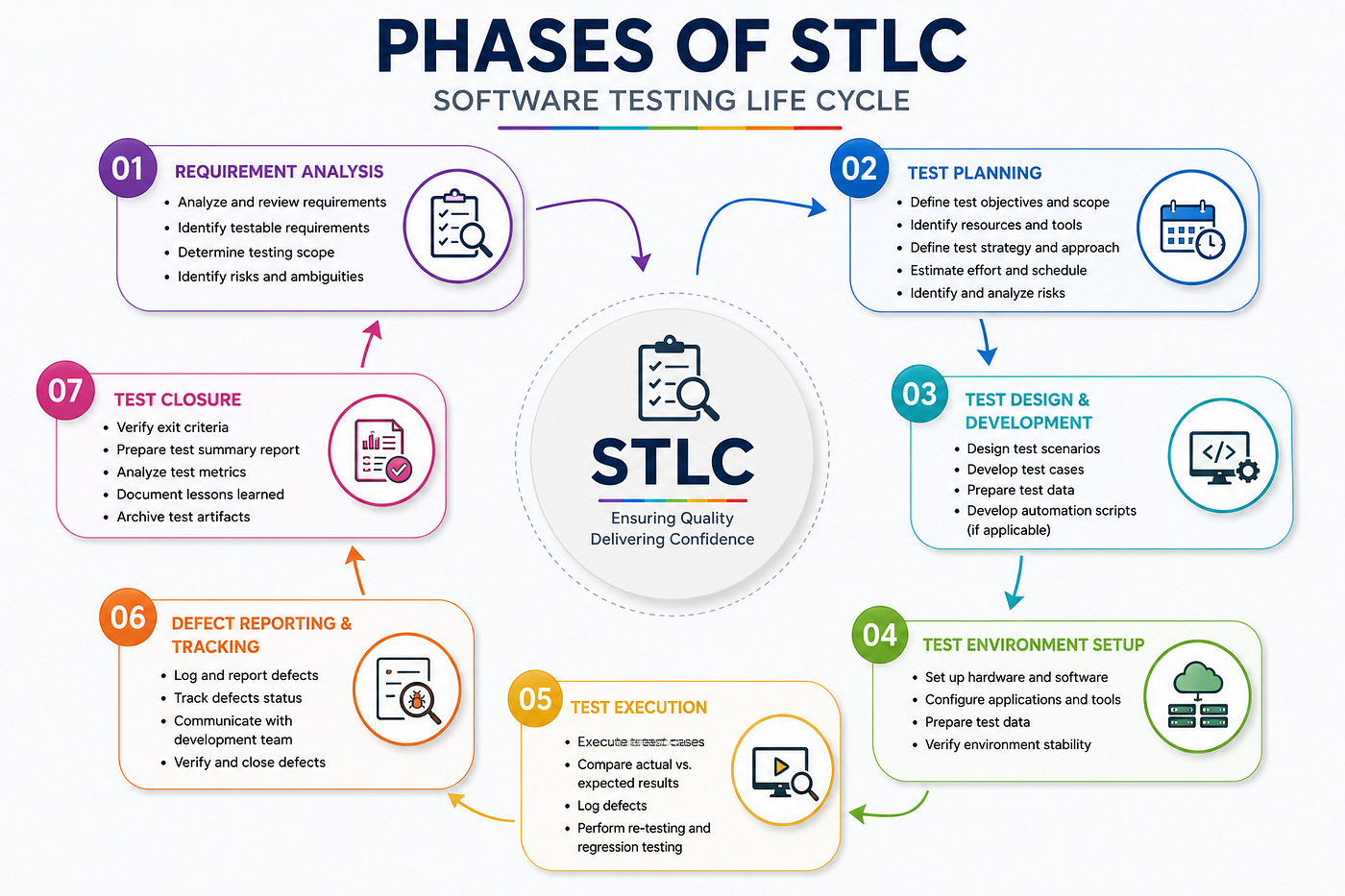
Phases of STLC
1. Requirement Analysis
Testing begins as soon as requirements become available.
Testers analyze requirements to determine:
- What should be tested
- Testable requirements
- Testing scope
- Potential risks
Early involvement helps identify requirement gaps and ambiguities.
2. Test Planning
The testing team creates a test plan that defines:
- Testing objectives
- Scope
- Resources
- Test strategy
- Schedule
- Risk management
The test plan acts as the foundation for all testing activities.
3. Test Design and Development
During this phase, testers prepare:
- Test scenarios
- Test cases
- Test data
- Automation scripts (if applicable)
Well-designed test cases improve coverage and increase the likelihood of detecting defects.
4. Test Environment Setup
A testing environment is prepared to closely resemble the production environment.
This may include:
- Servers
- Databases
- Applications
- Network configurations
- Test tools
A stable environment is essential for reliable testing.
5. Test Execution
Testers execute test cases and compare actual results against expected results.
Activities include:
- Running tests
- Logging defects
- Retesting fixes
- Performing regression testing
This phase generates valuable information about product quality.
6. Defect Reporting and Tracking
Defects identified during execution are documented and communicated to the development team.
Each defect is typically tracked through stages such as:
- Open
- Assigned
- Fixed
- Retested
- Closed
Effective defect management improves collaboration between teams.
7. Test Closure
After testing activities are completed, the team evaluates the testing effort and prepares closure reports.
Typical activities include:
- Reviewing test results
- Measuring coverage
- Analyzing defect trends
- Documenting lessons learned
This information helps improve future projects.
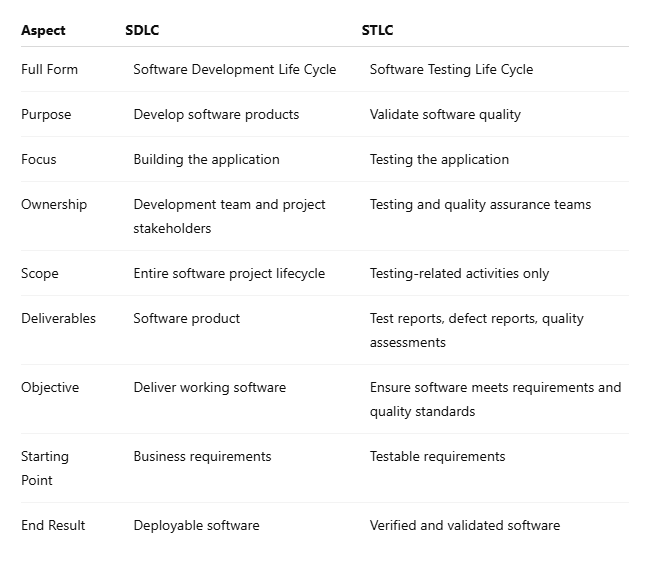
SDLC vs STLC: Key Differences
How SDLC and STLC Work Together
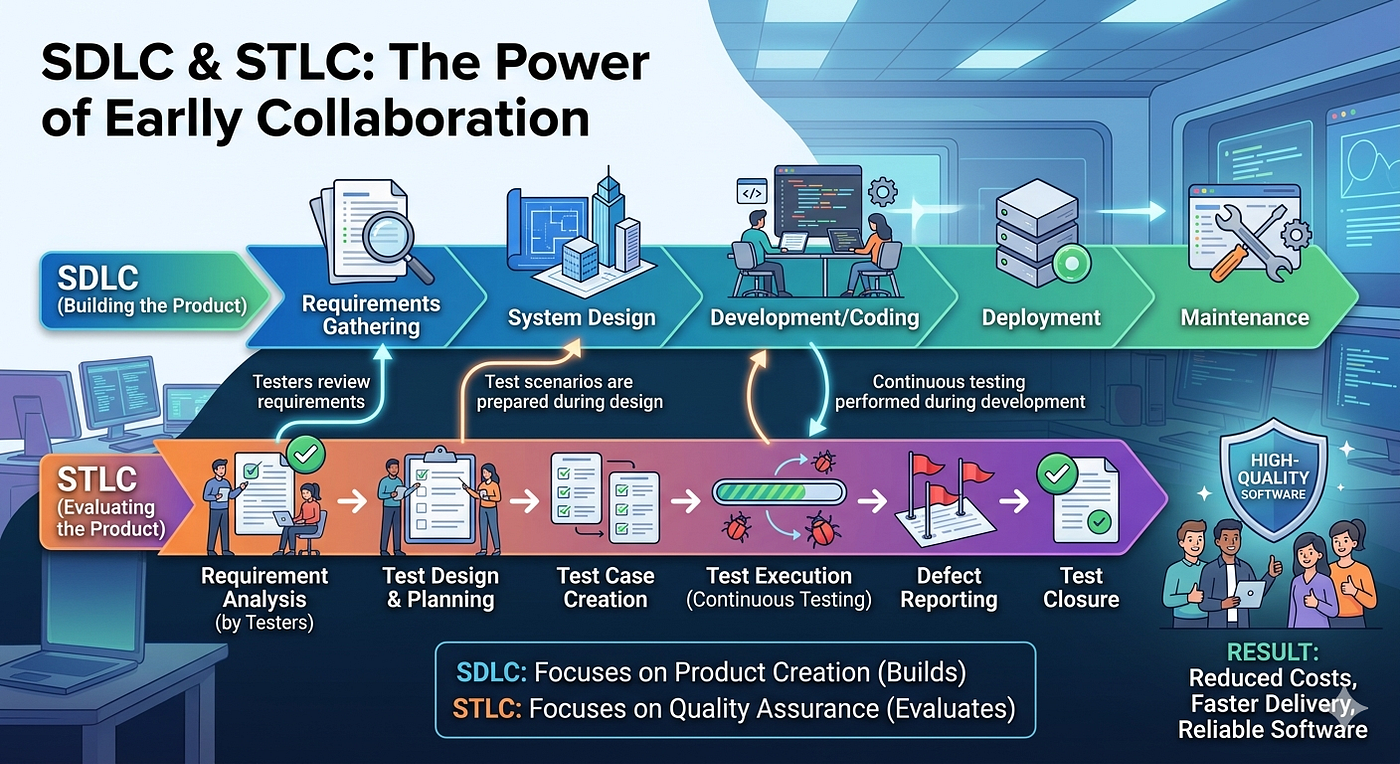
A common misconception is that testing starts only after development ends. Modern software projects follow a much more collaborative approach. Testing activities often begin during the requirement phase and continue throughout development.
For example:
- Requirements are reviewed by testers.
- Test scenarios are prepared during design.
- Test cases are created while development is ongoing.
- Continuous testing is performed as features are developed.
This early involvement helps detect issues sooner, reducing the cost and effort required to fix them.
The relationship can be viewed as:
SDLC builds the product.
STLC evaluates the product.
Both lifecycles complement each other and contribute to delivering high-quality software.
Why Understanding Both Matters
Whether you’re a developer, tester, business analyst, or project manager, understanding both SDLC and STLC offers several benefits:
Better Collaboration
Teams can communicate more effectively when they understand each other’s responsibilities and workflows.
Early Defect Detection
Awareness of testing activities encourages quality-focused development practices.
Improved Product Quality
When development and testing work together, defects are identified earlier and customer satisfaction improves.
Efficient Project Management
Project timelines and resources can be planned more accurately when both lifecycles are considered.
Real-World Example
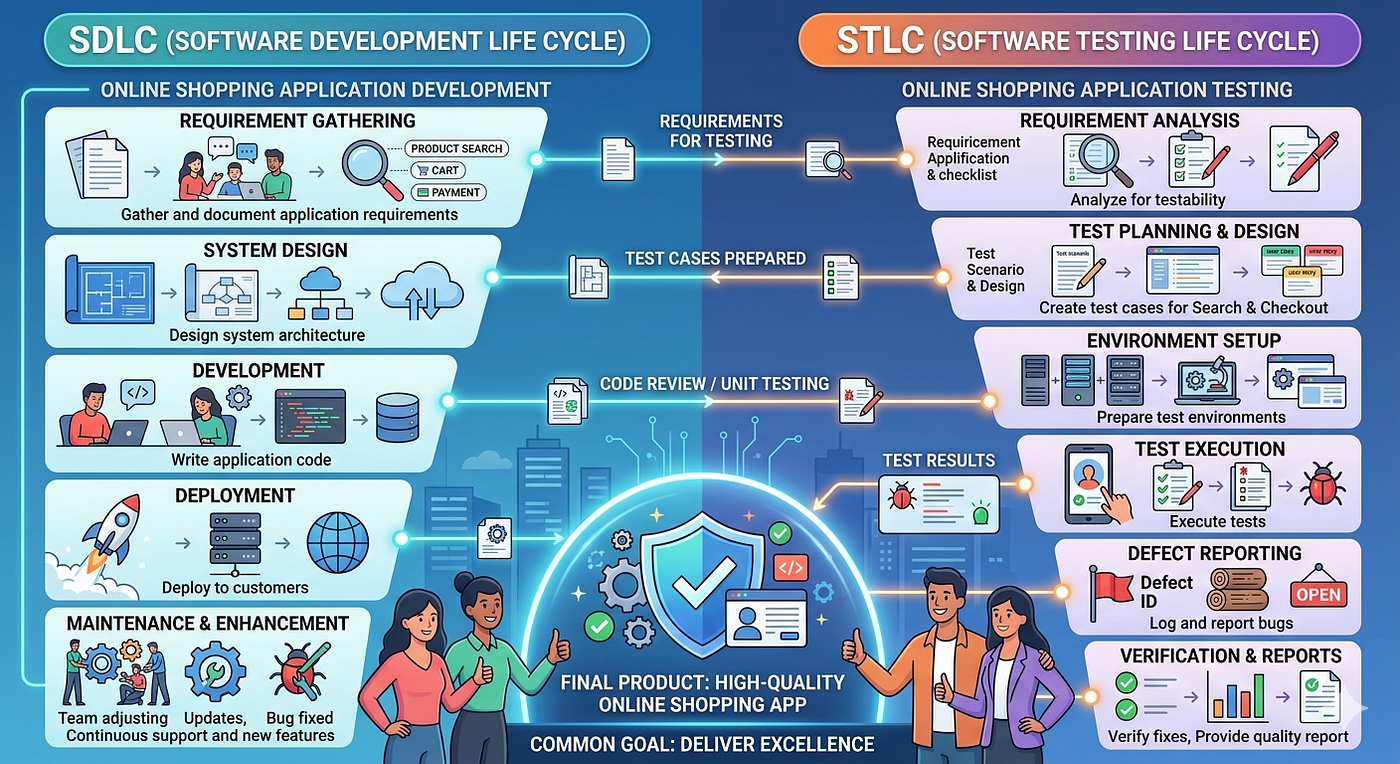
Imagine a team developing an online shopping application.
SDLC Activities
- Gather requirements for product search, cart, and payment features.
- Design the system architecture.
- Develop the application.
- Deploy it to customers.
- Maintain and enhance it over time.
STLC Activities
- Analyze requirements for testability.
- Create test cases for product search and checkout.
- Prepare test environments.
- Execute tests.
- Report defects.
- Verify fixes.
- Provide quality reports before release.
Both teams work toward the same goal but perform different responsibilities.
Final Thoughts
SDLC and STLC are two essential lifecycles that contribute to successful software delivery.
The Software Development Life Cycle (SDLC) focuses on planning, designing, building, deploying, and maintaining software. The Software Testing Life Cycle (STLC) focuses on validating that software meets requirements and performs as expected.
Rather than viewing them as separate processes, it’s more accurate to see them as complementary lifecycles working together throughout a project. Development creates value, while testing ensures that value is delivered with quality.
Organizations that effectively integrate SDLC and STLC are better equipped to deliver reliable, high-quality software that meets both business objectives and user expectations.
💻👩💻👨💻💻👩💻👨💻💻👩💻👨💻💻👩💻👨💻💻👩💻👨💻💻👩💻👨💻💻👩💻👨💻💻
That brings us to the end of this topic. Thank you for reading, and I look forward to meeting you again with another insightful discussion.
Have a wonderful day!
메타데이터
- post_id
- daab4e447780
- slug
- sdlc-vs-stlc-understanding-the-difference-every-software-professional-should-know-daab4e447780
- url
- https://medium.com/@vidumibandara23/sdlc-vs-stlc-understanding-the-difference-every-software-professional-should-know-daab4e447780
- canonical_url
- https://medium.com/@vidumibandara23/sdlc-vs-stlc-understanding-the-difference-every-software-professional-should-know-daab4e447780
- author_url
- https://medium.com/@vidumibandara23
- status
- ok
- fetched_at
- 2026-06-21 15:33:18