What is Rock & Roll?: A History of Black Innovation & Erasure
Prelude
What is Rock & Roll?: A History of Black Innovation & Erasure
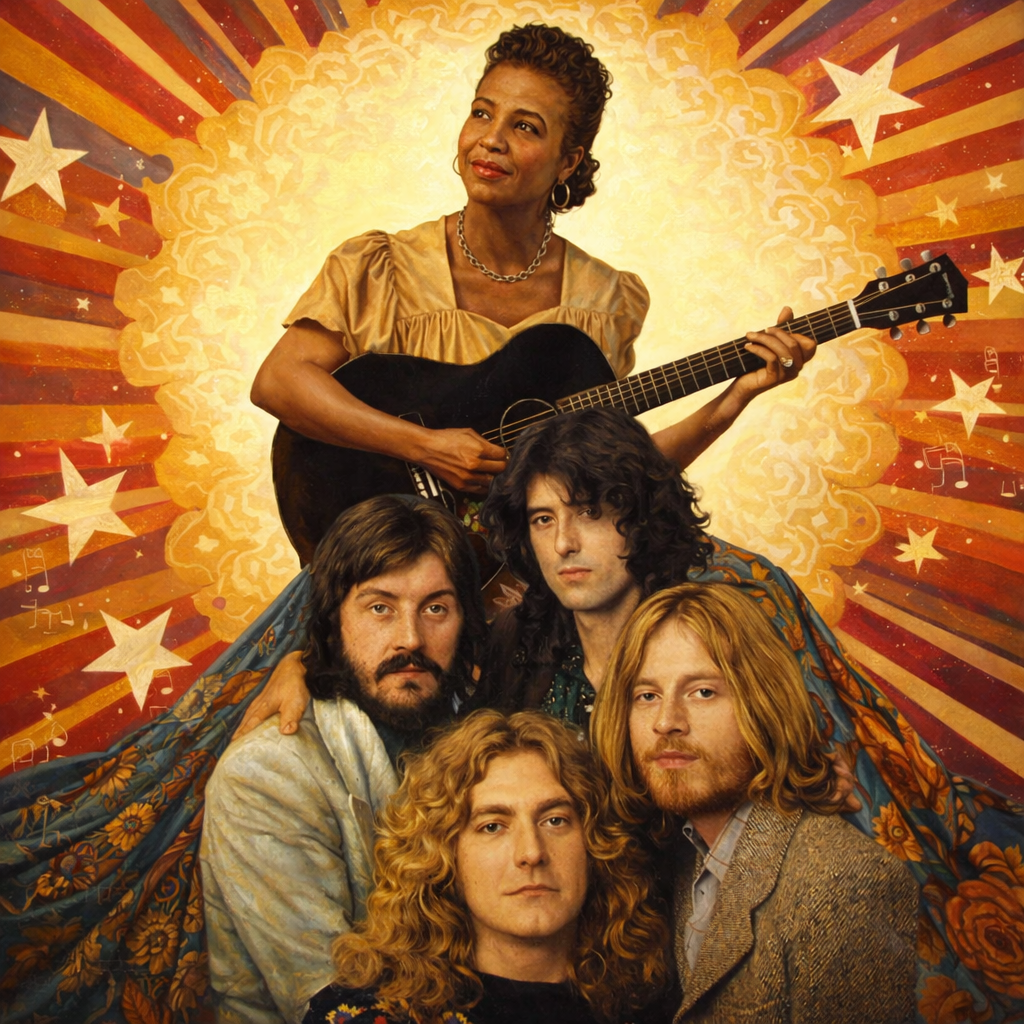
Memphis Minnie and Led Zeppelin. Created using ChatGPT, Midjourney and Adobe Photoshop
Prelude
Louisiana-born, Delta-raised Lizzie Douglas (1897–1973), better known to history as Memphis Minnie was a blues trailblazer who recorded over 200 songs. She co-wrote “When the Levee Breaks” in 1929 with Kansas Joe McCoy during their first recording session for Columbia Records. The song was famously covered by English rock band Led Zeppelin in 1971 using many of the original lyrics. Though credited, sources suggest Minnie did not receive significant royalties and passed away in poverty two years later. I grew up listening to Led Zeppelin’s version because my parents were classic rock fans. I did not learn about Memphis Minnie until decades later when I learned about how race records were marketed by white-owned companies from the 1920s to the 1940s. This move fostered the separation between white and black music and is part of the reason why Memphis Minnie’s and other Black American performers’ music never made it to the mainstream.
Soulful Pop Tops the Charts
Growing up, my family often listened to 104.7 WLOU — FM, which was the heritage black station in Louisville, Kentucky, and programming since 1951. The early conversion to rhythm and blues (R&B) music made WLOU one of the first full-time R&B stations in the U.S. One summer day in 1984 I was listening to WLOU when they aired a radio call-in quiz or segment with fast-paced trivia to win a prize. I can’t remember the question but I did call in and guess the correct answer. I had to visit the radio station to pick up something but they didn’t tell me what it was. I took two city busses to get there, just to get a promotional single (vinyl) by someone named “Sade.” At first, I was disappointed because the name was unfamiliar to me (Who is Shar-day… Shah-de?). The enthusiasm I initially had was fading fast… then I listened to the song.
In heaven’s name, why are you walking away? Hang on to your love In heaven’s name, why do you play these games? Hang on to your love…
Back album cover of the Sade single (song) “Hang On To Your Love” from 1984
It wasn’t a classic, though it might have been if Minnie had sung it rather than McCoy. — Charles Sharr Murray
Helen Folasade Adu aka Sade was unique because she was the principal songwriter and lead vocalist of her own namesake band, also called Sade. In some ways Sade was like Memphis Minnie because, as a Black woman, she challenged the status quo. The music industry had boxed in artists, making it very difficult to achieve success in different genres. Sade’s music crossed over from niche British jazz-soul to global pop stardom by blending sophisticated jazz instrumentation, R&B soul, and sultry “quiet storm” pop that appealed to broad, adult (urban) contemporary, and mainstream pop audiences. Unlike the race records of the 1920s and 30s, Black artists like Sade did not have to be segregated and mainstream audiences had access to their music via commercial radio and in music videos. Music streaming services disrupted the old commercial infrastructure, perhaps for all time.
However, it appears many critics seemed have missed this development.
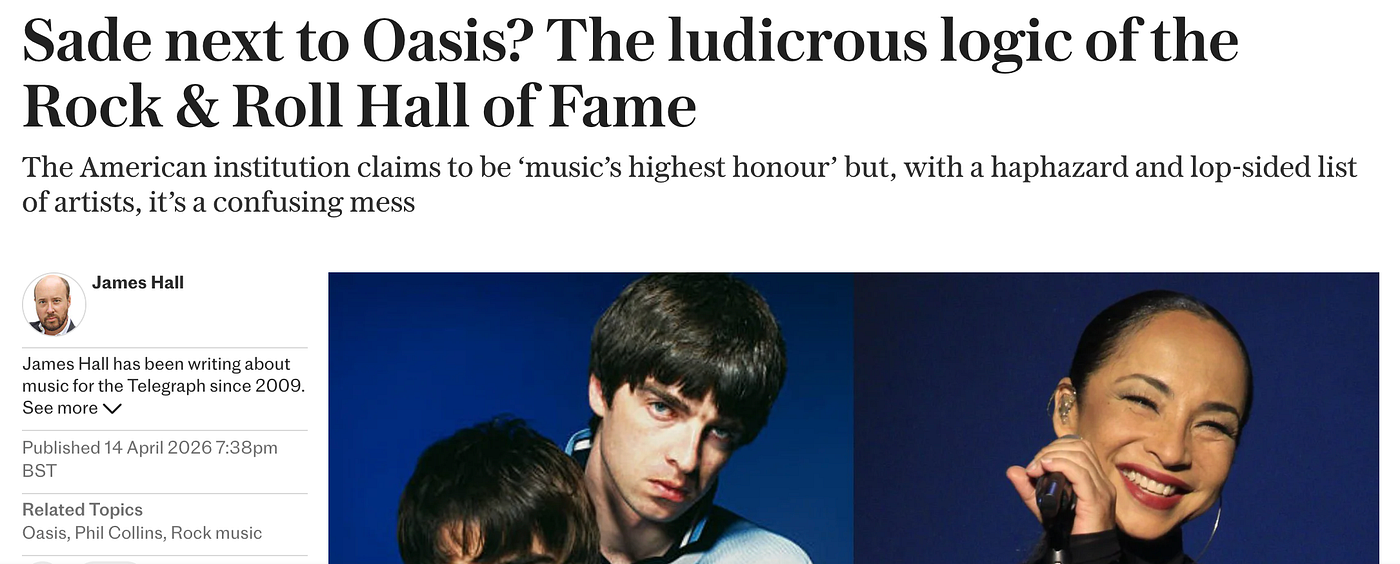
“Random and retro, it reads like a charity shop CD rack.” — James Hall for The Telegraph
Earlier this week, the Rock & Roll Hall of Fame Foundation or RRHoF announced its 2026 Inductees. Media outlets and social media sites have been buzzing about Sade’s induction along with Phil Collins, Iron Maiden, Billy Idol, Queen Latifah, Oasis, Joy Division/New Order, Wu-Tang Clan and the late Luther Vandross. The RRHoF faces persistent criticism for lack of transparency in voting, a slow induction rate for women and artists of color, and a broadening definition of “rock” that excludes hard rock/metal pioneers in favor of pop or hip-hop acts. For example, James Hall (The Telegraph) thinks Sade is “remote in the history of pop” and minimizes her importance in rock & roll.
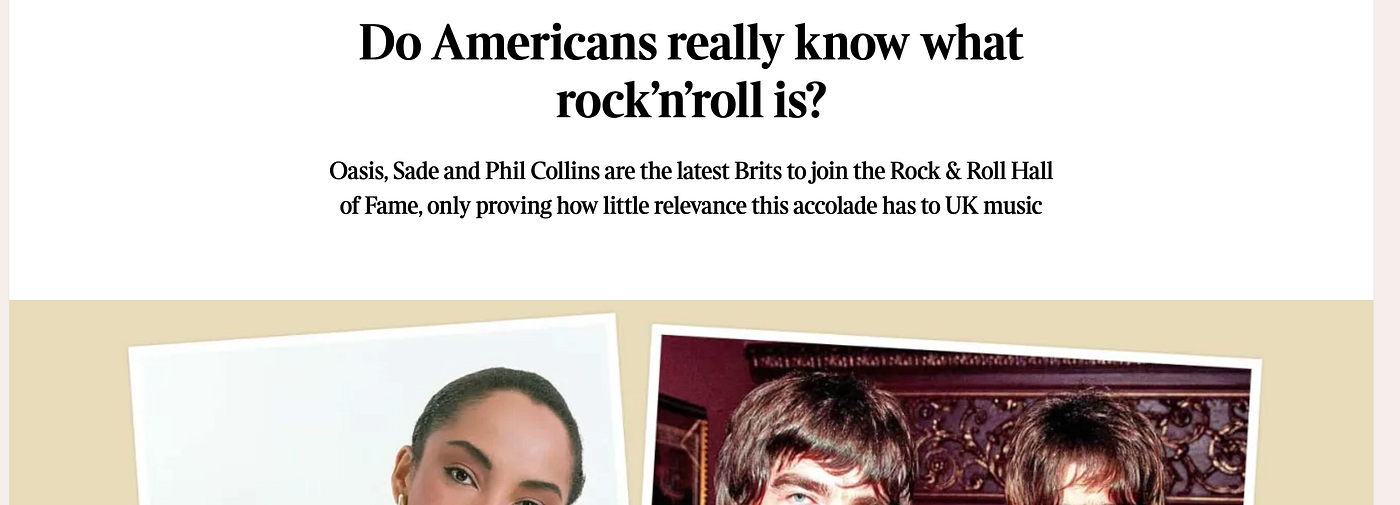
Will Hodgkinson thinks the RRHoF has little relevance to UK music
Will Hodgkinson of The Times thinks the disparity between this year’s British nominees proves RRHoF has “little relevance for the UK’s rock and pop history.” Neither James Hall or Hodgkinson acknowledge or know about the origins of rock & roll before the 1950s. The term “rock and roll” that was coined by a U.S. journalist was originally a catch-all category for mainstream and Black American music. The UK artists who the critics would include for induction (e.g., Led Zeppelin) were inspired by blues artists like Memphis Minnie and were rooted in 1950s rock & roll. So let’s briefly look at the origins of this genre/category.
From Race Records to Rock ’n’ Roll & Pop
Mainstream (pop) records during the 1890s and the first two decades of the 1900s were mainly made by and targeted towards white, middle class, and urban Americans. In the early 20th century, between the 1920s and 1940s, Black American music was categorized as “race records” that created a separation between Black and white listeners. While this provided a platform for Black artistry, the industry often involved exploitation, poor pay, and lack of credit for creators (e.g., Memphis Minnie). Billboard began publishing charts of hit race records in 1940. In 1949, Billboard journalist Jerry Wexler coined the term “rhythm & blues” as more Black American music and culture was in demand among mainstream listeners. Wexler thought the race music category was too detached from the mainstream.
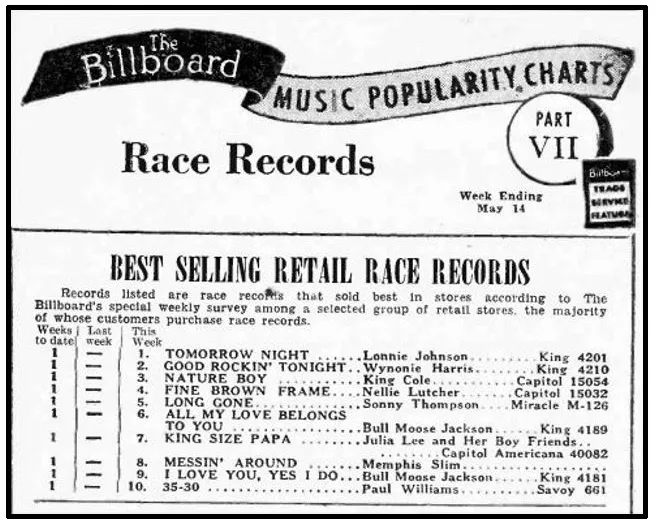
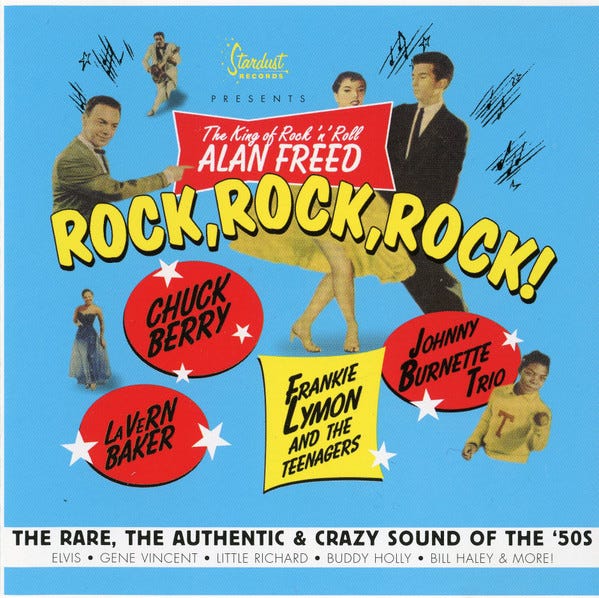
Left: A Billboard “Race Records” chart from May 1948; Right: 2003 Album cover for “King of Rock ’n’ Roll” Alan Freed. Courtesy of Goldenlane Records
DJ Alan Freed and record store owner Leo Mintz came up with a new name for R&B called “rock & roll” (also “rock n’ roll”) that was intended to meet the increasing demand for race music. The sound was described as having “fervor and movement”, capturing the sexuality of blues records such as Trixie Smith’s “My Man Rocks Me (With One Steady Roll)”, which was the first record to refer to “rocking” and “rolling” in a secular context. Hardly anyone mentions Trixie Smith (c.1895–1943) today but in the 1920s and 30s she made four dozen recordings and appeared in five films. Besides Memphis Minnie and Trixie Smith there was Bessie Smith (1892–1937) and Ma Rainey (1886–1939) who known as the “Mother of the Blues.” Sister Rosetta Tharpe (1915–1973) was among the first gospel musicians to appeal to rhythm & blues and rock & roll audiences, later being referred to as the “Godmother of Rock and Roll.” The song “Hound Dog” was written for blues and R&B singer Willie Mae (Big Mama) Thornton, not Elvis Presley.*
*Note: Men usually get far more attention and accolades than the women.
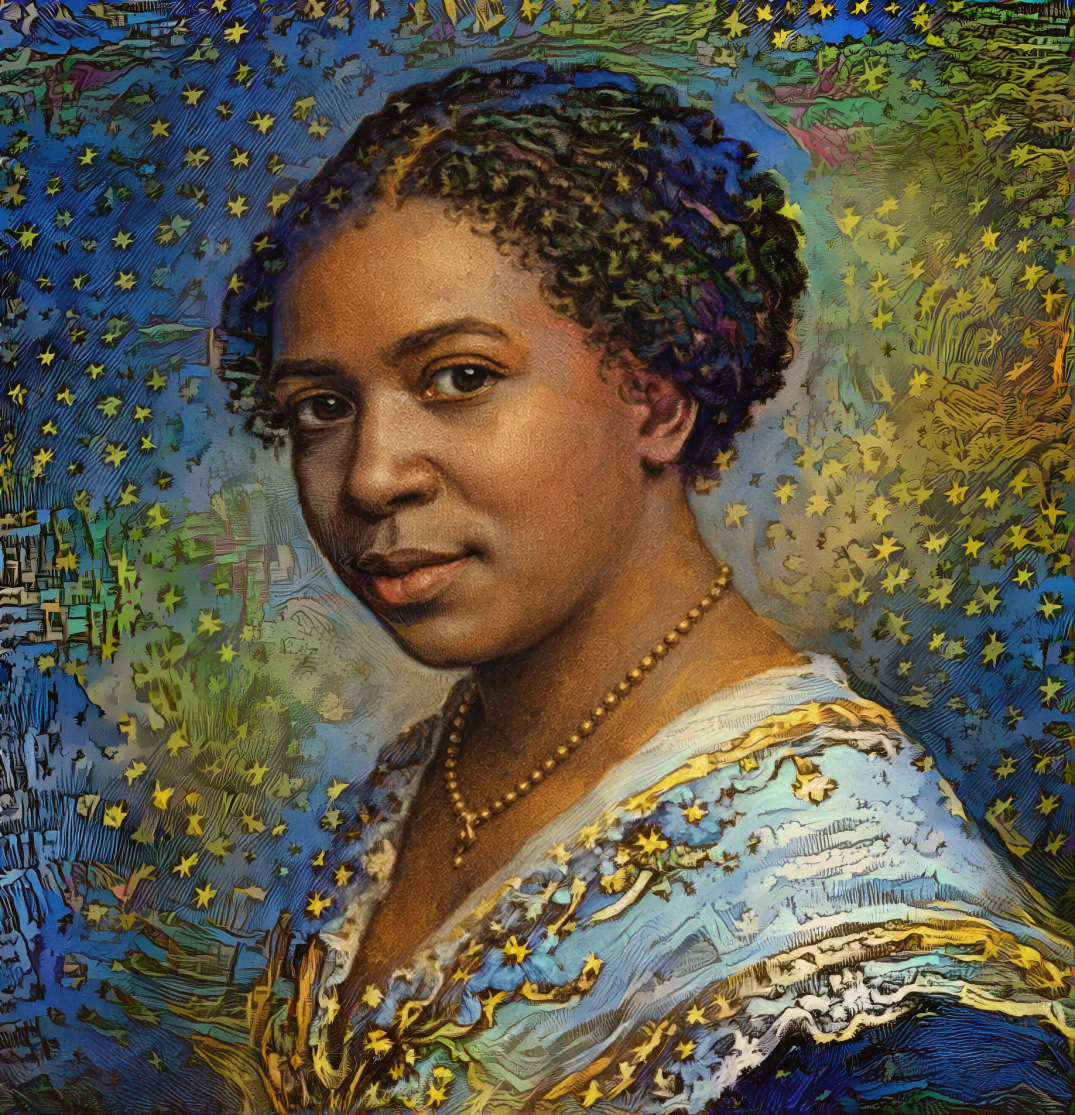
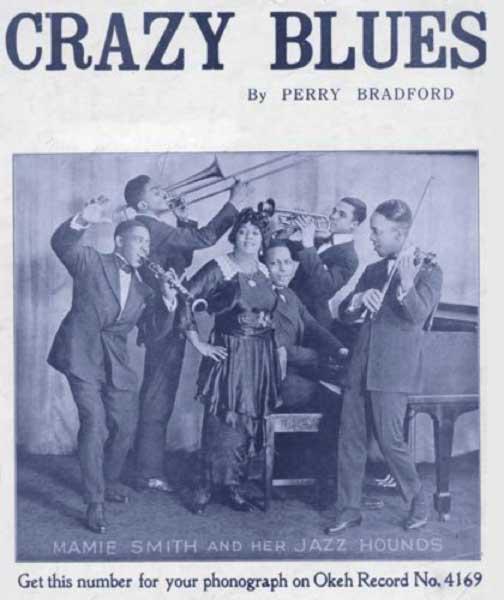
Left: Trixie Smith. Created using ChatGPT, Deep Style, and Adobe Photoshop; Right: Mamie Smith and her jazz band
Mainstream (white, middle-class) audiences loved the “fresh, new sound” of rock & roll but they didn’t have the cultural context to understand what was being sung (Black vernacular). In the 1950s, many white radio DJs refused to play original Black American music, favoring “covers” by white artists like Pat Boone to make the music more palatable. Despite this, DJs such as Alan Freed challenged this by playing original Black artists like Chuck Berry and Little Richard, helping to integrate rock & roll music. Pat Boone famously covered Little Richard’s “Tutti Frutti” and “Long Tall Sally” in 1956, bringing the rock & roll pioneer’s songs to mainstream pop audiences. While criticized as “watered down,” Boone’s versions were massive hits that earned Little Richard significant royalties and helped open doors in a segregated music industry.
Left: Little Richard’s original “Tutti Frutti”; Right: Pat Boone’s “Tutti Frutti” & blues covers (album)
Like many UK bands, the Beatles formed their sound from a combination of U.S. influences, especially rhythm & blues and early rock ’n’ roll. John Lennon cited T-Bone Walker and Sleepy John Estes. George Harrison was heavily influenced by B.B. King’s emotive phrasing and tone, which inspired his work on songs like “While My Guitar Gently Weeps”. UK artists such as Robert Plant (Led Zeppelin) developed a strong passion for blues music. Plant’s early blues influences included Johnson, Bukka White, Skip James, and Sleepy John Estes. The Rolling Stones got their name from the 1950 Muddy Waters blues song “Rollin’ Stone.”
So did the music critics forget this music history? Or did they overlook it?
Jim Crow and its system of legalized segregation and oppression heavily impacted how the music industry treated Black artists and their contributions. I argue that the evolving commercial infrastructure (music industry) systematically erased Black innovation. What they call rock & roll today was originally Black American music, which became big business for music companies. Many critics push the pioneers into the margins when they forget where rock & roll came from. Also, this history addresses the broadening definition of “rock” criticism and provides ample justification for why it makes perfect sense to induct Sade, Luther Vandross, and Wu Tang Clan into the Rock & Roll Hall of Fame.
Finale
In the 2000s UMass Boston professor Reebee Garafolo taught a course on American music. Reebee is known for creating the ***Genealogy of Pop/Rock Music**, a graphic representation of the rock ’n’ roll era, which first appeared as a three page fold-out in early printings of [Rock ’n’ Roll is Here to Pay](https://archive.org/details/rocknrollisheret0000chap). It has since been reproduced in a dozen or so graphic design texts, including Ed Tufte’s Visual Explanations*. I was invited to sit in on one of Reebee’s classes where he wanted to convey the impact early rock & roll had on the mainstream pop audience. First, he played a popular 1950s song like “I Can Dream, Can’t I” by the Andrew Sisters.
[embed]
Next, he played Little Richard’s “Long Tall Sally” that reached number one on the Billboard rhythm and blues chart, staying at #1 for six weeks, and peaking at number six on the Billboard pop chart.
[embed]
The difference between the songs was stark and the students in Reebee’s class were awestruck. We could imagine what impact early rock & roll had on mainstream listeners back then. Mainstream youth flocked to record stores to purchase the song. Next, Little Richard decided to write a song that was so up-tempo and the lyrics so fast that singers like Pat Boone would not be able to handle it. “Long Tall Sally” became a rock & roll standard covered by hundreds of artists, including Elvis Presley, Fleetwood Mac, the Kinks and the Beatles. This was the beginning of a journey that leads us here, with a UK critic asking if Americans know what rock & roll is: Black American music is rock & roll.
메타데이터
- post_id
- dab256399092
- slug
- what-is-rock-roll-a-history-of-black-innovation-erasure-dab256399092
- url
- https://medium.com/@nettricegaskins/what-is-rock-roll-a-history-of-black-innovation-erasure-dab256399092
- canonical_url
- https://medium.com/@nettricegaskins/what-is-rock-roll-a-history-of-black-innovation-erasure-dab256399092
- author_url
- https://medium.com/@nettricegaskins
- status
- ok
- fetched_at
- 2026-07-30 11:05:10