Empowering design decisions with business strategy
As a designer, I’ve always been focused on creativity and user experience, but I realized I needed to level up my knowledge of how…
Empowering design decisions with business strategy
As a designer, I’ve always been focused on creativity and user experience, but I realized I needed to level up my knowledge of how businesses work to turn my ideas into real-world success.
Today I finished an immersive journey into the challenging world of business. During the d.MBA course I learned methods to get a handle on strategy, leadership, and how to make design decisions that also drive business growth. To present i explained: how I did it before and how I will apply the new knowledge acquired.
Check-out the comparison below.
Business Empathy
🤔 Before (How I made decisions) I primarily focused on user research, like: interviews and usability tests, to understand user needs. However, I didn’t dive deeply into the business competitive landscape or the market context of the product.
🤩 Now (How I’ll apply what I’ve learned) Now, I’ve learned that I need to analyze the competitive arena, research competitors, and understand how create value.
**We can analyze: **Potential, direct and indirect competitors
This helps me design solutions that not only meet user needs but also stand out in a competitive market.

Example of Netflix Competitive Arena
Business Strategy
🤔 Before (How I made decisions) My focus was on creating a design roadmap based on user feedback and stakeholder input, but I didn’t often think about how the product would compete in the market or fit into a larger business strategy.
I was aware of monetization models (like freemium or subscriptions) and applied them to product design, but I didn’t fully understand how these models tie into the business growth and sustainability.
🤩 Now (How I’ll apply what I’ve learned) Now, I understand how to use some competitive strategies like
**Blue Ocean Strategy: is the simultaneous pursuit of differentiation and low cost to open up a new market space** and create new demand.
I also can create the Strategy Canvas and analize the main business goals and activities to identify the companys Strategy trade-off/ Differentiator. After this I’m able to test and iterate on these models, ensuring they align with both design and business objectives.

Wikipedia vs Britannica — Strategy Canvas
Business Models
🤔 Before (How I made decisions) I mainly considered revenue streams (like subscriptions or pay-per-use) and value propositions when designing products, but I didn’t analyze the entire ecosystem, including distribution channels and strategic partnerships.
🤩 Now (How I’ll apply what I’ve learned) Now, I understand how important it is to create a Ecosystem Map map and connect the different building blocks of a business model, like: value propositions, key activities, key partners, cost structure, and revenue streams.
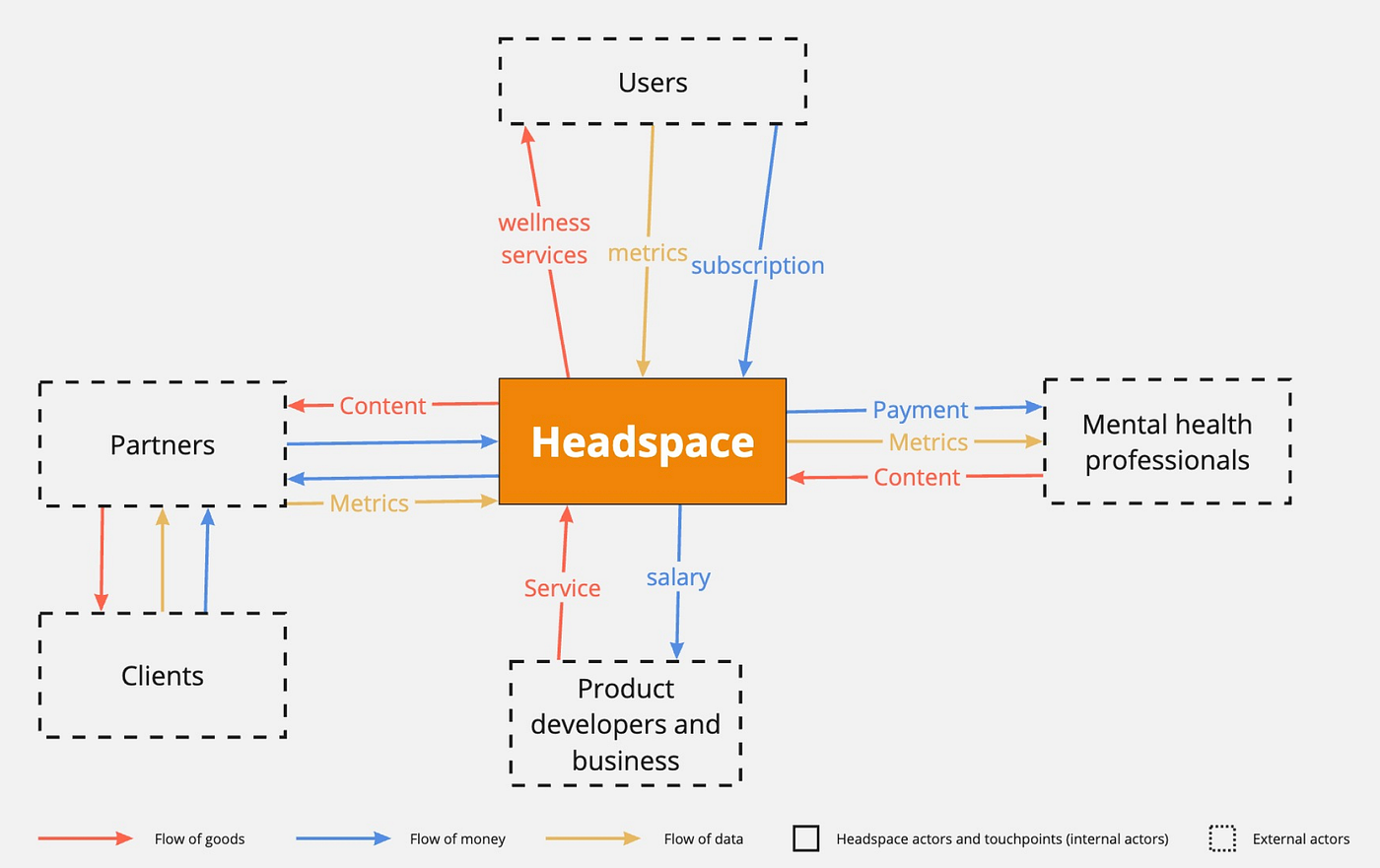
Example of Headscape Ecosystem Map
This allows me to think about design solutions that are more aligned with business goals and market needs.
Prototyping with numbers
🤔 Before (How I made decisions) before, I wasn’t involved in discussions about defining resources and planning where the budget would be spent.
🤩 Now (How I’ll apply what I’ve learned) Now, I use market data, market sizing, and business cases to validate the financial viability of a product. This allows me to consider not only the user experience but also the business impact and ROI.

Defining a Profit tree
Business and Design Metrics
🤔 Before (How I made decisions) I tracked design metrics like task completion time, error rate, and user satisfaction, but these metrics were often siloed from the business KPIs.
🤩 Now (How I’ll apply what I’ve learned) Now, I can integrate business metrics (like customer retention, customer acquisition cost, and conversion rate) with design metrics (like usability, engagement, and user experience) to measure the impact of design decisions on the overall success of the product. And finally, now I can use Hypothesis-Driven Design to test and validate solutions.

Hypothesis to analyze possible solutions for Apple Vision Pro
Now, I feel ready to approach product design with a deeper understanding of business, using frameworks and strategies that align the product vision with market needs and financial sustainability. This course has made me more strategic in my role, ensuring that every design decision not only solves user problems but also supports business goals and creates measurable value.
메타데이터
- post_id
- dab536601f52
- slug
- empowering-design-decisions-with-business-strategy-dab536601f52
- url
- https://medium.com/@michelle.brito/empowering-design-decisions-with-business-strategy-dab536601f52
- canonical_url
- https://medium.com/@michelle.brito/empowering-design-decisions-with-business-strategy-dab536601f52
- author_url
- https://medium.com/@michelle.brito
- status
- ok
- fetched_at
- 2026-07-22 04:22:49



