When the Sit-Down Ends
Why Washington is treating governors like capos, not partners
When the Sit-Down Ends
Why Washington is treating governors like capos, not partners
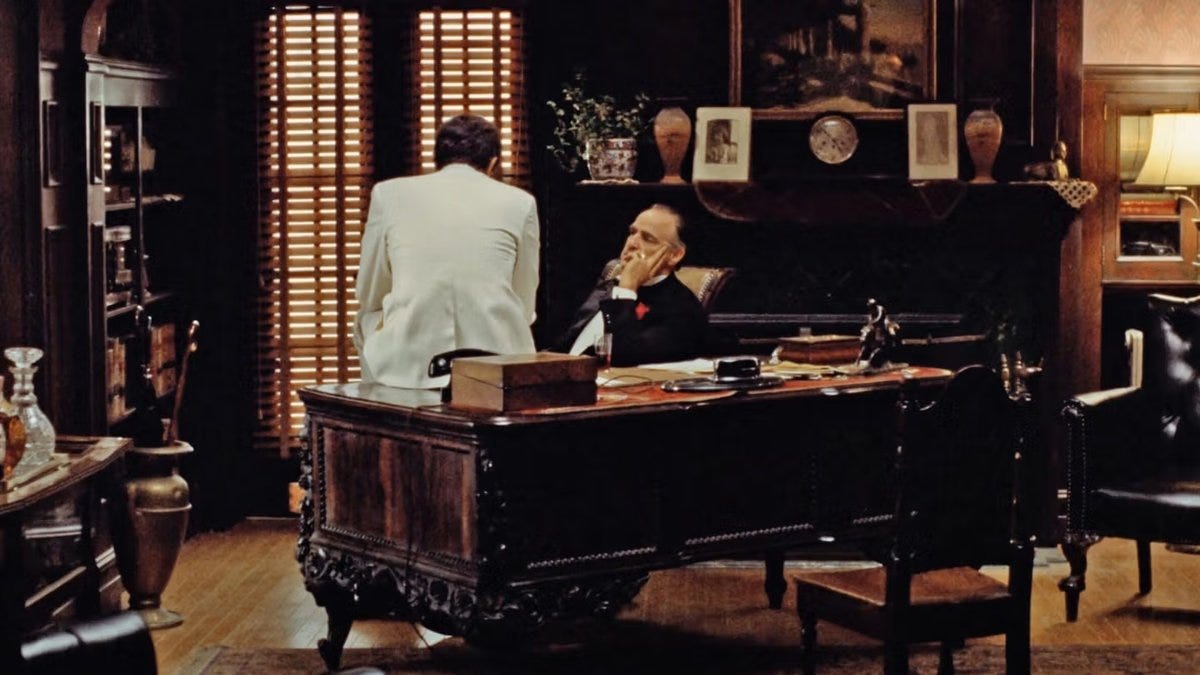
The image many Americans carry of concentrated authority comes from films like The Godfather: a single figure at the head of a darkened table, loyalty negotiated in private. Still from The Godfather (1972), Paramount Pictures. Used for commentary on hierarchical power structures.
This didn’t arrive with a speech or a decree. It didn’t come with a policy memo or a national address.
It arrived the way power often does when it’s being reorganized quietly: as a guest list.
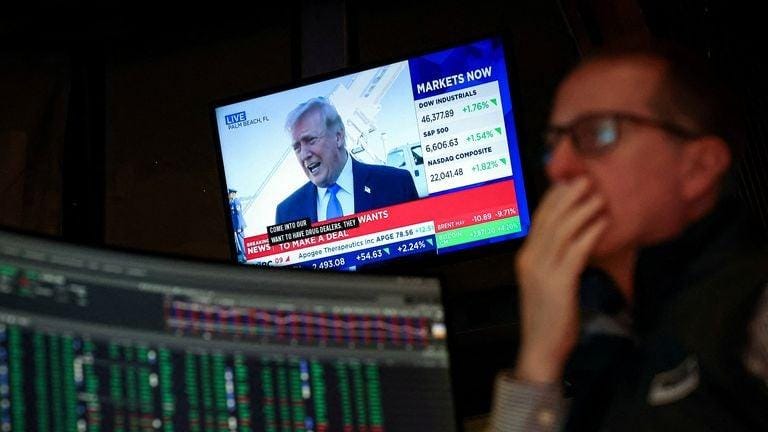
In February 2026, when the White House decide this year’s National Governors Association meeting would include Republican governors only, the immediate coverage focused on decorum. Democratic governors announced a boycott. The NGA withdrew from hosting the event. Statements followed. Everyone pretended this was about protocol.
It wasn’t.
What ended wasn’t a dinner. It was a sit-down.
Why Sit-Downs Matter
In any system built to manage competing power centers, sit-downs exist for one reason: to prevent escalation. They are not celebrations. They are not loyalty tests. They are mechanisms — neutral spaces where rivals can share information, negotiate boundaries, and keep conflicts from turning systemic.
For decades, that is what the National Governors Association functioned as. One of the last places where governors — Democrats and Republicans — could meet less as ideologues and more as executives. Floods. Power grids. Ports. Hospitals. Supply chains. Problems that don’t care who won the last election.
By converting that space into a partisan event, the White House didn’t insult governors.
It reclassified them.
From Partners to Lieutenants
When a Don only meets with trusted capos, the message isn’t subtle.
Access becomes reward. Presence becomes permission. Exclusion becomes instruction.
That is the logic now being applied to federal-state relations.
No governor was told they are barred from cooperation. No rule was written down. No law was passed. Instead, a quieter lesson was delivered: federal access is conditional.
Not on law. Not on necessity. On loyalty.
Once that lesson lands, rational actors adapt.
Why Governors Reroute Instead of Revolt
This doesn’t push governors toward rebellion. It pushes them toward workarounds.
If federal coordination becomes unpredictable — subject to partisan approval — then the safer route is horizontal power. State-to-state cooperation. Shared legal strategies. Joint procurement. Coordinated policy blocks. Quiet agreements that don’t require permission from a central authority that may change its mind.
This is not ideological defiance. It’s operational math.
Democratic governors already collaborate extensively across state lines. Climate compacts. Healthcare access. Education standards. Abortion logistics. The withdrawal of federal neutrality doesn’t stop that cooperation — it intensifies it.
What disappears is the assumption that Washington will mediate fairly.
Why the Midwest Should Care
This matters most in places where governance is still treated as practical work.
Midwestern states don’t have the luxury of symbolic paralysis. Floods still rise. Winter still collapses grids. Crops still move through ports and rail. Hospitals still need staffing. Disaster response still requires coordination that moves faster than press cycles.
When the federal government stops being a partner and starts behaving like a gatekeeper, the cost isn’t ideological — it’s logistical.
Fragmentation is expensive. And it always shows up locally first.
This Doesn’t Empower Red States Either
A system built on loyalty doesn’t strengthen its allies. It binds them.
When access flows through personal favor, governors don’t gain autonomy — they lose leverage. Disagreement becomes risk. Negotiation becomes performance. Federalism collapses upward into dependence.
That kind of system may feel strong at the center, but it weakens everything beneath it. Especially in moments that demand coordination: pandemics, infrastructure failures, climate emergencies.
Disasters don’t recognize capos. They recognize capacity.
The Quiet Consequence
This isn’t secession. It isn’t resistance theater. It isn’t even open conflict.
It’s something more destabilizing: governors learning, slowly and rationally, that working around Washington is more reliable than working with it.
Once that lesson is absorbed, institutions don’t snap back easily. The next administration doesn’t inherit cooperation. It inherits precedent.
And precedent is how systems change without ever admitting they’ve changed.
What Actually Ended
Not bipartisanship as an ideal. Not civility as a talking point.
What ended was the assumption that the federal government still hosts neutral sit-downs — spaces where equals negotiate rather than prove loyalty.
When that ends, governors don’t posture. They adapt.
And adaptation, repeated quietly across states, is how the map of power redraws itself — without anyone ever announcing that the rules have changed.
메타데이터
- post_id
- dae88657df4f
- slug
- when-the-sit-down-ends-dae88657df4f
- url
- https://medium.com/the-prairie-dispatch-in-the-land-of-lincoln/when-the-sit-down-ends-dae88657df4f
- canonical_url
- https://medium.com/the-prairie-dispatch-in-the-land-of-lincoln/when-the-sit-down-ends-dae88657df4f
- author_url
- https://medium.com/@annalkuyperbellettiere
- status
- ok
- fetched_at
- 2026-06-16 19:09:56