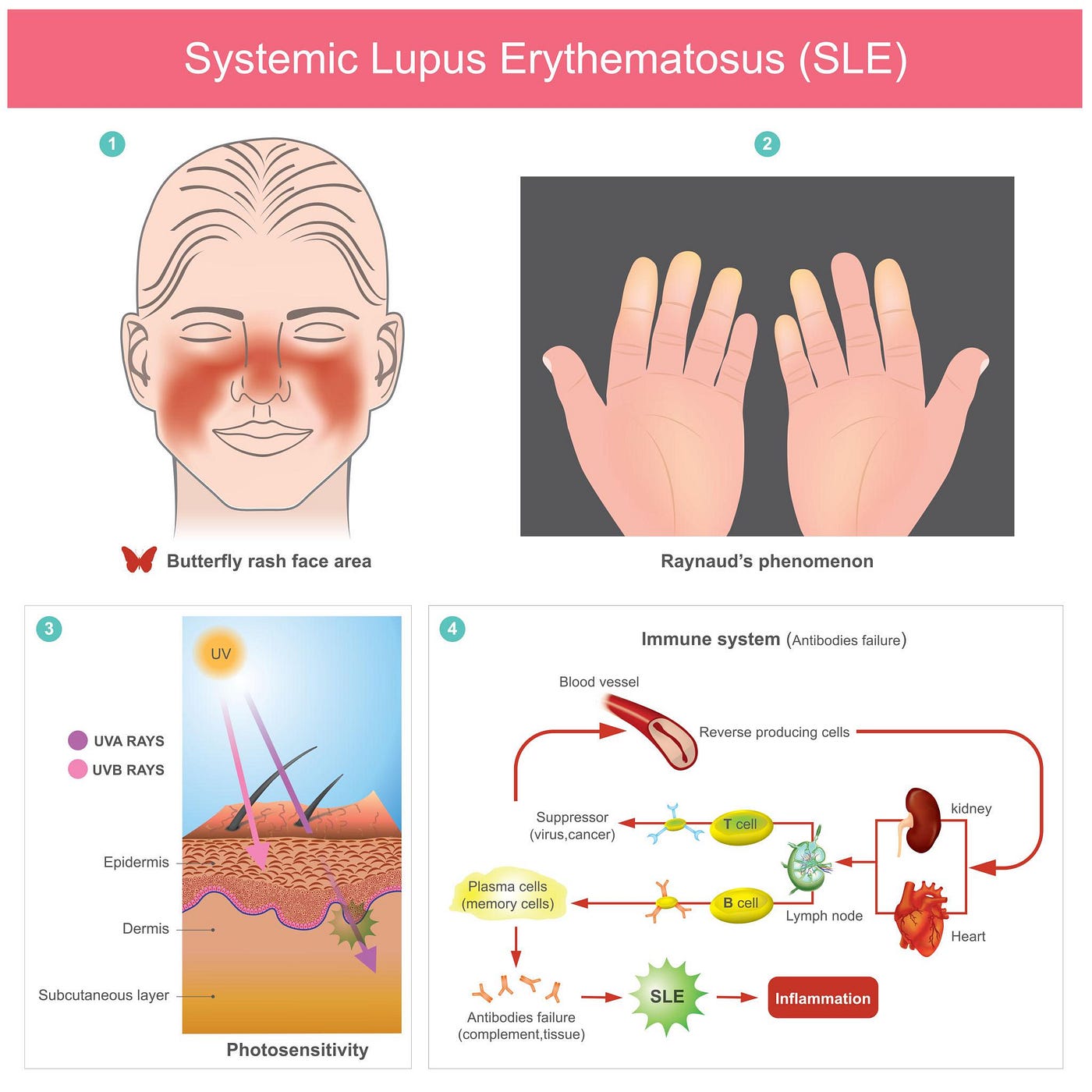
Lupus Explained: When the Immune System Turns on the Body.
Lupus Explained: When the Immune System Turns on the Body.
Definition:
Your immune system normally defends your body against infectious diseases. Lupus causes the immune system to function excessively which leads it to attack healthy cells in the body. The following body parts will experience negative effects from this condition.
- Skin
- Joints
- Kidneys
- Heart
- Lungs
- Brain
Common Symptoms:
The symptoms present with different degrees of variation, although the most common symptoms are:
- Extreme tiredness (fatigue)
- Swelling and pain in joints
- Skin rashes (especially a butterfly-shaped rash on the face)
- Fever
- Hair loss
- Sensitivity to sunlight
- Chest pain or shortness of breath
- The symptoms occur in intermittent cycles that doctors refer to as “flares”.
Types Of Lupus:
The different types of lupus include:
- Systemic lupus erythematosus (SLE) — this condition represents the most prevalent and severe form of lupus
- Cutaneous lupus — this disease primarily affects the skin
- Drug-induced lupus — this condition develops as a result of specific medications
- Neonatal lupus — this infrequent disorder affects newborn infants
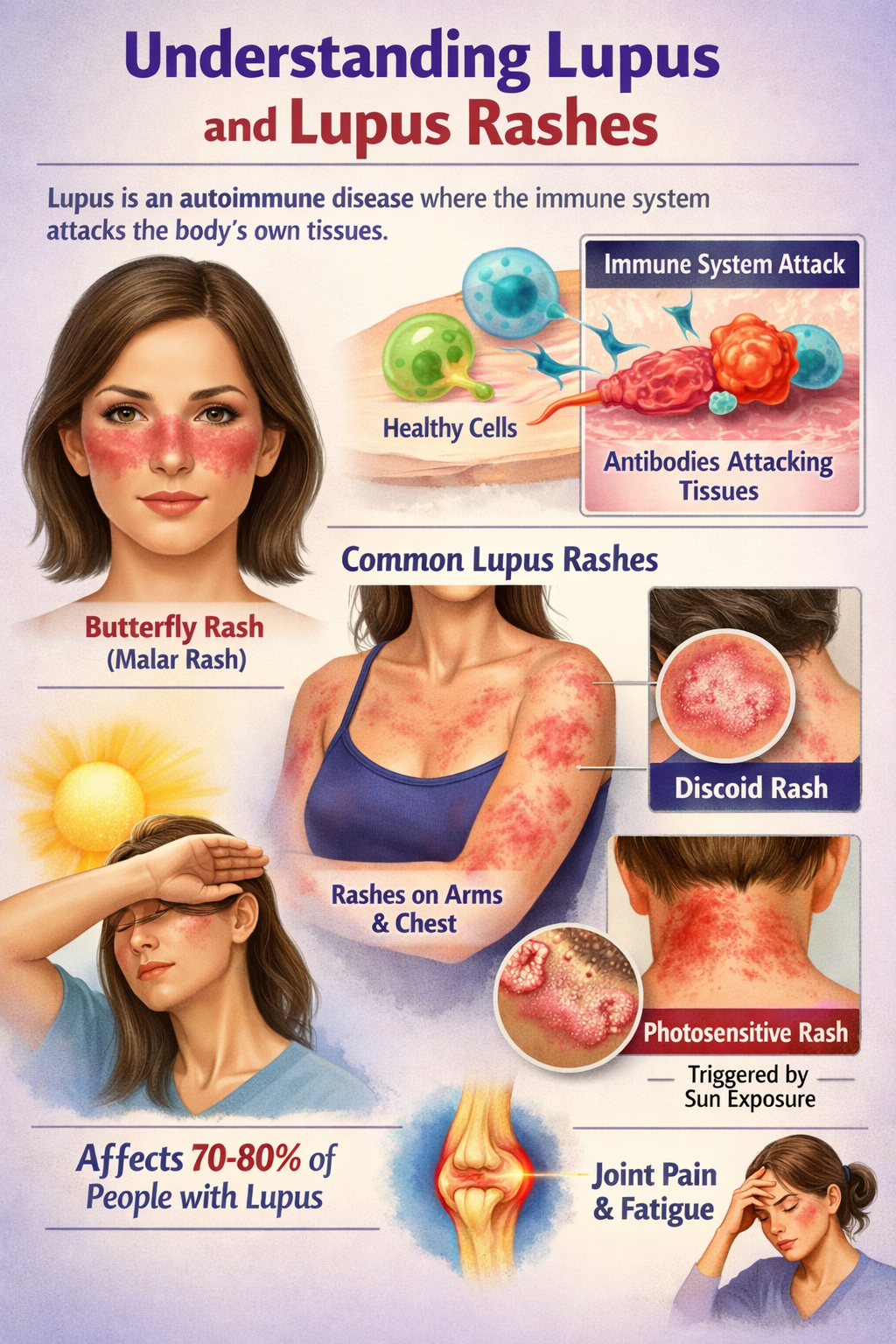
Overview of Lupus
Causes and risk factors:
Scientists have not discovered the complete origin of the disease because its development depends on multiple factors, which include:
- Genetic factors:
Women experience hormonal changes (which occur more frequently in their case)
- People develop allergic reactions to multiple environmental factors, which include sunlight exposure, infections, and stress.
How is Lupus diagnosed?
Finding lupus is tricky because it looks like many other illnesses. Doctors use blood tests to search for particular immune system “clues” according to their diagnostic needs. The doctors use a biopsy to see if the disease exists by examining a tiny skin sample or a small kidney section through a microscope.
Treatment:
The treatment goal requires maintaining disease remission while stopping all forms of permanent damage.
- Hydroxychloroquine functions as the basic treatment that all lupus patients should receive according to medical standards.
- Doctors use steroids to treat severe symptoms through fast-acting treatment but they try to use the smallest effective dose because long-term usage creates health risks.
- Scientists are testing new medicines which include obinutuzumab because clinical trials have proven that 77% of patients experience better health after taking it.

Treatment Management
Monitoring & regular checkups:
- The medical procedure needs to include all necessary doctor examinations for that patient to do regular checkups .
- The treatment approach requires physicians to assess three specific body areas which include skin and joint and organ symptoms.
Lifestyle Tips for Lupus:
- Avoid UV exposure: Use sunscreen, wear protective clothing, stay in shade
- Eat healthy & take Vitamin D (if advised)
- Stay active: Light exercise helps joints and energy
- Sleep well: Reduce fatigue
- Manage stress & mental health
- Quit smoking
- Stay organized: Write things down for memory issues
- Regular checkups & vaccinations
메타데이터
- post_id
- daec29d9f463
- slug
- what-is-lupus-daec29d9f463
- url
- https://medium.com/@parisaroosh786/what-is-lupus-daec29d9f463
- canonical_url
- https://medium.com/@parisaroosh786/what-is-lupus-daec29d9f463
- author_url
- https://medium.com/@parisaroosh786
- status
- ok
- fetched_at
- 2026-06-09 14:34:10