*281* Lightning, Trees, and the Survivorship Illusion
One might be tempted to believe that lightning can somehow benefit trees. At first glance, the idea appears attractive: researchers observe…
281 Lightning, Trees, and the Survivorship Illusion
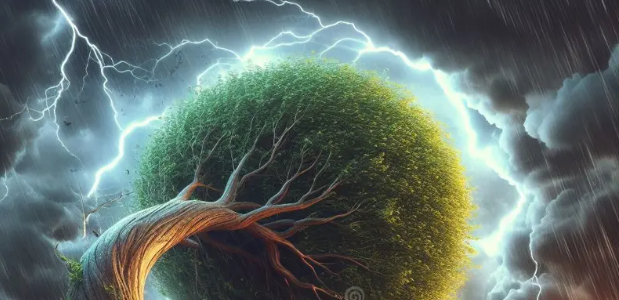
One might be tempted to believe that lightning can somehow benefit trees. At first glance, the idea appears attractive: researchers observe that certain trees struck by lightning continue to grow vigorously for many years afterwards.
From this observation, it becomes tempting to suggest that the electrical discharge itself may provide a long-term advantage. Yet such an interpretation deserves careful examination before being accepted.
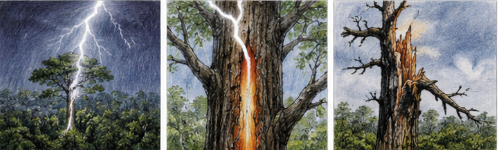
The first distinction that must be made is between observation and explanation. Observing that a tree grows well after a lightning strike does not automatically reveal why it grows well. The two statements are not equivalent. A correlation may be genuine while the proposed cause remains uncertain. This distinction is fundamental because nature often presents situations in which the visible outcome and the true underlying mechanism are very different.
A common explanation proposes that lightning removes lianas, parasites, or neighbouring vegetation, thereby reducing competition. This possibility cannot be dismissed. If competing organisms are damaged or eliminated, the surviving tree may gain increased access to sunlight, water, and nutrients. In such a case, the apparent advantage would not originate from the electrical discharge itself, but from the environmental reorganisation that follows the event. The tree would simply be benefiting from improved conditions rather than from any direct biological enhancement caused by lightning.
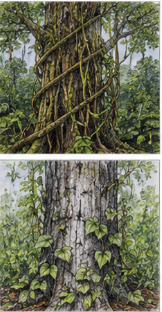
Among all the trees struck by lightning, why do some survive while many others do not? This issue is often overlooked. The trees that researchers can study years later are, by definition, survivors. They represent only a fraction of all the trees exposed to the event. Consequently, the sample may already be biased toward the most resilient individuals. Their continued growth may reflect qualities they possessed long before the lightning strike occurred.
This perspective introduces what is commonly known as the survivorship bias. If only the strongest or most structurally robust trees remain available for observation, it becomes easy to attribute their success to the lightning itself. Yet the opposite interpretation may be equally valid: these trees survived because they were already exceptionally capable of resisting severe disturbances. The lightning did not create their strength; it merely revealed it.
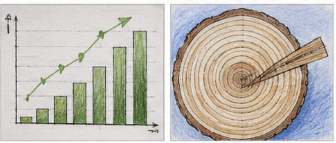


From this standpoint, the electrical discharge functions less as a source of improvement and more as a natural test. The event separates those individuals capable of withstanding extreme conditions from those that cannot. Years later, researchers encounter a population composed largely of successful survivors.
The energy sustaining future development originates from these continuing resources rather than from a single electrical discharge in the distant past.
What I Reveal
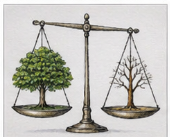
The most important insight is not that lightning benefits trees, but that lightning may act as a powerful filter. The event exposes differences that already existed within the population. Rather than creating exceptional trees, it may simply reveal which trees were exceptional from the beginning. The distinction is subtle, yet it profoundly changes the interpretation of the observations.
Opening New Perspectives
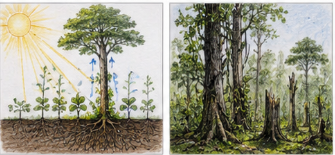
Many scientific debates arise when observations are transformed too quickly into explanations. The case of lightning-struck trees illustrates how easily a striking narrative can emerge from a real observation. A more cautious interpretation suggests that resilience, selection, and environmental restructuring may account for much of the phenomenon. Future investigations may therefore benefit from focusing less on what lightning supposedly gives to trees and more on what the surviving trees already possessed before the lightning ever arrived.
— — — — — — — — — — — — — — — — — — — — — — — — — — — — — — — — — — — — -
메타데이터
- post_id
- daf4e686b875
- slug
- lightning-trees-and-the-survivorship-illusion-daf4e686b875
- url
- https://medium.com/@gouvielos/lightning-trees-and-the-survivorship-illusion-daf4e686b875
- canonical_url
- https://medium.com/@gouvielos/lightning-trees-and-the-survivorship-illusion-daf4e686b875
- author_url
- https://medium.com/@gouvielos
- status
- ok
- fetched_at
- 2026-06-29 01:02:39