What’s New in WebAssembly 3.0 and Why It Matters for Developers
Inside the latest WASM standard, bringing cross-language components, async APIs, and secure edge computing. — WASM Radar #17
What’s New in WebAssembly 3.0 and Why It Matters for Developers
Inside the latest WASM standard, bringing cross-language components, async APIs, and secure edge computing. — WASM Radar #17

A retro-futuristic vision of the “WASM 3.0” expedition vehicle, symbolizing the new frontier of software portability where a single runtime can cross any terrain, from browser to edge to cloud.
When I first started following **WebAssembly, I saw it as a clever way to boost performance in browsers, helping heavy JavaScript apps run faster. But over the past few years, it became clear that something much bigger was unfolding. What began as a bytecode format has quietly evolved into a runtime model capable of unifying how software runs, from a laptop browser to an edge node in a data center. The release of WASM 3.0 feels like the moment that the shift becomes real. It formalizes ideas that have been developing for years, including the Component Model for language interoperability, WASIp3** for asynchronous system access, and runtimes like Wasmtime and Wasmer that prioritize portability. Together, they transform WebAssembly from a simple optimization layer into a new foundation for distributed computing.
This is also a milestone for **the Universal Microservices Architecture (UMA), the framework I have been developing through my research and upcoming book. UMA has always focused on creating services that can run anywhere, governed by clear contracts rather than platform-specific dependencies. With WASM 3.0, that vision becomes reality. The same component can now run in the browser, on the edge, or in the cloud with consistent behavior and reliable performance. What excites me most is that this is not just a backend story. WASM 3.0** unifies AI agents, client logic, and infrastructure code under a single runtime discipline. It finally allows architects to think in terms of shared behavior, not just shared APIs. The following sections examine the changes, their significance, and how these advancements complete key aspects of UMA’s design, transitioning from modular software to a universal execution layer that functions seamlessly everywhere.
TLDR;
WASM 3.0 transforms WebAssembly from a web optimization trick into a true universal runtime. The new standard introduces the Component Model and WASIp3, enabling code written in different languages to run anywhere and communicate safely through shared contracts.
For **Universal Microservices Architecture (UMA)**, this release is a turning point. It finally delivers the runtime consistency UMA was designed for, where the same component can execute in the browser, on the edge, or in the cloud with identical behavior.
WASM 3.0 is the missing layer that connects AI agents, client applications, and backend services under a single portable architecture, marking the beginning of a truly device-independent era for software.
WebAssembly 3.0: From Modules to Components
WebAssembly 3.0 has moved far beyond its origins as a high-performance bytecode for browsers. The real story today is composability. For years, Wasm modules behaved like sealed boxes, secure but isolated, limiting how large systems could be built from smaller parts. WebAssembly 3.0 changes that by introducing two foundational capabilities: the Component Model and WASI preview 3 (WASIp3). The Component Model gives WebAssembly a new structure. Instead of treating modules as opaque binaries, it defines a language-neutral interface layer where components expose and consume typed functions. This allows a Rust component to call a Swift component, or a C++ component to interact with Go, all through shared contracts rather than memory layouts. WASIp3 extends this flexibility to system-level resources and adds asynchronous communication, enabling components to delegate work and resume processing when results are available. Together, they transform Wasm from an execution engine into a polyglot, event-driven platform for distributed systems.
This progress directly supports **Universal Microservices Architecture (UMA)**. UMA depends on portable, contract-driven services that behave consistently across browsers, edge nodes, and cloud runtimes. WebAssembly 3.0 provides the missing layer of runtime consistency UMA requires. The Component Model becomes the mechanism for defining service contracts, and WASIp3 supplies the asynchronous backbone for cross-runtime orchestration. In the upcoming UMA book, this evolution fills critical sections on runtime unification and contract execution, showing how a single component can now serve as both a client-side and server-side service.
A simple example illustrates the shift. The WebAssembly Interface Types (WIT) format defines an interface in a language-neutral way:
package example:greeter
interface greetings {
  greet: func(name: string) -> string
}
world greeter-world {
  export greetings
}
A Rust implementation compiled with wit-bindgen can fulfill that contract:
use example::greeter::greetings;
struct Greeter;
impl greetings::Guest for Greeter {
    fn greet(name: String) -> String {
        format!("Hello, {name} from WebAssembly 3.0!")
    }
}
export!(Greeter);
The result is a portable .wasm component that can be imported by any other component regardless of its language or host environment.
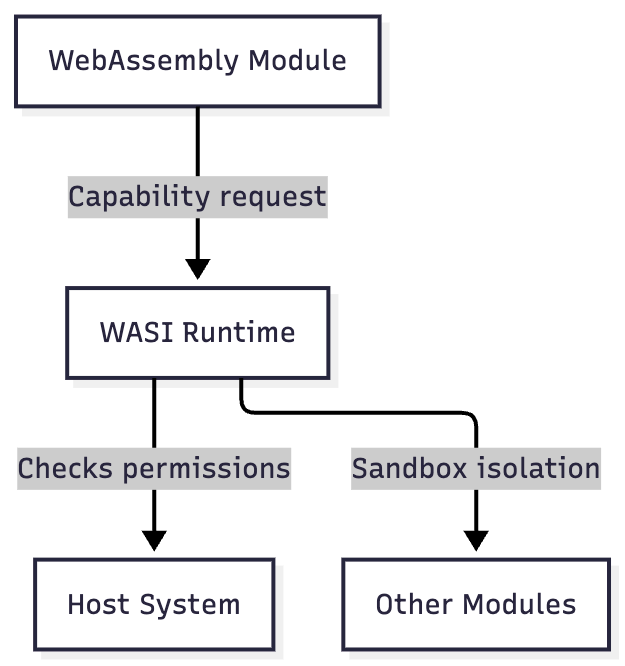
Diagram 1: Components in WebAssembly 3.0 interact through contracts, not language-specific bindings.
WebAssembly 3.0 turns Wasm from a compilation target into a composable runtime fabric. Its Component Model and WASIp3 establish a contract-based ecosystem where code written in different languages behaves predictably across any environment. For UMA, this advancement removes one of the last barriers to true runtime portability: shared, language-agnostic contracts that can execute anywhere without translation.
Security and Reliability in WebAssembly 3.0
Although WebAssembly was designed with sandboxing at its core, its security model continues to evolve as the technology scales to enterprise and infrastructure levels. The most recent updates leading to WebAssembly 3.0 show a mature and proactive ecosystem that treats security as a design surface rather than an afterthought. During mid-2025, critical zero-day vulnerabilities were discovered in Chrome’s V8 and Firefox’s WebAssembly engines. These flaws allowed for memory corruption and potential code execution through malformed WebAssembly (Wasm) binaries. The quick and coordinated response from browser vendors, followed by transparent patching and disclosure practices, demonstrated how far the community has come in hardening the runtime layer. The patches were accompanied by deeper auditing of how Wasm interacts with JavaScript through features like the JavaScript Promise Integration (JSPI), ensuring that asynchronous operations remain isolated and predictable.
Beyond software-level defenses, research such as Cage: Hardware Accelerated Safe WebAssembly introduced a new direction for Wasm safety. By using Arm’s Memory Tagging Extension and Pointer Authentication, Cage achieves hardware-assisted memory protection with minimal overhead. This move toward hardware-backed isolation brings Wasm closer to the standards required for high-assurance systems, where even minor pointer misuse could be catastrophic. The same progress is visible in the broader runtime ecosystem. Wasmtime, the reference runtime from the Bytecode Alliance, now applies aggressive crash isolation and structured panic recovery mechanisms to ensure that a misbehaving module cannot compromise the host. Its recent releases integrate fine-grained permission control through WASI capabilities, including network, filesystem, and TLS operations. These granular policies let developers define exactly what each module is allowed to access, turning practical sandboxing into something that operates at the level of system calls.
On **Universal Microservices Architecture (UMA)*, this hardening completes an essential part of the runtime story. UMA assumes that services are portable, deployable in untrusted environments, and must protect themselves without depending on the host’s security perimeter. WebAssembly 3.0’s layered defenses, built on language sandboxing, hardware verification, and capability-based access, provide the foundation for that trust model. In the upcoming UMA book, this directly supports the sections on service containment and trustworthy execution across environments*, where Wasm’s model of isolation enables secure multi-tenant microservices on both client and edge.

Diagram 2: Capability-based security ensures that each WebAssembly module operates within clearly defined boundaries.
Security in WebAssembly 3.0 is no longer a static property, but an active framework that extends from the compiler to the hardware. By combining capability-based access, deterministic isolation, and rapid response to vulnerabilities, the ecosystem now supports architectures that allow untrusted modules to coexist safely. For UMA, this means distributed components can execute across browsers, edge nodes, or cloud clusters with verifiable integrity, moving closer to the vision of a truly universal runtime.
Tooling and Language Updates in WebAssembly 3.0
The pace of tooling around WebAssembly has become one of the clearest signals of its maturity. Where early developers once struggled with limited compiler targets and incomplete runtimes, the 3.0 generation introduces a fully equipped ecosystem that spans languages, frameworks, and platforms. The latest Wasmtime 35 release introduced practical capabilities that bring WebAssembly (Wasm) closer to everyday development workflows. It includes an InputFile type for redirecting standard input, improved translation of conditional branches, support for WASIp2 in the C API, and initial steps toward native garbage collection in the Component Model. Wasmtime also integrated custom ONNX runtimes into its wasi nn crate, expanding support for machine learning inference. Each release now includes detailed change logs and quick security patches, demonstrating how the Bytecode Alliance is treating Wasm as production infrastructure rather than a research platform. Emscripten, the long-standing LLVM-based compiler, is equally active. Its 4.0.11 update refined the way asynchronous functions interact with JavaScript. Functions that rely on asynchronous behavior now require explicit tagging such as__async: true, allowing better control over when suspending and resuming occur. This improvement makes async coordination between Wasm and JavaScript more predictable and easier to debug.
Language ecosystems are catching up fast. Swift 6.2 introduced an official WebAssembly SDK, allowing developers to compile Swift applications directly to Wasm. This new support enables Swift code to run not only in browsers but also in edge runtimes and even inside Wasmtime. Combined with Apple’s efforts to unify concurrency through structured async code, Swift’s addition brings modern safety and readability to WebAssembly components. Beyond compilers, runtime ecosystems such as Wasmer and wasmCloud have evolved into full development environments. Wasmer now supports running WordPress entirely on Wasm, with integrated databases and routing, while wasmCloud introduced wash, a dedicated command line interface for building, deploying, and inspecting distributed Wasm applications. Both tools emphasize declarative configuration, aligning with the design of **Universal Microservices Architecture (UMA)**, where contracts define behavior and the runtime enforces it. These projects demonstrate how Wasm tooling is no longer an experimental niche but a practical development layer for cloud and edge systems.
For UMA, these improvements close the gap between concept and practice. The UMA book’s chapters on portable runtime orchestration and developer velocity layers assume that developers can build, test, and deploy Wasm components using the same workflows they use for containers or serverless functions. The new toolchains and SDKs make that possible. A service written in Swift or Rust can now be compiled to a Wasm component, bound with WIT, and deployed to any UMA-compatible runtime without rewriting or platform-specific builds.

Diagram 3: Modern toolchains turn code from multiple languages into portable WebAssembly components integrated through UMA contracts.
The new generation of tools transforms WebAssembly development from a low-level exercise into a smooth, multi-language experience. With strong SDKs, stable runtimes, and emerging AI integration libraries, developers can now focus on logic and contracts instead of runtime plumbing. For Universal Microservices Architecture (UMA), this maturity signifies that Wasm has achieved the level of reliability and accessibility necessary to underpin a universal runtime layer that truly works across browsers, edges, and clouds.
Performance and Scalability in WebAssembly 3.0
Performance has always been one of WebAssembly’s strongest promises, but the 3.0 generation expands that promise beyond raw execution speed. The new standard focuses on predictable scalability, reduced cold start times, and efficient resource sharing across runtimes. These improvements are what make Wasm viable not just for browser apps, but also for large, distributed systems built on patterns such as **Universal Microservices Architecture (UMA)**.
The introduction of vector instructions (SIMD) and bulk memory operations in the 2.0 draft already narrowed the performance gap between native code and Wasm modules. WebAssembly 3.0 builds on this with more aggressive compiler optimizations and better integration with hardware acceleration. Cranelift, the compiler backend used in Wasmtime, now translates division by constants directly into optimized instructions and uses native TLS backends to secure concurrent tasks without additional overhead. These small but cumulative improvements enable Wasm runtimes to achieve near-native speed in many real-world workloads. Another area of progress is startup performance. Traditional containerized microservices often spend hundreds of milliseconds initializing runtime environments before serving requests. In contrast, Wasm modules in Wasmtime, Wasmer, or wasmCloud start in a few milliseconds. Projects such as Spin and Fermyon demonstrate cold start times well under 10 ms, enabling event-driven applications that scale instantly. When applied to UMA’s service orchestration model, this behavior allows hundreds of portable microservices to start, pause, or migrate between nodes almost instantly, without losing state consistency or security guarantees.
Memory management is also evolving. The Garbage Collection proposal, which has been under development for several years, is approaching integration in 3.0 runtimes. This makes it easier for high-level languages like Java, Kotlin, and Python to achieve efficient memory behavior without depending on manual bindings. Early support in Wasmtime and wasmCloud indicates that multi-language UMA components will soon run side by side with consistent memory safety and predictable performance. Performance improvements extend to AI and data processing workloads as well. Wasmtime’s wasi nn module now allows AI inference through ONNX runtimes, while Cloudflare Workers and Wasmer integrate WASI HTTP and asynchronous I/O to handle thousands of concurrent connections efficiently. The result is that Wasm can act as a secure, low-latency compute layer across the edge and the cloud.

Diagram 4: WebAssembly modules launch significantly faster than traditional containerized microservices.
For Universal Microservices Architecture (UMA), this evolution provides the scalability model described in the upcoming book’s chapters on deterministic performance and runtime elasticity. UMA depends on services that scale predictably across heterogeneous environments. WebAssembly 3.0 achieves this by combining compact binaries, efficient thread and memory models, and predictable startup times. The shift from optimizing single-module speed to optimizing distributed startup and cross-runtime performance marks WebAssembly 3.0 as a new phase. It is no longer about matching native performance in a single process, but about enabling thousands of lightweight, contract-driven components to operate together with the same responsiveness regardless of where they run.
Adoption and Emerging Use Cases in WebAssembly 3.0
As WebAssembly enters its 3.0 era, adoption has accelerated far beyond the browser. The combination of WASMip3, the Component Model, and stable toolchains has positioned WASM as a universal runtime layer for cloud, edge, and even AI workloads. What began as a web technology has now become part of the infrastructure stack itself.
Enterprises are leading this transformation. Major players such as Docker, Cloudflare, and Fastly are integrating Wasm runtimes directly into their orchestration pipelines. Docker now supports Wasmtime and Wasmer as lightweight alternatives to traditional containers, allowing developers to ship Wasm modules in the same way they distribute images. The result is faster startup, smaller binaries, and better isolation. Cloudflare Workers, running on a Wasm-based execution layer, now handle millions of requests with sub-millisecond cold starts. These examples demonstrate how Wasm is redefining efficiency at scale. At the edge, projects like wasmCloud and Fermyon’s Spin show how distributed applications can run entirely on WebAssembly. wasmCloud’s actor model allows small components to communicate through capabilities, while Spin enables ultra-fast serverless functions that start almost instantly. Together, they illustrate a new deployment paradigm: event-driven systems that scale horizontally without heavy runtime dependencies.
WebAssembly is also expanding into specialized domains, including gaming, AI, and blockchain. Microsoft Flight Simulator 2024 utilizes WASM APIs to power high-fidelity extensions, allowing complex simulation logic to run safely within a sandbox. Mozilla.ai’s WASM agents project enables small, Python-based AI models to run directly in the browser using WASM and Pyodide. In finance, Bitcoin Swift introduced WASM-based smart contracts that combine blockchain logic with embedded learning agents. These examples show that Wasm has matured into a reliable host for both deterministic and adaptive workloads. For **Universal Microservices Architecture (UMA)**, this adoption wave validates the vision described in the upcoming UMA book. UMA depends on a common execution substrate that works across domains and devices. WebAssembly 3.0 provides that substrate. In UMA’s architecture, a single contract defined through the Component Model can represent a service that runs in the browser for interactivity, at the edge for low latency, or in the cloud for batch processing. This unification of environments turns Wasm into the backbone for truly device-independent systems.

Diagram 5: The same WebAssembly component can execute across browser, edge, and cloud through UMA’s contract orchestration.
What is most remarkable about this adoption is its diversity. WebAssembly 3.0 is no longer confined to a single ecosystem or language. It supports WordPress hosting, AI inference, distributed microservices, and simulation engines. It has become the connector between old and new platforms, allowing developers to safely reuse logic across any runtime. For UMA and architects in general, this suggests that the next phase of software design will be based on portable contracts rather than static deployments. The lines between frontend, backend, and infrastructure are blurring, replaced by a shared execution model that treats every environment equally. WebAssembly 3.0 is the technology that enables this transition.
AI Integration and the MCP Connection
The evolution of WebAssembly 3.0 is deeply tied to the growing need for secure and portable AI execution. As models and agents increasingly run across browsers, devices, and servers, developers need a runtime that can enforce safety, manage resources, and maintain deterministic behavior. WebAssembly has become that runtime, and the Model Context Protocol (MCP) is rapidly emerging as its orchestration layer.
In traditional AI workflows, Python environments or native extensions are often tied to specific hardware and operating systems. This leads to brittle deployment pipelines and high security risks, especially when user-provided or third-party code must execute locally. By contrast, running AI agents in Wasm isolates their execution, making it impossible for a rogue process to escape its sandbox. Research and open-source projects now demonstrate that Wasm can deliver near-native performance for many AI inference tasks, while maintaining memory safety and predictable resource limits. Microsoft’s **Wassette** project provides a concrete example. It runs MCP tools and agents inside WebAssembly environments, effectively turning every plugin into a secure, portable capsule. Each Wasm instance runs in isolation with capability-based permissions. When a model needs to access data or tools, the MCP layer mediates those calls through structured metadata rather than arbitrary code execution. This approach makes AI extensions safe to load anywhere, from a browser to a local IDE or an enterprise server.
Wasmtime’s WASI NN module also plays a vital role by enabling AI inference through ONNX runtimes compiled to Wasm. Developers can package a model and its logic as a self-contained component, then deploy it through the same pipelines used for standard services. Combined with the asynchronous support in WASI 3.0, this allows AI components to request predictions, await results, and continue processing without blocking other modules. For **Universal Microservices Architecture (UMA)*, these developments mark the completion of its AI runtime coordination* principle. UMA treats AI models as peers in the system, each communicating through contracts rather than language bindings. With WebAssembly 3.0 and MCP integration, these contracts become executable artifacts. UMA can now deploy AI reasoning modules alongside application logic, with shared metadata defining inputs, outputs, and permissions. This brings UMA closer to the goal of an intelligent, contract-driven ecosystem where both software and AI agents operate under the same runtime discipline.

Diagram 6: AI agents execute inside Wasm sandboxes, coordinated through MCP and UMA contracts for safe, portable orchestration.
This integration enhances the feedback loop between architecture and intelligence. MCP’s metadata-driven coordination complements WebAssembly’s declarative contract model, allowing AI systems to reason about capabilities, resources, and policies at runtime. Together, they form a unified foundation for intelligent microservices that can adapt, self-describe, and extend safely. On sideUMA, this convergence of Wasm 3.0 and MCP goes beyond mere compatibility. It establishes the groundwork for the next generation of software platforms where architecture and intelligence coexist. AI components are treated as just another service type, governed by the same contracts, and capable of running anywhere with consistent security and performance guarantees.
The Road Ahead: AI, Portability, and the Future of WASM 3.0
WASM 3.0 is not just an iteration of a standard; it is the moment where portability and intelligence converge into a single runtime model. The combination of the Component Model, WASIp3, and the Model Context Protocol (MCP) has enabled the development of systems where logic, data, and reasoning share the same execution environment. AI agents running inside WASM sandboxes can now operate consistently across browsers, edge devices, and servers. Through MCP, these agents expose metadata that describes their capabilities, dependencies, and contracts. This makes them first-class participants in distributed architectures such as **Universal Microservices Architecture (UMA)**, where every component, whether a service or an AI model, communicates through a common protocol.
Microsoft’s Wassette project and the WASI NN module illustrate how quickly this ecosystem is moving. By embedding ONNX runtimes inside WASM components, developers can execute AI inference locally, securely, and without platform dependencies. When paired with asynchronous messaging in WASIp3, those same components can coordinate predictions, update their internal state, and continue processing without blocking. This model extends the principles of UMA into the AI domain. Each service or model operates as a portable unit with its own defined boundaries and permissions. MCP provides the coordination layer that allows them to interact predictably, while WASM 3.0 ensures the runtime behavior remains deterministic. The combination enables an architecture where intelligence can live anywhere, from the client to the edge, under the same runtime discipline.

Diagram 7: AI components run inside WASM runtimes, coordinated through MCP and UMA contracts across environments.
By merging the reliability of WASM with the contextual awareness of MCP, software architecture gains a new dimension. Systems are no longer divided between code that runs logic and code that runs learning. Both coexist, portable and secure, governed by the same metadata and runtime rules. This foundation will define how UMA and other modern frameworks evolve, creating platforms where intelligence is not added to software but built into its very structure.
Takeaways
- WASM 3.0 represents the most significant step in the platform’s evolution since its creation. The new standard formalizes what developers have been experimenting with for years, turning WebAssembly from a high-performance plugin technology into a universal runtime that spans browsers, edge, and cloud environments.
- The Component Model and WASIp3 introduce a new level of interoperability. Code written in any supported language can now communicate through typed interfaces without relying on foreign function bindings. This transforms modularity from a build-time property into a runtime capability, allowing applications to grow as networks of composable components.
- Security and predictability have matured in tandem with performance. The adoption of capability-based isolation, hardware-assisted memory protection, and rapid patch cycles has positioned WASM as a trusted substrate for enterprise workloads. Combined with the runtime improvements in Wasmtime, Wasmer, and wasmCloud, this foundation now supports deterministic execution at scale.
- Tooling has reached the level of maturity needed for daily use. Swift, Rust, C++, and other languages compile cleanly to WASM, with SDKs that integrate debugging, async support, and AI inference through modules such as WASI NN. The result is a developer experience that feels native regardless of the deployment target.
- The most transformative change, however, is how WASM now interacts with higher-level coordination protocols, such as MCP. This union of portable runtime and metadata-driven control aligns perfectly with the ideas in **Universal Microservices Architecture (UMA)**. It enables a world where AI models, application logic, and infrastructure automation can all operate as equal citizens in a shared, contract-based ecosystem.
- WASM 3.0 makes UMA’s vision of device-independent, intelligent architecture technically achievable. Code can now move freely across environments while maintaining the same behavior, security guarantees, and performance characteristics. The result is a unified execution layer that extends intelligence to every level of software design.
🧠 Found this helpful?
If this post gave you fresh ideas or something to share with your team, a clap goes a long way. It also helps others find the series.
🛰️ Following the signal? This article is part of the ongoing series:
Each post examines what’s new in WebAssembly, from performance improvements to platform advancements, so you can stay ahead of the curve.
메타데이터
- post_id
- db14b6fb0d6c
- slug
- whats-new-in-webassembly-3-0-and-why-it-matters-for-developers-db14b6fb0d6c
- url
- https://medium.com/wasm-radar/whats-new-in-webassembly-3-0-and-why-it-matters-for-developers-db14b6fb0d6c
- canonical_url
- https://medium.com/wasm-radar/whats-new-in-webassembly-3-0-and-why-it-matters-for-developers-db14b6fb0d6c
- author_url
- https://medium.com/@enricopiovesan
- status
- ok
- fetched_at
- 2026-06-11 05:11:55