The Cult of Healthism
Is health a moral imperative?
The Cult of Healthism
Is health a moral imperative?
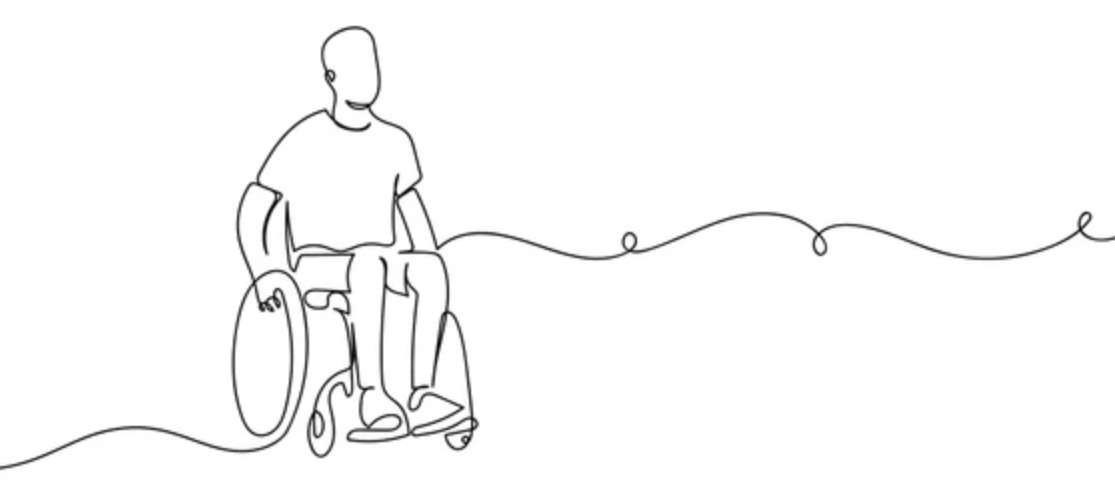
Illustration via Adobe Stock
Have you ever judged a friend for skipping the gym one too many times in a row? Perhaps you’ve engaged in a wellness fad like taking vitamin D supplements to ward off illness, or refused cake at a birthday party in an effort to ‘be good?’ Have you encouraged a loved one to ‘practise radical self-care’ while decrying the impacts of the obesity epidemic and espousing the benefits of positive thinking? If you answered ‘yes’ to any of the above, you just might be a proponent of healthism. Don’t panic; you are not alone. However, the ideology of healthism is insidious as it is pervasive. While you are not the only one to fall victim to the thinking trap of healthism, it is important to understand its meaning, how healthism manifests, and how we can fight the ideology that is inextricably linked with capitalism, white supremacy, ableism, anti-fatness, misogyny, and fascism.
‘Health’ is defined by the World Health Organisation as ‘a state of complete physical, mental and social well-being and not merely the absence of disease or infirmity.’¹ If you are anything like me, the phrase ‘to fall at the first hurdle’ immediately springs to mind. Even if you are healthy and able-bodied, to embody the degree of wellness described seems like an impossible feat, not least as the West careens wildly towards fascism. Nevertheless, the term healthism was coined by political economist Robert Crawford in 1980 to describe the fervour surrounding health and wellness fads of the 1970s like dance therapy and homeopathy.² Healthism is an ideology concerned with health as a moral imperative, positing that health is an individual problem and privatising wellness.³ Proponents of healthism argue that health and wellness are achievable goals that good, moral, upstanding citizens must pursue at all costs. To neglect one’s health is a failing, and illness or disability are a direct result of that failing, entirely the fault of the individual rather than resultant of environmental, genetic, or social factors. Crawford writes:
Healthists will acknowledge […] that health problems may originate outside the individual, [e.g.] in the American diet, but since these problems are also behavioral, solutions are seen to lie within the realm of individual choice. Hence, they require above all else the assumption of individual responsibility. For the healthist, solution rests within the individual’s determination to resist culture, advertising, institutional and environmental constraints, disease agents, or, simply, lazy or poor personal habits. In essence, then, cause becomes proximate and solution is constructed within the same narrow space.⁴
While he expresses reluctance to criticise all holistic approaches to health, including an emphasis on ‘self-care’ and ‘self-responsibility,’⁵ Crawford situates healthism as a dominant ideology that benefits those in power. Healthism posits that everyone can exercise control over their own wellbeing, prioritizing discourses of individual choice over, say, restructuring of public services at the population level. Health is not a social or political issue, but an individual one. Healthism promotes a new moralism; those who perform health adequately are moral and good, and ‘good living is reduced to a health problem, just as health is expanded to include all that is good in life.’⁶ Such discourse is alluring, as it offers a sense of control and belonging in an increasingly chaotic world.⁷ However, healthism suggests that chronically ill/disabled people are abusers of illness who use their ill-health to avoid responsibility or collect social welfare payments.⁸ As healthism necessarily promotes ableism, it should come as no surprise that it is often wielded by the powerful as a tool of social control.⁹ Gender, race, class, and sexuality are also complex issues implicated by healthism.
Who is health for?
While the pursuit of health is not merely a middle-class endeavour, Crawford points out that healthism is most likely to be an ideology held by those who have ample disposable income and leisure time to pursue health-giving products and services like gym memberships, health foods, and expensive dietary supplements. This is not to say that the working class is unhealthy by default, but that cheap food, shift work, and even living in disadvantaged communities lacking in outdoor space are largely associated with poor health outcomes. Healthist discourse excludes the working class, says Crawford:
As individuals, we all face the same dilemma: we cannot afford to wait for a political solution, so those of us who are able adopt health practices which we believe will reduce our risk. Those most able to make individual adjustments are more likely to be middle class. Middle-class people not only possess more personal resources for changing lifestyle, doing holistic therapy, and so forth, but also have acquired fundamental notions about themselves as social actors from work situations (and all the supporting socializing patterns) which are individually competitive. They are already predisposed toward seeing their achievements as a result of personal effort alone.¹⁰
As such, healthism and classism go hand-in-hand. Too, healthism is deeply racist, excluding people of colour from notions of health and wellbeing. According to Faith Stadnyk, during the 19th century the white establishment sought to pathologise Black slaves who desired freedom as having no right to safety or wellness.¹¹ Stadnyk also points out that colonial concepts of health fail to take non-Western approaches into consideration, situating Western medicine as the only way to achieve health.¹² They write that ‘this colonial discursive process engineers Western biomedicine as the one and only way to better the body’ and situates ‘societal well-being as health promotion.’¹³ The racism and xenophobia in healthism also extends to migrants, as conforming to certain standards of health is associated with ‘good citizenship.’¹⁴ The responsible citizen must plan for the future by preserving their health, say Julie Henderson et al, in order to comply with ‘the obligations of citizenship.’¹⁵ Self-surveillance and self-discipline according to ‘good’ choices promoted by the government are necessary in order to embody the mythic ‘good immigrant.’
According to Mikaela Beijbom et al, healthism is deeply implicated by gender, reducing women and girls to docile bodies preoccupied with disordered eating and low self-esteem.¹⁶ Healthist self-surveillance leading to an obsession with weight loss is associated with discourses of ‘individualism, choice, and empowerment’ amongst women. Thinness is idealised ‘as a bodily expression of self-mastery and responsibility,’ while fatness is naturalised ‘as a health problem.’¹⁷ Patriarchal body politics situates managing one’s own body through weight loss as a ‘pleasurable act of agency,’ conflating appearance and health while moralising both.¹⁸ When directed at women and girls, healthism obfuscates meaningful ways to improve women’s health like stress management or reducing sun exposure, instead encouraging body dissatisfaction and participation in late-stage capitalism.¹⁹ Furthermore, women are encouraged as primary caregivers to provide better care for their children by losing weight, and to feed their children ‘appropriately’ so that they do not become fat.²⁰ The demonisation of fat people, argues Talia L. Welsh, is solidified as follows:
Everyone should engage in weight maintenance; anyone could slip over that boundary into poor health. If one falls outside of the appropriate weight limits for one’s height, then diet and exercise activities should commence. If a regime of diet and exercise is not initiated, one runs the risk of having one’s behaviors viewed as immoral and pathological (Heyes 2006).²¹
Since health is political, says Aubrey Gordon, marginalised groups like the LGBT community will inevitably suffer due to healthism.²² Historically, LGBT people were pathologised for their identities and excluded from health by their very nature. The delayed government response during the HIV/AIDS crisis lead to the deaths of LGBT people at astronomical rates, while concerns around the side effects experienced by trans people using hormone therapy perpetuate healthist discourse.²³ For Gordon, healthism is a tool to enforce power, giving us ‘a sense of superiority over those whose health we’re so ready to judge and dismiss.’²⁴
Healthism, disability, and ableism
To embrace a full understanding of healthism’s relationship with ableism, we must contend with the ideology of neoliberalism. Emerging in the late 20th and early 21st centuries, neoliberalism is associated with free-market capitalism, cuts to investment in public services, as well as privatisation and de-regulation of business. For Lisette Farias Vera, neoliberalism promotes values like ‘rationality, autonomy, and self-efficiency,’ adopting austerity measures to gut healthcare services and blaming those who need help for their own chronic illness/disability.²⁵ According to neoliberal discourse, poverty, inequality, or poor public services are not to blame for ill health, instead framing health ‘as a matter of individual choice.’²⁶ Those who are not willing or able to maintain a high standard of health are ‘lazy or deviant.’²⁷
Healthism is deeply implicated by neoliberalism. This has dire ramifications for chronically ill and disabled people, who are marginalised when society fails to adapt to their needs. It is easy for those privileged by good health to enjoy the myth of meritocracy and view health as an individual choice, a moral duty fulfilled primarily through health-promoting activities.²⁸ In actuality, none of us are in control of our health; even the healthy and able-bodied may be just one post-viral infection away from severe chronic illness,²⁹ and loss of mobility and reduced quality of life awaits anyone who plans to live past retirement.³⁰ Nonetheless, under neoliberalism healthist discourse prevails, says Farias Vera:
The idea of health that can be ‘chosen’, maintained, and improved by individual action also shapes the subjectivity of ‘healthy’ individuals as those who are rational, responsible, and conscious ‘good’ citizens. As such, disciplinary power works through the creation of ideals of ‘healthy’ that are attached to individuals’ moral worthiness as a citizen (Ayo, 2012). Responsibility for health is also emphasized in social media through the presentation of illness as a consequence of ‘bad’ behavior, failure to exercise self-control, personal determination, and/or lack of willingness to adhere to numerous regimens and norms that supposedly enhance one’s health.³¹
Chronically ill and disabled people embody the negative consequences of ‘irrationality, laziness’ and ‘incorrect behaviour’ by failing to conform to a healthy lifestyle.³² This can involve ableist reproaches for such deviant behaviour as ‘burdening the health system’ or ‘stealing from the State’ by receiving social welfare payments (if there is a disabled person who has not once been admonished for their dependence on State disability payments, I have yet to meet them). Ultimately, healthism and neoliberalism frame health as an individual behaviour, positing that those who engage in risky health behaviour should be punished for their lack of self-discipline through the consequences of chronic illness and disability.³³ Marginalised communities are blamed for their own oppression by neoliberal and healthist values. However, it should be noted that chronic illness and disability exacerbated through the ‘fault’ of the individual is deserving of support and understanding. Certain conditions may benefit from lifestyle changes or treatments that the person with the condition refuses, for any number of reasons; they are no less worthy of sympathy, care, or resources for declining treatment options and making the right choice for their own health, irrespective of advice from healthcare staff and armchair diagnosticians alike.
Rose Galvin suggests that healthism and ableism are inextricably linked with neoliberal discourses of individual responsibility. They argue that individualism leads to internalised guilt for the chronically ill/disabled community.³⁴ Tracing the origins of the government of health during the 18th century, they posit that governments ‘focused on creating more salubrious living conditions’ for the poor and sick, until the emphasis shifted towards self-surveillance which encouraged individuals to police their own behaviour.³⁵ Chronic illness began to be framed as a matter of individual choice.³⁶ Today, healthism contends that anyone can become ill according to their own behaviour, and chronically ill people have ‘failed’ to be responsible for their own health ‘by making unwise or even culpable choices.’³⁷ This enforces a moral code which associates normative standards of health with ‘good behaviour,’ while the deviant chronically ill are ‘bad.’³⁸ Galvin describes this behavioural code as follows:
The healthy person is, in effect, symbolic of the ideal neoliberal citizen, autonomous, active and responsible and the person who deviates from this ideal state is, at best, lacking in value and, at worst, morally culpable.³⁹
To say that governments promoting healthism may have a hidden agenda will likely conjure up images of the author fashioning a tinfoil hat. Nevertheless, Galvin comments that discourse which blames chronically ill/disabled people for their own health is suspiciously convenient for governments during the emergence of neoliberalism and the shrinking of the welfare state. After all, why should a population be supported by the state apparatus when those pesky disableds could simply feel empowered to take control of their own individual health?⁴⁰ According to healthism, individual responsibility is key when it comes to our health, and as ‘consumers and enterprising individuals’ we should choose to be well.⁴¹ What were once failures of the modern state like sickness and poverty are now framed as matters of individual choice, and welfare supports are re-situated ‘as the cause of the problem rather than the solution.’⁴² Those who rely on State disability payments to survive are diametrically opposed to the ‘independent,’ ‘hard-working,’ ‘autonomous,’ and ‘self-reliant’ neoliberal subject.⁴³ This is emphasised by government programmes which stress the ‘positive consumer outcomes’ associated with taking ‘responsibility’ and increasing ‘self-reliance,’ as if chronic illness or disability can be overcome with the same ease as purchasing a handbag.⁴⁴ If sickness is a choice, then those claiming welfare supports are stealing money from the State, not to mention the hardworking taxpayer. The social welfare cheat who is ‘faking’ their disability then becomes scapegoated for the government’s failure to provide all citizens with an acceptable standard of living. If not for those pesky welfare cheats — of which I am assured there are thousands — we would surely see an end to the housing crisis, the cost-of-living crisis, the healthcare crisis, Direct Provision, war, injustice, indeed every system of oppression under the sun.⁴⁵
Healthism and the new fascism
It is clear that healthism has dire implications for systems of social, cultural, and institutional power. When women, fat people, people of colour, the LGBT community and the working class are excluded from conversations about health, they are pathologised for their identity and marginalised for factors largely outside of their control. When we tell chronically ill/disabled people that health is an individual choice, we blame them for their own oppression and tacitly support the state apparatus which fails to provide them with adequate support, resources, and care. Unsurprisingly, healthism has been linked to the recent rise in conservatism,⁴⁶ with health influencers online parroting right-wing views and demanding pious devotion from their followers.⁴⁷ The degree to which healthism and ableism interact with fascism cannot be overstated.
Healthism invariably leads to health supremacy, a key component of fascism. Marteen Steenhagen defines health supremacy as the belief in the inherent superiority of those who are healthy and able-bodied over the inferior chronically ill/disabled population, that ‘those who are healthy have a natural privilege to dominate others in society.’⁴⁸ Steenhagen uses the public discourse surrounding the COVID-19 pandemic as an example of health supremacy, where the disease was presented as a threat to only the ‘vulnerable’ chronically ill, while the ‘superior,’ ‘naturally healthy’ population protested against minor lockdown measures without regard to the impact this may have on the lives of the elderly and disabled.⁴⁹ Health supremacy posits that the supposedly superior group should have their interests prioritised over those with underlying conditions to maintain dominance.⁵⁰ If healthism prevails, so too does the fascistic notion of health supremacy.
In the future, I see an end to healthism. I see us challenging those in power that benefit from healthist thinking, the assumptions and the biases associated with health supremacy. I see an end to anti-fatness, homophobia, transphobia, misogyny, white supremacy, classism, ableism, indeed all forms of oppression. I see a world where chronically ill/disabled people can thrive, not just survive, free from healthist assumptions about their conditions with the care and resources they deserve. I see an end to neoliberalism and fascism, with a flourishing state apparatus that supports all members of its population without hesitation, judgment, or paternalism. I see the voices of hatred and intolerance silenced by love, and I hope that you can see it, too.
References
-
“Constitution of the World Health Organization,” Who.int https://www.who.int/about/governance/constitution
-
Crawford, R., “Healthism and the Medicalization of Everyday Life,” International Journal of Health Services: Planning, Administration, Evaluation, 10.3 (1980), pp. 365–88, doi:10.2190/3H2H-3XJN-3KAY-G9NY
-
Ibid.
-
Ibid.
-
Ibid.
-
Ibid.
-
Ibid.
-
Ibid.
-
Turrini, Mauro, “A Genealogy of ‘Healthism,’” Ournal of Medical Humanities & Social Studies of Science and Technology, 7.1 (2015), pp. 11–27 <https://hal.science/hal-01350627/file/015-A%20genealogy%20of%20healthism-EA%CC%88.pdf>
-
Crawford.
-
Stadnyk, Faith, “Co-Healthism in Health at Every Size®-Aligned TikTok Activism: Transforming the Definition of Healthism via Feminist-of-Color Disability Studies Theorizing,” Fat Studies, 13.3 (2024), pp. 277–92, doi:10.1080/21604851.2024.2306991
-
Ibid.
-
Ibid.
-
Henderson, Julie, and others, “‘Health Is the Number One Thing We Go for’: Healthism, Citizenship and Food Choice,” The Future of Sociology, 2009, pp. 1–14 <https://fac.flinders.edu.au/dspace/api/core/bitstreams/2e379a09-95ee-4ddf-bd65-cc6e11727d36/content>
-
Ibid.
-
Beijbom, Mikaela, Alexis Fabricius, and Kieran C. O’Doherty, “Women’s Health Magazines and Postfeminist Healthism: A Critical Discourse Analysis,” Feminism & Psychology, 33.4 (2023), pp. 604–21, doi:10.1177/09593535231169823
-
Ibid, p. 609.
-
Ibid, p. 613.
-
Ibid, p. 617.
-
Welsh, Talia L., “Healthism and the Bodies of Women: Pleasure and Discipline in the War against Obesity,” Journal of Feminist Scholarship, 1.1 (2011), pp. 33–48 <https://digitalcommons.uri.edu/cgi/viewcontent.cgi?article=1012&context=jfs>
-
Ibid.
-
Gordon, Aubrey, “We Have to Stop Thinking of Being ‘Healthy’ as Being Morally Better,” SELF, August 7, 2020 <https://www.self.com/story/healthism>
-
Ibid.
-
Ibid.
-
Farias Vera, Lisette, “The (Mis)Shaping of Health: Problematizing Neoliberal Discourses of Individualism and Responsibility,” in The Routledge Handbook of Transformative Global Studies, ed. by S. A. Hamed Hosseini, and others (Routledge, 2021), pp. 218–30, doi:9780429470325
-
Ibid, p. 219.
-
Ibid.
-
Ibid, p. 224.
-
Tackey, Caleb, and others, “Post-Viral Pain, Fatigue, and Sleep Disturbance Syndromes: Current Knowledge and Future Directions,” Revue Canadienne de La Douleur [Canadian Journal of Pain], 7.2 (2023), doi:10.1080/24740527.2023.2272999
-
I like to refer to young people who are healthy and able-bodied as ‘currently abled,’ given that illness and disability await anyone who plans to live to their elderly years.
-
Farias Vera, p. 225.
-
Ibid.
-
Ibid, p. 227.
-
Galvin, Rose, “Disturbing Notions of Chronic Illness and Individual Responsibility: Towards a Genealogy of Morals,” Health (London, England: 1997), 6.2 (2002), pp. 107–137, doi:10.1177/136345930200600201
-
Ibid, p. 115.
-
Ibid.
-
Ibid.
-
Ibid, p. 116.
-
Ibid, p. 117.
-
Please read with heavy sarcasm.
-
Galvin, p. 117.
-
Ibid, p. 120.
-
Ibid, p. 124.
-
Ibid.
-
See footnote 40.
-
Cheek, Julianne, “Healthism: A New Conservatism?,” Qualitative Health Research, 18.7 (2008), pp. 974–82, doi:10.1177/1049732308320444
-
Pelters, Britta, and Barbro Wijma, “Neither a Sinner nor a Saint: Health as a Present-Day Religion in the Age of Healthism,” Social Theory & Health, 14.1 (2016), pp. 129–48, doi:10.1057/sth.2015.21
-
Steenhagen, Maarten, “Loathe Fascism? Then Don’t Be a Health Supremacist,” Medium, April 16, 2022 <https://msteenhagen.medium.com/loathe-fascism-then-dont-be-a-health-supremacist-c8841acdf69>
-
Ibid.
-
Ibid.
Further reading
-
Griffin Basis, Carrie, “What’s Bad about Wellness? What the Disability Rights Perspective Offers about the Limitations of Wellness,” Journal of Health Politics, Policy and Law, 39.5 (2014), pp. 1–48 <https://papers.ssrn.com/sol3/papers.cfm?abstract_id=2478902>
-
Johnson, Kourtney, “When a Focus on Healthy Living Becomes Problematic,” Withinhealth.com (Within Health, October 7, 2025) <https://withinhealth.com/learn/articles/healthism-when-a-focus-on-healthy-living-becomes-problematic>
-
Kirbiš, Andrej, “The Impact of Socioeconomic Status, Perceived Threat and Healthism on Vaccine Hesitancy,” Sustainability, 15.7 (2023), pp. 1–13, doi:10.3390/su15076107
-
MacKay, Anne, “‘I Wish People Would Understand’: Exploring Ableism through Young Adults’ Experiences of Living with Chronic Illness” (University of Ottawa, 2019) <https://ruor.uottawa.ca/server/api/core/bitstreams/514f2637-bbf0-4236-b4be-ec8834e6b6fc/content>
-
Mackert, Nina, and Friedrich Schorb, “Introduction to the Special Issue: Public Health, Healthism, and Fatness,” Fat Studies, 11.1 (2022), pp. 1–7, doi:10.1080/21604851.2021.1911486
-
Welsh, Talia, “The Affirmative Culture of Healthy Self-Care: A Feminist Critique of the Good Health Imperative,” International Journal of Feminist Approaches to Bioethics, 13.1 (2020), pp. 27–44, doi:10.3138/ijfab.13.1.02
메타데이터
- post_id
- db160d47d261
- slug
- the-cult-of-healthism-db160d47d261
- url
- https://medium.com/@banjaxed/the-cult-of-healthism-db160d47d261
- canonical_url
- https://medium.com/@banjaxed/the-cult-of-healthism-db160d47d261
- author_url
- https://medium.com/@banjaxed
- status
- ok
- fetched_at
- 2026-06-09 15:37:30