Frankincense: A Resin of Culture & Ritual
Frankincense, unlike other well known herbs, is actually not a leaf or a flower. It is an aromatic dried resin from the boswellia tree…
Frankincense: A Resin of Culture & Ritual

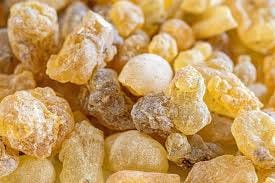
Frankincense, unlike other well known herbs, is actually not a leaf or a flower. It is an aromatic dried resin from the boswellia tree. Normally harvested in parts of the Middle East, East Africa, and India — it is been highly regarded in societies and religion for centuries as useful medicine, perfumery, and incense.
The most common uses of the resin are incense for ritual use in churches, temples, and meditation practices. In other perfumery and essential oils it adds warmth, woodiness, and ever so slight citrus notes to scent blends. Traditionally, it has been used medicinally for inflammation and respiratory issues.
It’s scent is often described by words like woody, resinous, slightly spicy, and a somewhat lemony pine-like aroma.
It’s fame for many comes from the famous biblical story of the three wise men gifting baby Christ the resin alongside gold and myrrh. Aside from it having been a common incense in Israelite temples, the value of the gift extends to it having been a major commodity in the ancient world.
Evidence for how frankincense is able to be a relief for inflammation stems from compounds inside called boswellic acids. Research has been limited and the safest use of it is best directed by a medical health professional.
I originally thought resin was like tree sap but they are not the same, as I probably should have reasoned by the different words.
Sap is the watery fluid that moves through a plant carrying the water, sugars, and nutrients it needs to survive, making it part of the plant’s circulatory system. An example of sap would be like maple sap, a sticky sap from broken stems, that is used for syrup.
Resin, however, is a thicker and even stickier substance and it functions like a protective sealant as a part of plant’s immune system. Trees produce resin to protect against wounds, trap insects, and fight against fungi or bacteria.
Humans get the resin by making shallow cuts in the bark and allow it to harden to become a resin, however in nature the resin often comes out on it own through broken branches, insect bites, animal damage, fungal infection, cracks in bark or storm and fire damage. A good to think about the difference between sap and resin is to think of sap as a plant’s bloodstream and resin as a plant’s band-aid or protective glue. Another unique thing about resins is that some of them become fossilized over millions of years and turn into the popular gemstone Amber.
In Ancient Egypt, it was burned in temple rituals, used in offerings to their gods, included in embalming and funerary practices, and became seen as a symbol of purification and divine presence.
Historically, Egypt imported huge amounts of frankincense from the southern Arabian Peninsula and the Horn of Africa.
Similarly, in Judaism, the resin was mixed with sacred incense in temple ritual, used with grain offerings, and associated with holiness and priestly character. The incense was regarded as sacred and not for ordinary use — which of made it a perfect gift for baby Christ.
In Christianity, frankincense was notable in the Catholic Church and in some Oriental Orthodox and Anglican traditions. For them it became a symbol of prayer rising to heaven, spiritual purification, reverence, and the divinity of Christ.
In Islam, frankincense is casually burned in homes and mosques for serenity and aromatherapy. It is also used to foster a sense of hospitality by perfuming the home before visitors pass through as a sort of aromatic invitation. Passing through the smoke and getting its scent in one’s hair and clothes is seen as a warm welcome in all kinds of communal gathering like weddings, holidays, meals, and get togethers. It often accompanies coffee and tea. As such, it has become a symbol of cleansing and blessing. It is most valued in Islamic countries like Oman, Yemen, Somalia, and parts of North and East Africa.
Occasionally, frankincense use comes up in Dharmic religions like Hinduism and Buddhism, but other aromatic materials like sandalwood are often the preference.
Learning about frankincense made me wonder why we like the scents that we do and I wanted to share a few things about aromatherapy.
The practice of aromatherapy operates through the interaction between smell, the nervous system, memory, emotion, and physiology. As a person inhales odors travel up the nose and into the brain, binding to receptors that send signals tied to brain matter connected to emotion, memory, stress response, and autonomic nervous system regulation. The odor that travels are volatile molecules released into the air by the burning of a fragrant substance.
One of the pathways that the molecules take is through the limbic system which includes structures like the amygdala and hippocampus and is part of the reason smells trigger moods, memories, or bodily feelings.
To further break it down aromatic compounds can influence people through psychological association, nervous system effects, physiological responses, and behavioral/environmental effects. Psychologically a scent can remind a person of a culture, ritual, memory, or obligation. Scents can be calming, stimulating, exciting, or grounding. Experiencing certain scents can affect heart rate, stress hormones, breathing patterns, and inflammation. The use of aroma can also affect behavior in ritual because there is a need or expectation to slow down, inhale, and relax or meditate. A scent alone can naturally put someone in a meditative or peaceful state through repeated association or just by the way the scent goes up the nose.
Aromatherapy can then be defined as partly chemistry, context, and psychology working together.
Frankincense has truly made a name for itself as an aroma of sacrality by being valued by quite a few major religions and all three Abrahamic ones. As a result, it has come to represent stability, order, slowness, depth, stillness, appreciation.
Its sensory experience functions not only through its inherent smell but the visible smoke, lingering scent, altered lighting and atmosphere, and associated ritual behavior creating a varied experience for the user.
Some research suggests that the aromatic compounds have a mild anxiolytic (anxiety reducing) effects as well as the potential to soothe minor inflammation. It even has been evidenced to have mild effects on mood and attention spans.
Overall, aromatic research on frankincense is varied and few in number but the strongest potentials we can infer from frankincense with certainty are stress reduction, the emotional response of comfort and sedation, and relaxing ritual and sensory regulation.

메타데이터
- post_id
- db32c88fd010
- slug
- frankincense-a-resin-of-culture-ritual-db32c88fd010
- url
- https://medium.com/@sydney.ac.harris/frankincense-a-resin-of-culture-ritual-db32c88fd010
- canonical_url
- https://medium.com/@sydney.ac.harris/frankincense-a-resin-of-culture-ritual-db32c88fd010
- author_url
- https://medium.com/@sydney.ac.harris
- status
- ok
- fetched_at
- 2026-07-10 09:05:01





