103. Ten years of UPI
This April, UPI completed 10 years.
103. Ten years of UPI
This April, UPI completed 10 years.
When you take an elevator, you are mostly looking at your phones. Pretend to read that mail in spam folder, scroll through WhatsApps and if you are a completely pathetic nuisance then watch Reels in loud music.
I wonder what people were doing in elevators before smartphones… Maybe reading instructions, staring at your own shoes or calculating if the weight of all people is within limit. .
Anyway, the point is not about the elevator. The point is what life was like before UPI.
Yes, it’s been 10 years since UPI was launched.
A ground breaking idea that started in April 2016 with 21 banks is now the world’s biggest Real Time Payment rail (Hurray!) and last year UPI surpassed Visa (Hurray, again!).
Today UPI has become omnipresent and omnipotent, it can solve any payment related problems/requirements (except the bribe which is still in cash). UPI has transcended age and economical stature of people and it has gone beyond the borders of India.
Humans and UPI
My payments journey started before the existence of UPI. I was busy selling payment aggregation to merchants and mostly talking about cards, prepaid cards, and net-banking (yes, who had more banks was an USP), and then came UPI.
In the last 10 years, UPI has impacted both personally as well as professionally.
For me UPI is not just about an awesome free payment instrument and various experiences and stories. I am sure those who were part of this journey (building, selling, promoting, using etc.) have their own stories.
Here are few of those:
- Initial Days:
In 2016–17, payments industry leaders had different views of UPI. Traditional folks ignored it and kept pushing Net-Banking (good volume & good margins), few new FinTechs took a bet on UPI, and few simply sat on the fence (let’s see where it goes!).
PhonePe was founded for UPI but in early months PhonePe had more card traffic than UPI. And then UPI started evolving and scaling!
- UPI didn’t play much role during demonetization
One of those Black Swan events that gave push to digital commerce. But strangely UPI didn’t play a big role during the early days of demonetization. It was the PayTM wallet.
On 30-Dec-2016, BHIM was launched.
UPI did play a big role during pandemic… When migrant population of cities moved to smaller towns, they also took their knowledge of paying with UPI.
In a way UPI is one of those products which cross from India to Bharat.
- Google Pay:
Today we have many UPI Apps / TPAPs and each gives some incentive (cashback, rewards, coins etc.) to users. Few of those incentives are more useless than the other useless ones.
So far the best App to give incentive was Google Pay’s scratch cards… It was awesome, it was fun and it was unpredictable. Eventually cashbacks dried out and the message ‘Better Luck next time’ reminded me of all the rejections from HR recruiters so I decided to delete that App.
- Zero ‘dark’ MDR
On 1st Jan 2020, UPI MDR became zero. The government wanted to push digital payments and decided to make UPI free. It had a big impact on the ecosystem that wanted to make some revenue or margin. And on top PAs had to do a lot of work in terms of informing merchants, signing addendums and changing fee configs. Anyway, FinTechs stopped charging MDR and renamed it as ‘platform fee’ or ‘infra fee’. :)
- PhonePe — The Phoenix
In 2020, RBI’s moratorium on Yes Bank impacted all FinTechs and PAs who were using Yes Bank for payment processing. The biggest impact was on PhonePe as it was blacked out for a couple of days. Despite this setback, PhonePe bounced back and even today it is the biggest UPI App. Kudos!
- Going Global
Many countries have their own RTP / fast payment rails but those are limited to their own countries or at best to the neighbourhood countries.
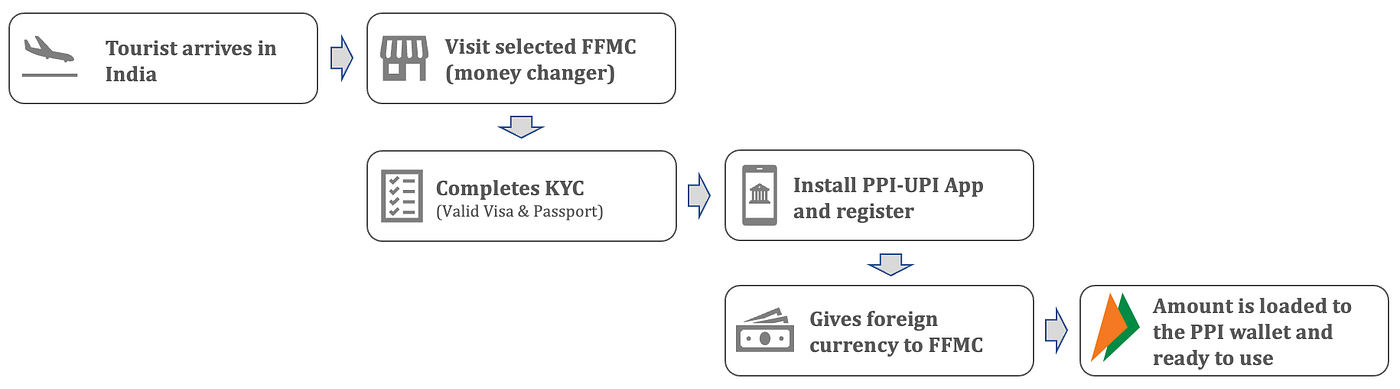
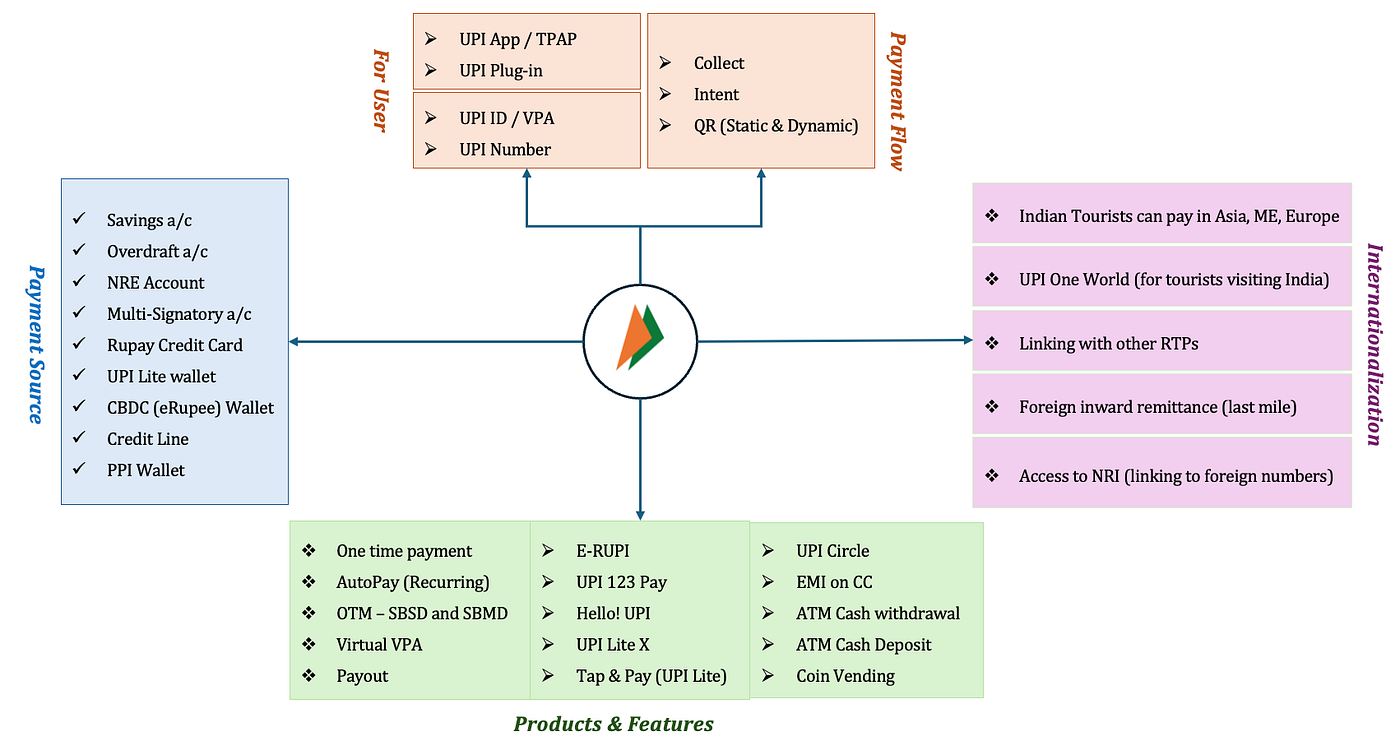
UPI was bravely expanded outside India. India users can pay using UPI in other countries, interlining of UPI and other RTPs for remittance. NIPL is helping other countries to their on UPI (and Rupay). Truly going above and beyond!
- UPI Tax:
In July 2025, shops in Bangalore started receiving GST notices based on their UPI collections. Newspapers started calling it ‘UPI Tax’.
Many small shops stopped accepting UPI and then went on strike to protest against GST notices. Eventually things settled down and shops are back on the UPI network.
For a moment it looked like a challenger had emerged for UPI… that is UPI.
Of course UPI has reduced usage of cash and we tend to spend more. But an interesting story is ‘how UPI impacted the sale of toffees’ by Growth X founder. (Link).
Evolution of UPI (from Circulars)
For the past ten years, NPCI has been relentlessly shaping the UPI and related products/features. NPCI’s circulars show the journey of UPI.


UPI — Road ahead
It is granted that UPI is here to stay and grow not only in India but also in many countries. Still there are few tough questions or challenges.
- Concentration Risk:
UPI is an interoperable platform. But there is huge concentration risk at various levels of UPI ecosystem.
- NPCI (the apex entity that runs NPCI)
- PhonePe and Google Pay combined control 85% of the market share of UPI Apps
- Acquiring banks (Yes, Axis, HDFC, SBI)
NPCI is not happy with duopoly in the UPI App space. Since Nov ’20, NPCI has been planning to enforce 30% capping on TPAP but is not able to do so. The next deadline is 31-Dec-2026.
NPCI is approving many TPAPs, BHIM App (3.0 version) is being promoted aggressively, user capping of WhatsApp is removed but still the duopoly continues.
- Will UPI have MDR?
Looks like NO.
UPI has become too big and too sensitive for any Government to bring MDR and then face wrath of users. Although a small MDR may not create a big problem, misinformation and fake news may create more confusion. So the Government will avoid it.
The subsidy is nowhere sufficient to cover the costs so banks will pass the cost to customers in some other form (No free lunches).
- Did UPI kill innovation?
Maybe.
UPI has solved everything related to payments and it is economical. So there is nothing much to do in terms of innovation as NPCI does that work.
For those who really want to do innovation then they have many other areas to work on.
- The frauds
The digital payments boom also increased digital frauds. Fraudsters have figured out innovative ways to con people. The payments ecosystem (RBI, NPCI, Banks, TPAPs) have implemented various processes and policies to stop the fraud proactively as well as reactively.
Was the speed of UPI one of the reasons for fraud? Maybe, the RBI is proposing to reduce the speed (delayed the settlement) and additional authorization for senior citizens.
UPI is one of those great stories of this great country that we all should be proud of. Kudos to everyone who played a role in this UPI story.
메타데이터
- post_id
- db901f2db57c
- slug
- 103-ten-years-of-upi-db901f2db57c
- url
- https://medium.com/authncapture/103-ten-years-of-upi-db901f2db57c
- canonical_url
- https://medium.com/authncapture/103-ten-years-of-upi-db901f2db57c
- author_url
- https://medium.com/@kulkarni-adi
- status
- ok
- fetched_at
- 2026-06-11 12:34:08