How to Revise Effectively in the Last 30 Days Before Exams
The final month before exams can feel like a race against the clock. There’s a syllabus to cover, topics that still don’t make sense, and a…
How to Revise Effectively in the Last 30 Days Before Exams
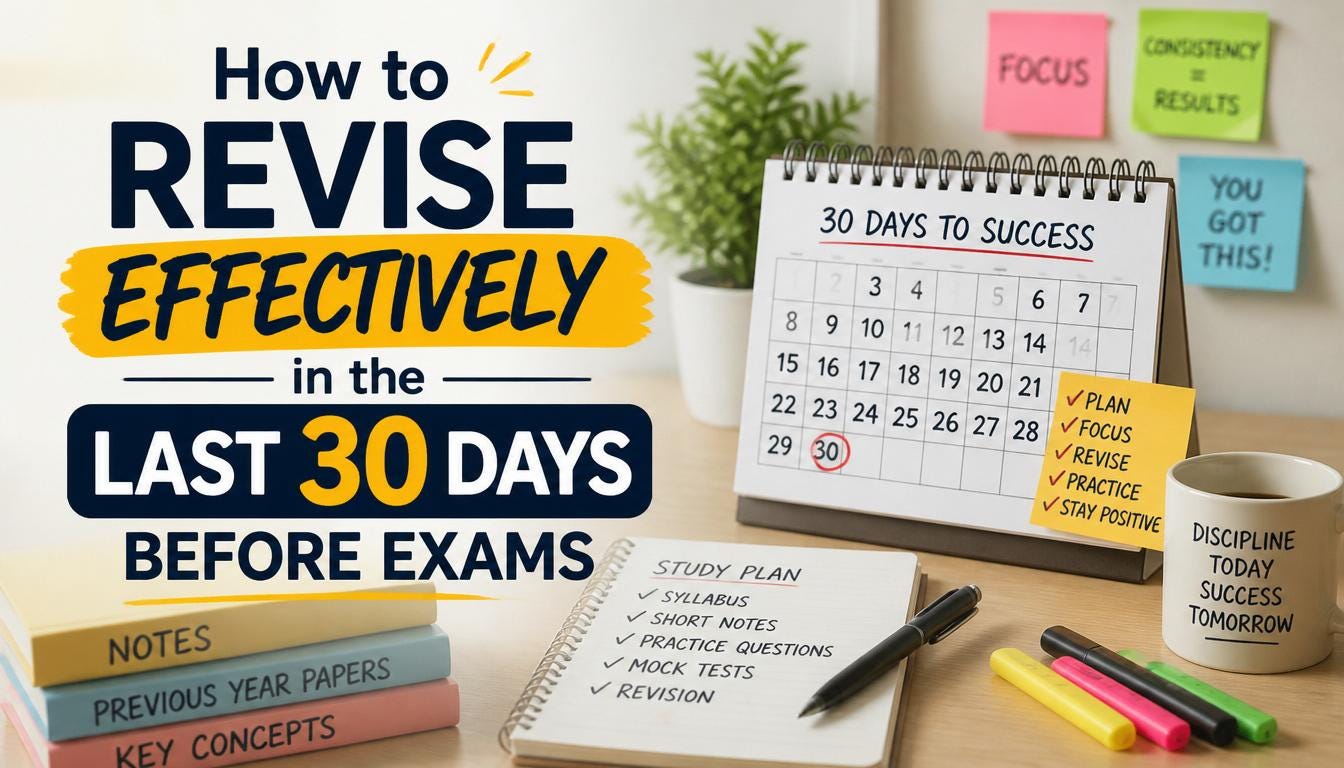
The final month before exams can feel like a race against the clock. There’s a syllabus to cover, topics that still don’t make sense, and a growing pile of worry that there isn’t enough time. The truth is, the last 30 days are not about cramming everything at once. They’re about revising smartly, calmly, and in the right order.
You don’t need to study for twelve hours a day to do well. You need a clear plan, the right revision methods, and enough rest to keep your brain sharp. This guide gives Class 8 to 10 students a realistic, high-impact way to use the last month before exams.
Here’s what you’ll learn:
- How to build a simple 30-day revision plan that actually works
- Which topics to prioritize when time is short
- The revision methods that build memory fast, and the ones that waste time
- How to protect your sleep, energy, and calm during the final stretch
Start With a Clear 30-Day Revision Plan
A plan removes the biggest source of last-minute panic: not knowing what to study next. When every day has a purpose, you stop wasting energy deciding and start using it learning.
Begin by listing every subject and the chapters left to revise in each. Then spread them across four weeks. A simple structure works well:
- Weeks 1 to 2: Revise all topics once, focusing on understanding and weak areas.
- Week 3: Practice papers and application-based questions.
- Week 4: Final revision, quick recall, and light review of strong topics.
Keep each day’s plan realistic. Three or four focused subjects in a day is plenty. A plan you can actually follow beats an ambitious one you abandon by day three.
If you feel behind already
Don’t try to revise everything equally. Focus first on high-weightage chapters and the topics you understand least. Covering the most important material well is far better than rushing through all of it badly.
Prioritize High-Weightage and Weak Topics
With limited time, what you choose to revise matters more than how much you revise. Two categories deserve the most attention: topics that carry the most marks, and topics you find difficult.
Check past papers or your syllabus to see which chapters appear most often or carry higher marks. These deserve early, thorough revision. A chapter worth fifteen marks should get more of your time than one worth three.
Next, be honest about your weak areas. These are the topics you’ve been quietly avoiding. Tackle them in the first two weeks while you still have energy and time to fix the gaps. Leaving them for the final days almost always leads to panic.
Common mistake: Spending hours revising topics you already know well because they feel comfortable. Comfort is not progress. Push into the areas that genuinely need work.
Use Active Recall Instead of Passive Rereading
This is the single biggest change most students can make. Reading your notes over and over feels productive, but it builds very weak memory. Your eyes recognize the words without your brain truly recalling them.
Active recall means testing yourself instead of rereading. Close the book and try to write down everything you remember about a topic. Check what you missed, then repeat. This effort to retrieve information is what locks it into long-term memory.
How to use active recall in practice
- After reading a section, close the book and summarize it from memory.
- Turn headings into questions and try to answer them without looking.
- Draw diagrams from memory, then check them against the original.
- Explain a concept out loud as if teaching someone else.
This method feels harder than rereading, and that difficulty is exactly why it works. The students in the EduAiTutors Foundation Program learn through this kind of active, concept-first approach rather than passive memorizing.
Practice With Past Papers Under Real Conditions
Knowing a topic and answering exam questions on it are two different skills. Past papers close that gap better than anything else, which is why Week 3 of your plan should center on them.
Sit with a full paper, set a timer for the real exam duration, and attempt it without your notes. This builds three things at once: speed, exam familiarity, and the ability to perform under pressure.
After finishing, mark it honestly and review every mistake. Ask why each error happened. Was it a concept gap, a misread question, or a calculation slip? This review is where the real improvement comes from, not just from completing the paper.
Try this: Aim for at least two full past papers per subject in the final 30 days. The more familiar the exam format feels, the calmer you’ll be on the actual day.
Balance Your Subjects Across the Week
Revising only one subject for several days in a row creates a false sense of progress while other subjects slip out of memory. A daily rotation keeps everything active.
Mix subjects within each day rather than dedicating whole days to one. For example, pair a heavy subject like Maths with a lighter revision session in another subject. This keeps your mind fresh and prevents the burnout that comes from staring at the same material for hours.
A simple weekly balance might look like this:
- Two core subjects each morning when focus is highest
- One lighter subject or revision task in the afternoon
- A short evening recall session on anything covered that day
Rotating subjects also helps you spot connections and stops any single subject from being neglected until the last minute.
Track Your Progress So You Stay Motivated
When exams feel overwhelming, it’s easy to focus on everything left to do. Tracking progress flips that view and shows you how far you’ve come.
Keep a simple checklist of every chapter you need to revise. Tick each one as you complete a proper revision session, not just a quick read. Watching the list fill up is genuinely motivating and reduces the “I’m not ready” feeling that fuels stress.
You can also track your past paper scores over the weeks. Seeing your accuracy climb is far more reassuring than simply hoping you’re improving. Progress you can see is progress you can trust.
Protect Your Sleep, Energy, and Focus
Late-night cramming feels productive but it works against you. A tired brain stores information poorly and recalls it even worse. Sleep is when your brain organizes everything you learned during the day, which means good rest is part of your revision, not a break from it.
Simple habits that keep your energy steady
- Sleep seven to eight hours. Cutting sleep to study more usually lowers, not raises, your marks.
- Study in focused blocks. Try 40 to 50 minutes of work followed by a short break, rather than long, draining sessions.
- Eat and hydrate properly. Your brain runs on fuel, and skipped meals lead to poor concentration.
- Move a little each day. A short walk clears your head and resets your focus.
A calm, rested student learns more in two focused hours than a tired one does in five distracted ones.
Manage Exam Stress Before It Builds
Some nerves are normal and even helpful. The goal isn’t to feel zero stress, it’s to keep stress from taking over your preparation.
When worry rises, respond with evidence rather than panic. Look at your progress checklist and your improving paper scores. That record reminds you that you’re moving forward, even on days when it doesn’t feel like it.
Break big worries into small actions. “I’ll never finish the syllabus” becomes “today I’ll revise these two chapters.” Each completed task lowers anxiety more than any reassurance ever could.
For Parents: How to Support the Final 30 Days
Parents shape the home environment more than they often realize during this period. Your calm makes a real difference.
Avoid comparing your child’s progress to others or asking repeatedly how much is left. Instead, ask supportive questions like “What did you revise today?” Show interest without adding pressure.
Help protect their routine. Ensure they’re sleeping well, eating properly, and have a quiet space to study. Sometimes the most valuable support is simply trusting the work they’re putting in and keeping the mood at home steady. For students who need extra structure during this stretch, the **Class 9 Foundation Program and [Class 10 Foundation Program](https://eduaitutors.com/foundation-program/class-10/)** are built around the kind of consistent, focused revision that the final month demands.
Read: How Class 8 Students Can Build Strong Study Habits Early
Final Thoughts
The last 30 days before exams are not about doing everything. They’re about doing the right things in the right order: a clear plan, smart prioritizing, active recall, real exam practice, and enough rest to keep your mind sharp. Done this way, the final month becomes a steady climb rather than a frantic scramble.
Start today with one action: list every chapter you still need to revise and spread it across the next four weeks. That single plan turns a month of worry into a month of progress.
If your child would benefit from structured, concept-first support that builds both understanding and exam readiness, explore the **EduAiTutors Foundation Program**. It’s designed to make the final stretch before exams feel calm, organized, and genuinely manageable.
메타데이터
- post_id
- db94bd7e37ca
- slug
- how-to-revise-effectively-in-the-last-30-days-before-exams-db94bd7e37ca
- url
- https://medium.com/@tutorseduai/how-to-revise-effectively-in-the-last-30-days-before-exams-db94bd7e37ca
- canonical_url
- https://medium.com/@tutorseduai/how-to-revise-effectively-in-the-last-30-days-before-exams-db94bd7e37ca
- author_url
- https://medium.com/@tutorseduai
- status
- ok
- fetched_at
- 2026-07-14 19:19:05