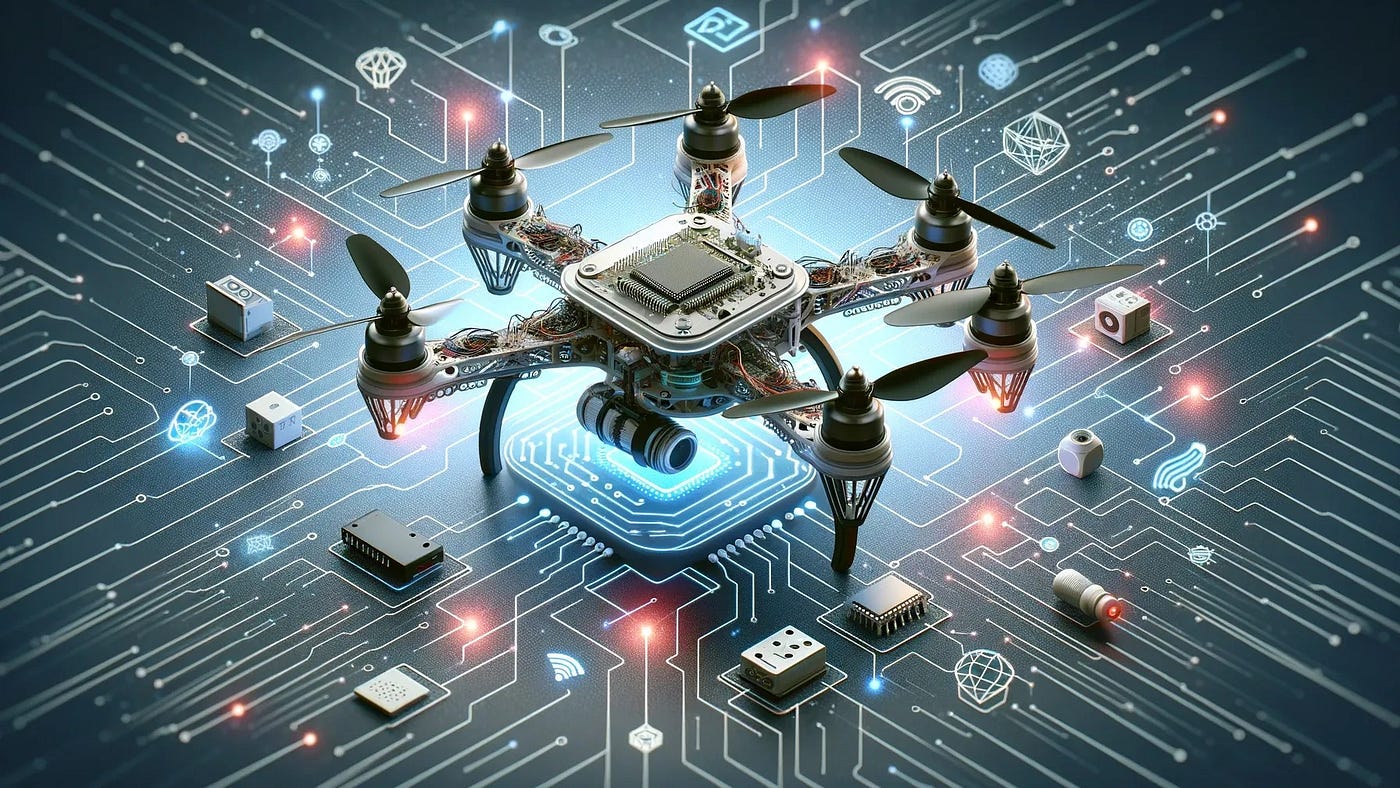
Masters of Intelligence: OpenAI And Nvidia’s Strategic Sprint To Shape The Future of AI Robotics
The race towards intelligent, autonomous machines is no longer science fiction; it’s a high-stakes reality being forged in the labs and…
Masters of Intelligence: OpenAI And Nvidia’s Strategic Sprint To Shape The Future of AI Robotics
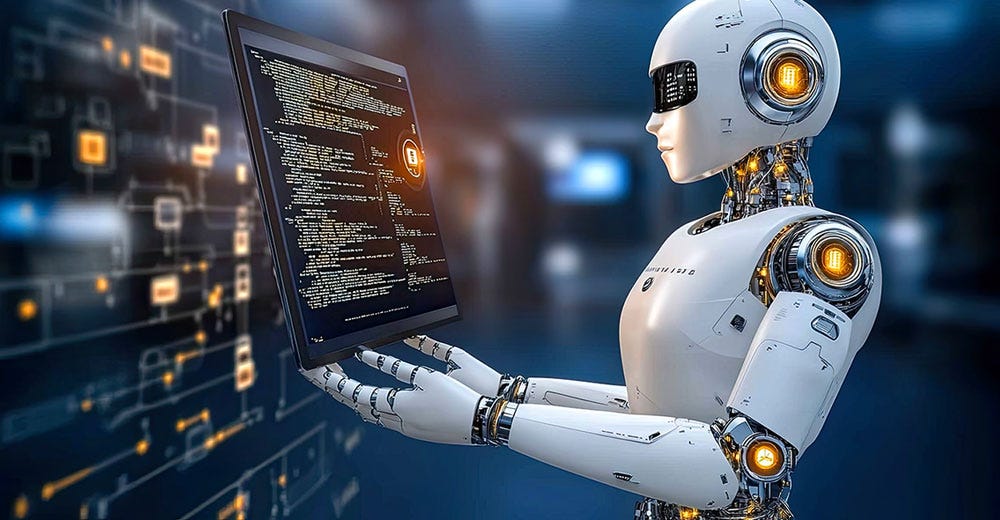
The race towards intelligent, autonomous machines is no longer science fiction; it’s a high-stakes reality being forged in the labs and boardrooms of tech giants. At the vanguard stand two seemingly disparate, yet profoundly complementary, players: OpenAI, the research powerhouse pushing the boundaries of artificial intelligence, and Nvidia, the undisputed king of accelerated computing. Their deepening strategic alliance isn’t just collaboration; it’s a coordinated sprint to fundamentally define and dominate the future of AI Robotics. Understanding the “how,” “why,” future implications, revenue potential, and growth trajectory of this partnership reveals a blueprint for the next industrial revolution.
The “How”: A Synergy of Mind and Muscle
The partnership thrives on a perfect division of labor, creating an ecosystem where each entity’s strengths amplify the other’s:
Nvidia: The Engine Room: Nvidia provides the indispensable physical foundation:
- Hardware Dominance: Their GPUs (like the H100 and upcoming Blackwell B200) are the undisputed workhorses for training massive AI models and running complex robotic simulations. Robotics-specific platforms like Isaac Sim offer hyper-realistic virtual environments for safe, rapid training and testing. Jetson modules bring AI processing directly onto robots.
- Software Stack: CUDA, Omniverse, and AI Enterprise software provide the essential tools and frameworks for developers to build, deploy, and manage AI-powered robotic applications efficiently.
OpenAI: The Cognitive Architect: OpenAI brings the “intelligence” to the machine:
- Advanced AI Models: Leveraging their expertise in large language models (LLMs like GPT-4) and multimodal AI, OpenAI is developing the cognitive engines for robots. This includes models that can understand complex instructions, reason about the physical world, learn from demonstrations or simulations, and adapt in real-time.
- Robotics Research: Initiatives like ChatGPT for Robotics (exploring natural language robot control) and dedicated robotics teams focus on imbuing machines with human-like dexterity, spatial understanding, and decision-making capabilities. They need Nvidia’s raw power to train these incredibly complex models.
- API & Ecosystem: Future APIs could allow roboticists to easily integrate OpenAI’s most advanced cognitive capabilities into their Nvidia-powered systems.
The “Why”: Convergence at the Perfect Moment
Several converging factors make this partnership not just logical, but imperative:
- The AI Tipping Point: Breakthroughs in generative AI, computer vision, and reinforcement learning have finally reached a level of sophistication where meaningful real-world robotic applications are feasible.
- The Simulation Imperative: Training robots in the real world is slow, expensive, and dangerous. Nvidia’s Isaac Sim provides the vast, scalable, and safe virtual proving ground OpenAI’s models need to learn complex skills.
- Hardware Readiness: Nvidia’s continuous advancements in GPU power, efficiency, and edge computing (Jetson) make deploying sophisticated AI models directly on robots a reality.
- Massive Market Demand: Industries from manufacturing and logistics to healthcare, agriculture, and elder care are desperate for automation solutions that are more flexible, adaptable, and intelligent than traditional robotics. The labor shortage amplifies this demand.
- Mutual Strategic Defense: Both face intense competition (Google DeepMind, Tesla, Amazon, Meta, traditional automation giants). Partnering creates a formidable barrier to entry, combining world-leading AI with world-leading compute.
Shaping the Future: Beyond Automation to Autonomy
The OpenAI-Nvidia axis isn’t just about faster pick-and-place robots. It’s about enabling a new generation:
- General-Purpose Robots (GPRs): Moving beyond single-task machines towards robots that can understand context, follow complex multi-step natural language instructions (“Tidy the living room, then unload the dishwasher”), learn new tasks with minimal data, and adapt to dynamic environments — powered by OpenAI’s cognitive models running on Nvidia hardware.
- Accelerated Innovation: Simulation drastically shortens development cycles. New robot skills or adaptations can be trained and tested virtually in days or weeks, not months or years.
- Human-Robot Collaboration: AI will enable seamless, intuitive interaction. Robots will understand gestures, anticipate human needs, and work safely alongside people.
- Democratization: Combined platforms (Nvidia hardware + OpenAI models via APIs) could lower the barrier for smaller companies and researchers to develop sophisticated robotic applications.
Revenue and Growth: A Trillion-Dollar Trajectory
This partnership unlocks immense and multifaceted revenue streams:
- Direct Hardware Sales (Nvidia): Surging demand for data center GPUs for AI/robotics training, and edge AI modules (Jetson) for deployment. Robotics represents a massive new growth vector beyond gaming and data centers. Nvidia’s own projections peg the potential robotics market opportunity at $100+ billion in the coming years.
- Software & Services (Nvidia): Licenses for Isaac Sim, Omniverse, AI Enterprise, and cloud-based robotics platform services (Nvidia AI Foundations).
- Model Access & APIs (OpenAI): Licensing fees or usage-based pricing for accessing their advanced robotics-specific AI models or APIs integrated into robotic systems.
- Ecosystem Lock-in: Developers building on the combined OpenAI-Nvidia stack create a powerful, self-reinforcing ecosystem. Success attracts more developers, fueling demand for both companies’ products.
- Cloud Monetization: Both companies benefit from increased cloud compute demand (Azure for OpenAI training, often on Nvidia GPUs; Nvidia’s own DGX Cloud).
Growth is projected to be explosive. The global AI robotics market, valued in the tens of billions today, is expected to reach hundreds of billions within the next decade. OpenAI and Nvidia, through their partnership, are positioned to capture a dominant share of the high-value segments — the “brains” and the “nervous system” of intelligent automation. Nvidia’s stratospheric stock growth and OpenAI’s soaring valuation (reportedly over $80 billion) reflect investor belief in this trajectory.
Conclusion: Architects of the Next Epoch
The OpenAI-Nvidia partnership is far more than a supplier-customer relationship. It’s a strategic co-creation pact to build the fundamental infrastructure for intelligent machines. By combining Nvidia’s unparalleled computational muscle and simulation environments with OpenAI’s cutting-edge cognitive AI, they are accelerating the development of robots that can perceive, reason, learn, and act with unprecedented sophistication.
This isn’t just about automating tasks; it’s about augmenting human capabilities, solving complex global challenges (supply chains, healthcare access, aging populations), and fundamentally reshaping productivity across every sector of the economy. While challenges around safety, ethics, job displacement, and cost remain significant hurdles, the momentum behind this alliance is undeniable. They are not merely participants in the AI robotics revolution; they are actively designing its core architecture, positioning themselves as the indispensable masters of intelligence for the machines that will define our future. The sprint is on, and OpenAI and Nvidia are setting the pace.
FAQ: OpenAI, Nvidia, and the AI Robotics Future
Q: What does Nvidia actually do for robotics?
- A: Nvidia provides the critical hardware (powerful GPUs for training AI models, Jetson modules for on-robot processing) and the software ecosystem (Isaac Sim for simulation, CUDA, Omniverse) that enable the development, training, and deployment of AI-powered robots. They build the computational foundation.
Q: What does OpenAI contribute specifically to robotics?
- A: OpenAI develops the advanced AI models that provide robots with intelligence: understanding language and instructions, reasoning about the physical world, learning new skills from data or simulation, and making complex decisions. They focus on the cognitive “brain” of the robot.
Q: Why partner? Couldn’t they do this alone?
- A: The challenges are immense. OpenAI needs Nvidia’s raw computing power and sophisticated simulation tools to train its models effectively and safely. Nvidia benefits immensely by having OpenAI’s groundbreaking AI models optimized for and running on its hardware, driving demand and showcasing its capabilities. The synergy accelerates progress beyond what either could achieve solo.
Q: Who are their main competitors in this space?
- A: Key competitors include:
- Tesla: Developing Optimus humanoid robot and its own AI stack (Dojo chip initiative).
- Google DeepMind: Pioneering robotics AI (RT models) and partnering with Google’s robotics teams.
- Amazon: Heavy investment in warehouse robotics (Kiva, newer prototypes) and AI.
- Meta: Significant AI research with robotics applications.
- Traditional Robotics Companies: (e.g., Fanuc, ABB, Boston Dynamics) integrating more AI, often using Nvidia hardware.
- Chip Competitors: (e.g., AMD, Intel, custom silicon efforts) vying for AI compute market share.
Q: How soon will we see advanced AI robots from this partnership?
- A: Early applications are already emerging (e.g., more intelligent warehouse bots, simulation-trained manipulators). Truly general-purpose robots capable of complex, adaptive tasks in unstructured environments are likely 5–10+ years away for widespread deployment, but the pace of innovation is accelerating rapidly. Expect incremental, domain-specific advances much sooner.
Q: What are the biggest challenges they face?
- A: Key hurdles include:
- AI Reliability & Safety: Ensuring robots make safe, predictable decisions in complex real-world situations.
- Hardware Cost & Power: Making powerful compute affordable and energy-efficient enough for mass deployment.
- Data Efficiency & Transfer Learning: Enabling robots to learn new tasks quickly with minimal real-world data.
- Ethics & Societal Impact: Addressing job displacement, bias in AI, and safety regulations.
- Bridging the Simulation-to-Reality Gap: Ensuring skills learned virtually work flawlessly in the messy real world.
Q: How will this impact jobs?
- A: The impact will be transformative. While it will automate many routine, dangerous, or physically demanding tasks, it will also create new jobs in robot design, programming, maintenance, supervision, and in entirely new industries. The focus will shift towards roles requiring creativity, critical thinking, emotional intelligence, and managing human-robot collaboration. Reskilling and workforce transition strategies are crucial.
This strategic sprint by OpenAI and Nvidia is more than a business alliance; it’s a pivotal force shaping the technological and societal landscape of the decades to come.
Thank you for reading! If you enjoyed this, don’t forget to follow and subscribe to see more of my writing.
Be a part of our growing community! Show your support by clapping and following the writer 👏️️.
Stay updated by following us on X, LinkedIn, YouTube, Discord, and subscribing to our newsletter.
Explore our other platforms: Boost.App, Substack, Amazon, Pinterest, and WeShop.
메타데이터
- post_id
- dba0ba4e92e7
- slug
- masters-of-intelligence-openai-and-nvidias-strategic-sprint-to-shape-the-future-of-ai-robotics-dba0ba4e92e7
- url
- https://medium.com/@jckapadia003/masters-of-intelligence-openai-and-nvidias-strategic-sprint-to-shape-the-future-of-ai-robotics-dba0ba4e92e7
- canonical_url
- https://medium.com/@jckapadia003/masters-of-intelligence-openai-and-nvidias-strategic-sprint-to-shape-the-future-of-ai-robotics-dba0ba4e92e7
- author_url
- https://medium.com/@jckapadia003
- status
- ok
- fetched_at
- 2026-06-23 17:05:31