What is the typical efficiency of a diesel power plant?
The efficiency working of a diesel power plant can vary based on various factors, including the design of the generator, engine technology…
What is the typical efficiency of a diesel power plant?
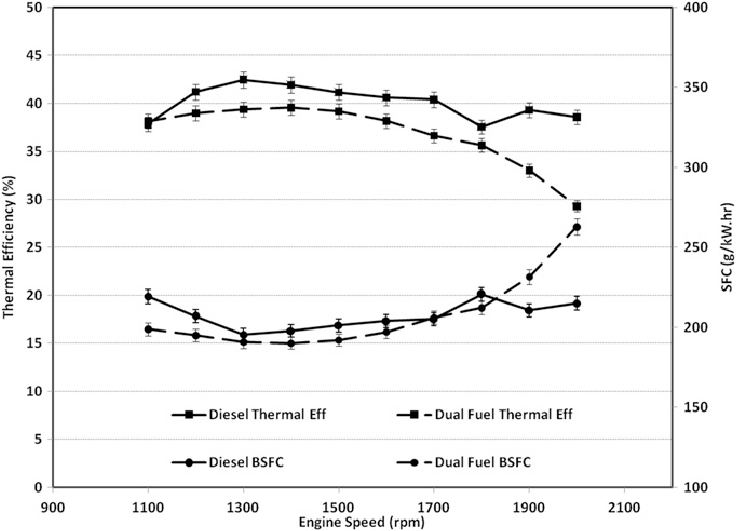
The efficiency ***working of a diesel power plant*** can vary based on various factors, including the design of the generator, engine technology, load conditions, and maintenance practices.
However, in general, diesel power plants are known for their relatively high thermal efficiency compared to some other types of power generation. Here’s a detailed description of the typical efficiency of a diesel power plant:
Thermal Efficiency:
The efficiency of a diesel power plant primarily refers to its thermal efficiency, which measures how effectively the plant converts the energy in the fuel (diesel) into useful mechanical and electrical power.
Diesel engines are known for their high thermal efficiency, often exceeding 30%. This means that they can convert more than 30% of the heat energy in the diesel fuel into mechanical work.
Compression-Ignition:
Diesel engines are compression-ignition engines, and this combustion method is intrinsically more efficient than spark-ignition engines (e.g., gasoline engines).
The high compression ratios in diesel engines lead to higher temperatures and pressures during combustion, resulting in more complete and efficient fuel combustion.
Better Fuel Energy Conversion:
Diesel fuel has a higher energy density compared to gasoline, which means that a given volume or weight of diesel fuel contains more energy. This higher energy density contributes to the efficiency of diesel power plants.
Constant Speed and Load:
Diesel power plants are often used in applications with relatively constant speed and load conditions, such as industrial facilities, data centers, and emergency backup systems.
In these scenarios, diesel generators can operate near their optimal operating points, maximizing their efficiency.
Long Service Life:
Diesel generators are known for their longevity and durability. They can provide reliable service for many years with proper maintenance.
The long service life amortizes the initial investment in the generator, contributing to the overall cost-effectiveness and efficiency of the system.
Low Maintenance Requirements:
Diesel generators have relatively low maintenance requirements compared to some other types of power generation systems.
Routine maintenance, such as oil and filter changes, inspections, and basic upkeep, helps ensure continued efficiency and performance.
Fast Start-Up:
Diesel generators can start and reach full power within seconds of a power outage. This quick response is crucial for applications where downtime is costly, further enhancing the efficiency of the backup power system.
Load Following Capability:
Diesel generators can efficiently handle variations in load, making them adaptable to dynamic power demands. Their load-following capability helps maintain high efficiency under changing load conditions.
Emissions Control:
Modern diesel generators incorporate emission control technologies, such as catalytic converters and particulate filters, to reduce the release of pollutants.
These technologies help meet environmental regulations while maintaining high efficiency.
Economies of Scale:
Larger diesel power plants can benefit from economies of scale, leading to increased efficiency. Multiple generators can be synchronized to provide power in parallel, allowing for more efficient operation and load sharing.
It’s important to note that the efficiency of a diesel power plant may decrease at partial loads or when operating in extreme environmental conditions.
Factors such as engine wear, fouled fuel injectors, and inadequate maintenance can also affect efficiency.
Regular maintenance and proper operating procedures are essential to maintain the high efficiency and reliability that diesel power plants are known for.
In summary, a typical diesel power plant exhibits high thermal efficiency, primarily due to the combustion characteristics of diesel engines, the high energy density of diesel fuel, and the ability to operate near their optimal points under constant speed and load conditions.
These factors contribute to the overall efficiency and effectiveness of diesel power plants in various applications.
메타데이터
- post_id
- dbb7e2ed3232
- slug
- what-is-the-typical-efficiency-of-a-diesel-power-plant-dbb7e2ed3232
- url
- https://medium.com/@Breadarose/what-is-the-typical-efficiency-of-a-diesel-power-plant-dbb7e2ed3232
- canonical_url
- https://medium.com/@Breadarose/what-is-the-typical-efficiency-of-a-diesel-power-plant-dbb7e2ed3232
- author_url
- https://medium.com/@Breadarose
- status
- ok
- fetched_at
- 2026-06-28 14:26:31