Pakistan Army Crisis: 2,500 Soldiers Resign Amid Rising Insurgency & Officer-Soldier Divide
Table of Contents:
Pakistan Army Crisis: 2,500 Soldiers Resign Amid Rising Insurgency & Officer-Soldier Divide
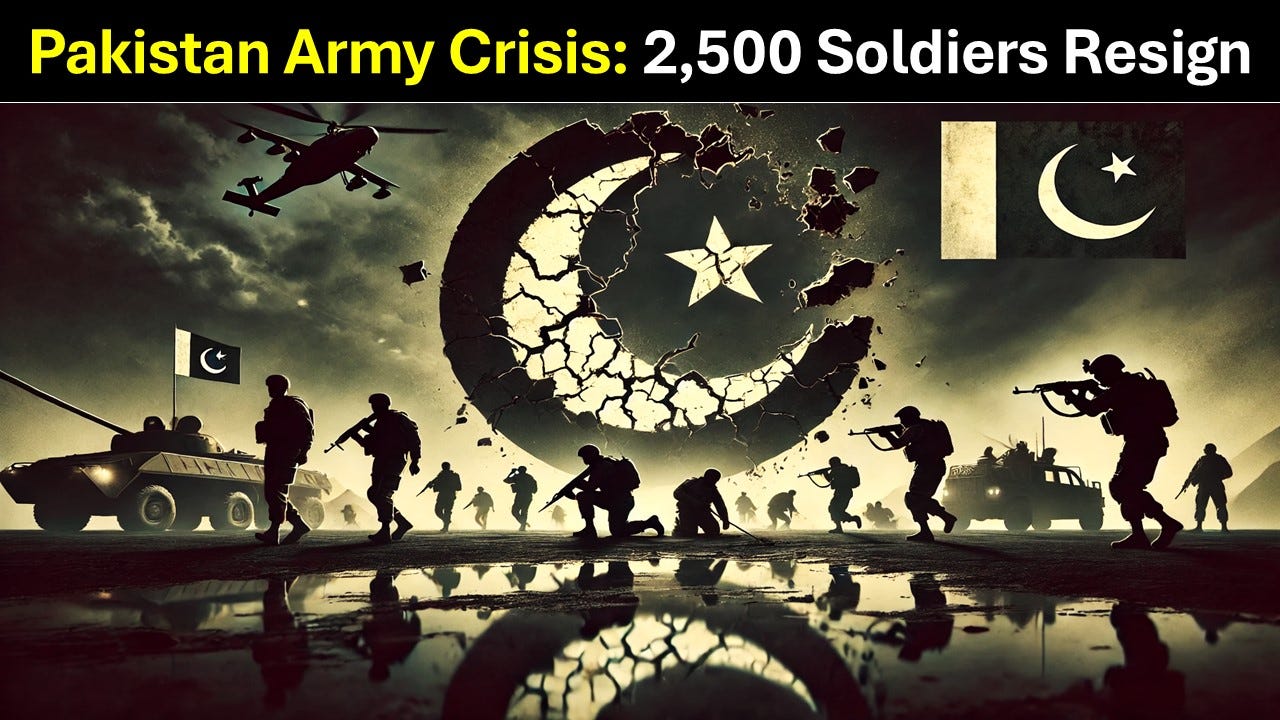
Table of Contents:
- Introduction
- Overview of Pakistan Army’s Historical Role
- Surge in Mass Resignations: The Breaking Point
- Balochistan & Khyber Pakhtunkhwa: Hotbeds of Insurgency
- The Relentless Attacks: BLA and TTP’s Strategy
- Fear and Insecurity Among Pakistan Soldiers
- The Officer-Soldier Divide: Socio-Economic Disparity
- Allegations of Corruption: Defense Land Scams & DHA Nexus
- The Psychological Toll: Demoralization and Social Ostracization
- Unclaimed Bodies & Denial of Martyr Status: The Army’s Historical Disregard
- Pashtun Soldiers’ Dilemma: Fighting Their Own
- The BLA Prisoner Exchange Incident: A Turning Point
- The Exodus to Gulf Countries: Economic Survival vs Military Service
- Frontier Corps & Baloch Levies Desertions: A Systemic Breakdown
- Leaked Letters, Official Directives & Pakistan Army’s Response
- Internal Discord within ISI & Pakistan Military Leadership
- The Role of Army Chief Asim Munir: Advocating a “Hard State”
- Pakistan Media’s Silence: Suppression or Denial?
- Comparative Analysis: Past Military Crises & Present Trends
- Long-Term Implications: Operational Capability & National Security
- Conclusion: Can the Pakistan Army Recover?
1. Introduction
The Pakistan Army, often hailed as the backbone of the nation’s stability, is facing an unprecedented internal crisis. Recent credible reports suggest over 2,500 soldiers have resigned within a single week, triggering alarm bells in Islamabad. This article dives deep into the root causes, socio-political factors, and operational challenges contributing to this dangerous unraveling.
2. Overview of Pakistan Army’s Historical Role
Since its inception, the Pakistan Army has wielded considerable influence over the country’s political, security, and foreign affairs. With multiple military coups and significant control over national resources, it was historically considered one of the most organized institutions. However, recent developments threaten to erode this image.
3. Surge in Mass Resignations: The Breaking Point
The wave of mass resignations marks the most significant internal disruption in decades. Approximately 2,500 soldiers resigned within just one week, a staggering figure pointing to deeper systemic issues. This article examines whether this is a temporary phase or a sign of structural collapse.
4. Balochistan & Khyber Pakhtunkhwa: Hotbeds of Insurgency
Insurgency in Balochistan and Khyber Pakhtunkhwa has intensified. Groups like the Balochistan Liberation Army (BLA) and Tehrik-i-Taliban Pakistan (TTP) have escalated attacks on military convoys, check posts, and key installations, resulting in heavy casualties for the Pakistan Army.
5. The Relentless Attacks: BLA and TTP’s Strategy
The BLA and TTP’s joint operations have created a new challenge for the military. The BLA’s claim of executing 214 hostages and killing 90 soldiers in a single convoy attack has fueled fear among troops. In the past year alone, TTP reportedly killed around 900 soldiers, further demoralizing the rank and file.
6. Fear and Insecurity Among Pakistan Soldiers
Fear is now pervasive within the lower ranks. The rising casualties, coupled with limited support from superiors, have driven soldiers to question their commitment. Their sense of security has eroded, leading to large-scale desertions.
7. The Officer-Soldier Divide: Socio-Economic Disparity
One of the most glaring issues is the widening gap between officers and soldiers. Officers, often hailing from privileged urban backgrounds, enjoy lavish lifestyles, while soldiers — mostly from rural, impoverished areas — feel undervalued. Reports of officers benefiting from corruption while soldiers’ sacrifices go unrecognized worsen this divide.
8. Allegations of Corruption: Defense Land Scams & DHA Nexus
High-ranking military officials have been implicated in scandals involving the Defense Housing Authority (DHA) and real estate scams. The involvement of former Army Chief Ashfaq Parvez Kayani and other officers in land deals has become emblematic of this corruption, deepening resentment within the lower ranks.
9. The Psychological Toll: Demoralization and Social Ostracization
Returning soldiers, particularly Pashtuns, face a unique dilemma. They not only endure low morale during service but also social ostracization back home, often seen as collaborators in oppressing their own people, especially in tribal belts where Pashtunwali code dominates.
10. Unclaimed Bodies & Denial of Martyr Status: The Army’s Historical Disregard
The Pakistan Army’s history of not claiming soldiers’ bodies, as seen during the Kargil War, has resurfaced in recent incidents. Families are reportedly denied martyr status, pensions, and promised benefits, leaving them in financial and emotional ruin.
11. Pashtun Soldiers’ Dilemma: Fighting Their Own
Pashtun soldiers, making up a significant portion of the army, are being deployed to fight fellow Pashtuns in Khyber Pakhtunkhwa and Balochistan. The moral and cultural conflict this creates, especially given tribal customs like revenge (badal), has driven many to abandon service.
12. The BLA Prisoner Exchange Incident: A Turning Point
The BLA’s offer to release 200 Pakistani soldiers (including a captain and major) in exchange for their own prisoners was rejected by army leadership, reportedly due to the perceived lower value of ordinary soldiers. The execution of these hostages by BLA has left a deep scar in the army’s psyche.
13. The Exodus to Gulf Countries: Economic Survival vs Military Service
Soldiers are increasingly preferring low-wage labor jobs in Saudi Arabia, UAE, Qatar, and Kuwait over military service. The promise of economic stability outweighs the risk and low recognition in the army — a sharp indicator of disillusionment.
14. Frontier Corps & Baloch Levies Desertions: A Systemic Breakdown
Desertions among Frontier Corps (FC) and Baloch Levies personnel have surged. Reports confirm cases of security personnel abandoning check posts, handing over weapons to BLA insurgents, and refusing to retaliate.
15. Leaked Letters, Official Directives & Pakistan Army’s Response
A leaked letter from the Director General of Balochistan Levies Force acknowledged these desertions. Orders for strict disciplinary action, immediate dismissal, and no reinstatement highlight the military’s reactive — not proactive — approach to the crisis.
16. Internal Discord within ISI & Pakistan Military Leadership
The court martial of a former ISI head and growing infighting within the intelligence apparatus are worsening operational inefficiencies. These internal fissures, combined with poor coordination with the army, weaken the counter-insurgency effort.
17. The Role of Army Chief Asim Munir: Advocating a “Hard State”
General Asim Munir’s proposal to turn Pakistan into a “hard state” to crush insurgency reflects a heavy-handed approach. However, without addressing socio-political alienation, this strategy risks further radicalizing frontier regions.
18. Pakistan Media’s Silence: Suppression or Denial?
Interestingly, mainstream Pakistani media, including outlets like Dawn, has largely avoided acknowledging mass resignations. Instead, the focus remains on isolated disciplinary actions, hinting at intentional suppression or state control of narratives.
19. Comparative Analysis: Past Military Crises & Present Trends
Comparing the current scenario to past military crises — like the aftermath of Kargil and internal mutinies — reveals a far more systemic, deep-rooted breakdown, threatening the Pakistan Army’s long-term coherence.
20. Long-Term Implications: Operational Capability & National Security
With growing desertions, officer-soldier mistrust, corruption scandals, and an emboldened insurgency, the Pakistan Army faces serious threats to its operational capability, national defense, and regional security posture.
21. Conclusion: Can the Pakistan Army Recover?
The resignation of 2,500 soldiers in one week signals more than temporary unrest — it represents a structural rot. Unless the leadership addresses socio-economic disparities, corruption, officer elitism, and the emotional toll on soldiers, this crisis may snowball into an existential threat.
메타데이터
- post_id
- dbbb1d73c569
- slug
- pakistan-army-crisis-2-500-soldiers-resign-amid-rising-insurgency-officer-soldier-divide-dbbb1d73c569
- url
- https://medium.com/@kumarranvijayraj786/pakistan-army-crisis-2-500-soldiers-resign-amid-rising-insurgency-officer-soldier-divide-dbbb1d73c569
- canonical_url
- https://medium.com/@kumarranvijayraj786/pakistan-army-crisis-2-500-soldiers-resign-amid-rising-insurgency-officer-soldier-divide-dbbb1d73c569
- author_url
- https://medium.com/@kumarranvijayraj786
- status
- ok
- fetched_at
- 2026-06-26 03:39:16