Food sovereignty and inclusive food security
By Mel Yan
Food sovereignty and inclusive food security
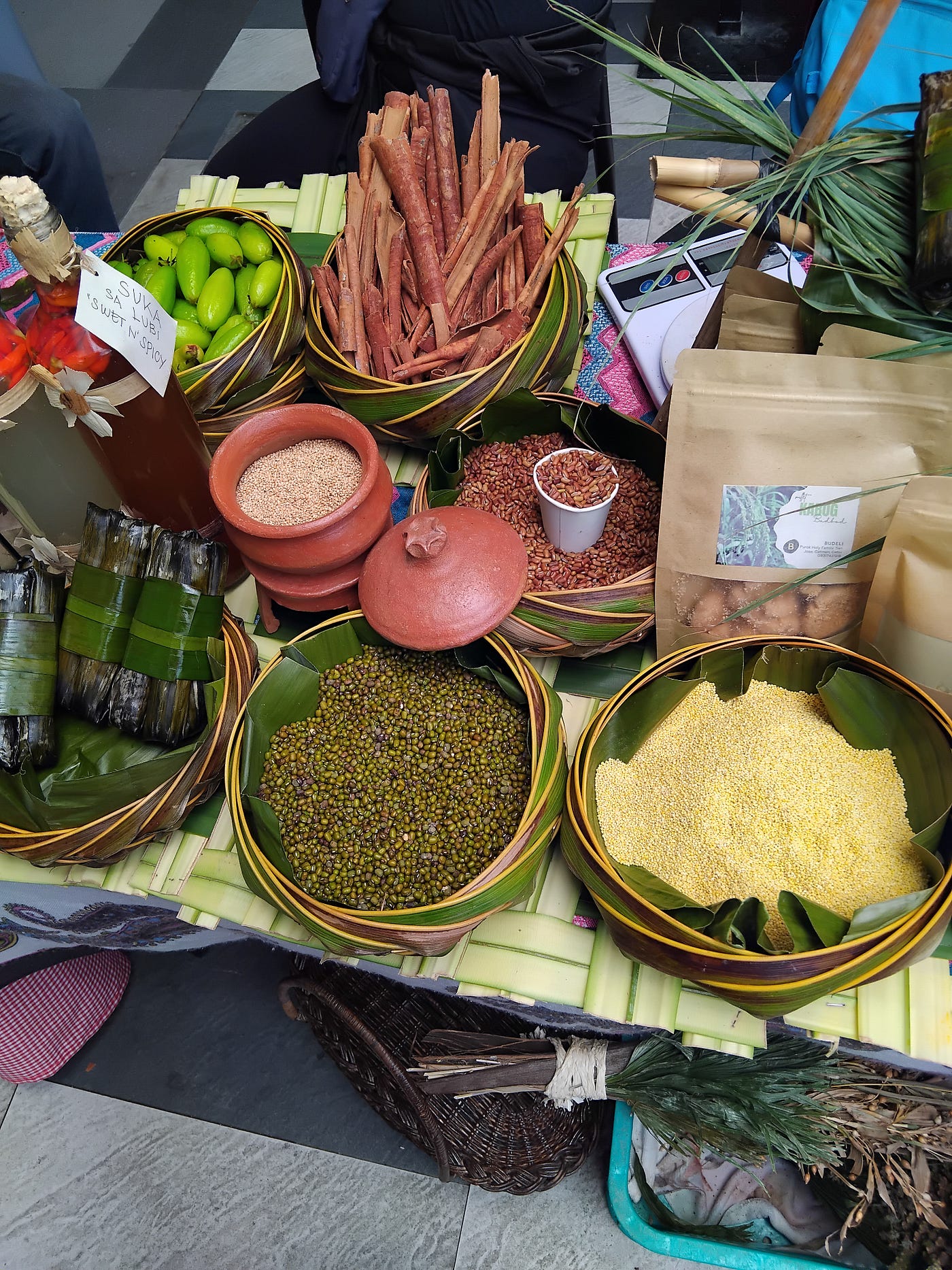
Photo credit: Mel Yan
Hunger remains a major global challenge despite decades of international attention and countless efforts to end it. The most recent State of Food Security and Nutrition in the World report of the United Nations indicates that 2.3 billion people — or more than a quarter of the world’s population — were moderately to severely food insecure in 2024. This foremostly draws our attention to how food is currently provisioned and why disparities in food security persist. Many countries have been relying on imports to feed their citizens. The Philippines, for example, sources around 20 percent of its staple food, rice, from the world market, making it the top importer of the grain. But as shown during the COVID-19 pandemic and by recent geopolitical conflicts, disruptions in the global supply chain can limit the availability and increase the prices of imported food and other commodities, including agricultural inputs.
Producing food for export can also mean reliance on industrial agriculture practices such as monocropping and the use of chemical inputs to produce large quantities year-round. These practices reduce farm productivity over time, given how they degrade land, pollute water sources, and make crops less resistant to pests. Climate change has intensified the problem, as frequent typhoons and longer droughts destroy harvest and further disrupt already fragile food distribution channels. Hence, ensuring that people have constant access to safe and nutritious food would require countries and communities to pursue greater food self-sufficiency. This means increasing domestic food production to meet local consumption demands whilst making food systems resilient from economic shocks and ecological disasters. Global trade may still be necessary, but only as a complement whilst localised food provisioning capacities are being strengthened.
Role of small-scale producers
Rural small-scale producers are at the forefront of localising food systems. According to the ETC Group, — they feed roughly 70 percent of the world’s population whilst using minimal agricultural resources. Unfortunately, the people who produce our food tend to be the hungriest. Their relative poverty increases vulnerability to sudden price hikes, extreme weather events, and other disasters. This is apart from their inability to compete with the cheap food imports already flooding domestic markets. Moreover, the attempt to participate in export trading by supplying big corporations has driven some farmers to adopt industrial agriculture, eventually degrading farmlands and other natural resources that are integral to the livelihood and survival of rural communities. To address these issues, social movements led by farmers and rural workers have been advocating for food sovereignty, or the right of peoples to define their own food and agriculture system. Food sovereignty privileges the contribution of small-scale producers in provisioning their local consumers. This is anchored on agroecological practices that can regenerate the soil, protect natural resources, and preserve knowledge and skills in indigenous farming methods. These practices can also make agricultural production more adaptive to climate change.
Role of consumer
Even though food sovereignty offers a transformative framework for local-level food security, its conceptual debates tend to focus more on producers. This may overlook another equally important agent in transforming food systems: consumers. Choosing to buy local and to eat sustainably grown food seem like sensible consumption decisions to support rural livelihoods and the planet. However, my ethnographic study of the Cebu Farmers Market (CFM) in the Philippines reveals that the reality can be far more complicated. Under the slogan, “Farm Right. Eat Right. Live Right”, CFM has been providing a space for local smallholder farmers and micro food processors to provision city residents with organic produce at ‘fair’ prices dictated by the vendors themselves. CFM can therefore be considered as an emblematic case of food sovereignty, given its intention to (re)connect rural producers directly to urban consumers. However, the poor can barely afford to eat with their meagre income, let alone pay the ‘fair’ prices that CFM demands.
Eating healthily may often require more time for cooking and food preparation — something that many dual-income households struggle to do. These households may then subscribe to ready-made (ultra)processed meals instead of buying fresh produce. This is further removed from the notion of eating ‘organic’ foods, which has also been linked to affluence, encouraging a predominantly middle- to upper-class consumer base for CFM even if price differences with the industrial produce sold in traditional markets are often marginal.

Mel (in the middle wearing a dark blue shirt) on fieldwork in Cebu Farmer’s Market, Philippines. Photo credit: Mel Yan
Challenge of transformation
Despite revealing the challenges of realising food sovereignty, emblematic cases such as CFM remains crucial in showcasing the possibility of a localised food provisioning anchored on protecting rural communities, supporting sustainable agriculture, and promoting healthy eating. However, my research highlights the difficulty of such radical food systems transformation, given the varying — and often conflicting — struggles among actors.
As mentioned, a ‘fair’ market for small-scale producers may limit the affordability, accessibility and/or social acceptability of food, especially among the poor and the working class. Resolving these types of conflict between producers and consumers is a core political issue that the food sovereignty movement must confront if it were to achieve inclusive food security — one that substantively meets the food consumption requirements of everyone whilst allowing small-scale producers to lead valued lives.
메타데이터
- post_id
- dbd4527fb787
- slug
- food-sovereignty-and-inclusive-food-security-dbd4527fb787
- url
- https://medium.com/globalfoodleeds/food-sovereignty-and-inclusive-food-security-dbd4527fb787
- canonical_url
- https://medium.com/globalfoodleeds/food-sovereignty-and-inclusive-food-security-dbd4527fb787
- author_url
- https://medium.com/@globalfoodleeds
- status
- ok
- fetched_at
- 2026-06-10 08:17:25