Are Honey and Evil Related?
Why I think William Golding was wrong
moral standards
Are Honey and Evil Related?
Why I think William Golding was wrong
Photo by Zoaib Khan on Unsplash
[Readers who are not yet paid members of Medium can read this for free HERE.]
There’s a well-known saying that ‘The love of money is the root of all evil.’ Which is sometimes shortened to ‘Money is the root of all evil.’ Neither one is true of course, but they do have a point to make.
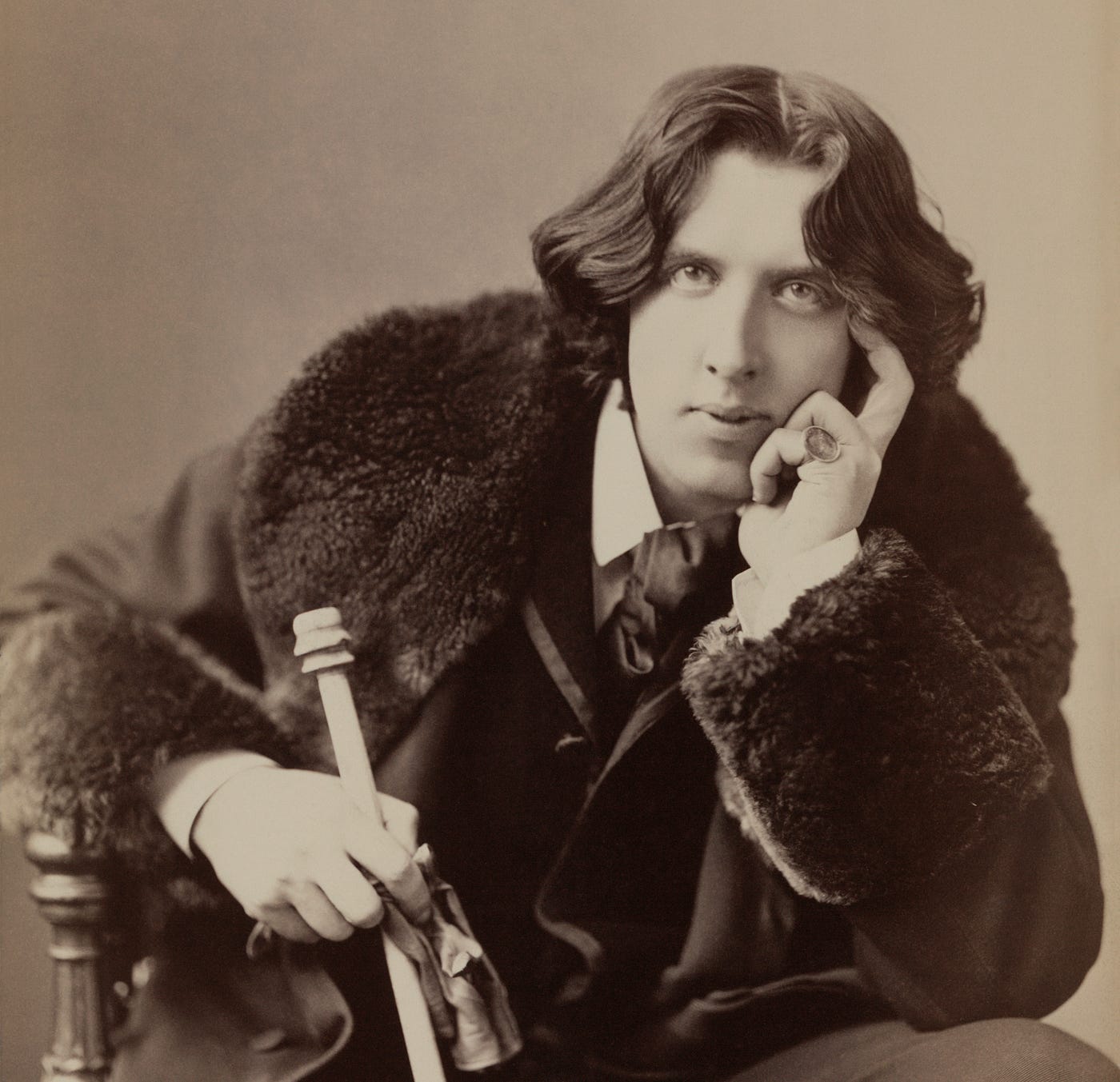
On the other hand, William Golding, the author of Lord of the Flies, would have us believe that ‘Honey is the root of all evil.’ I’m being flippant and sarcastic, of course. What he really did say was: “A man produces evil as a bee produces honey.” And he wrote his most famous novel in an attempt to prove the point.
I’m not convinced. Neither by the statement nor by the book. In fact I’m rather violently (in a peaceable sort of way) opposed to both.
I’ve always hated the book — and the statement even more.
However, I think he did have some excuse for thinking the way he did. Two excuses in particular.
One, he had fought in World War II. There’s nothing quite like a war for making us think that people might be inherently evil. The goal of any war is ‘to defeat the enemy,’ and defeating the enemy means, of course, killing as many as possible of the ones who are on the ‘wrong side.’ And since we’re all pretty much agreed, whether we believe in the Sixth Commandment or not, that killing is ‘bad,’ then participating in an activity where killing is the goal must be even ‘badder.’ And if you’re praised for how well you do it, and called a traitor if you don’t do it, then you eventually come to believe that you are just ‘made that way.’ Inherently.
(He helped fire the rocket that sank the Bismarck, by the by.)
Second, he was a teacher in an English grammar school for boys. In fact he was a teacher while he wrote the book. I’m sure a lot of the more repugnant scenes in the novel were mere transcriptions of horrible events that had in fact actually happened in that school. (And in a lot of others.)
English grammar schools, and especially grammar schools for boys, were notorious in those days for being hotbeds of misbehavior. (We can thank God it wasn’t a boarding school. The novel would have been even worse.) Without the softening influence of anyone of the female variety, school-boys got up to some pretty evil stuff. (And I’m not talking anything having to do with sex.) There was bullying. There was physical abuse, by individual boys and by groups of boys. There was abusive language. There was thievery. There was fire-setting. There was destruction of private and public property.
And that’s just when the teacher was there. When the teacher wasn’t there, it got much worse.
So he had lots of inspiration. I feel certain that some of the characters in the novel were based pretty literally on boys he actually knew and taught.
So he had plenty of reason to think that boys (and men) come by their evil ways quite naturally.
But just as soldiers are conditioned to become killers, so boys in that sort of school are conditioned to commit evil deeds. They’re conditioned first of all by other boys who have been getting away with it, but also by teachers who think that the misbehavior is ‘natural,’ and, even worse, by parents, who sent the boys to that school in the first place because they didn’t want to have to deal with the issues themselves.
However, there’s nothing about any of that to suggest that the evil is somehow inherent.
Evil does not live in our genes. It lives in the way we are forced to be part of a sometimes-evil society.
So, Mr. Golding, I think you’e wrong. I don’t think a group of normal boys, left to their own natural devices when stranded on a deserted island, would descend into savagery. I think they would find a way to become cooperative and self-sustaining as a group. But they do have to be ‘normal’ boys for that to happen. If they’ve been mistreated all their lives, and taught to misbehave in order to ‘get ahead,’ and punished for selfless behavior and rewarded for its opposite, then, yes. Flies indeed. Lots of flies. And inevitably, one of those flies will be promoted to become ‘Lord.’ It has happened hundreds of times in the past, and will undoubtedly happen in the future.
Chaos. Lots of chaos. And chaos eventually means death. Because if you destroy your life-support system, you (guess what!) stop being alive!
So, I reject William Golding’s view of the universe. What do I offer instead?
Unless we’ve been somehow ‘misshapen,’ I think our natural behavior is to be ‘good.’ I don’t think that that comes from religious influence or upbringing, or from emulating the behavior of others who are ‘good.’ I think we are simply inherently intelligent. Intelligent enough to see that — if we create an atmosphere around ourselves of cooperative productivity — in the long run it will be better for everyone, including ourselves. And that what we call ‘good’ is in fact merely informed selfishness.
This is not, of course, an original thought on my part. (I doubt I’ve ever had a truly original thought in my life.) I am not a big fan of Ayn Rand. In many ways she was a ridiculous person. (Saying that smoking cigarettes was her way of proving she was better than the apes, for example.) Her philosophy of ‘objectivism’ is in many ways a joke. I think her political stances were often screwy.
But in one particular, I think she was right. She said that enlightened self-interest was the basis of everything good. And I agree. If what I do benefits all of us, then it benefits me too, but that isn’t selfishness. It’s benevolence. And if we all were to do that, we’d have a usable and effective society. Would we still have greedy folks that occasionally needed to be told how to behave better? Yes, we would. Would we still have people who were warped? Who stole or killed? Who took advantage of other people or coerced them into doing undesirable things? Most certainly, yes.
Would we still have religious leaders who tried to control our lives? Would we still have politicians who wanted to enrich themselves at our expense? Would we still have to endure the occasional muckraker? Yes, and yes, and yes.
Would we still have people who abuse children? Or their wives? Or themselves? Undoubtedly.
But if the standards we created were based in what’s good, instead of what’s expedient, or easiest, or sanctioned by past precedent, or seemingly most rewarding in at least the short run, then I think all of those negative things could be controlled and alleviated.
So, Mr. Golding: You can keep your island, and your flies. (And your evil honey.)
I think you’re wrong.
In fact, I think you’re dead wrong.
메타데이터
- post_id
- dbdbad87821f
- slug
- are-honey-and-evil-related-dbdbad87821f
- url
- https://medium.com/questionality/are-honey-and-evil-related-dbdbad87821f
- canonical_url
- https://medium.com/questionality/are-honey-and-evil-related-dbdbad87821f
- author_url
- https://medium.com/@legendkeeper21
- status
- ok
- fetched_at
- 2026-07-15 08:07:22