Mürəbbə
Seasons preserved in syrup
Mürəbbə
Seasons preserved in syrup
In Azerbaijan, mürəbbə is more than dessert.
It is preserved season, hospitality, and ritual — served with strong black tea in armudu glasses as the first gesture to guests.
Unlike Western jams, it uses whole fruits slowly cooked in clear syrup, preserving both flavor and memory. Each jar is a seasonal snapshot, sometimes even a folk remedy.
Most varieties contain ~240–310 kcal per 100 g, depending on fruit and sugar level.
The Role of Mürəbbə Beyond Taste
Mürəbbə sits at the core of three traditions:
• Hospitality (tea culture) • Seasonal preservation (summer stored for winter) • Folk wellness (home comfort in cold seasons)
In winter, certain varieties are traditionally used for comfort during fatigue or colds — not as medicine, but as cultural care.
Tea with fruit syrup remains a simple ritual of warmth and recovery.
Classic Fruit Preserves: Seasonal Energy in a Jar
Across the country, fruit mürəbbə reflects the rhythm of orchards and harvests.
Quince (Heyva) Autumn fruit with floral aroma and gentle tartness. Quince is traditionally valued for its soothing effect on digestion and general wellness during colder months. ~270 kcal/100 g | Peak: September–October

Cherry (Albalı) A balance of sweetness and acidity, rich in natural antioxidants. ~260 kcal/100 g | Peak: June
White Cherry (Ağ gilas) Delicate and fragrant, often served for guests due to its refined sweetness. ~260 kcal/100 g | Peak: June

Apricot (Ərik) Sun-dried sweetness in syrup form, naturally rich in beta-carotene. ~255 kcal/100 g | Peak: June–July
Fig (İncir) Dense, honey-like, and mineral-rich, often considered one of the most nourishing preserves. ~280 kcal/100 g | Peak: August–September
Mulberry (Tut) Light, floral, and seasonal, often eaten fresh and preserved in parallel. ~255 kcal/100 g | Peak: June
Raspberry (Moruq) Bright and slightly tart, known for its refreshing profile. ~250 kcal/100 g | Peak: June–July
Strawberry (Çiyələk) One of the most familiar preserves, symbolizing early summer abundance. ~255 kcal/100 g | Peak: May–June
Plum (Gavalı) Balanced sweetness with gentle acidity, often used alongside tea and pastries. ~250 kcal/100 g | Peak: July–August
Pear (Armud) Soft, floral, and mild, often preferred for lighter tea pairings. ~250 kcal/100 g | Peak: September–October
Distinctively Azerbaijani Preserves: From Orchard to Apothecary
Some mürəbbə varieties go beyond dessert — they carry cultural associations with traditional wellness and seasonal care.
Green Walnut (Yaşıl qoz) Harvested before the shell hardens, green walnuts are transformed through days of soaking and slow cooking into a dark, complex preserve. ~310 kcal/100 g | Peak: May–June
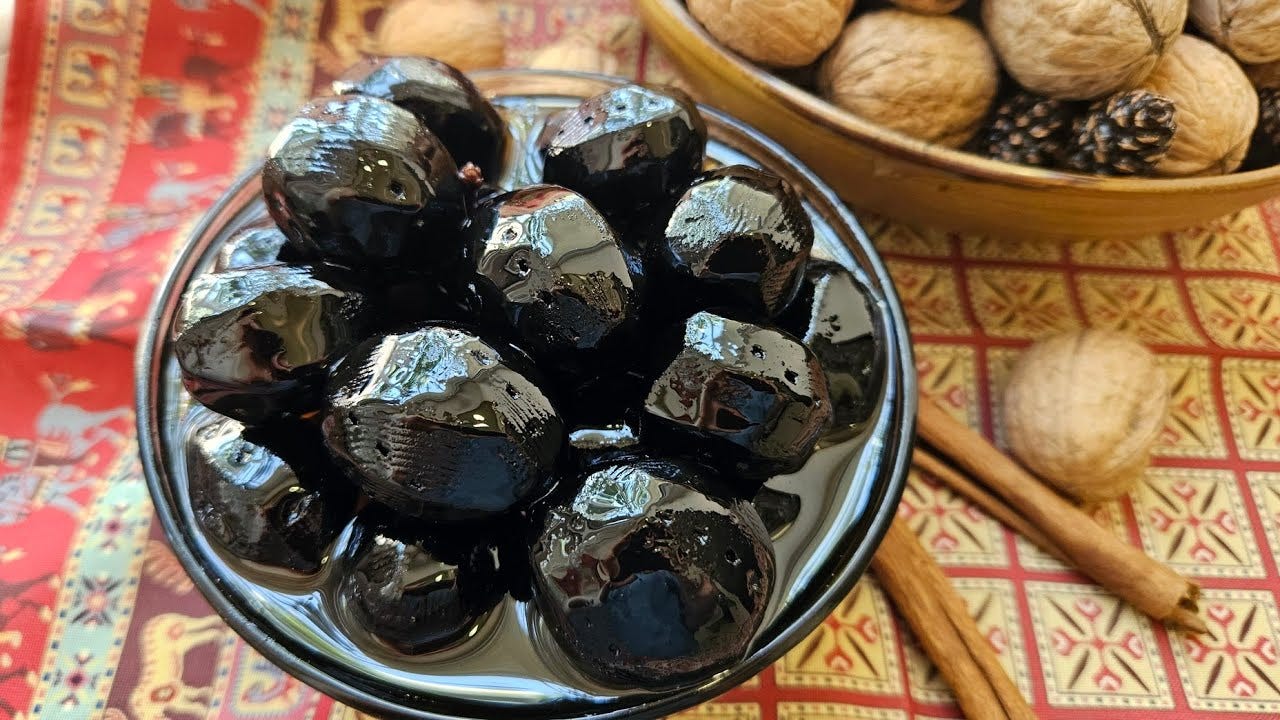
Traditionally considered nourishing and warming, it is often served in small portions with strong tea during colder months.
Rose Petal (Gül ləçəyi) Highly aromatic and perfumed, used more for fragrance and ritual than volume consumption. ~260 kcal/100 g | Peak: May–June
Often associated with emotional comfort and hospitality due to its calming scent.
Cornelian Cherry (Zoğal) Tart, vibrant, and deeply traditional.
Zoğal mürəbbə holds a special place in Azerbaijani home remedies. It is commonly consumed during cold and flu seasons, often with hot tea or warm water. In folk tradition, it is believed to help with:
- easing sore throat discomfort
- supporting the body during feverish conditions
- improving general immunity during seasonal illness
While not a medical treatment, its high vitamin C content and acidity make it a naturally refreshing winter preserve. ~240 kcal/100 g | Peak: August–September
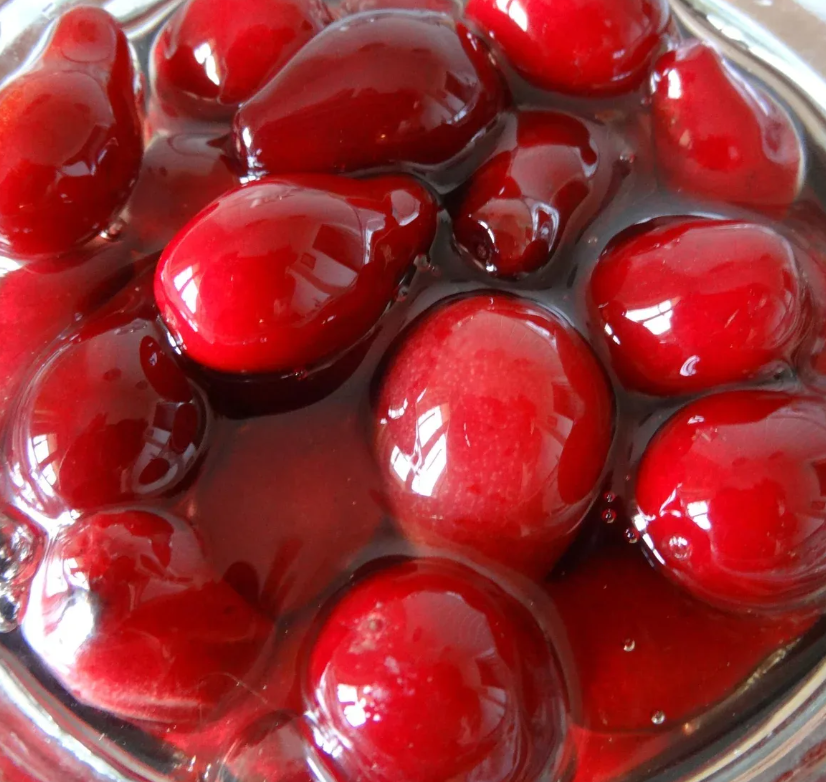
Paradise Apple (Cənnət alması) Tiny whole fruits preserved intact, visually striking and slightly tart. ~255 kcal/100 g | Peak: September
Watermelon Rind (Qarpız qabığı) A symbol of resourcefulness, transforming waste into a translucent sweet preserve. ~245 kcal/100 g | Peak: July–August
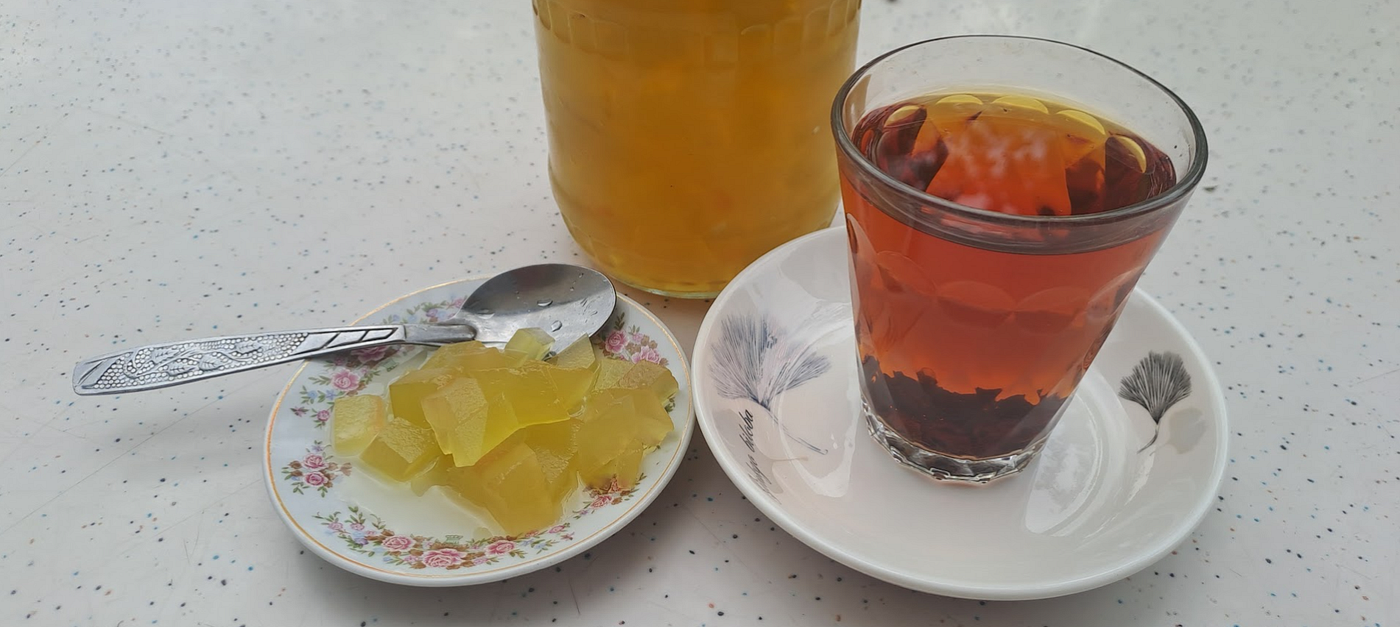
Pumpkin (Balqabaq) Soft, mellow, and gently sweet, often associated with autumn comfort foods. ~240 kcal/100 g | Peak: September–October
Eggplant (Badımcan) One of the most unusual preserves, often infused with spices like cloves or cardamom, creating a sweet-savory aromatic profile. ~250 kcal/100 g | Peak: August–September
Grape (Üzüm) Concentrated fruit sweetness, reflecting vineyard harvest traditions. ~270 kcal/100 g | Peak: August–September
The Health Logic Behind Mürəbbə Culture
While mürəbbə is undeniably sweet, its role in Azerbaijani households is not purely indulgent.
Traditionally, it is:
- consumed in small portions alongside tea, not as a spread
- used as a quick source of energy during cold seasons
- paired with warm beverages for comfort during seasonal illness
- prepared in summer to ensure nutritional continuity through winter
In this sense, mürəbbə functions less like a dessert and more like a seasonal energy reserve stored in sugar and fruit.
Final Thought
In many cultures, jam belongs to breakfast.
In Azerbaijan, mürəbbə belongs to conversation, hospitality, and care.
A spoonful of preserved fruit is never just sugar and produce — it is summer held in suspension, offered to a guest as a gesture that says:
stay a little longer.
About Caucasica
Interested in traveling, researching, volunteering, or collaborating? We’d love to hear from you.
Every journey with Caucasica is designed to benefit both the traveler and the community through local ownership, regenerative practices, cultural respect, accessibility, and authentic human connection.
We create immersive 1–3 day experiences across Azerbaijan, connecting travelers with family homes, regional gastronomy, wellness traditions, artisans, nature, and the stories that rarely appear in guidebooks.
Beyond travel, we collaborate with academics, universities, researchers, exchange students, volunteers, and local communities who share our commitment to regenerative tourism, cultural preservation, and sustainable regional development.
We believe tourism should not simply consume places — it should strengthen them.
Discover Azerbaijan. Contribute to its future.
메타데이터
- post_id
- dbe52658adf1
- slug
- jams-dbe52658adf1
- url
- https://medium.com/@caucasica/jams-dbe52658adf1
- canonical_url
- https://medium.com/@caucasica/jams-dbe52658adf1
- author_url
- https://medium.com/@caucasica
- status
- ok
- fetched_at
- 2026-07-27 23:14:51