FlowGuard™ Self-Defense Singapore: What It Is and Why I Created It
You’re walking alone at night in an unfamiliar city.
FlowGuard™ Self-Defense Singapore: What It Is and Why I Created It
If something did happen right now, would your training show up — or would it evaporate?
You’re walking alone at night in an unfamiliar city.
Someone’s footsteps echo behind you. Your heart rate spikes. Your breathing changes.
You’ve taken self-defense classes before. You know techniques. But in this moment, you realize something uncomfortable: you’re not sure what you’d actually do.
That uncertainty — that gap between knowing what to do and trusting your body to do it — is what FlowGuard™ was created to solve.
I Understand That Feeling
A drunk man confronted me at a coffeeshop years ago. Despite knowing I should do something, I couldn’t move. I froze.
That moment changed everything. It’s why I started training.
Fifteen years later — national fencing, Wing Chun, Jeet Kune Do — I realized most people face the same problem I did.
They train hard. Feel confident in the moment. Then walk alone at night and realize they’re still not sure.
Because most self-defense programs teach what to do in theory, not how your body responds when chaos actually hits.
There’s a massive gap between practicing a technique with a cooperative partner in a bright studio and executing that same technique when adrenaline floods your system and someone’s aggression feels real.
I watched people I cared about train for months, feel empowered, then freeze when it mattered.
That gap is what FlowGuard™ closes.
What FlowGuard™ Actually Is
FlowGuard™ is a self-defense framework built on martial arts principles, but designed for one specific goal: self-sufficiency in unpredictable situations.
Not belt ranks. Not competitions. Just the certainty that if something happens, your body won’t freeze.
It’s built on three core responses:
Recognition. Reading body language. Trusting your instinct. Creating distance before things escalate. Most confrontations give you warning signs — someone’s posture shifts, their eyes lock on you differently, they move into your space with intent. Recognition training teaches you to notice these signals early and act on them without second-guessing yourself.
Positioning. Using angles, timing, and footwork to control space. How you move in relation to a threat. This isn’t about overpowering someone — it’s about using your body intelligently so strength becomes irrelevant.
Escape. Getting to safety. Every scenario ends with you removing yourself from the situation, not engaging further. Self-defense isn’t about winning a fight. It’s about going home safe.
Why These Three Come From Martial Arts
After 15 years of training, I realized each martial art I studied solved a specific part of the self-defense problem:
Jeet Kune Do taught me to strip away what doesn’t work and adapt to the person in front of me. Bruce Lee’s philosophy wasn’t about adding more techniques — it was about removing everything unnecessary until only truth remains.
Wing Chun gave me structure that works even when I’m physically weaker. Centerline control. How to maintain your base when someone’s trying to disrupt it. Critical for people who aren’t physically imposing but need to defend themselves against larger opponents.
Fencing trained me to read intent before the attack lands. Distance management. Timing. How to control engagement range so you’re never fully vulnerable but always ready to respond.
Here’s why these three principles combine into self-sufficiency:
When you’re traveling alone overseas and someone’s following too close, you need to recognize the threat early (fencing). You need to maintain your structure without panicking (Wing Chun). And you need to respond with what works for your body in that specific moment, not follow a memorized script (JKD).
That’s self-sufficiency. Your body already knows what to do.
How FlowGuard™ Training Works
We don’t train in well-lit studios with cooperative partners.
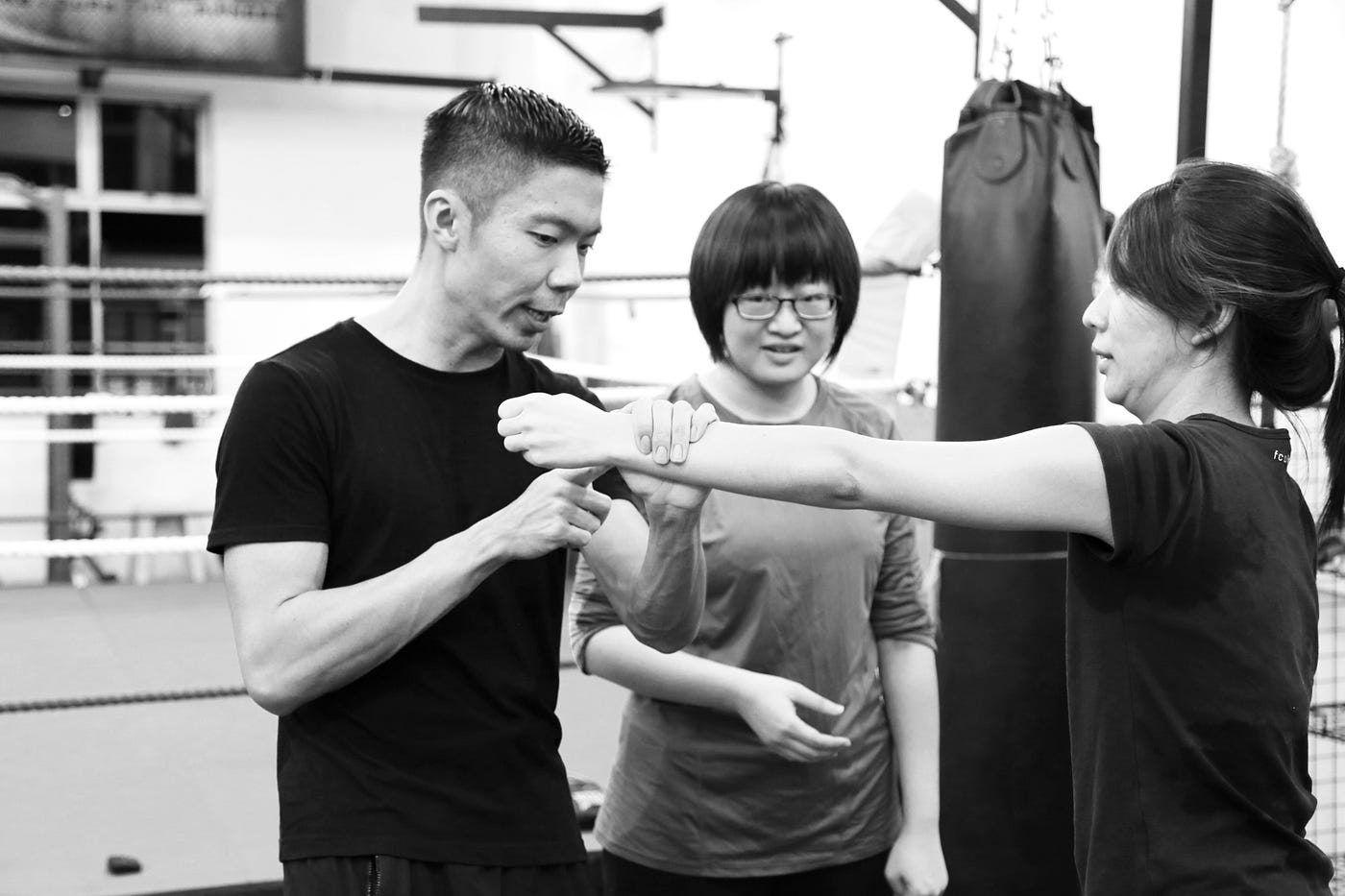
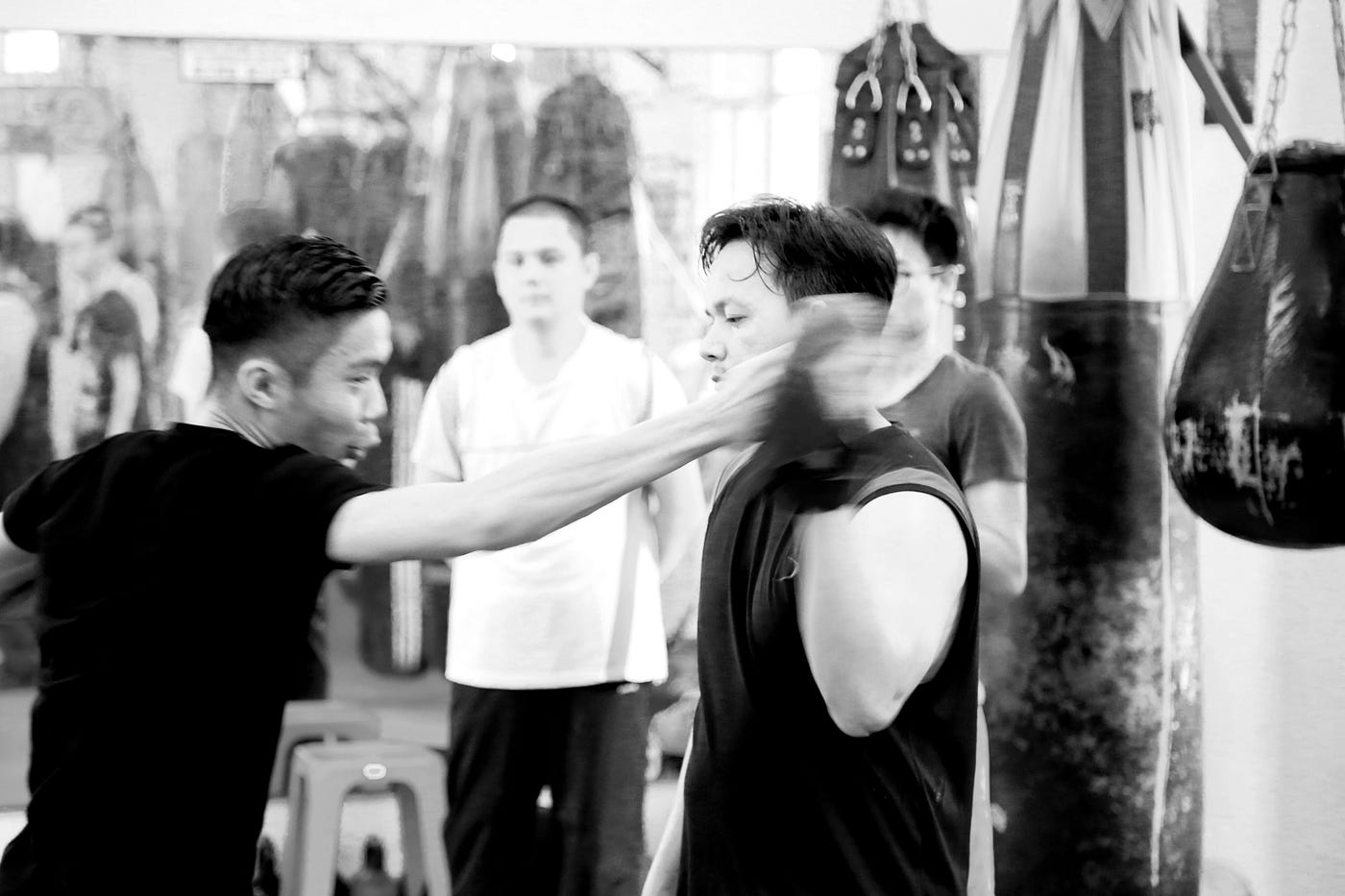
We train in real scenarios. Stairwells. Enclosed spaces. Unfamiliar streets. With unexpected timing. With stress that mirrors reality.
Because your body needs to learn what it feels like to respond when your heart rate spikes and your brain is screaming at you to freeze.
We create that stress intentionally. Then we train you to function within it.
Not by overwhelming you. By gradually building your capacity to stay present and responsive even when everything in you wants to shut down.
That’s the difference between knowing a technique and trusting your body to execute it when chaos hits.
The FlowGuard™ Program
8 sessions. One-on-one. Completed over 4–6 weeks.
Sessions 1–2: Foundation. How your body responds under stress. Simple, direct responses that work even when you’re panicking.
Sessions 3–4: Recognition and Positioning. Reading body language. Using angles and timing. Practicing scenarios where you recognize warning signs early and act on them.
Sessions 5–6: Real Scenarios. Training in conditions that mirror reality — unexpected timing, real environments, elevated stress.
Sessions 7–8: Pressure Testing. Everything comes together. Multiple scenarios. No scripts. High stress. You’ll execute recognition, positioning, and escape under pressure until your body knows what to do automatically.
By the end, hesitation is gone.
Who This Is For
People traveling overseas who want certainty, not just confidence.
Parents sending children abroad for university or work who want them equipped with real skills.
Anyone who’s taken group self-defense classes in Singapore and left still uncertain.
Women who want to walk alone at night without constantly looking over their shoulder.
Professionals with unpredictable schedules who can’t commit to long-term memberships but need real preparation before an upcoming trip.
People who don’t want to spend years in traditional martial arts but need functional readiness now.
The Questions That Matter
When you’re walking alone at night in an unfamiliar city, do you trust your body to respond — or are you just hoping nothing happens?
If something did happen right now, would your training show up — or would it evaporate?
FlowGuard™ self-defense training answers those questions.
Not through theory. Through training that builds real, testable responses your body can execute under pressure.
What You’ll Walk Away With
Not superhero confidence. Certainty.
The kind where you walk through an unfamiliar city and your shoulders relax because you know you can handle yourself.
Where you notice someone’s body language early and trust your instinct to create distance.
Where your mind stays clear instead of spiraling into “what if.”
Understanding your body. Expressing yourself under pressure. Trusting your instincts.
That’s self-sufficiency.
Ready to Start?
If this resonates with you, let’s talk.
Message me the word #FLOWINTRO to schedule an Introduction Session in Singapore.
90 minutes. Scenario-based training. Real environments.
Walk On.
메타데이터
- post_id
- dc06228daead
- slug
- flowguard-self-defense-singapore-what-it-is-and-why-i-created-it-dc06228daead
- url
- https://medium.com/@jeetkunedo.singapore/flowguard-self-defense-singapore-what-it-is-and-why-i-created-it-dc06228daead
- canonical_url
- https://medium.com/@jeetkunedo.singapore/flowguard-self-defense-singapore-what-it-is-and-why-i-created-it-dc06228daead
- author_url
- https://medium.com/@jeetkunedo.singapore
- status
- ok
- fetched_at
- 2026-06-22 17:31:34