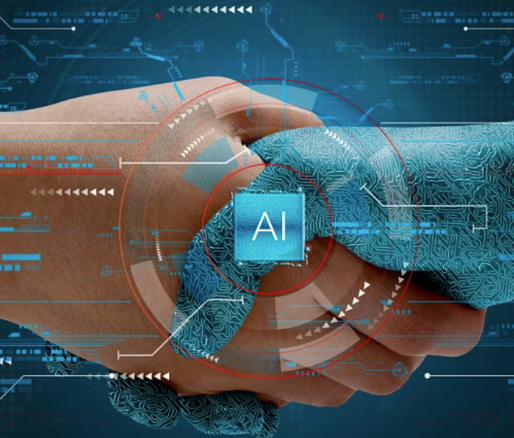
Enterprise-Grade Generative AI Platform
An Enterprise LLM (Large Language Model) Platform is a secure, scalable infrastructure that enables organizations to deploy, manage, and…
Enterprise-Grade Generative AI Platform
An Enterprise LLM (Large Language Model) Platform is a secure, scalable infrastructure that enables organizations to deploy, manage, and operationalize advanced AI language models across business functions. Unlike standalone AI tools, enterprise platforms are designed to integrate deeply with existing systems, ensure governance and compliance, and deliver measurable business value.
enterprise llm platform
At its core, an enterprise LLM platform provides access to foundation models (proprietary, open-source, or hybrid) that can perform tasks such as text generation, summarization, translation, code generation, document analysis, and conversational automation. These models are typically deployed via APIs and enhanced with enterprise features like role-based access control, encryption, monitoring, and audit logs.
A key capability is customization. Enterprises often fine-tune models on proprietary data or use retrieval-augmented generation (RAG) to connect LLMs to internal knowledge bases, ensuring responses are accurate, context-aware, and domain-specific. This allows organizations to build intelligent assistants for customer support, legal document review, HR operations, software development, sales enablement, and more.
Security and compliance are central considerations. **Enterprise LLM platforms** support data isolation, private cloud or on-premises deployment options, and adherence to regulatory standards such as GDPR, HIPAA, and SOC 2. Advanced governance tools help manage model risks, detect bias, prevent data leakage, and maintain transparency in AI outputs.
Scalability and performance optimization are also essential. These platforms include orchestration layers that manage model selection, workload balancing, caching, prompt optimization, and cost monitoring. They often integrate with MLOps and DevOps pipelines to enable continuous deployment, evaluation, and monitoring of AI applications.
Another critical component is workflow integration. Enterprise LLM platforms connect with CRM systems, ERP tools, collaboration platforms, and data warehouses, embedding AI directly into business processes rather than operating as isolated chatbots. Low-code or no-code interfaces further empower business users to build AI-powered workflows without deep technical expertise.
Ultimately, an enterprise LLM platform serves as a strategic AI foundation. It enables organizations to standardize AI adoption, accelerate innovation, maintain governance, and unlock productivity gains at scale. By combining advanced language models with enterprise-grade security, integration, and operational controls, these platforms transform LLMs from experimental tools into reliable, business-critical infrastructure.
메타데이터
- post_id
- dc0c015951ff
- slug
- enterprise-grade-generative-ai-platform-dc0c015951ff
- url
- https://medium.com/@workllm/enterprise-grade-generative-ai-platform-dc0c015951ff
- canonical_url
- https://medium.com/@workllm/enterprise-grade-generative-ai-platform-dc0c015951ff
- author_url
- https://medium.com/@workllm
- status
- ok
- fetched_at
- 2026-06-16 19:09:56