7 zk-Proof Uses That Add Trust Without Friction
How zero-knowledge proofs quietly make apps safer, fairer, and more private — without asking users to jump through hoops.
7 zk-Proof Uses That Add Trust Without Friction
How zero-knowledge proofs quietly make apps safer, fairer, and more private — without asking users to jump through hoops.

Explore 7 zk-proof use cases — private KYC, on-chain compliance, proof of reserves, anti-bot checks, credentials, audits, and fair gaming — without UX pain.
Let’s be real: “trust” is expensive.
If you’re building on the internet, you spend an absurd amount of time proving things that should be obvious. This user isn’t a bot. This exchange isn’t insolvent. This vote wasn’t tampered with. This person is eligible without handing over their entire life story.
Zero-knowledge proofs (zk-proofs) are one of the rare tools that can reduce that cost. The magic trick is simple to say and hard to build: prove a statement is true without revealing the underlying data.
But the best zk use cases don’t feel like magic. They feel… invisible. No extra clicks. No new passwords. No “download this special wallet.” Just smoother trust.
Here are seven zk-proof use cases that add trust without friction, with real-world patterns and a few “don’t do this” warnings along the way.
A quick mental model: where zk fits in a product
Most teams think zk is only for rollups. That’s like thinking TLS is only for banks.
In product terms, zk is a verification layer:
User data / private state
      ↓
Prover (creates zk-proof)
      ↓
Verifier (checks proof)
      ↓
App decision (allow / deny / settle / rank / pay)
If you can make “verification” cheaper, safer, and less invasive, you unlock new UX.
1) Private KYC: “I’m Eligible” Without Oversharing
KYC isn’t going away. But “upload your passport to every app” is an objectively bad internet design.
What zk enables
A user can prove statements like:
- “I’m over 18”
- “I’m not from a restricted jurisdiction”
- “I passed KYC at a trusted provider” …without exposing their name, address, or document scans to every protocol.
Why it reduces friction
Users hate repeating KYC. Teams hate storing sensitive data. zk can move you toward reusable compliance proofs.
Where it breaks
- If the verifier list is unclear, everyone argues about “trusted providers.”
- If revocation isn’t handled, proofs can outlive eligibility.
Design tip: build revocation into the system from day one (expiring proofs, updateable registries, or validity windows).
2) Proof of Reserves That Doesn’t Leak Customer Balances
Proof of reserves is often presented like a checkbox. It shouldn’t be.
What zk enables
An exchange or custodian can prove:
- total assets held on-chain
- total liabilities (customer balances) summed correctly
- assets ≥ liabilities …without revealing each individual customer’s balance.
Why it adds trust without UX work
Users don’t have to do anything. They don’t need to “trust the tweet.” They can verify a proof published regularly.
Where it breaks
- Partial scope (“reserves” but not liabilities) gives false comfort.
- Off-chain liabilities and opaque debt can still exist.
Practical framing: zk proof of reserves is a trust upgrade, not a full audit replacement. Make that clear.
3) Sybil Resistance Without CAPTCHAs or KYC
You might be wondering: can zk help with bots and airdrop farmers? Yes — if you aim for proof of uniqueness, not “proof of identity.”
What zk enables
Users can prove they satisfy uniqueness signals without revealing who they are:
- “I’m a unique human”
- “I haven’t claimed this benefit before”
- “I hold a credential from X set”
- “I meet a reputation threshold”
Why it’s fan-friendly
Instead of punishing everyone with CAPTCHAs, you give real users a smoother lane.
Where it breaks
- If uniqueness depends on centralized gatekeepers, trust shifts, not disappears.
- If the proof becomes expensive to generate, you’ve introduced hidden friction.
Rule: keep proofs fast and make them optional “boost lanes” when possible.
4) Private Credentials for Access and Employment
Credentials are everywhere — courses, certificates, memberships. The problem is disclosure.
What zk enables
Prove:
- “I completed the course”
- “I have the certification”
- “I belong to this professional group” …without exposing the entire credential record or other memberships.
Why it’s low-friction
Users don’t want to manage 20 logins for 20 credential systems. A zk credential can be verified by any app with one simple check.
Architecture sketch
Issuer → issues credential → user wallet
User → generates proof of attribute → verifier checks → access granted
Where it breaks
- Issuers must be reputable, or credentials become spam.
- UX dies if users must understand cryptography.
Product move: hide complexity behind a “Verify” button and show plain-English statements (“Verified: completed X”).
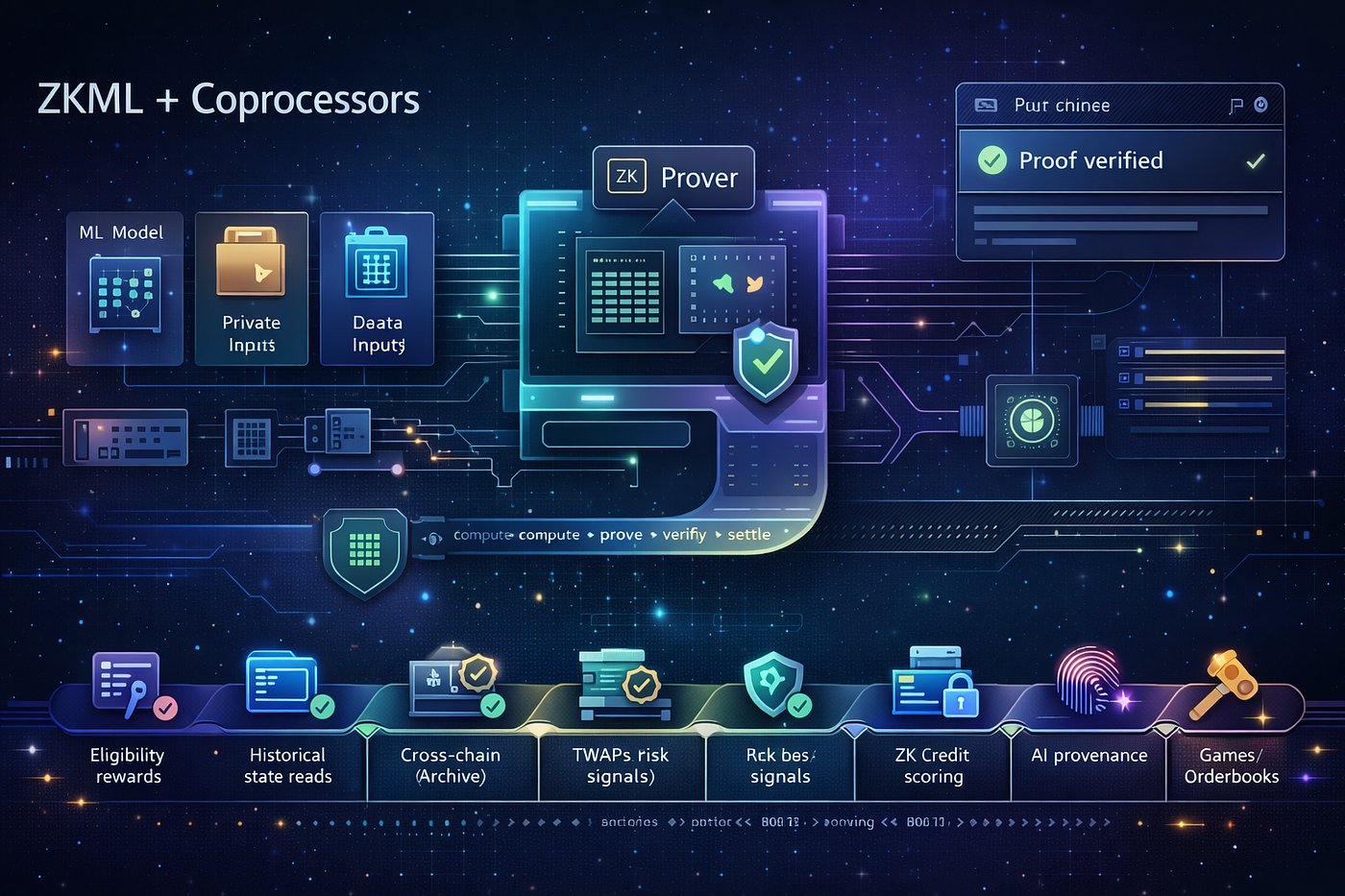
5) Verifiable Computation: “Trust the Result” for AI and Analytics
As AI becomes embedded in everything, the obvious question pops up: how do I know this output wasn’t manipulated?
What zk enables
Prove that a computation was run correctly:
- a model inference followed a specific process
- a scoring algorithm used the published weights
- a leaderboard ranking wasn’t tampered with
- an analytics pipeline produced a result from a defined dataset
Why it matters
This is trust at the infrastructure level. It’s not “did the user click?” It’s “did the system behave as promised?”
Where it breaks
- Proving complex computations can be expensive.
- If the dataset is untrusted, proving correctness doesn’t prove truth.
Good use case: verifiable scoring and matching systems where rules must be transparent but inputs can remain private.
6) Fair Gaming and Randomness Without “Trust Me Bro” Servers
Online games and raffles have a classic problem: players don’t trust the server.
What zk enables
- Prove a game move followed the rules without revealing hidden state
- Prove a draw/loot distribution followed an agreed RNG process
- Prove no one altered the outcome after seeing results
Why it reduces friction
Players can verify fairness without the studio revealing proprietary mechanics or user-sensitive data.
Where it breaks
- If the game is not fun, fairness doesn’t matter.
- If proofs are slow, gameplay feels laggy.
Design strategy: use zk for high-stakes events (tournaments, loot drops, raffles) and keep moment-to-moment play fast.
7) Private Voting With Public Verifiability
Token voting and community governance suffer from two opposite problems:
- votes are too public (bribery, intimidation, bandwagon effects)
- or votes are too opaque (no trust in results)
zk can bridge that.
What zk enables
- Private ballots
- Public verification that votes were counted correctly
- Eligibility proofs (“only members vote”) without identity exposure
Why it’s a trust upgrade
It reduces social pressure and makes bribery harder, while keeping outcomes verifiable.
Where it breaks
- Governance UX is already fragile; added complexity can reduce turnout.
- Dispute resolution needs clear rules.
Fan-friendly approach: start with privacy for specific votes (e.g., sensitive budget allocations) instead of switching everything overnight.
The “frictionless zk” checklist
If you’re building with zk and you want it to feel invisible, ask:
- Can users understand the claim in one sentence?
- Is proof generation fast enough to feel like “loading,” not “waiting”?
- Can you cache proofs or reuse them safely?
- Is failure mode friendly (“try again” instead of “cryptic error”)?
- Do you have revocation/expiry so proofs don’t become stale lies?
zk doesn’t win because it’s elegant. It wins when it’s boring in the UI.
A simple technical sample: eligibility proof pattern
Even without diving into a specific zk library, most implementations follow the same shape:
Public inputs:  claim type, verifier key, expiry
Private inputs: user attributes, issuer signature, secret
Output:         zk-proof + public inputs
Verification:   verifier checks proof against public inputs
And the app logic is just:
// Pseudo-code: verify proof then gate access
async function gateAccess({ proof, publicInputs }) {
  const ok = await verifyZkProof(proof, publicInputs);
  if (!ok) throw new Error("Not eligible");
  return { access: "granted" };
}
Commentary: 90% of the product work is not the math. It’s key management, expiry, UX, and “what happens when verification fails.”
Conclusion: zk works best when nobody notices it
The most powerful zk-proof use cases don’t scream “zero knowledge.” They simply make the internet feel less scammy:
- compliance without oversharing
- audits without leaking user balances
- fairness without trusting servers
- access without surveillance
If you’re building with zk right now, I’m curious — which use case feels most “ready”: private KYC, proof of reserves, or anti-sybil eligibility? Comment your pick, and follow if you want a practical breakdown of zk UX patterns that don’t scare normal users.
메타데이터
- post_id
- dc4d2e4d8eac
- slug
- 7-zk-proof-uses-that-add-trust-without-friction-dc4d2e4d8eac
- url
- https://medium.com/@Quaxel/7-zk-proof-uses-that-add-trust-without-friction-dc4d2e4d8eac
- canonical_url
- https://medium.com/@Quaxel/7-zk-proof-uses-that-add-trust-without-friction-dc4d2e4d8eac
- author_url
- https://medium.com/@Quaxel
- status
- ok
- fetched_at
- 2026-07-29 04:51:17