EVEREST AND THE FAILURE OF THE HEROIC MYTH
Do you have a favourite superhero? I personally find them all a little cliché. It’s all just: tragic backstory, finding meaning through…
EVEREST AND THE FAILURE OF THE HEROIC MYTH
Do you have a favourite superhero? I personally find them all a little cliché. It’s all just: tragic backstory, finding meaning through some obscure experiment, and helping the good citizens of the world. The hero archetype is overrated.
Reading the second section of Into Thin Air by Jon Krakauer through an archetypal literary lens made me realize that the author keeps setting us, the readers, up to expect a hero story and absolutely dismantles our ideas. Technically, the expedition has everything that should make it feel like a classic adventure. There are wise mentors, legendary climbers, dangerous trials, and a protagonist pursuing a lifelong dream. However, the more I read, the more it felt like Krakauer was questioning whether heroism even matters on Everest. Instead of presenting the mountain as a place where great people prove themselves, he repeatedly shows how little reputation, experience, and confidence actually mean when nature is involved.
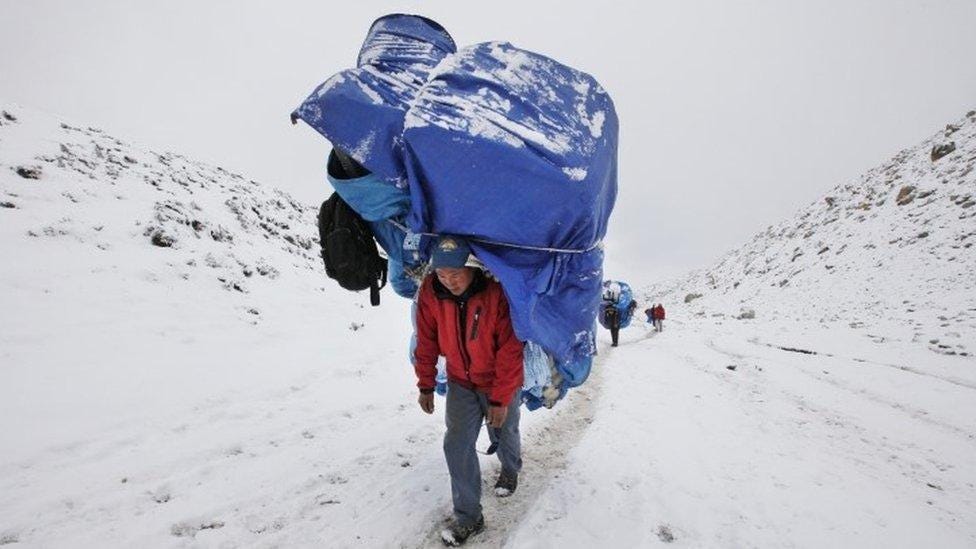
Image: Jon Krakauer from jonkrakauer.com
THE COMFORT OF THE MENTOR ARCHETYPE
One of the clearest archetypal characters is Rob Hall, who functions as the Mentor. Krakauer explains that Hall’s camp acted as “the seat of government for the entire Base Camp” (Krakauer 100). Apparently, climbers went to Hall for advice whenever there was a problem. So, at first, it seems like Hall’s the character readers are supposed to trust completely. In myths and adventure stories, mentors are usually people who have a supreme understanding of everything and help guide heroes. What I find interesting is that Krakauer emphasizes Hall’s authority so strongly because it highlights how much everyone wants to believe somebody is in control. I believe Krakauer is using Hall to explore the illusion of certainty. Climbers spend enormous amounts of money to hire expert guides because they want to feel protected from the mountain’s unpredictability. Yet the memoir constantly reminds us that expertise can reduce risk but never eliminate it. By presenting Hall as a respected mentor, the author encourages us to place our trust in him before forcing us to confront the limit of that trust.
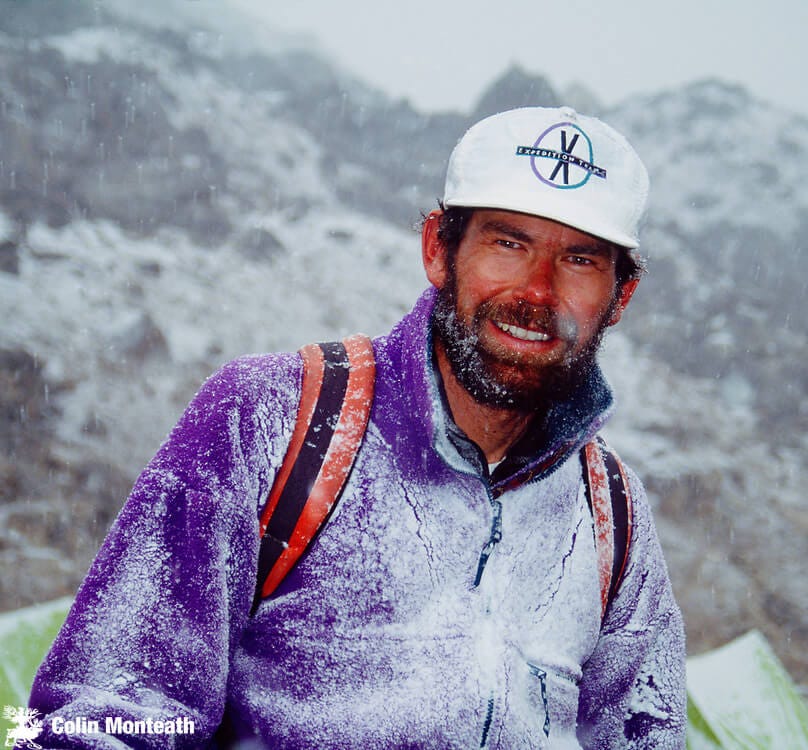
Image: Rob Hall from endorfeen
WHEN LEGENDS MEET REALITY
Someone who stood out to me most was Pete Schoening, because he initially felt less like a real person and more like a figure from mythology. Krakauer describes him as “a living Himalayan legend” (142) because of his famous role in a K2 rescue decades earlier, where he stopped multiple climbers from falling to their deaths (145). Normally, stories treat legendary heroes as proof that exceptional people can overcome impossible circumstances. Even Neal Beidleman admits that “Somebody like me doesn’t ‘guide’ Pete Schoening anywhere” (142), which shows how much respect Schoening commands. However, Krakauer then undermines the archetype by showing that Schoening’s legendary reputation cannot protect him from physical decline. I think this is a deliberate choice because it challenges the romantic mythology surrounding mountaineering. Readers expect legendary heroes to seem larger than life, but Everest strips away that illusion. By showing that age and health ultimately matter more than reputation, Krakauer reinforces the idea that the mountain acts as a great equalizer. No matter how extraordinary someone once was, Everest reduces everyone to the same basic human limitations.
EVEREST’S YELLOW BRICK ROAD
Another detail that stood out to me was Scott Fischer’s claim that climbers have built a “yellow brick road to the summit” (106). The phrase immediately reminded me of The Wizard of Oz, where the Yellow Brick Road guides Dorothy toward safety and understanding. Fischer uses the image to suggest that Everest has become predictable because of commercial guiding companies and established routes. However, because readers already know from the introduction that the expedition ends in disaster, the statement feels deeply ironic. I think Krakauer includes this quote because it perfectly captures the mindset that developed around Everest in the 1990s. The mountain was increasingly being treated as something that could be managed, packaged, and sold. The metaphor reveals how climbers convince themselves that technology and organization have made Everest safer than it really is. To me, the image feels less reassuring than arrogant. The “yellow brick road” symbolizes the false confidence people develop when they mistake preparation for control.
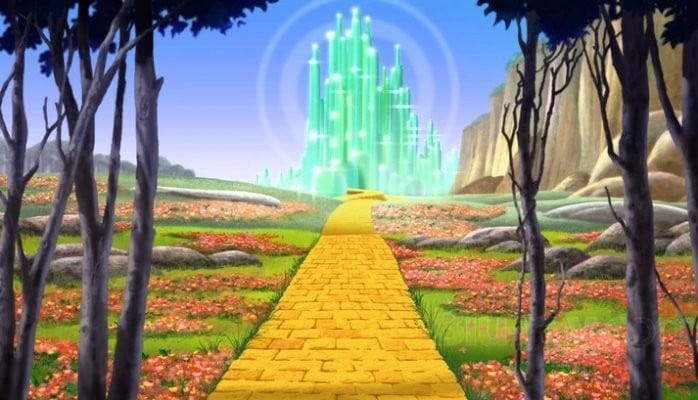
Image: Medium
ENTERING THE LABYRINTH
The Khumbu Icefall provides another important archetypal symbol. Krakauer describes it as a “vertical maze of crystalline blue stalagmites” beneath walls resembling “the shoulders of a malevolent god” (121). The imagery transforms the Icefall into a labyrinth, which is a common archetype in mythology. Heroes often enter mazes as part of a trial that forces them into an unfamiliar and dangerous world. What I found especially interesting is the way Krakauer almost personifies the landscape. Describing the mountain as a “malevolent god” makes Everest feel like an active force rather than a passive setting. I think this imagery helps explain why so many climbers speak about the mountain with a mixture of respect, fear, and obsession. The Icefall becomes more than an obstacle; it represents the moment where climbers leave the ordinary world behind and enter a place where normal rules no longer apply.
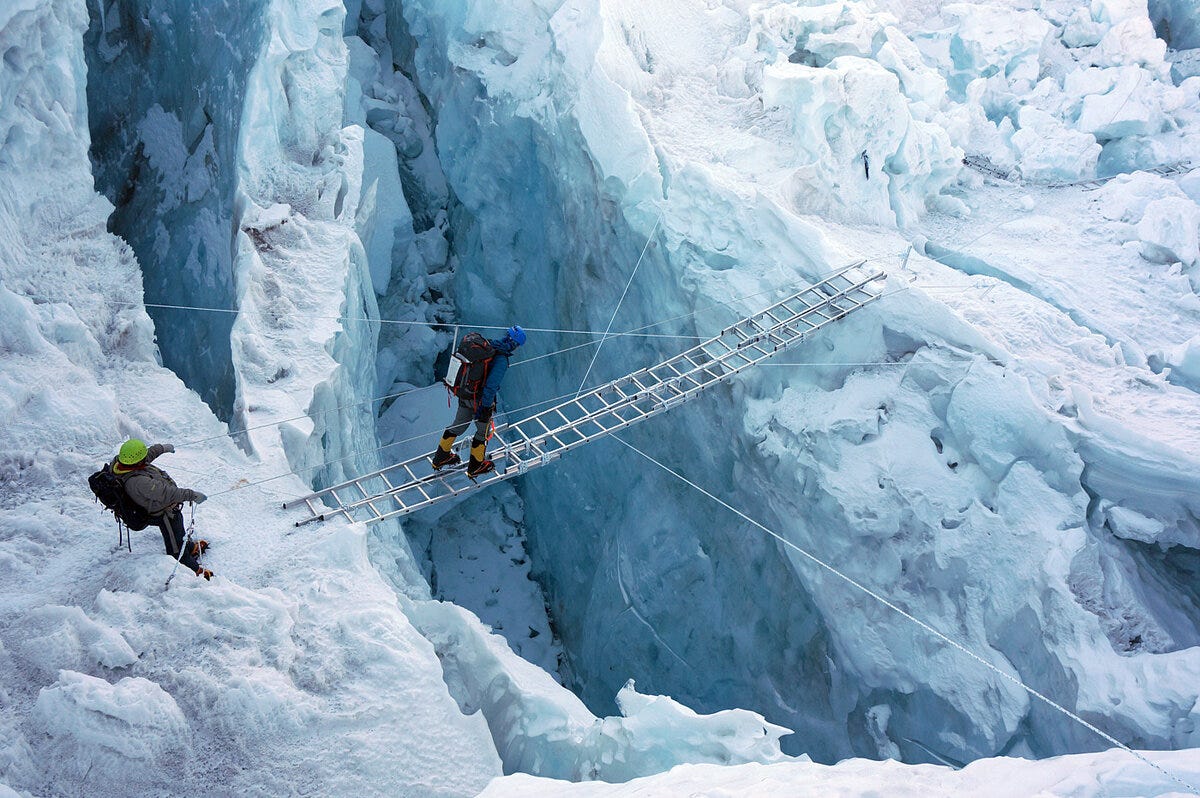
Image: Kumbu Icefall from Himalayan Trekkers
A HERO WITHOUT HEROIC PURPOSE
Krakauer’s own journey also follows many elements of the archetypal hero’s journey. His call to adventure comes from a lifelong fascination with Everest, and he admits that he “wanted to climb the mountain as badly as I’d ever wanted anything in my life” (133). Like many heroes, he faces a series of physical trials, including extreme exhaustion and weight loss as his body “began consuming itself for sustenance” (109). However, what makes Krakauer different from a traditional hero is his honesty about why he is there. Earlier in the memoir, he describes climbing Everest as “an intrinsically irrational act — a triumph of desire over sensibility” (18). That line has stuck with me throughout the book because it completely changes the way I view his journey. Most heroes pursue a quest for a noble purpose, but Krakauer openly admits that his motivation is largely personal. I think this makes the memoir more effective because it refuses to romanticize ambition. Instead, Krakauer forces readers to confront how often people chase difficult goals simply because they want them, even when those goals are dangerous or irrational.
CONCLUSION
Based on these archetypes, I don’t expect Krakauer’s story to end like a traditional hero’s journey. Usually, heroes return from their adventures wiser, stronger, and rewarded for their efforts. So far, however, the memoir seems to be moving in the opposite direction. The archetypes in this section suggest that the summit will not function as a reward but as the beginning of a much greater ordeal. Rather than returning home as a triumphant hero, I think Krakauer is being positioned as a tragic survivor whose greatest lesson comes from witnessing the consequences of human ambition. Through these archetypes, Krakauer seems less interested in celebrating Everest than in questioning why people continue pursuing something that has the power to destroy them.
Works Cited:
Krakauer, Jon. Into Thin Air: A Personal Account of the Mount Everest Disaster. Anchor Books, 1999.
메타데이터
- post_id
- dc5974cd1e20
- slug
- everest-and-the-failure-of-the-heroic-myth-dc5974cd1e20
- url
- https://medium.com/@leel_74890/everest-and-the-failure-of-the-heroic-myth-dc5974cd1e20
- canonical_url
- https://medium.com/@leel_74890/everest-and-the-failure-of-the-heroic-myth-dc5974cd1e20
- author_url
- https://medium.com/@leel_74890
- status
- ok
- fetched_at
- 2026-06-09 15:37:30