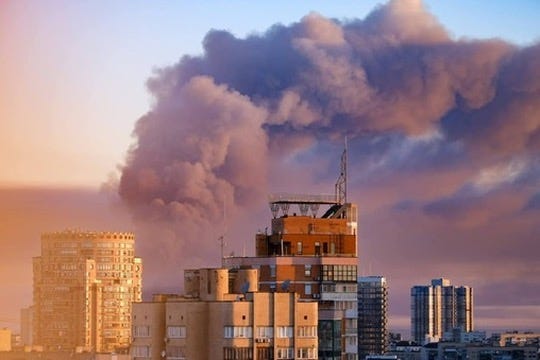
Global Nuclear Stockpile 2026. Estimated for 9 Nuclear-Armed Nations
The world is entering a new era of nuclear uncertainty following the expiration of the New START treaty, on Feb 5, 2026 . Currently, nine…
Global Nuclear Stockpile 2026. Estimated for 9 Nuclear-Armed Nations
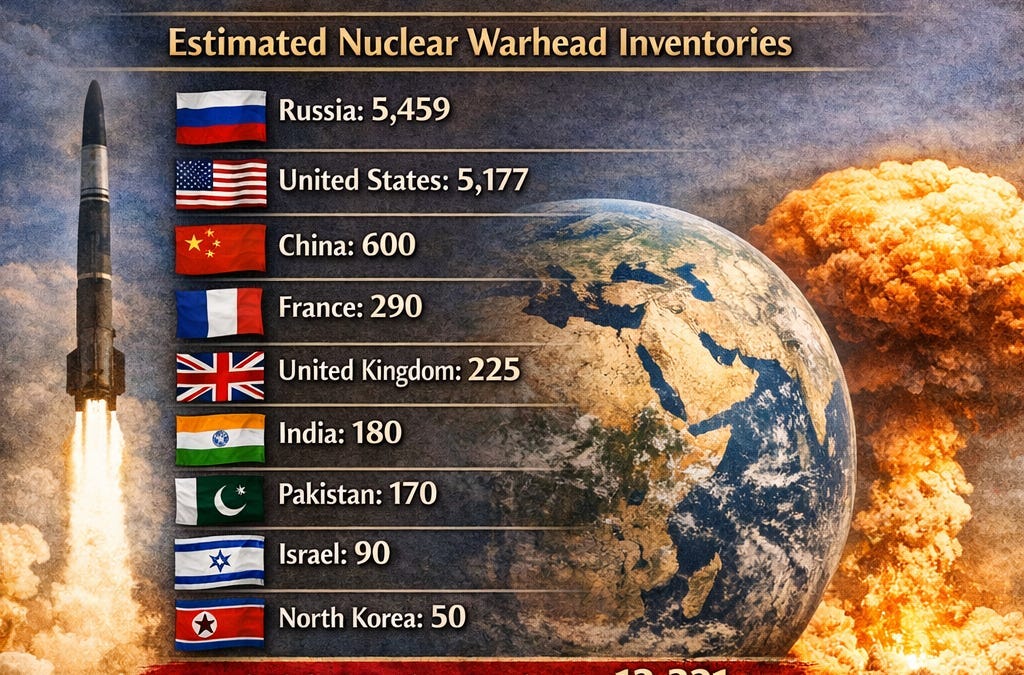
The world is entering a new era of nuclear uncertainty following the expiration of the New START treaty, on Feb 5, 2026 . Currently, nine nations hold a combined total of approximately 12,321 nuclear warheads.
The United States and Russia continue to dominate the landscape, holding roughly 86% of the world’s total inventory. While the overall number of weapons has declined since the Cold War, many nations are now actively modernizing or increasing their active military stockpiles.
Based on the data from the Federation of American Scientists (FAS) as of early 2026, here is the breakdown of the estimated nuclear stockpiles for the 9 nuclear-armed nations.
The listed countries are known nuclear powers and have maintained arsenals for decades.
Recognized by the Treaty on the Non-Proliferation of Nuclear Weapons (NPT):
Unofficial Nuclear Power (Neither Confirmed nor Denied but Widely Accepted): 9. Israel — 90
While Russia holds the numerical lead, the U.S. advantage lies in superior precision and stealth. With high-reliability warheads and the upcoming Columbia-class submarines, the U.S. can achieve strategic objectives with fewer weapons, effectively choosing quality over raw capacity.
- Poland — Likely, as they are actively moving toward it. As of March 3, 2026, Prime Minister Donald Tusk officially stated that Poland will aim for “the most autonomous actions possible” regarding nuclear security, and is in talks with France. (Source: Reuters / Bloomberg).
- Saudi Arabia — Likelyto pursue capabilities if Iran advances further; Riyadh’s resources make this achievable.
- South Korea — Unlikelydue to strong U.S. security ties, but public support for nuclear development has grown.
- Japan — Unlikely, given its pacifist constitution, but if security tensions rise, the conversation could shift.
- Turkey & Egypt — Limited capability at present, but political rhetoric may increase pressure for development.
- China is rapidly expanding its nuclear stockpile, further complicating arms control efforts. For the first time, U.S. strategy must account for a ‘two-peer’ problem, as China’s surge to 600 warheads creates a three-way race that renders old bilateral treaties obsolete.
- We are now in the first month of a “ Post-Treaty” ( Expired Feb 5, 2026) world. where transparency has been replaced by satellite intelligence and “worst-case scenario” planning. This is the first time in over 50 years, with no legally binding limits on the deploymentr of startegic nuclear weapons.
Ronald Reagan’s efforts in the 1980s to reduce nuclear arsenals, particularly via the Intermediate-Range Nuclear Forces (INF) Treaty with the Soviet Union, marked a significant de-escalation period. However, recent trends suggest a reversal of this progress:
A single modern nuclear weapon detonated over a major city could kill 100,000 to over 1 million people depending on yield and population density, while injuring many more and destroying large portions of the urban area. The blast, heat, radiation, and fires could devastate tens to hundreds of square miles, with long-term environmental and health effects extending far beyond the immediate impact zone.
The renewed interest in nuclear weapons reflects a breakdown in confidence in global security guarantees and arms-control frameworks that held for decades after the Cold War. As regional conflicts persist and major powers modernize their arsenals, more countries are reconsidering nuclear deterrence as the ultimate safeguard of sovereignty, raising the risk of a broader proliferation cycle and a less stable global security environment.
**Sources:**Federation of American Scientists (FAS), Stockholm International Peace Research Institute (SIPRI), Arms Control Association (ACA), Nuclear Threat Initiative (NTI), U.S. Department of State
The global trend reflects a growing belief that nuclear deterrence is essential for national security, especially in regions where alliances seem uncertain or adversaries are nuclear-capable. If major powers fail to strengthen diplomatic efforts, this new wave of nuclear ambitions could destabilize global security, reversing decades of non-proliferation efforts.
Originally published at https://ganewsanalysis.substack.com.
메타데이터
- post_id
- dc59c8a94b39
- slug
- global-nuclear-stockpile-2026-estimated-for-9-nuclear-armed-nations-dc59c8a94b39
- url
- https://medium.com/@georgejassad/global-nuclear-stockpile-2026-estimated-for-9-nuclear-armed-nations-dc59c8a94b39
- canonical_url
- https://medium.com/@georgejassad/global-nuclear-stockpile-2026-estimated-for-9-nuclear-armed-nations-dc59c8a94b39
- author_url
- https://medium.com/@georgejassad
- status
- ok
- fetched_at
- 2026-06-22 07:15:07