Globalization Is Ending Faster Than Anyone Expected IMF Confirms It
Uncover the hidden signals showing why the world’s economic order is unraveling.
Globalization Is Ending Faster Than Anyone Expected IMF Confirms It
Uncover the hidden signals showing why the world’s economic order is unraveling.
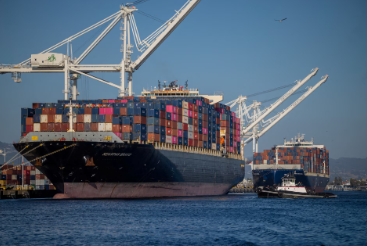
Image used from reuters
I’ve been paying close attention to the global economic picture for a while now, and I have to say, the past few months have felt like a genuine turning point rather than just another cycle of trade tensions. The world economy is going through a shift that most people aren’t fully registering yet, partly because it’s happening gradually rather than all at once. But when the chief economist of the International Monetary Fund starts issuing stark public warnings about where things are headed, I think that deserves serious attention. So let me walk you through what’s actually happening, why it matters far beyond just trade disputes, and what I honestly think this means for the world most of us grew up in.
A Massive Historic Transformation Nobody Is Talking About Honestly
For most of the past several decades, the direction of the global economy seemed completely settled. Supply chains stretched across continents. Capital moved across borders with very little friction. Companies set up manufacturing wherever labor costs were cheapest, then shipped finished goods everywhere else. The whole system was built around one core idea: efficiency above almost everything else.
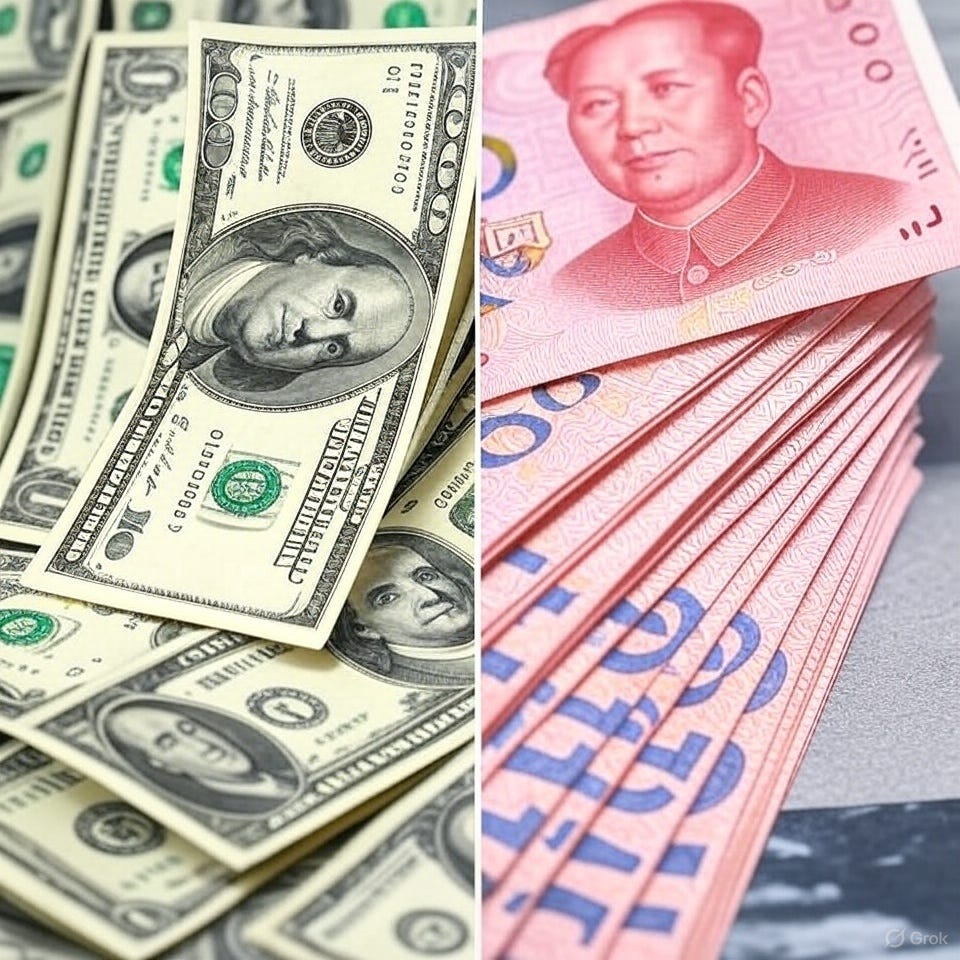
Sitting at the center of all of this was the US dollar. Most international trade got priced in dollars. Most central bank reserves were held in dollars. Most major commodity markets ran on dollars. The dollar wasn’t just America’s currency. It was effectively the operating system of the entire global financial system.
For a long time, this arrangement worked well enough that most people never had reason to question whether it was permanent. But here’s what I keep coming back to: the IMF’s chief economist Pierre-Olivier Gourinchas recently issued what I’d describe as one of the clearest warnings we’ve seen from a major international institution in years.
According to the IMF, the world is now facing a serious and growing risk of what they call “tit-for-tat economic warfare.” Tariffs, export controls, financial sanctions, technology restrictions, and geopolitical rivalries are no longer occasional disruptions to the global system. They are increasingly becoming the system itself.
And the IMF is warning that if this continues, the fragmentation that’s already reshaping trade could eventually spread into the financial system too, which would be a far more profound transformation than anything we’ve seen so far.
The Tit-for-Tat Trap
Here’s the dynamic that worries me most when I think about where this is all heading. It’s not any single tariff or any single sanction. It’s the cycle that these measures tend to create once they get started.
One country imposes tariffs. The other retaliates with counter-tariffs. The first country responds with export controls. The second develops alternative supply chains. Then comes financial pressure, restrictions on access to dollar-based payment systems, technology export bans, investment screening. Each move invites a counter-move. And the IMF is explicitly warning that once these cycles become embedded in national policy, history shows they become extremely difficult to reverse.
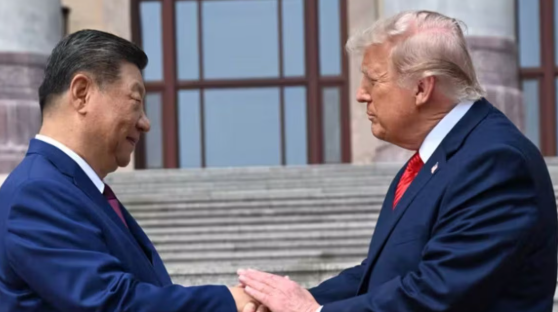
We’ve already seen clear examples of this playing out in real time. The US imposed steep tariffs on China. China responded by restricting exports of critical minerals that American and European industries depend on. Western countries piled sanctions onto Russia. Russia redirected its trade flows eastward. Each of these actions made perfect sense from a narrow national interest perspective. But collectively they’re chipping away at the integrated global system that produced decades of relatively low-cost goods and steady economic growth.
The IMF’s language around this is unusually blunt for an institution that typically chooses its words very carefully. When they use phrases like “tit-for-tat economic warfare,” they’re not describing a temporary spat between trading partners. They’re describing a structural shift in how countries think about economic relationships.
How Supply Chains Are Being Rebuilt Around Politics
One of the most visible consequences of this shift is what’s happening to global supply chains right now. For thirty-plus years, the guiding principle was simple: make things wherever it’s cheapest, move them wherever there’s demand. That logic gave us incredibly low prices on manufactured goods and contributed meaningfully to rising living standards in a lot of places.
Today, governments and major corporations are operating by a fundamentally different logic. The keyword you keep hearing now is “resilience” rather than “efficiency.” Another term that’s entered the mainstream policy conversation is “friend-shoring,” which basically means moving production toward countries that are politically aligned rather than just cheapest.
Industries that used to be organized purely around cost are now being treated as strategic assets that governments want to control domestically or at least have access to through trusted allies. Semiconductors. Batteries. Pharmaceuticals. Rare earth minerals. Energy infrastructure. These aren’t just commercial sectors anymore. They’re being treated as national security questions, and that changes everything about how they get built, where they get built, and who has access to them.
The economic cost of this shift is real and it gets underappreciated in public debate. Globalizing production around efficiency created genuine gains through specialization. Countries focused on what they were best at, which lowered costs for everyone. Moving production back to less efficient locations, or forcing supply chains to take longer and more expensive political routes, means higher production costs. Those costs eventually show up in the prices consumers pay.
Countries Are Building Financial Alternatives to the Dollar
Now here’s where things get really significant, and where I think the long-term implications are the most profound. The trade fragmentation we’ve been talking about is visible and relatively well understood. But the IMF is warning about something deeper: the potential fragmentation of the financial system itself.
The dollar’s dominance in global finance is built on a foundation of trust and convenience. Most international contracts are written in dollars. Most commodities are priced in dollars. Most foreign exchange reserves are held in dollars. This gives the United States extraordinary leverage, because access to the dollar-based financial system can be restricted through sanctions. And countries that have been on the receiving end of those sanctions are drawing clear conclusions about what that means for their own security.
China has been actively expanding the international use of the yuan for trade settlements and pushing to give its currency a larger role in global markets. BRICS nations have been holding ongoing discussions about payment systems specifically designed to reduce dependence on Western financial infrastructure. Central banks around the world have been significantly increasing their gold purchases, which I read as a pretty direct signal that they want more of their reserves in something that can’t be frozen or restricted by a foreign government’s decision. Regional payment systems that bypass dollar clearing are expanding. Digital currencies at the central bank level are being actively developed across multiple countries.
Now, to be absolutely fair and accurate here, the IMF itself is clear that these developments are still small relative to the enormous scale of the dollar-based system. There is, as they put it, very little evidence right now that countries are abandoning the dollar wholesale. The dollar remains dominant. But the IMF’s warning isn’t about what’s happening today. It’s about the direction of travel and the pace at which that direction could accelerate.
And the specific phrase the IMF used that stuck with me is that “fragmentation often occurs gradually rather than suddenly.” They’re not predicting a sudden dollar collapse. They’re warning that a slow, steady drift away from dollar dependence is already underway, and that the conditions driving it aren’t going away.
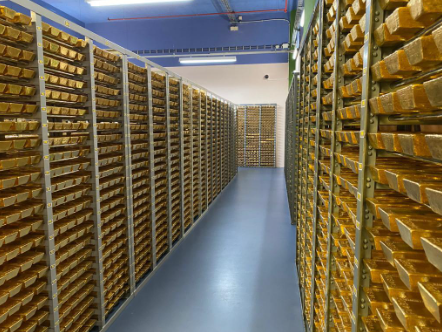
Image used from bullionstar
Energy Security Is Driving the Fragmentation Faster
One more factor that I think is accelerating all of this is what’s happened to energy markets in the context of recent geopolitical events. The disruptions around the Strait of Hormuz during the US-Iran conflict showed in very stark terms how vulnerable global energy supply chains remain to geopolitical shocks.
Strategic petroleum reserves helped cushion the blow, but many countries now hold smaller emergency buffers than they did in the past, which means the cushion keeps getting thinner.
The response to this vulnerability is entirely predictable. Countries are pushing harder than ever to diversify their energy suppliers, develop more domestic production, build larger strategic reserves, and find alternative transportation routes.
Energy, which used to be analyzed primarily as an economic commodity with price fluctuations driven by supply and demand, is now being treated as a matter of national security in virtually every major capital.
That shift matters for economic fragmentation because energy relationships are deeply embedded in broader economic and political relationships. When countries reorganize their energy supply chains around geopolitical alignment rather than cost, they pull other trade and financial relationships along with them.
What History Actually Tells Us About This
The IMF explicitly draws a comparison to the Cold War, and I think it’s an instructive one even if the modern situation isn’t a perfect parallel. During the Cold War, global trade was divided into competing economic blocs with very limited interaction between them. Research on that period consistently shows that the trade barriers between East and West reduced economic flows and imposed real long-term costs on both sides, including on the countries that were supposedly “winning.”
The specific costs that concern the IMF in the current context are slower economic growth, higher production costs, reduced innovation, and lower productivity. All of these would be gradual in their arrival, which is part of what makes this so tricky to respond to politically.
Nobody will wake up one morning to a headline that says “globalization officially ended today.” Instead, goods will cost a little more each year. Supply chains will get a bit less efficient. Growth will come in a little below what models would have predicted under a more integrated world. The costs are real but they arrive slowly enough that they rarely generate the political urgency the situation probably deserves.
My Honest Take on All of This
Let me tell you where I genuinely land on this, because I’ve spent a lot of time thinking about it.
I don’t think globalization is simply ending. I think it’s being reorganized, and that reorganization is happening along political and security lines rather than purely economic ones.
The result is likely to be a world with two or three loosely competing economic blocs rather than a single tightly integrated global economy, each with its own preferred currencies, payment systems, supply chains, and technology standards.
Whether that outcome is better or worse than pure economic globalization is actually a genuinely complicated question. The old model delivered low prices and efficiency gains, but it also created deep vulnerabilities and, as the IMF notes, arguably exploited weaker economies in the process. The new model will be less efficient and almost certainly more expensive, but it might prove more resilient to shocks and more responsive to legitimate concerns about national security and economic dependency.
What I’m fairly confident about is that the world economy that emerges over the next decade will look meaningfully different from the one we’ve been operating in for the past thirty years. Anyone doing long-term planning, whether for a business, an investment portfolio, or just their own financial life, would do well to take that probability seriously rather than assuming the current order simply continues indefinitely.
So I’ll ask you what the IMF is really asking: are we watching the gradual end of the globalization era, or is this just the global economy reorganizing itself into a new shape? I’d genuinely love to hear your perspective in the comments, because I don’t think anyone has this fully figured out yet.
메타데이터
- post_id
- dc7a334ffccb
- slug
- globalization-is-ending-faster-than-anyone-expected-imf-confirms-it-dc7a334ffccb
- url
- https://medium.com/geopolitics-beyond/globalization-is-ending-faster-than-anyone-expected-imf-confirms-it-dc7a334ffccb
- canonical_url
- https://medium.com/geopolitics-beyond/globalization-is-ending-faster-than-anyone-expected-imf-confirms-it-dc7a334ffccb
- author_url
- https://medium.com/@nairsahil08
- status
- ok
- fetched_at
- 2026-07-12 00:07:18