So, You Want To Make Your Own Cereal
A brief history, recipes, and more tiny dough balls than anyone needs.
Ask The Editors
So, You Want To Make Your Own Cereal
A brief history, recipes, and more tiny dough balls than anyone needs.
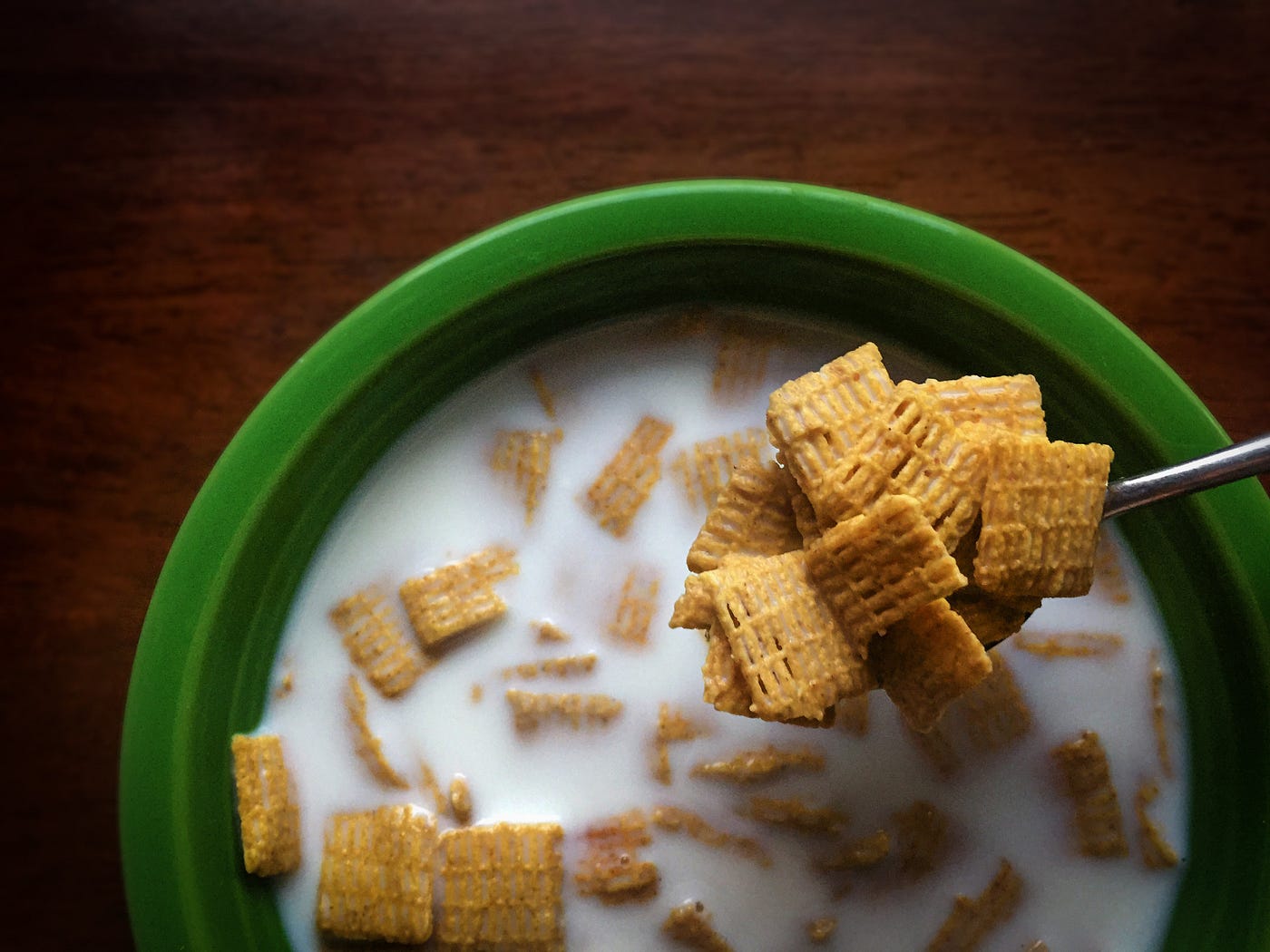
Image by Pexels from Pixabay
A reader asked: “Cereal? That is the question. What is a good recipe to make some homemade breakfast cereals? The sugary store ones are interesting. Sugar, but a complete, fortified vitamin in each bowl. I was also thinking of the notion of what ‘cereal’ means.”
Oy vey!
As you might have guessed from the phrasing, my friend Eric is at it again. I offered him a granola recipe. He responded — rather impolitely — that granola is never a breakfast cereal. Fine. I love the guy, so I’ll humor him.
But first, a little food history. (I pulled quite a bit of this from the excellent Food Timeline.)
Hot cereals — porridge, oatmeal, gruel — have been around forever. Cold cereal, however, is a relatively new invention, barely two centuries old. And the origin story is … well, let’s just say it may put you off your morning bowl.
In the late 19th century, a wave of health crusaders emerged — people convinced that specific foods, prepared in specific ways, would cure all ills. Think of them as the first cousins of the era’s snake‑oil salesmen.
The main characters:
Sylvester Graham was a Presbyterian minister who, as a child, had been plagued with illness. Let’s start by saying that Graham had a difficult life. He was the youngest of 17 — his father was 70 when Graham was born, and his mother was mentally ill. As a result, throughout his childhood, he was bounced around from family to family, and one was the owner/operator of a tavern. Work in that place exposed Graham to the sadness of drunken behavior and turned him away from alcohol for his entire life.
When he was a young adult, there was a worldwide outbreak of cholera; the accepted medical practice was that avoiding vegetables and consuming abundant amounts of meat and wine would offer protection from the dread disease. That prescription didn’t sit well with Graham, so he studied and developed his own theology, concluding that eating meat and alcohol were gluttonous and that people should consume only plants, as Adam and Eve did in the Garden of Eden.
Milling and baking at home were a significant part of his message; his first book, “Treatise on Bread and Bread-Making,” helped spread the message. He developed his own brand of flour, made from the entire wheat seed, not just the endosperm. Does his name sound familiar to you? Perhaps you’ve heard of graham crackers.
Dr. James Caleb Jackson was the creator and founder of ‘Our Home Hygienic Institute’ in New York. Like Graham, Jackson was a rather sickly child but took a decided turn for the better after receiving a “water cure” at a health spa. This remarkable event not only changed his health but also his avocation.
Jackson devoted himself to hydropathy and became a trained physician in the “science.” At his institute in New York, he doled out a strict vegetarian diet with an emphasis on unprocessed grains. In 1863, he developed a breakfast cereal that he named granula. It was made of oats, cornmeal, and graham flour.
John Harvey Kellogg (yes,** **that Kellogg) was the director of the Battle Creek Sanitarium in Michigan. This is his story, as explained by Heather Arndt Anderson in her 2013 publication “Breakfast — A History”:
“In 1894, John Harvey and his brother Will Keith Kellogg accidentally invented the cereal that would make them famous when a pan of cooking wheat was forgotten on the stove. Trying to save money by not wasting product, they ran the paste of overcooked wheat through a set of steel rollers. They named the flakes cereal Granose Flakes, and marketing began in 1895. Shortly after receiving the patent, more than fifty tons of Granose cereal had been manufactured and sold, primarily through mail order.”
So yes — the cold cereal many of us grew up with was invented by men who ran sanitariums. Make of that what you will.
Now, Eric wants recipes. And surprisingly, there are quite a few.
Homemade Cornflakes
The first recipe I found was for homemade cornflakes. They sound easy enough — place a thin layer of fine cornmeal in a skillet, spray on just enough water to dampen, and cook until dried out. Use a metal spatula to scrape the flakes from the bottom of the pan. Those who left comments report that they are tasty but disintegrate quickly in milk.
Vanilla-Almond Cereal Puffs
These vanilla-almond cereal puffs sound much more promising. With the aid of a food processor, you create a “cookie dough” which is then shaped into pea-sized balls and baked in the oven. One commenter suggested simply rolling out the dough and then cutting it into small cubes with a pizza cutter. If you don’t mind square-shaped cereal (it wouldn’t bother me), I think that’s a simpler way to go.
Homemade Cinnamon-Toast Crunch
My daughter wants to make this homemade cinnamon toast crunch; CTC is her absolute favorite cereal, and if you make it yourself, you can control (with mom’s supervision) the amount of sugar.
Nutty Bran Flakes
Here’s a recipe that holds real promise. Nutty bran flakes are rolled paper-thin on a sheet of parchment paper. Instead of cutting into small pieces, the entire one large flake of dough is baked in the oven until beginning to dry and turn golden. Allow to cool, break into bite-sized pieces, and bake once again in a low oven to completely crisp. I guess you could call it the biscotti of breakfast cereals.
Cheerios
Would you believe homemade Cheerios (oaty-ohs)? Honestly, it sounds like more work than I’d care to invest, but if you’re willing to roll bite-sized balls of dough into a ball, flatten, and then impale with a bamboo skewer, you could probably knock out a batch of these oven-baked oh’s in no time.
Wheat Flake Cereal
This final recipe actually looks kinda fun. Instead of creating a dough, the wet and dry ingredients are mixed into a batter that is poured in a thin layer on a sheet of parchment paper.
That thin slurry is baked in the oven until crisp, then cooled and broken into bite-sized wheat flake cereal.
So there you have it — homemade cereal, from cornflakes to oaty‑ohs, for anyone brave enough to try. Will Eric make any of these? Probably not. Will he ask me another impossible question next week? Absolutely. And I’ll be right here, wooden spoon in hand, ready for it.
This story is part of “Ask the Editors,” a Wednesday column where Tastyble’s editors answer readers’ questions.
메타데이터
- post_id
- dc8949f1f89a
- slug
- so-you-want-to-make-your-own-cereal-dc8949f1f89a
- url
- https://medium.tastyble.com/so-you-want-to-make-your-own-cereal-dc8949f1f89a
- canonical_url
- https://medium.tastyble.com/so-you-want-to-make-your-own-cereal-dc8949f1f89a
- author_url
- https://medium.com/@lindalum_2779
- status
- ok
- fetched_at
- 2026-07-10 16:46:54