The “Zero-Click” Reality: How to Rescue Your Organic Traffic in the Age of AI Overviews
Picture this. You spend three weeks researching, outlining, and polishing a comprehensive 2,500-word guide. You hit publish. A month later…
The “Zero-Click” Reality: How to Rescue Your Organic Traffic in the Age of AI Overviews
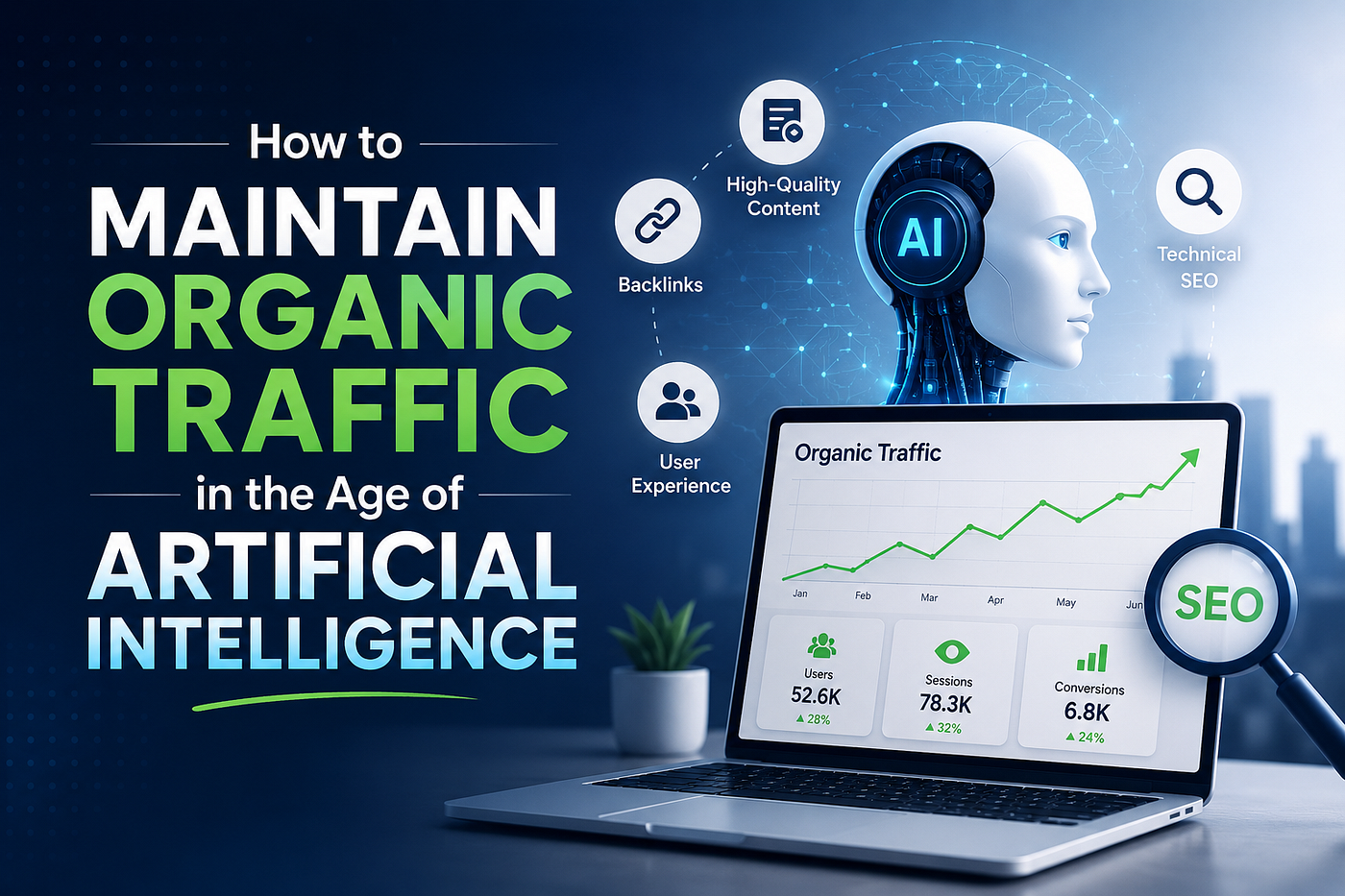
Picture this. You spend three weeks researching, outlining, and polishing a comprehensive 2,500-word guide. You hit publish. A month later, you’re sitting comfortably at position number one for your primary target keyword. You open your analytics, expecting a massive spike in organic sessions.
Instead, the line is flat. Or worse, it’s actually trending downward.
It feels like a glitch in the matrix. You did everything the traditional SEO playbooks told you to do. You optimized your meta tags, nailed the keyword density, and built a few internal links. But the traffic didn’t come.
You haven’t been penalized. You’ve just fallen into the zero-click trap.
As search engines evolve to answer questions directly on the results page — often powered by AI overviews — the fundamental mechanics of organic traffic have shifted beneath our feet. Ranking number one no longer guarantees a click. In fact, for a vast majority of informational queries, the search engine has become the final destination.
If your SEO strategy is still built on the premise that “ranking equals traffic,” you are going to have a bad time. Here is how we rebuild the strategy for the reality of modern search.
See exactly where your competitors are winning — and how to beat them.
The Illusion of the “Perfect” Keyword
For the last decade, the holy grail of content marketing was finding a high-volume, low-difficulty keyword and writing the definitive guide for it.
That playbook is dead.
When you target broad, high-volume informational keywords today, you are directly competing with the search engine’s own interface. If a user searches “what is a macro in Excel,” the search engine doesn’t need to send them to your blog post to find the answer. It displays a snapshot right at the top of the page. The user gets their answer, closes the tab, and you get a “zero-click” search.
The illusion we have to break is that all search volume is created equal. A keyword with 5,000 monthly searches that results in a 90% zero-click rate is practically worthless compared to a niche keyword with 300 monthly searches that has a high commercial intent and a low zero-click rate.
We have to stop optimizing for search volume and start optimizing for click probability.
Why Your Competitors Are Winning (Even With “Messier” Content)
If you’ve been doing SEO for a while, you’ve probably experienced the frustration of watching a “worse” article outrank yours.
Their word count is lower. Their design is clunky. They don’t have a perfectly optimized URL structure. Yet, they are sitting in the top three spots, siphoning off all the clicks. Why?
Because they have scar tissue.
AI and automated content can easily synthesize existing facts. They can tell you what a thing is, how it works, and list its features. But AI cannot synthesize lived experience. It cannot tell you what it feels like when a specific software integration fails at 2 AM, or the exact workaround you need when a standard best practice breaks down in a real-world scenario.
Users have become incredibly adept at sniffing out generic, synthesized content. When they see a polished, perfectly structured article that just regurgitates the top three results on page one, they bounce. Search engines track this engagement data. When users bounce, rankings drop.
The “messy” competitor is winning because their content is opinionated. It’s flawed, maybe, but it’s deeply human. It contains proprietary frameworks, personal anecdotes, and specific, nuanced advice that couldn’t have been generated by a machine. To win the click, your content must offer a perspective, not just a summary.
Building a “Click-Worthy” Moat in a Zero-Click World
So, how do we actually adapt? We need to fundamentally change how we approach content creation, shifting from broad information to deep, actionable insight.
Here are three strategic pivots you can make immediately to protect your traffic and start capturing clicks again.
1. Engineer “Curiosity Gaps” in Your Headings If the search engine is giving the user the basic “what” and “how” in the AI overview, your title and meta description need to sell the “why” and the “what’s next.”
You need to create a curiosity gap. This is the space between what the user knows and what they desperately want to know.
Instead of a title like “How to Train a Golden Retriever Puppy,” which the search engine will easily summarize on the results page, you pivot to something that implies a unique mechanism or a counter-intuitive secret. Think: “The 10-Minute Morning Routine That Stops Golden Retriever Biting Instantly.”
The first title promises generic information. The second promises a specific, easy-to-implement solution to a painful problem. The user has to click to find out what that 10-minute routine actually is. You aren’t clickbaiting; you are clarifying the unique value proposition of your specific angle.
2. Pivot to High-Complexity Queries The easiest way to avoid the zero-click trap is to target questions that are too complex, nuanced, or multi-layered for an AI snapshot to answer in a few paragraphs.
High-complexity queries usually involve multiple variables. They aren’t asking “how to do X.” They are asking “how to do X when Y is also happening, but Z is the ultimate goal.”
For example, “Best CRM for small business” is a low-complexity query that will trigger a massive product carousel and AI summary. But “How to migrate from Hubspot to Salesforce without losing historical custom objects” is highly complex. It requires step-by-step nuance, warnings about common pitfalls, and specific technical advice.
Search engines know they cannot adequately answer these complex queries in a snapshot. They need to send the user to a detailed, authoritative article. By shifting your keyword research toward these long-tail, high-complexity problems, you naturally bypass the zero-click filter.
3. Audit Your Topical Decay Before It Happens Even if you have great content, search intent is not static. It fractures and shifts over time. A query that was purely informational two years ago might have commercial intent today, or vice versa.
If you don’t catch these micro-shifts in intent, your content will slowly decay. You won’t notice a sudden drop in traffic; you’ll just see a slow, agonizing bleed over six months.
This is where your tool stack actually matters. You can’t fix what you can’t see. When I’m auditing a site, I don’t just look at current rankings. I look at the historical trend of specific keyword clusters. Using a comprehensive platform like SE Ranking, I can spot when a competitor suddenly starts outranking me for long-tail variations of my core topic.
It tells me the search intent is fracturing. Maybe users are suddenly looking for video content, or they want a template instead of a guide. Catching that early by monitoring your ranking shifts and visibility scores means I can update my content to cover that new angle before my traffic takes a real hit. Proactive monitoring is the only way to stay ahead of intent decay.
The Mindset Shift: From Volume to Resonance
The biggest mistake marketers are making right now is mourning the loss of top-of-funnel vanity traffic.
Yes, the massive spikes of informational traffic from broad keywords are largely gone, absorbed by the search interface itself. But the traffic that remains is infinitely more valuable. It is traffic from users who have a complex problem, who need a human perspective, and who are ready to take action.
Stop trying to be the encyclopedia. The search engine is already doing that job.
Instead, become the consultant. Provide the nuance, the scar tissue, and the specific frameworks that a machine simply cannot replicate. When you shift your focus from simply answering questions to actually solving complex problems, the clicks will follow.
The game of SEO isn’t over. The rules have just changed. Adapt your strategy, track your intent shifts closely, and start building content that demands to be clicked.
You can write the most insightful content in the world, but if you’re flying blind on shifting search intent and competitor gaps, you’re leaving revenue on the table. Don’t let the zero-click era erase your hard work.
Equip yourself with the exact data you need to pivot your strategy, uncover hidden high-complexity keyword opportunities, and reclaim your organic traffic before your competitors do.
See exactly where your competitors are winning — and how to beat them.
메타데이터
- post_id
- dca981c0ea80
- slug
- the-zero-click-reality-how-to-rescue-your-organic-traffic-in-the-age-of-ai-overviews-dca981c0ea80
- url
- https://medium.com/@yusefdigitalmarketingseo/the-zero-click-reality-how-to-rescue-your-organic-traffic-in-the-age-of-ai-overviews-dca981c0ea80
- canonical_url
- https://medium.com/@yusefdigitalmarketingseo/the-zero-click-reality-how-to-rescue-your-organic-traffic-in-the-age-of-ai-overviews-dca981c0ea80
- author_url
- https://medium.com/@yusefdigitalmarketingseo
- status
- ok
- fetched_at
- 2026-06-09 15:37:30