How sports newspapers can monetize highlights and recaps sustainably
Sports newspapers and digital publishers have become video businesses, even when they still think of themselves as newsrooms first. Match…
How sports newspapers can monetize highlights and recaps sustainably
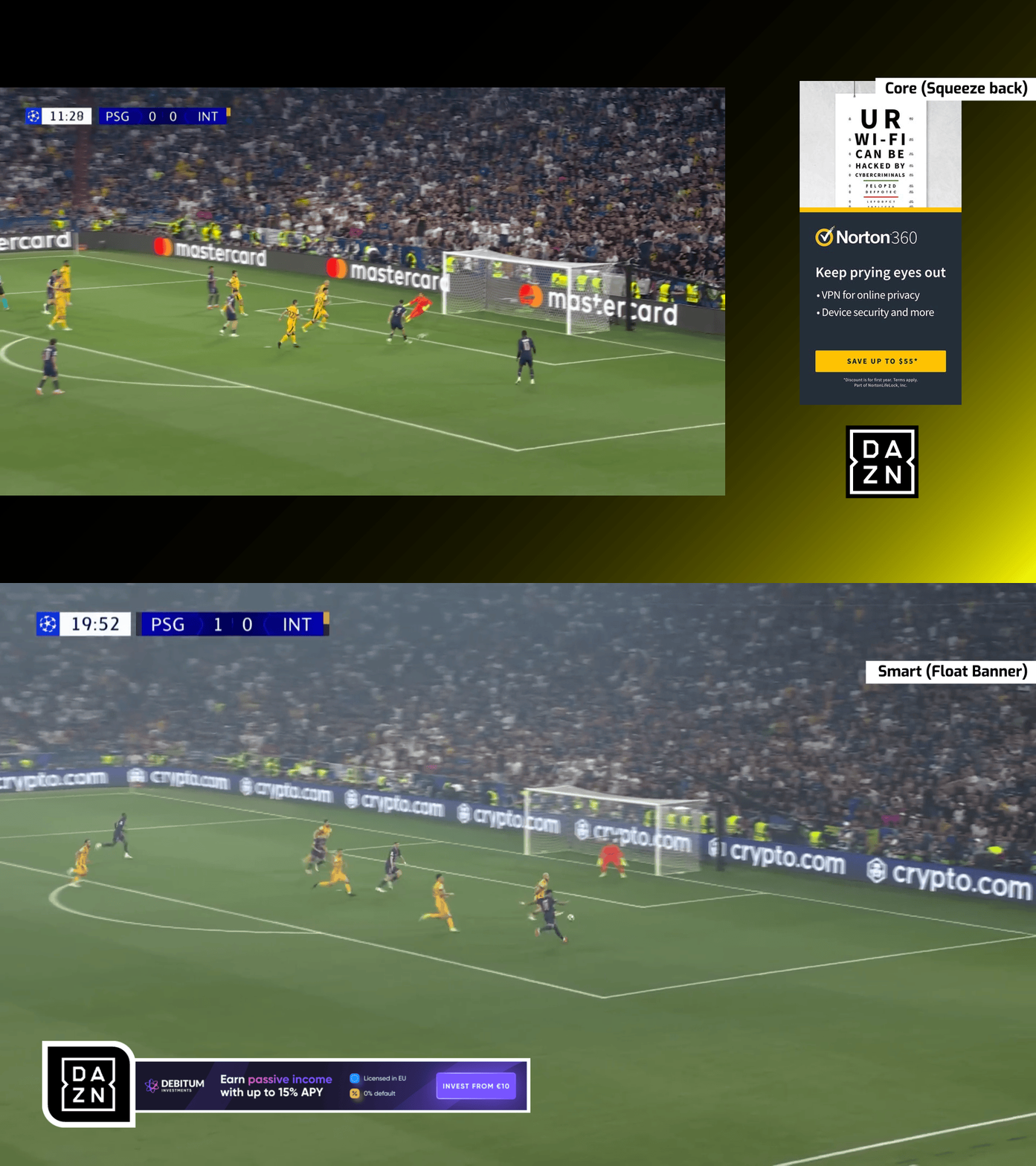
BRNDTS Technology In Action
Sports newspapers and digital publishers have become video businesses, even when they still think of themselves as newsrooms first. Match moments now travel through highlight clips, recap packages, and short feeds that fans watch in bursts throughout the day, which means the “product” is increasingly a library of short videos rather than a single long reading session.
This shift creates a monetization challenge that is easy to feel in practice. A large highlight library can generate meaningful total viewing, but demand for traditional video ads is not always deep enough to monetize every clip, and it is rarely deep enough to do so without creating friction that makes fans stop watching. Sustainable monetization depends on matching the ad experience to short-session viewing, rather than forcing short-form consumption into a monetization model that was built for longer programs.
Where current approaches struggle with short-form libraries
Many sports publishers rely on the same monetization patterns that dominate premium video, which usually means pre-roll, mid-roll, and skippable formats that are familiar to buyers. Those formats can work well when content is long and viewing sessions are stable, but highlight and recap libraries have constrains:
- Demand coverage. When a publisher has hundreds or thousands of clips, demand does not reliably show up for every asset, especially outside of marquee events. The result is that monetization becomes uneven across the library, and teams either accept gaps or spend time trying to fill them manually, which is rarely sustainable.
- Length mismatch that can happen in short-form sports. When an ad experience begins to feel comparable in length to the clip the viewer came to watch, it creates a sense of friction that is hard to recover from, particularly when the viewer’s goal is to quickly catch up on moments. This is not a claim about any one format being “bad,” but it is a recognition that short clips create less tolerance for delays and interruptions.
- Fans watch multiple videos back to back. Skippable ads can reduce frustration in a single-view session, but in a highlight session where a viewer watches several clips in sequence, repeated skippable prompts and repeated starts can create fatigue and drop-off. Even when viewers can skip, the repeated interruption changes the feel of the product and can make the library less bingeable, which is a problem because bingeable behavior is often what creates aggregate scale.
What a sustainable model looks like for highlights and recaps
Sustainable monetization for short sports videos starts with a simple goal. The model should monetize the library through aggregate delivery across many clips, while preserving the “keep watching” behavior that makes highlights valuable in the first place.
That usually requires three practical shifts:
- Building a dependable base layer that does not rely on every clip attracting strong video ad demand. A short-form library needs monetization that can run consistently across a high volume of assets, including moments that are valuable to fans but do not behave like premium video programming from a buyer’s perspective.
- Aligning monetization with short-session viewing. Instead of repeatedly interrupting the start of each clip, the system should support non-disruptive exposure that allows the session to flow, because flow is what turns a library into a habit.
- Treating monetization as a product definition, not as a set of one-off decisions. A product definition gives sales teams something they can package and sell across the library, and it gives operations teams a set of rules they can run without constant manual intervention.
A sustainable highlight monetization layer commonly includes:
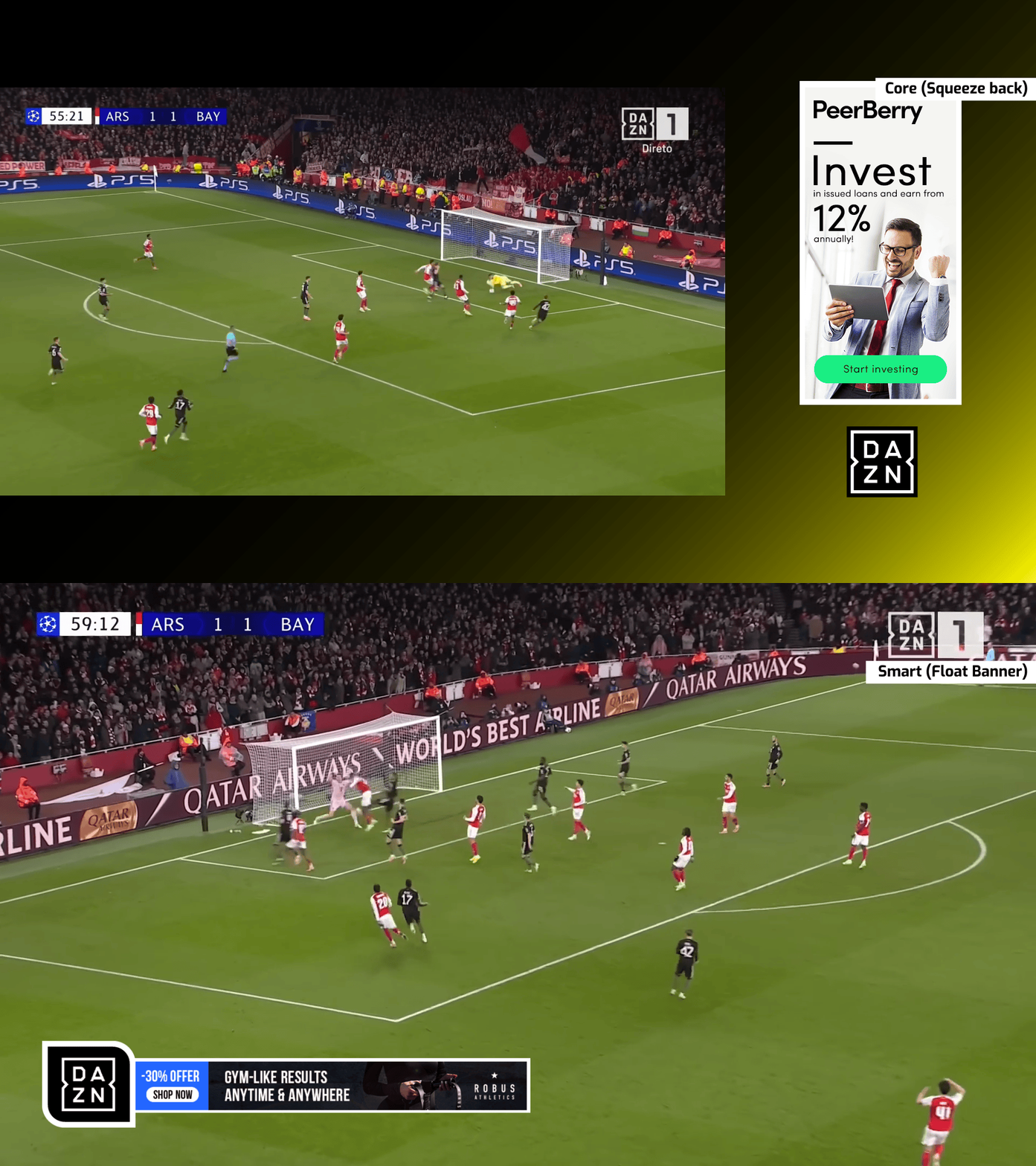
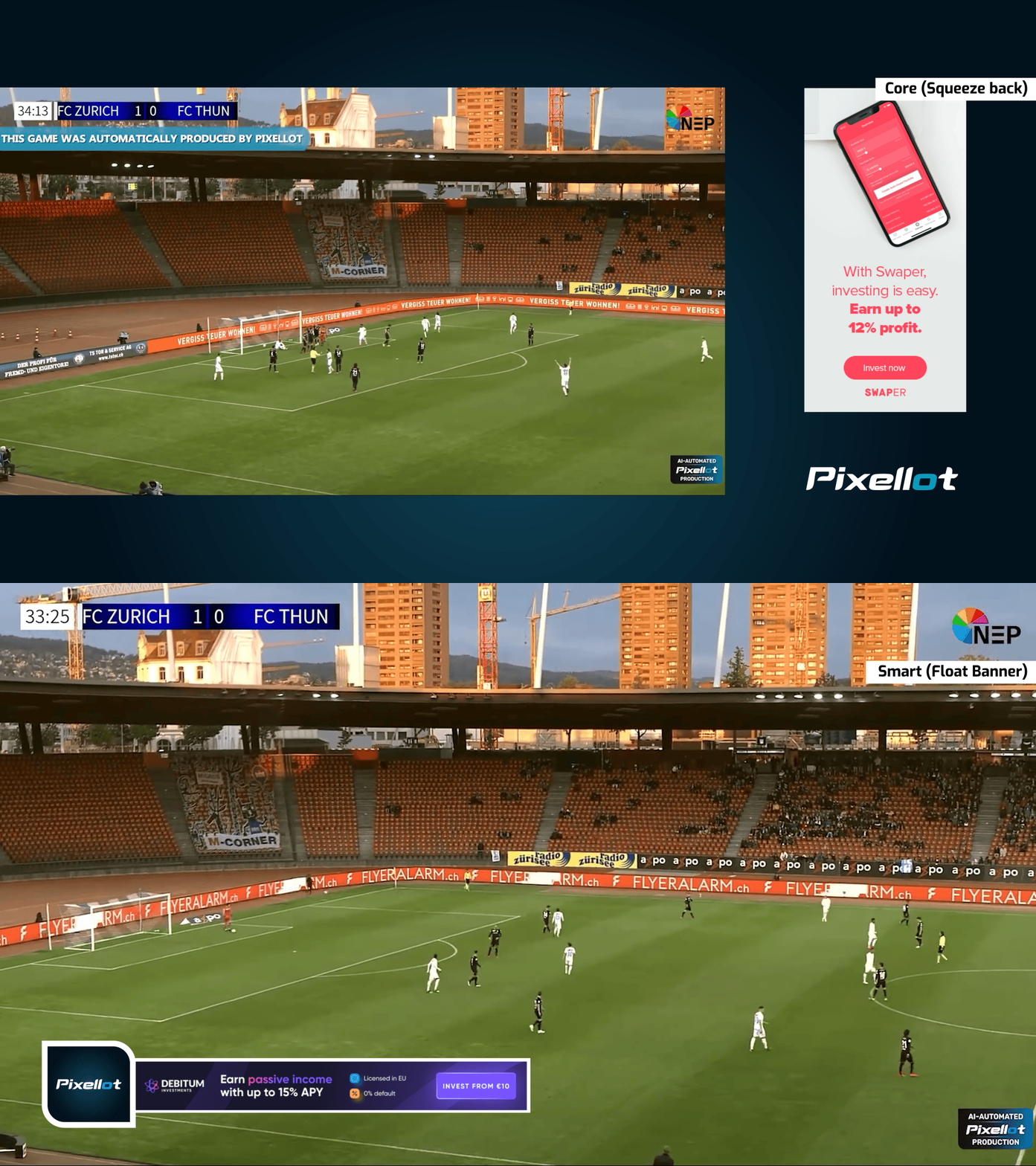
- Consistent on-screen placements that can appear across highlights and recaps without changing from clip to clip.
- Clear do-not-cover and density rules so placements do not clutter the viewing experience or block essential action.
- Frequency controls that reflect the fact that viewers often watch many clips in a row, which reduces repetition fatigue.
- Reporting that rolls up across packages so commercial teams can sell bundles and show delivery without stitching together fragmented results.
This approach does not claim that video ads have no place, because longer recap programs and premium content can still support them in the right contexts. It does recognize that a short-form library needs a scalable foundation that preserves viewing sessions, and that foundation should not depend on interrupting every clip.
How BRNDTS supports sustainable short-form monetization
BRNDTS is valuable for sports newspapers and publishers because it supports a governed monetization layer that matches short-form viewing behavior and scales across large libraries without requiring constant manual effort. When highlight sessions involve multiple clips in sequence, sustainable monetization depends on keeping the experience clean, controlling repetition, and providing reporting that makes packaged selling credible.
In practical terms, BRNDTS helps by supporting consistent placement behavior across highlights and recaps, which makes the product easier for buyers to understand and easier for publishers to run. It supports governance that protects the viewing experience through clear rules, which helps preserve the flow that makes highlight libraries bingeable. It also supports frequency controls and unified reporting that allow commercial teams to package and monetize short sports videos across teams, competitions, and time windows, while still showing delivery in a way that supports renewal conversations.
For sports publishers that now operate as video-first news products, highlights and recaps can be a powerful growth engine, but they only become a durable revenue engine when monetization is built to fit short sessions, large libraries, and repeat viewing. BRNDTS supports that shift by making a scalable, governed, and reportable layer possible across the highlight economy.
메타데이터
- post_id
- dcaabfea13bc
- slug
- how-sports-newspapers-can-monetize-highlights-and-recaps-sustainably-dcaabfea13bc
- url
- https://medium.com/@BRNDTS/how-sports-newspapers-can-monetize-highlights-and-recaps-sustainably-dcaabfea13bc
- canonical_url
- https://medium.com/@BRNDTS/how-sports-newspapers-can-monetize-highlights-and-recaps-sustainably-dcaabfea13bc
- author_url
- https://medium.com/@BRNDTS
- status
- ok
- fetched_at
- 2026-06-10 12:26:30