The “Next-Door” Strategy: Why Japan’s Hidden Neighbors are the Future of Work
When people think of Japan, names like Tokyo, Osaka, or Kyoto immediately come to mind. But have you ever looked at the map and wondered…
The “Next-Door” Strategy: Why Japan’s Hidden Neighbors are the Future of Work
When people think of Japan, names like Tokyo, Osaka, or Kyoto immediately come to mind. But have you ever looked at the map and wondered what lies between these stars?
For every famous metropolis, there is a “next-door” neighbor. Yokohama has Yamanashi. Kyoto has Shiga. And nestled between the popular Kanazawa and Niigata, lies Toyama.
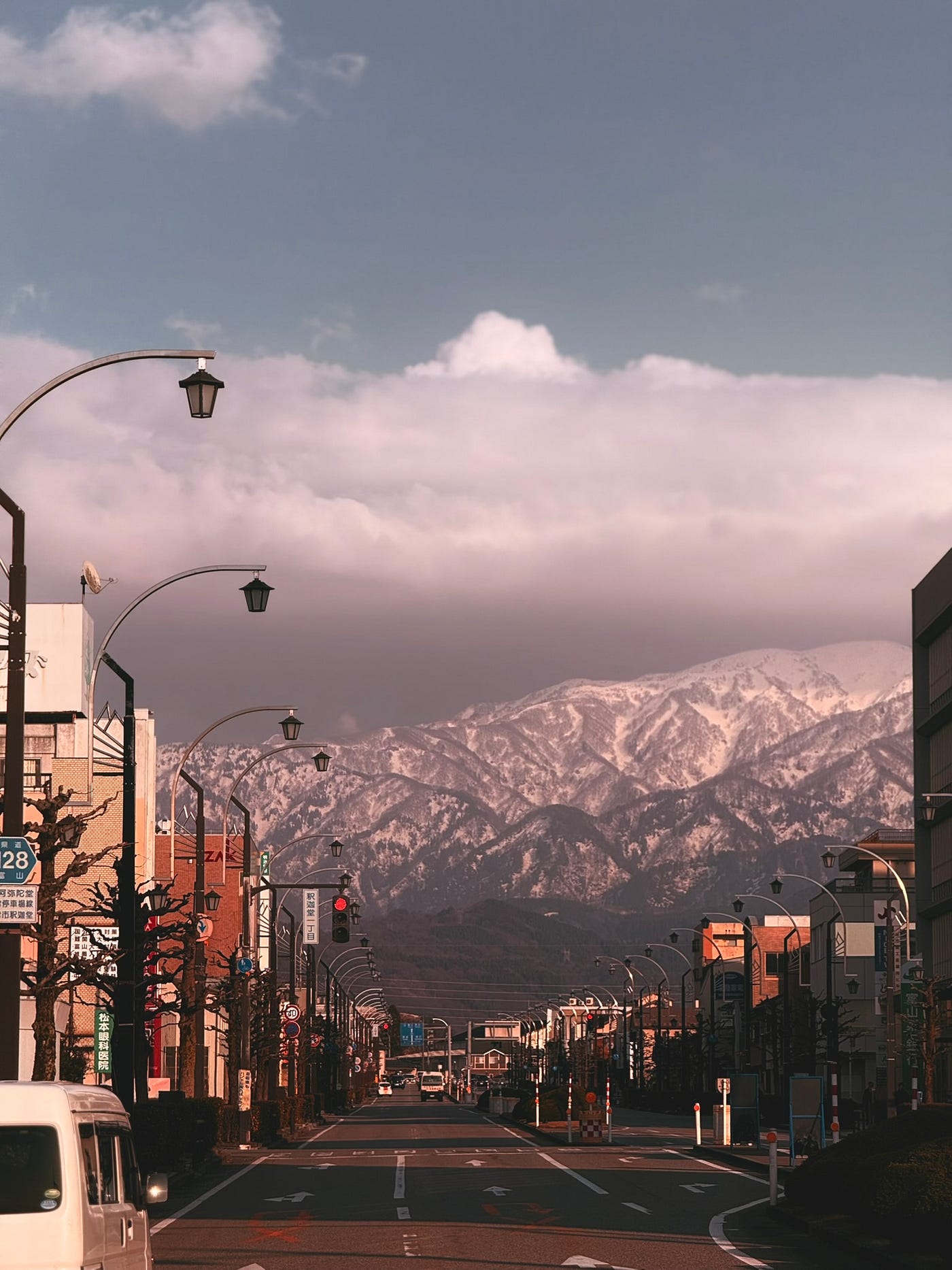
In the traditional tourism context, these “next-door” cities have often struggled to find their voice. They are frequently overshadowed by their famous neighbors, perceived as places you merely pass through on a bullet train.
However, we are witnessing a fascinating reversal. In an age of overtourism and digital exhaustion, these “neighboring” cities — which stayed quiet while the rest of the world rushed to modernize — are suddenly emerging as the most valuable frontiers for the global tourism industry.
The Purest Water, the Deepest Breath

If you ask a Japanese local about Toyama, they might mention tulips or traditional medicine. But to a traveler who values the sensory experience, Toyama is a revelation.
Dominating the horizon are the Tateyama Peaks — massive, snow-capped mountains that plunge directly toward the sea. Because of this steep terrain, the snowmelt rushes down to the city so quickly that it has no time to become polluted.
In Toyama, the water flowing in the street gutters looks like a mountain stream. The tap water tastes better than the most expensive bottled water in Tokyo. For sauna enthusiasts (like myself), Toyama offers the ultimate “mizuburo” (cold plunge) experience. It is a city that doesn’t just show you its beauty; it lets you feel it, taste it, and breathe it.
From “Revitalization” to “Co-creation”

Recently, I was invited to speak at a conference in Toyama about the potential of the long-term tourism industry (such as digital nomadism). We traveled from the coastal town of Namerikawa to the woodcarving village of Inami, engaging in 16 different sessions.
This experience made me reflect on the state of “Regional Revitalization” (Chihou Sosei:地方創生) in Japan.
Before the pandemic, these events were often top-down. Experts from Tokyo would fly in to give lectures to locals on how to “save” their towns. But that era is over. We no longer need “saviors.” What we need are “accomplices.”
The “Two Laps Behind” Advantage

I often say that these regions are “two laps behind” in the race for mass tourism — and that is exactly why they are winning now. They haven’t been hollowed out by souvenir shops or global hotel chains. They have preserved their authenticity by accident.
The digital nomad is the perfect catalyst for this new era. They aren’t just tourists who consume and leave; they are people who develop a “gradation of attachment.” They stay for a month, find a favorite cafe, and start to care about the local drainage system because that’s where their drinking water comes from.

The goal of regional revitalization shouldn’t be to create a “product” for tourists. It should be to foster a “small, certain conspiracy” between locals and outsiders. It’s about finding people who say, “I love this water, let’s do something interesting here together.”
The New Map of Japan

If you are looking for the “real” Japan, don’t just follow the crowds to the major landmarks. Look at the “next-door” cities. Look at the spaces between the dots on the map.

In the quiet streets of Toyama, under the gaze of the Tateyama mountains, I saw the future of how we will live and work. It’s not about finding a destination; it’s about finding a place where you are meant to be.
메타데이터
- post_id
- dcab32fce488
- slug
- the-next-door-strategy-why-japans-hidden-neighbors-are-the-future-of-work-dcab32fce488
- url
- https://medium.com/@oseraryo/the-next-door-strategy-why-japans-hidden-neighbors-are-the-future-of-work-dcab32fce488
- canonical_url
- https://medium.com/@oseraryo/the-next-door-strategy-why-japans-hidden-neighbors-are-the-future-of-work-dcab32fce488
- author_url
- https://medium.com/@oseraryo
- status
- ok
- fetched_at
- 2026-07-14 18:48:27