Ghana at a Crossroads: To Extend or Exit the IMF Credit Facility?
ACCRA — A reckoning is approaching in Ghana. As the clock ticks toward the expiration of its $3 billion Extended Credit Facility (ECF)…
Ghana at a Crossroads: To Extend or Exit the IMF Credit Facility?
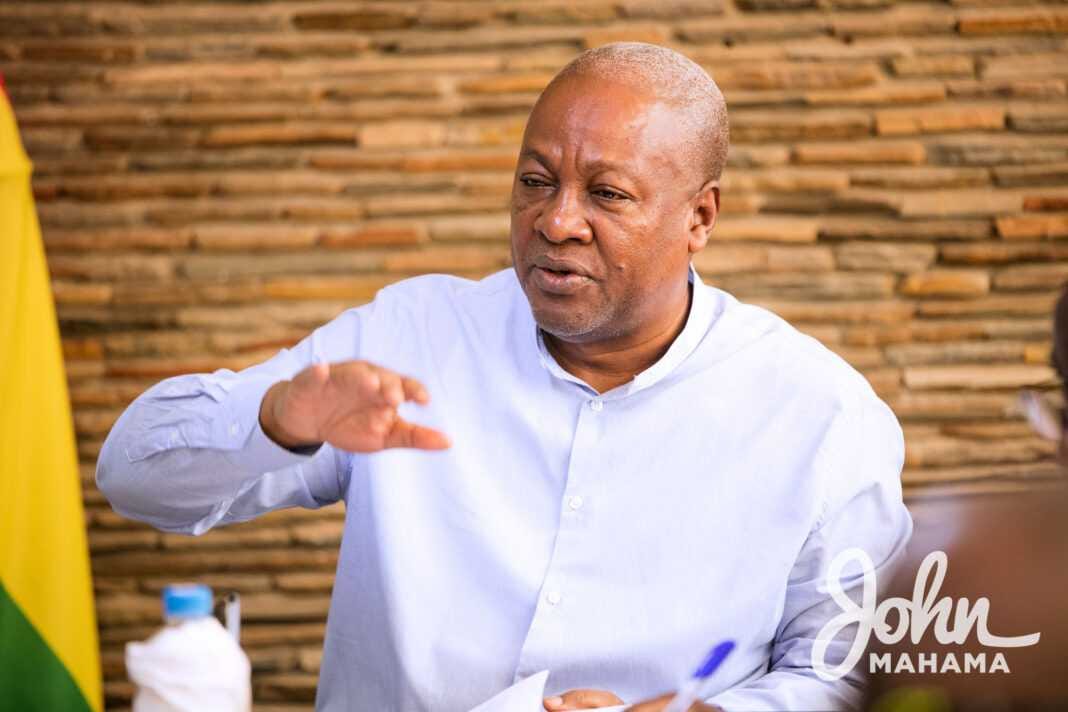
PRESIDENT JOHN DRAMANI MAHAMA-GHANA
ACCRA — A reckoning is approaching in Ghana. As the clock ticks toward the expiration of its $3 billion Extended Credit Facility (ECF) with the International Monetary Fund (IMF), the country stands at a precipice. Should it extend the program and retain IMF oversight, or cut ties and reclaim full fiscal sovereignty? President John Mahama, now at the helm, has expressed strong reservations about an extension, emphasizing the need for Ghana to reclaim its economic autonomy. However, recent remarks from Finance Minister Cassiel Ato Forson suggest a more measured approach — one that seeks to balance financial discipline with economic flexibility. This ambiguity leaves markets and policymakers uncertain: Will Ghana opt for a full exit, a renegotiation, or a phased transition?
The IMF Program: A Lifeline or a Crutch?
Ghana’s IMF journey has been cyclical — crisis, bailout, recovery, relapse. The latest engagement, signed in 2023 after a debt crisis that sent the cedi into freefall and pushed inflation past 50%, was intended to restore fiscal discipline and unlock market confidence. The program’s core goals — reducing the fiscal deficit (from 12% to 5% of GDP), restructuring external debt (which stood at nearly $50 billion), and implementing structural reforms — were designed to steer Ghana toward long-term stability.
In some areas, the program has delivered. According to the IMF’s 2023 Article IV review, fiscal targets showed progress, yet with caveats: inflation remains stubborn at 23%, the cedi continues to depreciate (losing 15% year-over-year), and debt-to-GDP, though down from 85% in 2022, still hovers at 75% in 2024. However, concerns linger over Ghana’s historical pattern of slipping back into economic distress post-IMF engagement. Global financing conditions are tightening, and with cocoa and oil revenues — the backbone of Ghana’s exports — remaining volatile, the case for a continued IMF safety net remains strong.
Mahama’s Case: Breaking Free from the IMF’s Grip
President Mahama argues that IMF-imposed austerity measures have stifled social spending, burdened citizens with tax hikes, and eroded Ghana’s economic autonomy. “We have been here before,” he recently declared in a campaign speech in the heat of the 2024 elections. “How long will we mortgage our future to foreign technocrats who do not understand our realities?” However, his administration’s position is not as rigid as initially suggested. Finance Minister Ato Forson has indicated that while Ghana seeks economic independence, a complete and immediate break from the IMF may not be feasible.
Mahama’s administration is taking steps to reduce government expenditure by streamlining governance, with the number of ministers cut to 60 — a significant reduction from previous administrations. By focusing on domestic revenue mobilization, digital taxation, and deeper regional trade integration through the African Continental Free Trade Area (AfCFTA), Mahama envisions an economy that is self-sustaining. Yet, the effectiveness of these measures remains to be tested.
The IMF’s Stance: Fragile Gains and the Risk of Exit
The IMF acknowledges Ghana’s progress but warns against premature disengagement. A recent IMF report praised efforts to restore macroeconomic discipline but flagged emerging risks, including energy sector arrears and the potential for unsustainable fiscal expansion. The underlying concern? A “stop-go” cycle, where Ghana exits IMF supervision only to return in distress a few years later.
Exiting without a credible alternative could spook investors, widen bond spreads, and weaken the cedi further, driving up import costs. Ghana has already struggled to regain access to international capital markets following its debt restructuring, and an abrupt departure from the IMF could delay efforts to issue new Eurobonds. Moreover, losing the IMF’s stamp of approval might impact Ghana’s ability to secure concessional financing from other multilateral lenders like the World Bank.
The Case for Extension: Stability Over Political Expediency
Proponents of an extension argue that, with global uncertainties persisting, Ghana cannot afford to risk another economic downturn. Economists had warned that without IMF oversight, election-year spending could spiral, reversing hard-fought fiscal gains. Investors, too, see an extension as a stabilizing force, providing reassurance that Ghana remains committed to economic discipline.
Social advocates worry that a hasty exit could weaken protections for vital sectors like health and education. Under IMF oversight, Ghana has maintained critical social spending floors. Without external scrutiny, there’s fear that political priorities could shift toward populist measures rather than sustained structural reform. Experts caution that while exiting the IMF is a legitimate long-term goal, doing so without a proper transition plan could destabilize Ghana’s fragile economic recovery.
Lessons from the Region: Success, Failure, and the Middle Path
Ghana need not navigate this dilemma in isolation. Senegal’s 2018 IMF exit, executed after successfully meeting revenue mobilization targets, is held up as a model of responsible disengagement. Zambia, on the other hand, offers a cautionary tale — its decision to abandon fiscal reforms led to a default in 2020, forcing an IMF re-entry under more difficult terms.
Kenya’s approach — a precautionary facility that balances IMF support with policy autonomy — offers a potential middle path. A phased, tapered exit could allow Ghana to maintain stability while gradually weaning itself off IMF assistance.
A Hybrid Solution? Navigating the Crossroads
A pragmatic compromise might involve extending the program for a shorter duration — perhaps a year — with reduced conditionalities, allowing Ghana time to build stronger fiscal buffers. Strengthening domestic institutions, such as an independent debt management office, could also help ensure sustainable economic governance post-IMF. Implementing strategic reforms ahead of a full exit, rather than an abrupt break, could serve as a signal of responsible economic stewardship.
Ultimately, the decision hinges on Ghana’s ability to convince markets, investors, and its own citizens that it can maintain discipline without external oversight. As Finance Minister Ato Forson cautiously noted, “We are evaluating all options to ensure a soft landing.”
Mahama’s Vision: A Homegrown Path to Fiscal Stability
President Mahama’s administration is betting on a homegrown approach to fiscal stability, one that emphasizes increased revenue mobilization, the eradication of corruption, and the plugging of revenue leaks. By running a lean government with just 60 ministers, Mahama is signaling a commitment to reducing wasteful expenditure and focusing on efficient governance. However, this approach must be backed by empirical evidence showing measurable fiscal gains.
Mahama’s focus on digital taxation and leveraging technology to improve revenue collection is already showing promise, but its long-term effectiveness remains untested. Additionally, his push for deeper regional trade integration through AfCFTA is expected to open new markets for Ghanaian goods and services, further boosting economic growth. Yet, challenges such as trade barriers, infrastructure deficits, and competition from larger economies within AfCFTA remain unresolved.
While the risks of exiting the IMF program are real, Mahama’s administration believes that with the right policies and a commitment to fiscal discipline, Ghana can achieve sustainable economic growth on its own terms. The road ahead is challenging, but the potential rewards — greater economic sovereignty and long-term stability — are worth the effort.
메타데이터
- post_id
- dcd68ffae4e3
- slug
- ghana-at-a-crossroads-to-extend-or-exit-the-imf-credit-facility-dcd68ffae4e3
- url
- https://medium.com/@sameshungh/ghana-at-a-crossroads-to-extend-or-exit-the-imf-credit-facility-dcd68ffae4e3
- canonical_url
- https://medium.com/@sameshungh/ghana-at-a-crossroads-to-extend-or-exit-the-imf-credit-facility-dcd68ffae4e3
- author_url
- https://medium.com/@sameshungh
- status
- ok
- fetched_at
- 2026-07-20 22:28:24