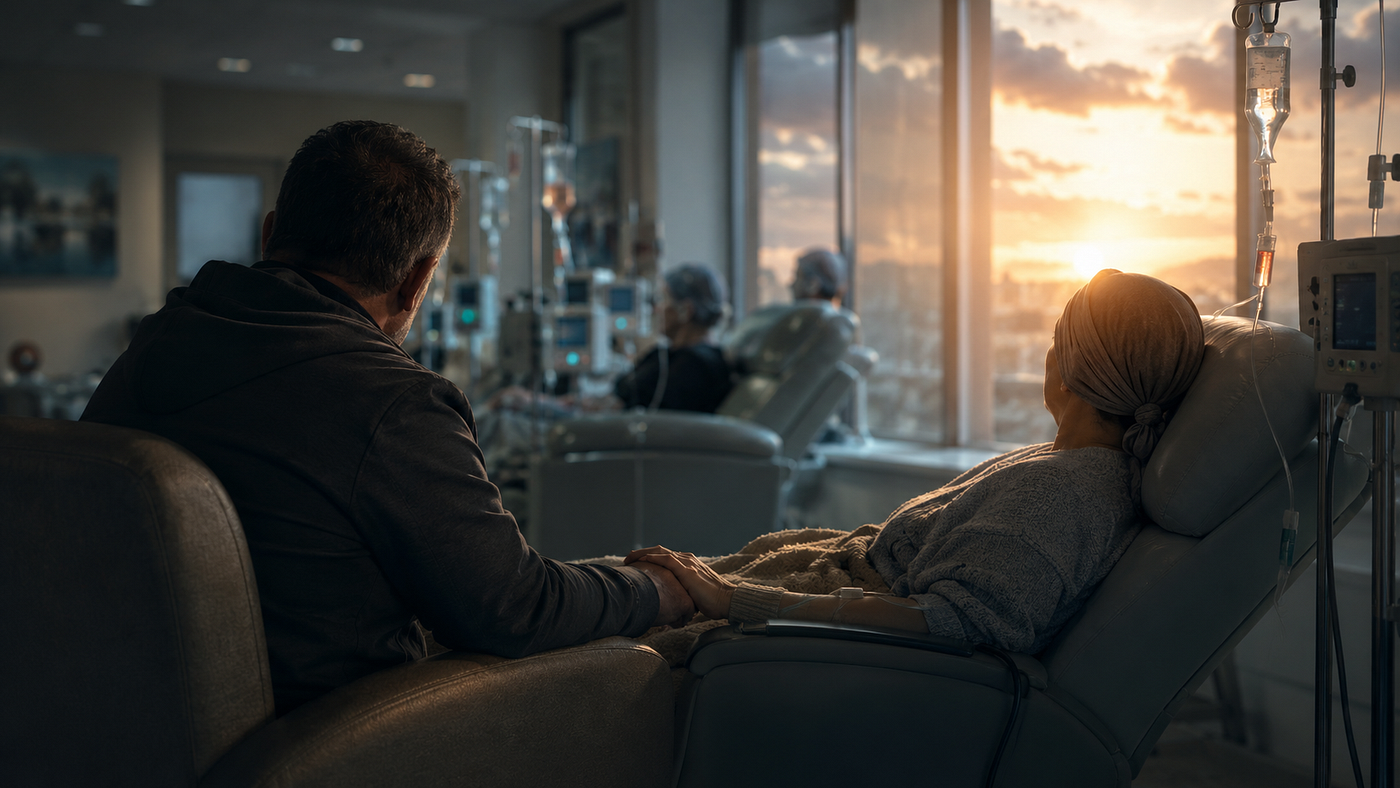
The Cure and the Cost
Cancer: that dreaded disease that affects nearly 40% of all people. Once a death sentence, but now, many types of cancer are easily treated…
The Cure and the Cost

CAR-T Cell therapy is transforming outcomes for treatment-resistant cancer patients. (Photo Credit: UT Southwestern Medical Center)
[embed]Video Overview
Cancer: that dreaded disease that affects nearly 40% of all people. Once a death sentence, but now, many types of cancer are easily treated with some combination of chemotherapy or radiation. For patients with acute lymphoblastic leukemia (ALL), an aggressive blood cancer, however, radiation is not a treatment option, and standard chemotherapy can sometimes fail. Additionally, patients may relapse after completing treatment, and their relapsed cancer may become unresponsive to chemotherapy. For most patients, a failure to respond to chemotherapy can be a death sentence, as there are very limited alternative treatment options, and most carry high risks.
A new treatment called CAR-T cell therapy has given such patients new hope. In some patients with otherwise untreatable leukemia, CAR-T therapy has led to complete remission (eradication of detectable cancer). However, this breakthrough also comes with a complication that researchers and doctors are still trying to understand: neurotoxicity, a dangerous side effect that affects the brain.
This creates a complicated balancing act: without CAR-T therapy, many patients would not survive their cancer, but the treatment itself can sometimes trigger dangerous neurological complications, and in rare cases, even death. How do doctors walk this thin line?
How It Works
Here’s how CAR-T therapy works:
Normally, our immune system uses T cells to recognize and destroy dangerous cells, such as viruses or damaged tissue. Cancer, however, is extremely good at hiding from our immune system. Leukemia cells often evade immune detection by appearing similar to normal cells.
However, doctors have recently found a way to train the body’s immune system to recognize and kill cancer cells. They begin by collecting a patient’s own T cells from their blood. In the lab, scientists genetically modify these cells to express a new receptor called a chimeric antigen receptor (CAR). This receptor acts like a sensor that allows the T cells to recognize a specific protein found on leukemia cells. These cells are then administered back into the patient’s body through a one-time IV infusion. They can then identify and attack leukemia cells throughout the body. Because these cells are living human immune cells, they can also multiply inside the body and last for months or years, continuing to protect against cancer long after the initial treatment. In many patients with treatment-resistant leukemia, CAR-T therapy has succeeded even when chemotherapy did not. However, every new treatment also comes with new side effects, and this miraculous treatment is no exception.

CAR-T Therapy is delivered via a one-time IV infusion. Picture Credit: USZ
An Overactive Immune System
When CAR-T cells encounter leukemia cells, they launch an aggressive immune response. This triggers the body to release inflammatory signaling molecules called cytokines, which help coordinate immune activity. In an infection, these cytokines help the body regulate inflammation and fight off the infection. But in CAR-T therapy, the amount of cytokines released can overwhelm the body, leading to an overactivated immune system and increased inflammation. When this happens, it is called cytokine release syndrome (CRS) and is one of the most common complications of CAR-T therapy. Patients with CRS may experience high fevers, low blood pressure, and fatigue as immune cells flood the body with pro-inflammatory cytokines. In most cases, CRS can be managed with supportive treatments or targeted anti-inflammatory drugs.
However, in some patients, the immune reaction may extend beyond the body and begin affecting the brain. This is known as immune effector cell-associated neurotoxicity syndrome (ICANS), and is the most dangerous complication of CAR-T cell therapy.
Affecting the Brain
Unlike CRS, which typically does not reach the brain, ICANS directly affects neurological function.
The earliest signs are subtle. Patients may struggle to name simple objects, write a coherent sentence, or follow basic instructions. Some doctors ask patients to write a short phrase every day during treatment because changes in handwriting can sometimes signal early neurological effects. However, the condition can escalate quickly. As inflammation spreads to the brain, patients may develop confusion, seizures, severe swelling of the brain (cerebral edema), or even fall into comas. In rare cases, ICANS can become life-threatening.
One of the most concerning aspects of ICANS is that researchers still do not fully understand why it happens. Current evidence suggests that the same immune activation responsible for killing leukemia cells may also disrupt the blood-brain barrier. In humans, the brain’s immune system is separate from the body’s. The blood-brain barrier prevents inflammatory cells from the body’s immune system from entering the brain, and disruption can lead to brain inflammation, swelling, and damage.

Light-hearted meme illustrating how CAR-T can both treat cancer and harm the brain (Created with: imgflip)
Predicting ICANS
Not every patient who receives CAR-T therapy develops ICANS. Some experience only mild neurological symptoms, while others develop severe complications. This unpredictability makes ICANS hard to prevent, and is one of the biggest challenges that researchers are trying to solve.
Researchers have identified several factors that appear to increase risk, such as high levels of inflammation, severe CRS, or prior neurological damage. However, none of these factors alone has been able to reliably predict which patients will develop ICANS. Because of this uncertainty, physicians have to monitor patients extremely closely during treatment. Neurological assessments are often performed multiple times per day. Patients may be asked to complete tasks such as naming objects, counting backwards, or writing sentences to detect cognitive changes as early as possible. If doctors are able to recognize the symptoms quickly enough, they can intervene with anti-inflammatory treatments to prevent ICANS from worsening.

A simple comic about the balancing act of CAR-T Therapy
Preventing Neurotoxicity
Although predicting and treating ICANS after it develops is important, many researchers believe the most important area of research is understanding how to prevent it from happening altogether.
Scientists are currently investigating several approaches:
One approach involves adjusting how the CAR-T cells are administered. Some researchers are exploring fractionated dosing, where CAR-T cells are infused in parts rather than all at once. This may help by reducing the intensity of the immune response and spreading it out over time. However, scientists and doctors are still trying to find the most beneficial split that both reduces inflammation and allows for effective cancer treatment.
Another experimental design attempts to build “off switches” into CAR-T cells, allowing doctors to deactivate the CAR cells if severe toxicity begins to develop. However, turning off the CAR-T cells would also stop cancer treatment. Thus, this solution should only be used as a last resort.
Balancing Act
CAR-T therapy is one of the most powerful tools modern medicine has developed against cancer. For patients with relapsed leukemia, it has brought hope back to once hopeless cases. However, as with many strong treatments, CAR-T therapy also comes with complex trade-offs.
Doctors must carefully balance two competing goals. On one hand, they want the CAR-T cells to be aggressive enough to eliminate every leukemia cell. On the other hand, they must prevent the immune response from becoming so intense that it harms the patient. Researchers still do not fully understand how ICANS develops or how best to treat it. As CAR-T therapy becomes more widely used, further studies will also be needed to understand its long-term neurological effects. In this era of scientific development, CAR-T therapy provides both a hope for what medicine can achieve and a reminder that every breakthrough brings new questions.
Original Article:
Sliwa-Tytko, P., Kaczmarska, A., Lejman, M., & Zawitkowska, J. (2022). Neurotoxicity Associated with Treatment of Acute Lymphoblastic Leukemia Chemotherapy and Immunotherapy. International Journal of Molecular Sciences, 23(10), 5515.
메타데이터
- post_id
- dcd73e693613
- slug
- the-cure-and-the-cost-dcd73e693613
- url
- https://medium.com/@graceywa/the-cure-and-the-cost-dcd73e693613
- canonical_url
- https://medium.com/@graceywa/the-cure-and-the-cost-dcd73e693613
- author_url
- https://medium.com/@graceywa
- status
- ok
- fetched_at
- 2026-06-09 15:37:30