From Sedan to Sarajevo: How the Franco-Prussian War Set the Stage for WWI
From the Franco-Prussian War to the Eve of the First World War
From Sedan to Sarajevo: How the Franco-Prussian War Set the Stage for WWI
From the Franco-Prussian War to the Eve of the First World War
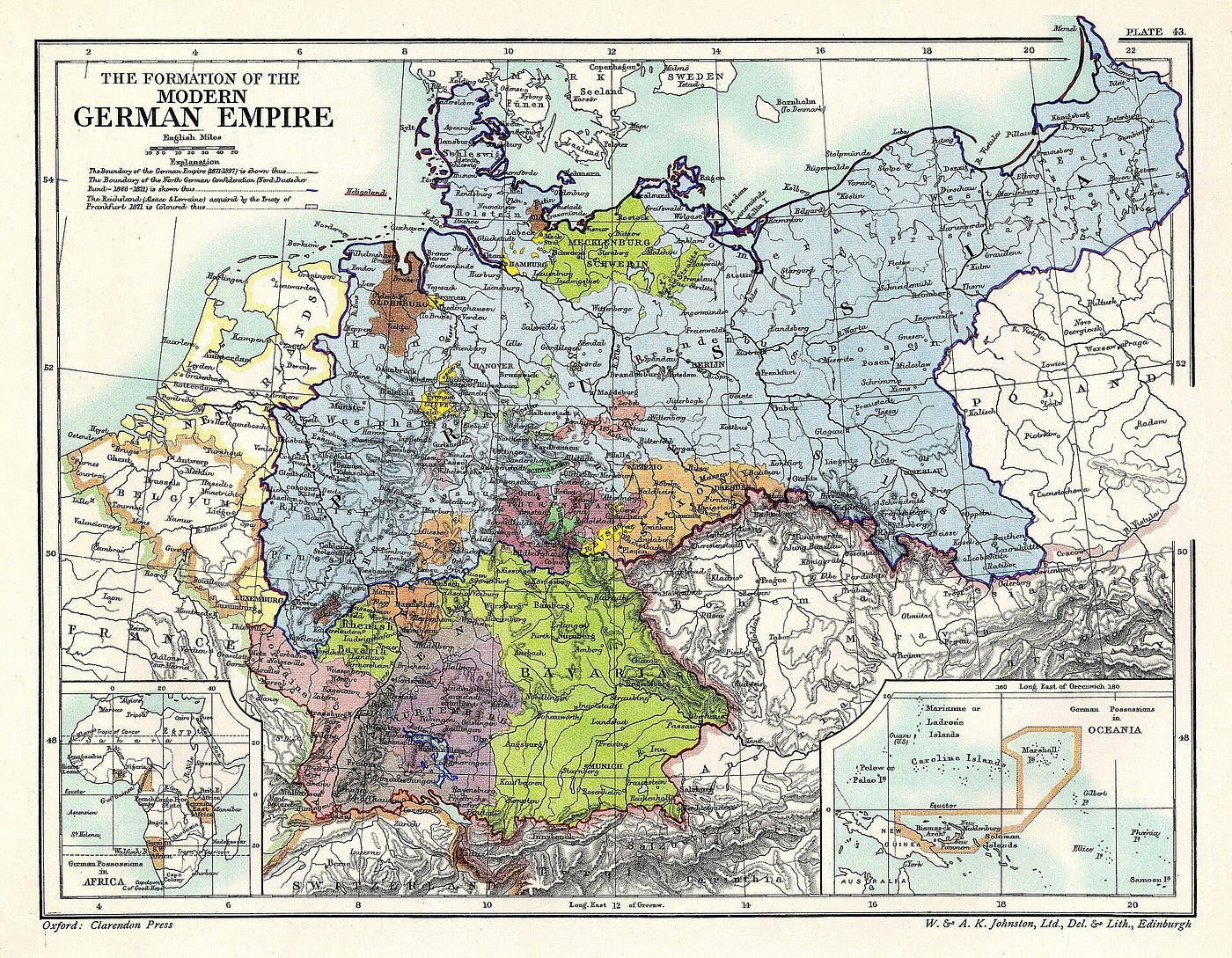
A German Empire map (public domain image from Wiki Commons)
Overall, this era covers the period of 1871–1914. This was the German Empire era, under the monarchy of Wilhelm. During the period, Germany emerged with one of Europe’s largest armies and expanded economically.
Essentially, Germany was a monarchy with Wilhelm as king after the Franco-Prussian War. Wilhelm appointed Bismarck as German foreign minister, a position he held until 1890.
Bismarck’s foreign policy was largely concerned with Europe. Bismarck hoped to have alliances with states in central Europe. Certainly, Bismarck did not expect France to be an ally in any way; keeping Russia neutral was something considered.
To this extent, a Dual Alliance was first negotiated between Germany and Austria-Hungary in 1879. This alliance, which would also include Italy as a Triple Alliance, would, as Carr noted, “Become the very cornerstone of German foreign policy.” With Italy’s joining, the Triple Alliance was formed in 1882.
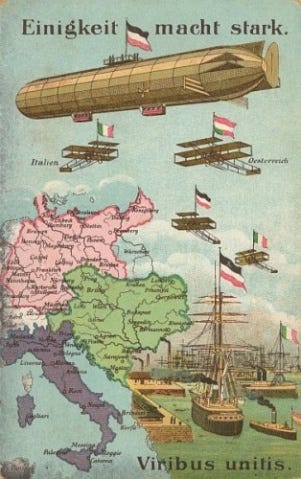
A Triple Alliance postcard (public domain image from Wiki Commons)
Bismarck’s foreign policy also included a Reinsurance Treaty with Russia in 1887. With this, Russia and Germany pledged their neutrality.
Bismarck agreed to gain colonies in Africa by 1884. This policy in Africa was largely a result of German public opinion. Colonies such as Togoland were gained, although for the most part, the German Empire was somewhat limited.
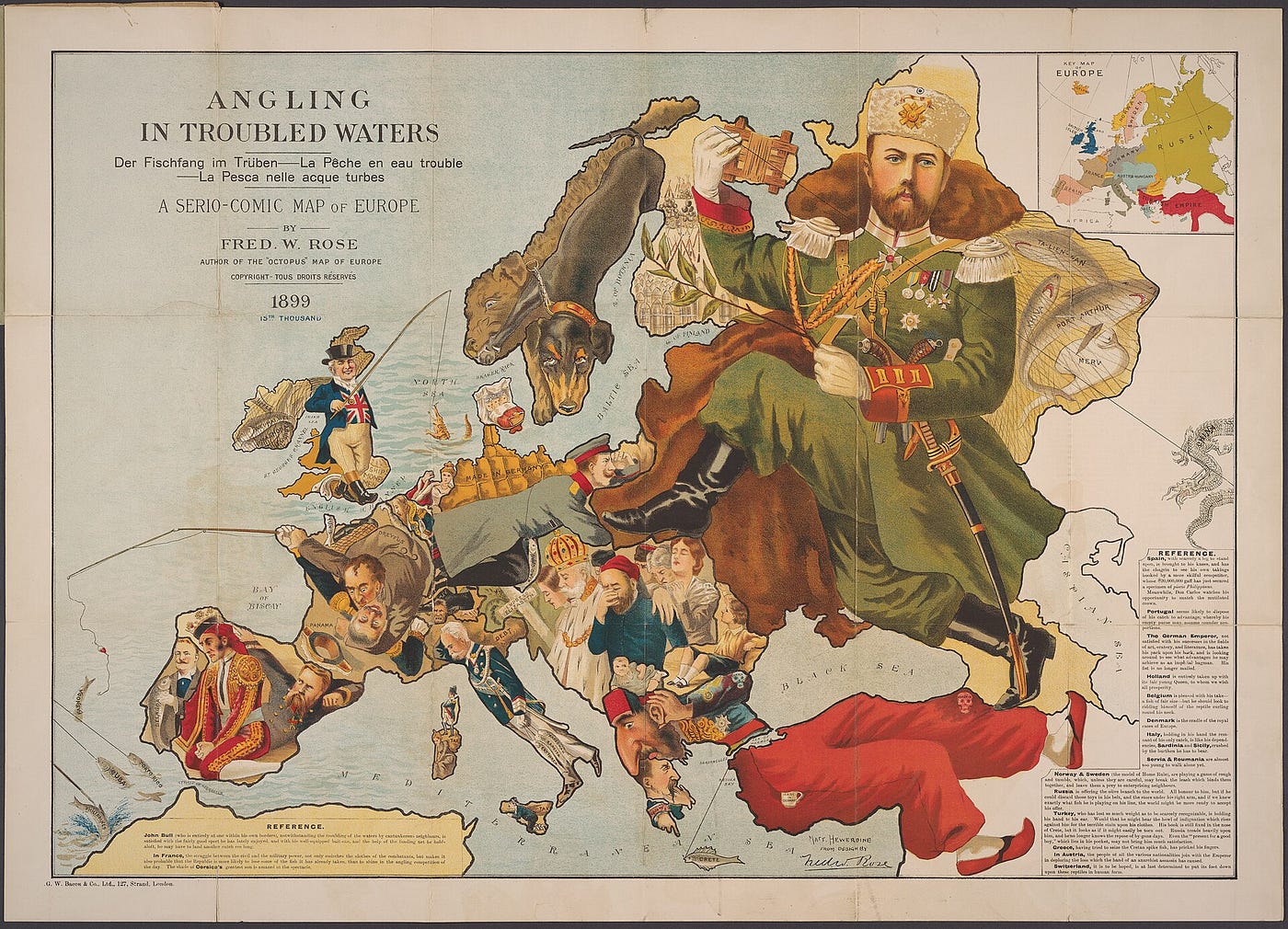
1899 Europe satirical map (public domain image from Wiki Commons)
German industry also expanded in the period. German industry largely eclipsed France and was more comparable to Britain’s industrial base by 1890.
By 1890, Wilhelm II became king of Germany, and Bismarck was replaced as the German foreign policy chief. With this, Caprivi was appointed foreign minister, and German policy began to change, particularly in relation to Russia. The re-insurance treaty was not renewed with Germany in 1892.
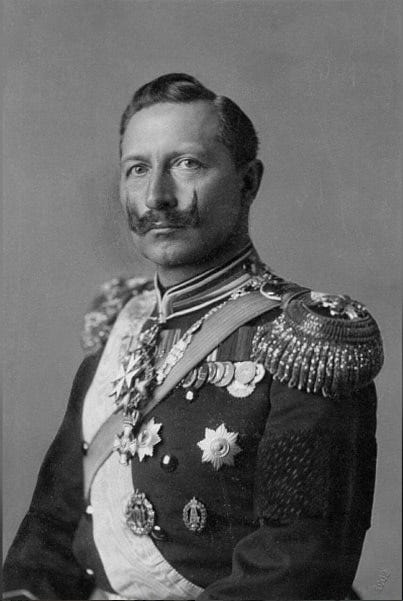
Kaiser Wilhelm II (public domain image from Wiki Commons)
Instead, Germany favored an alliance with Britain. However, for the most part, this became increasingly unlikely after France and Britain formed the Entente in 1904. This was later joined by Russia to establish the Triple Entente. The Triple Entente also effectively ended Britain’s relative neutrality with the rest of Europe.
Germany also increased their investment in a navy league to expand the German navy. Britain, too, would further invest in their own navy to keep ahead.
Disagreements over Morocco between Germany and France would also develop by 1911, when the German gunboat Panther appeared off Agadir. However, it was agreed that Morocco would become a French protectorate.
The Morocco affair of 1911 only served to highlight that war in Europe may be likely. Increased investment in armies after 1911 was not uncommon. By 1914, the war in Europe spilled over between the countries in eastern and western Europe.
Read more of my German history articles on Medium:
[The History of the German Navy in the 20th Century](http://The History of the German Navy in the 20th Century)
Remembering the Berlin Conference of 1884
메타데이터
- post_id
- dd005ffaefda
- slug
- from-sedan-to-sarajevo-how-the-franco-prussian-war-set-the-stage-for-wwi-dd005ffaefda
- url
- https://medium.com/illumination/from-sedan-to-sarajevo-how-the-franco-prussian-war-set-the-stage-for-wwi-dd005ffaefda
- canonical_url
- https://medium.com/illumination/from-sedan-to-sarajevo-how-the-franco-prussian-war-set-the-stage-for-wwi-dd005ffaefda
- author_url
- https://medium.com/@mav44233
- status
- ok
- fetched_at
- 2026-06-14 11:28:49