Trading India’s Silicon Valley for the Blue Mountains: A family’s purpose-filled journey
Author of this article: Selina D’Souza
Trading India’s Silicon Valley for the Blue Mountains: A family’s purpose-filled journey
Author of this article: Selina D’Souza
The author has written this article based on publicly available information about The Good Doll’s founding team, including their YouTube videos, secondary sources, and website. All opinions and any errors are the author’s own and do not represent The Good Doll or RegenSpiral.
If you are not a Medium subscriber, the full article is available here
Ever dreamt of leaving your fast-paced city life behind for a slower, simpler one rooted in nature? For many, it’s a distant retirement plan. But for Sunita Suhas and Suhas Ramegowda, it became a very real journey for their family — one that began with minimalism and led them to live deep in the mountain communities of Tamil Nadu, where they’re helping to shape something far more meaningful than having a slower life.
The yearning for something more
In Bengaluru — India’s bustling Silicon Valley — the couple had built successful careers in multinational companies. With a beautiful home, regular vacations, and their young son enrolled in a dream school, they seemingly had it all.

Suhas, Sunita, and their young son. (Photo shared by Suhas Ramegowda)
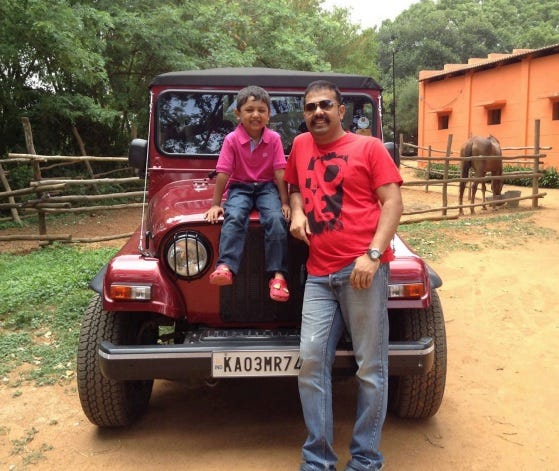
Suhas and his son. (Photo shared by Suhas Ramegowda)
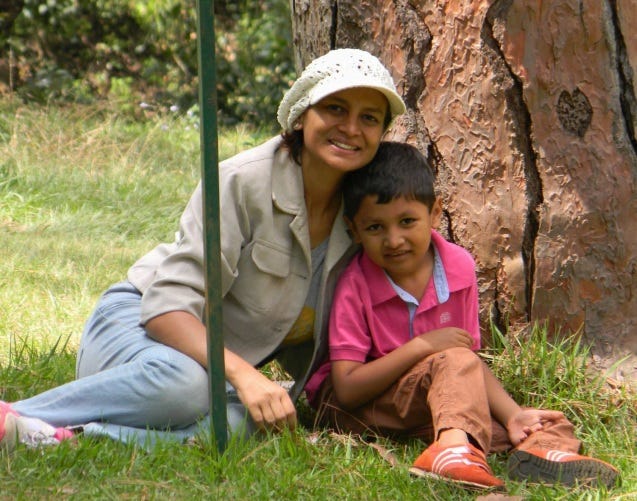
Sunita and her son. (Photo shared by Suhas Ramegowda)
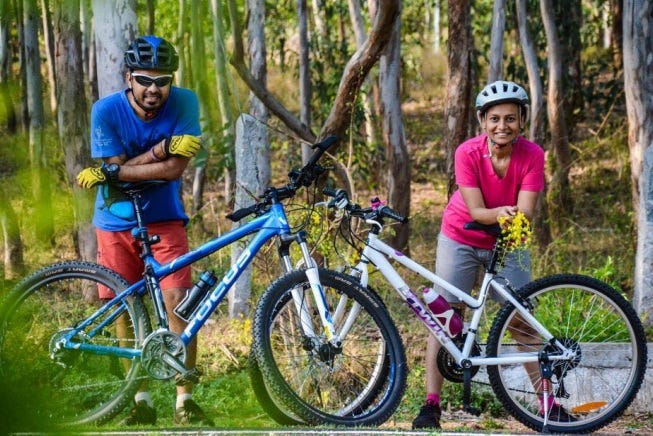
Suhas and Sunita. (Photo shared by Suhas Ramegowda)
Under the surface, though, something didn’t feel quite right.
Sunita, especially, felt a quiet discomfort growing. “Is this all there is?” she wondered. Their consumeristic lifestyle and the rigidity of formal schooling for her son, Aarav, left her longing for more — more meaning, more freedom, more possibility. They didn’t know what “more” looked like.
They began to experiment — with less.
They stripped their lives down to the essentials: selling most of their belongings, camping on weekends, learning new crafts, and embracing frugality. Suhas kept his corporate job in the city, even as the family discovered joy in simplicity and alternative ways of living.
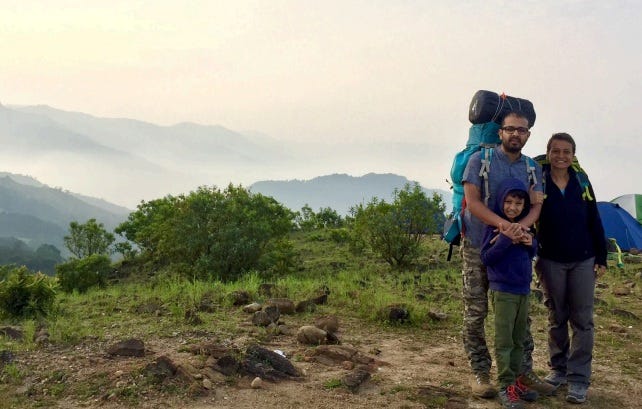
Photo shared by Suhas Ramegowda
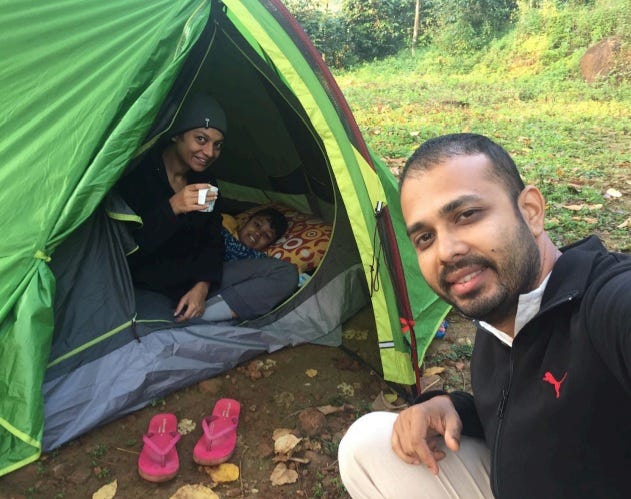
Photo shared by Suhas Ramegowda
On a road trip across the length and breadth of India, the family made the decision to quit corporate life and live off the grid. Travelling south to Tamil Nadu, they reached the Nilgiris, part of the magnificent Western Ghats of India and a hotspot of biodiversity.
Rustic living in the Nilgiris
Reaching Coonoor, a misty hill station, the Suhas family stopped to enjoy cool weather and serene surroundings. Drawn to the idea of living in the Nilgiris (meaning ‘Blue Mountains’ in the Tamil language), they soon bought an acre of land in a forested area and moved into an abandoned house with no electricity or modern comforts. Cultivating their own food using water sourced from mountain streams, Sunita, Suhas and their young son found themselves living a rustic dream.

Photo shared by Suhas Ramegowda
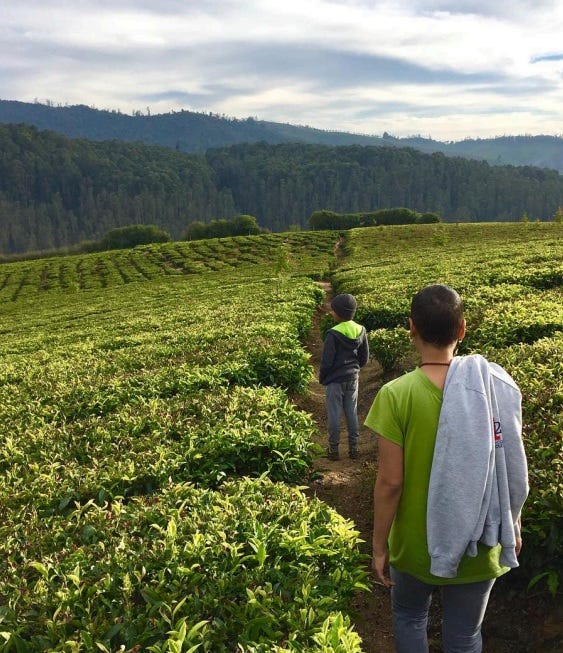
Photo shared by Suhas Ramegowda
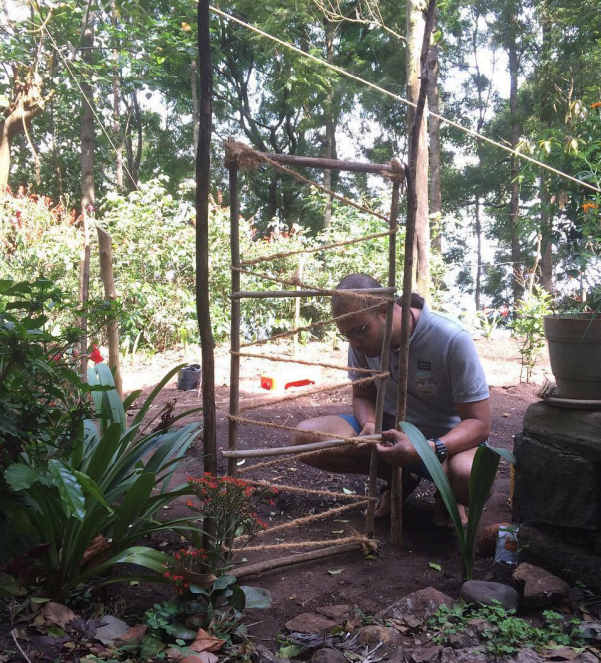
Photo shared by Suhas Ramegowda
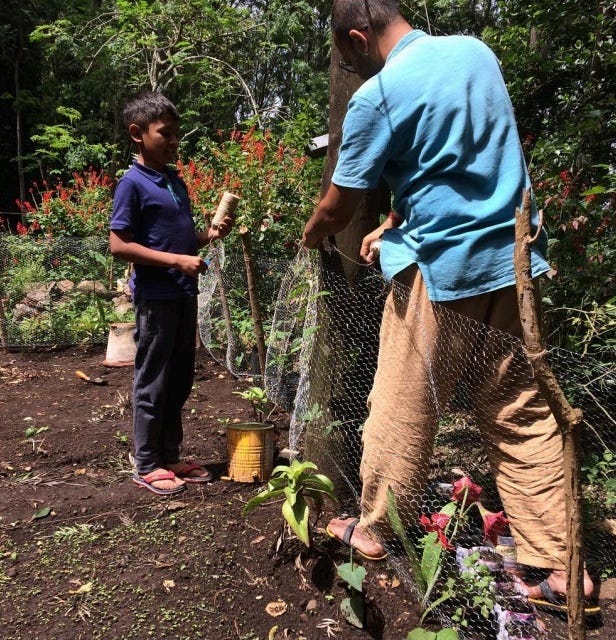
Photo shared by Suhas Ramegowda

Photo shared by Suhas Ramegowda
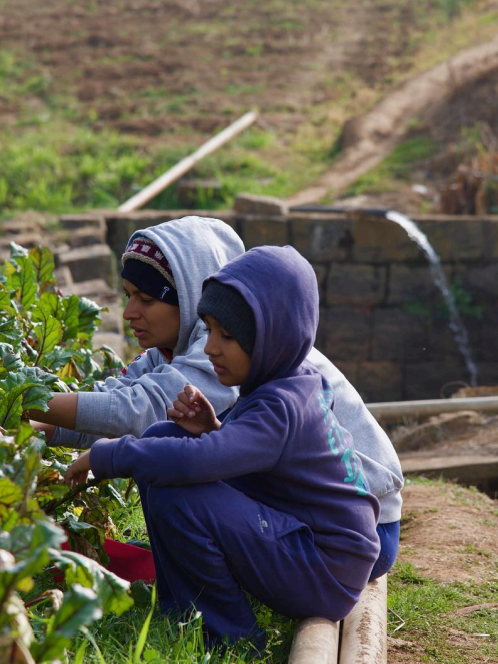
Photo shared by Suhas Ramegowda
The nearest village was 3 to 4 kilometres away, and their only neighbours were the elephants and bears. “Living in a forest is something everyone must experience at least once in their lifetime,” Sunita says. “If you don’t bother the animals, they don’t bother you.”
As they began interacting with the local people, they realised that what felt like a dream off-grid experiment looked very different through the eyes of the nearby tribal communities.
Understanding Reality
Recalling their early days in the Nilgiris, Suhas said, “We had savings and a steady rental income to fall back on. Many in the local communities lived without such buffers.”
Local jobs were seasonal and required long travel. Women, in particular, faced limited opportunities for paid work or upskilling, as caregiving duties and cultural norms kept them at home despite their potential.
With her background in crafts, Sunita wondered if her quilting and other craft skills could benefit the local community. She invited indigenous women to her home to teach quilting, starting with just a few and gradually building trust and momentum. Eventually, she established a centre to train more women, teaching them to stitch cloth dolls from locally sourced pre-consumer textile waste material that would otherwise end up in landfills.
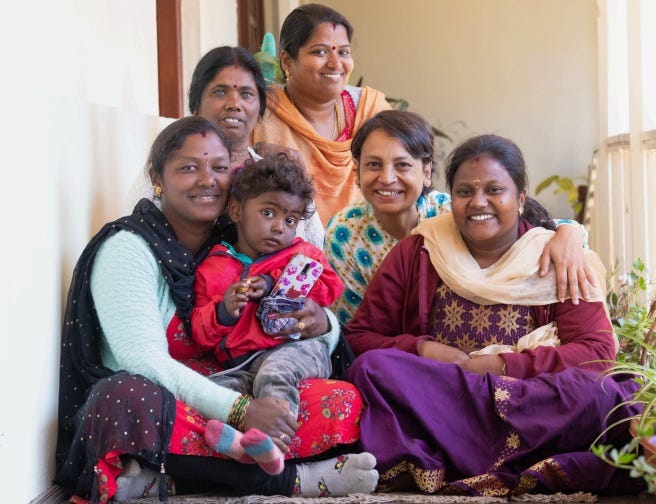
Photo shared by Suhas Ramegowda
Bringing together a community
Eventually, Sunita and Suhas founded The Indian Yards Foundation, a non-profit to train and empower women through craft skills. Alongside it, they launched **The Good Doll**, a for-profit company selling the handmade dolls and channelling profits back into the mission.
Many women earned an income for the first time. Some could not even afford bus fare to reach the training centre, yet they came — driven by curiosity and hope.
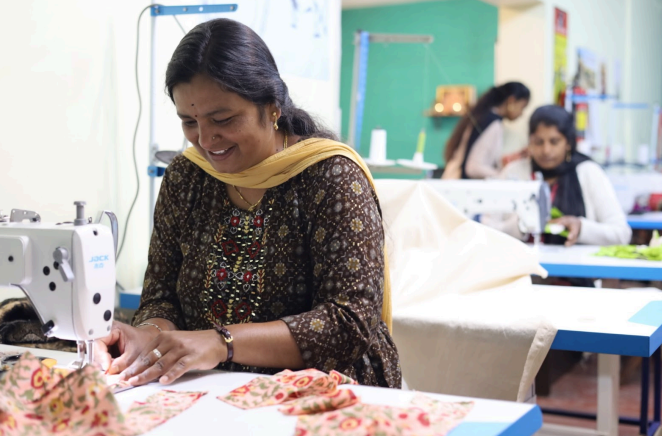
Photo shared by Suhas Ramegowda
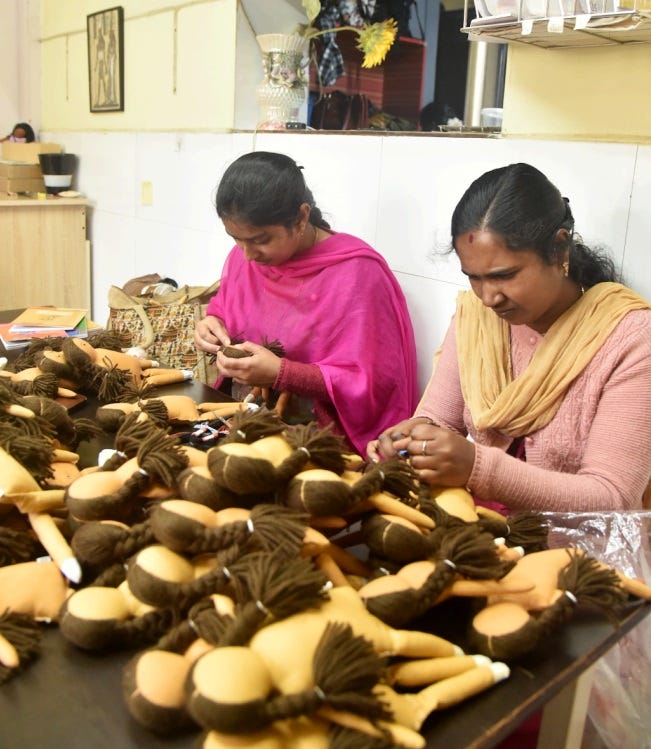
Photo shared by Suhas Ramegowda
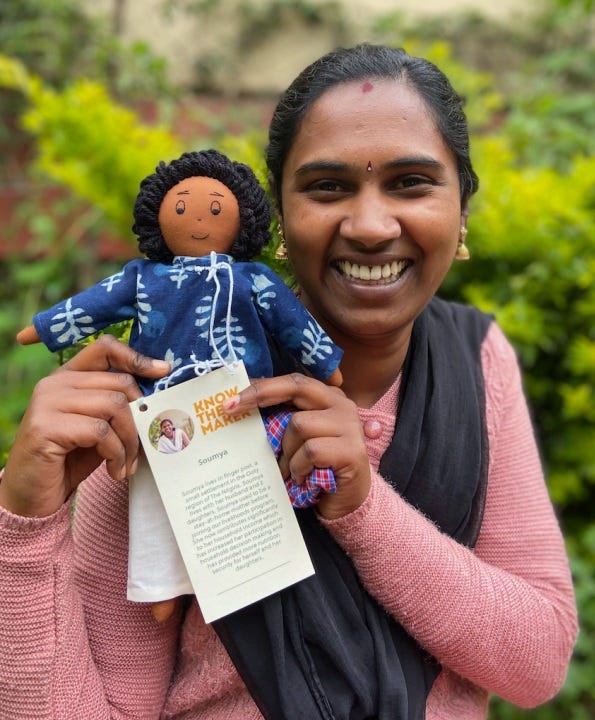
Photo shared by Suhas Ramegowda
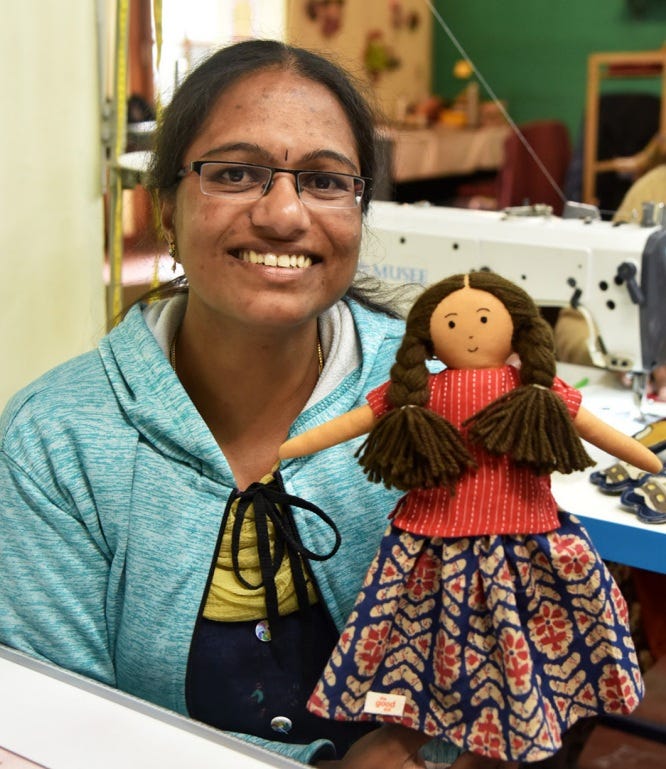
Photo shared by Suhas Ramegowda
After intensive training and guided practice, the women become skilled in crochet, embroidery, and macrame. Through The Good Doll, over 100 women now earn an equitable wage by working 6 to 8 hours a day at home while managing household and caregiving responsibilities.
Women who were once confined to their houses have found friends, built a community at the training centre, and gained independence and respect from their families through a steady income.
“Nilah” and family — Sustainable toys from the Blue Mountains
The toy industry is one of the most plastic-intensive: 90% of existing toys are made of plastic, with 48 tons of plastic used for every US$1 million in revenues. Many plastic toys are quickly unloved or forgotten, and many end up in the landfills rather than reused.
By upcycling cloth waste into dolls, The Good Doll has saved 15,000 kg of fabric from landfills, provided fair employment to 100 women, and indirectly impacted over 300 indigenous lives.
The central figure of The Good Doll collection is Nilah, a girl doll whose name means ‘Blue’ in Tamizh (Tamil). Starting with Nilah, the range has expanded to include Nilah’s siblings, parents, grandparents, and more.
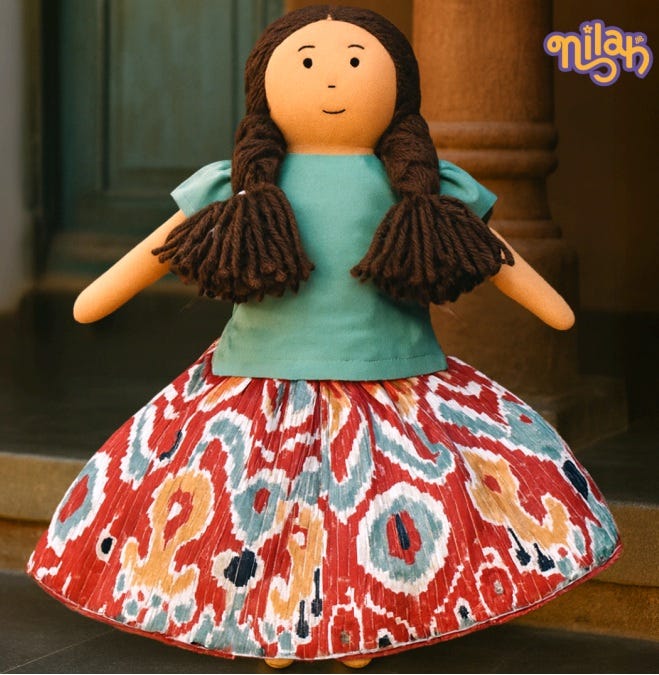
Photo shared by Suhas Ramegowda
The Good Doll also aims to reflect the diversity of traditional South Indian society. With dolls of dark to light skin tones dressed in modern and traditional clothing, Indian children can see themselves represented in the collection.
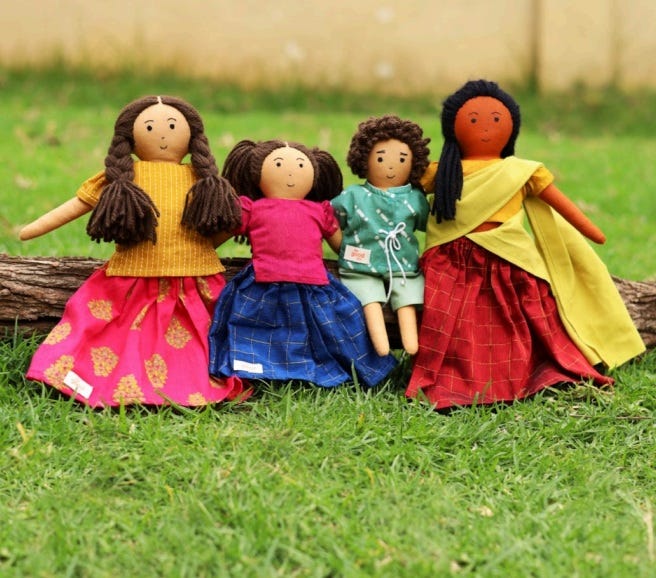
Photo shared by Suhas Ramegowda
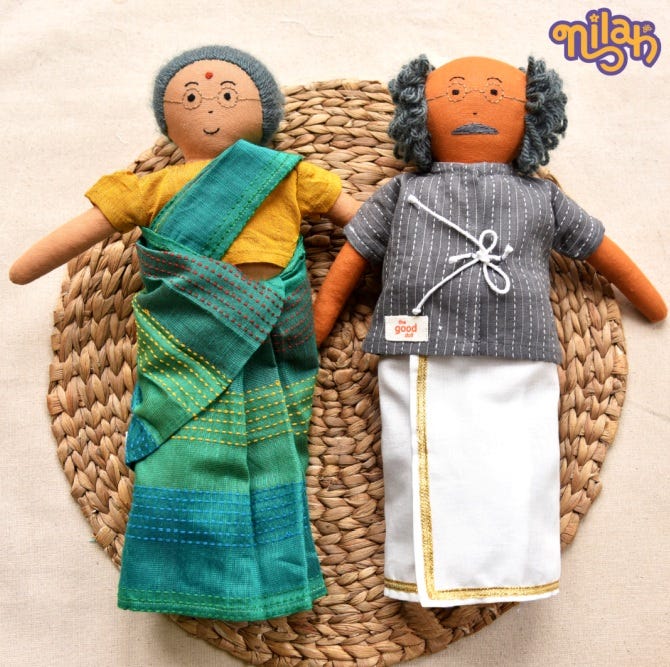
Photo shared by Suhas Ramegowda
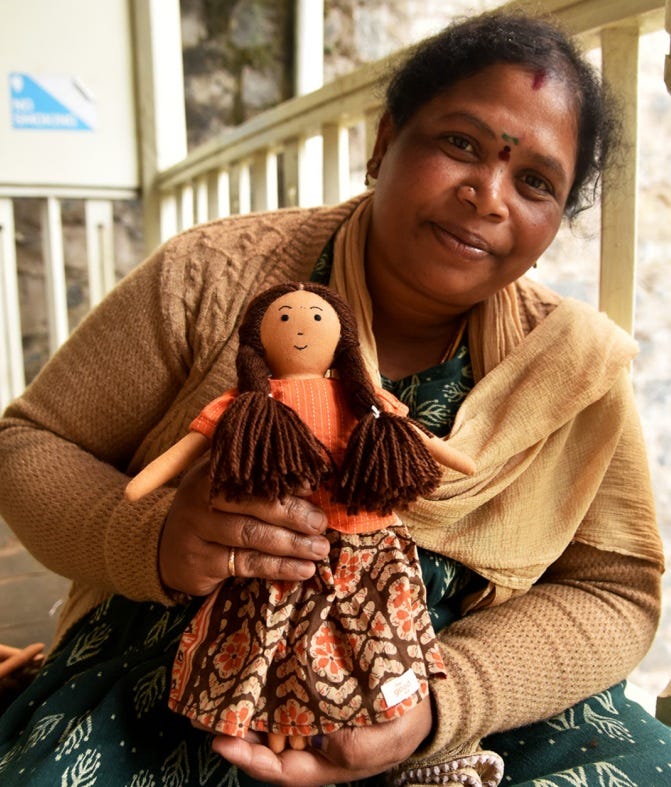
Photo shared by Suhas Ramegowda
Purpose beyond Profit
What began as a family’s rejection of consumerism has blossomed into a social enterprise that uplifts women, preserves culture, and promotes sustainability.
Unlike Unicorns — companies which chase growth and profits often at the expense of people and environmental well-being, The Good Doll exemplifies a Zebra company — companies that prioritise social responsibility, sustainability, and support for all stakeholders, including their employees, customers, partners, and investors.
On a recent SharkTank India episode, investors urged Suhas and Sunita to focus on scaling. The Good Doll team chose to remain true to their mission, proving that businesses can serve people, purpose, and planet.
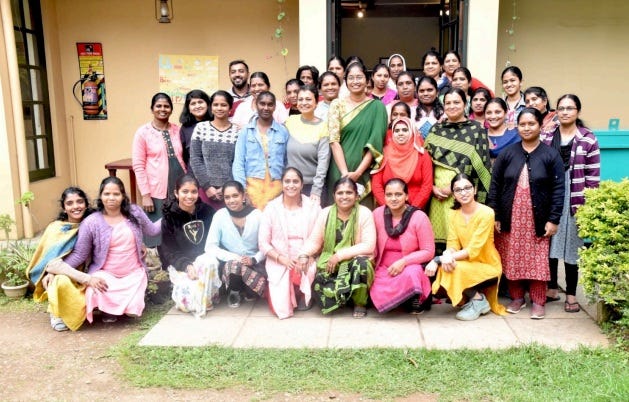
The Good Doll team at their current headquarters in Ooty, Nilgiris, Tamil Nadu. Photo shared by Suhas Ramegowda
If this story resonates with you, please click the clap button — you can give up to 50 claps! Your support helps the story reach more Medium readers. Feel free to leave a comment, share, or follow as well
About the Writer
Selina D’Souza (LinkedIn)
Selina works at the intersection of marketing, communication, and strategy, where understanding the audience, writing for them, and learning from them are equally important. She is a mother, wife, daughter, sister, friend, and nature lover — passionate about leaving the Earth better for future generations.
메타데이터
- post_id
- dd0c4eefb130
- slug
- trading-indias-silicon-valley-for-the-blue-mountains-a-family-s-purpose-filled-journey-dd0c4eefb130
- url
- https://medium.com/regenerative-spiral/trading-indias-silicon-valley-for-the-blue-mountains-a-family-s-purpose-filled-journey-dd0c4eefb130
- canonical_url
- https://medium.com/regenerative-spiral/trading-indias-silicon-valley-for-the-blue-mountains-a-family-s-purpose-filled-journey-dd0c4eefb130
- author_url
- https://medium.com/@foodcitizensg
- status
- ok
- fetched_at
- 2026-06-14 11:28:49